All posts by Wildtrumpetvine

Our Summer Village on the Cape

IMG1357

This year, H’s sister and her husband brought their three-month old baby to Cape Cod. We were not so brave. We waited until our daughter was two and a half. The year before, we had attempted our first family beach trip, to the Outer Banks, just the three of us. While it was a joy to experience the sun and sand from D’s fresh perspective, it was not a vacation. The demands of our beautiful child, limitless as always in those early years, were more difficult to satisfy, being away from home. We were simply caregivers in an alien setting, and there was minimal opportunity for relaxation or enjoyment. When D was awake in the hotel, which was most of the time, H worried she would awaken or annoy our neighbors.  On the rare occasions when she finally succumbed to sleep, these same neighbors typically awakened her and annoyed me. There was great collective frustration all around.

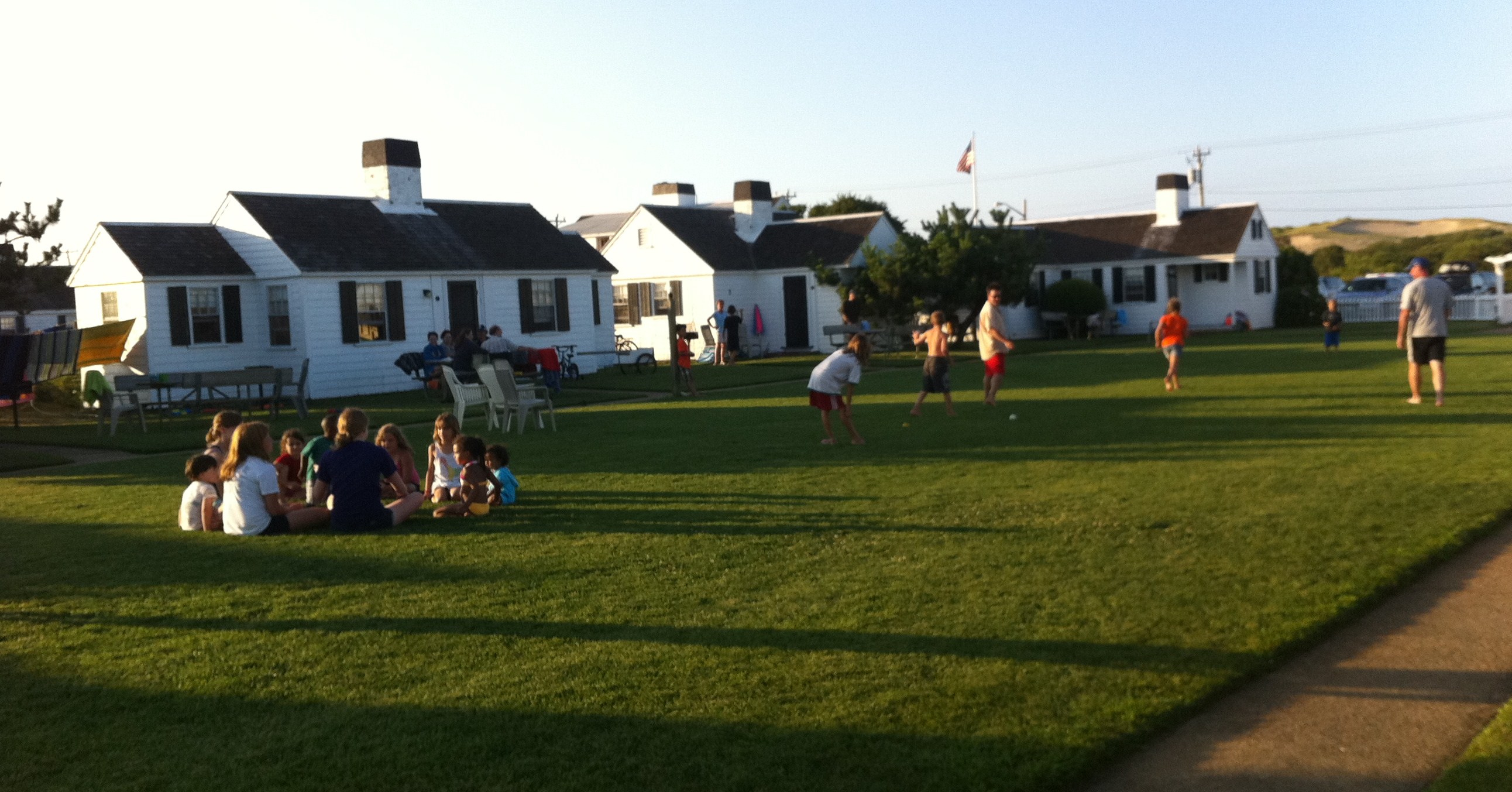
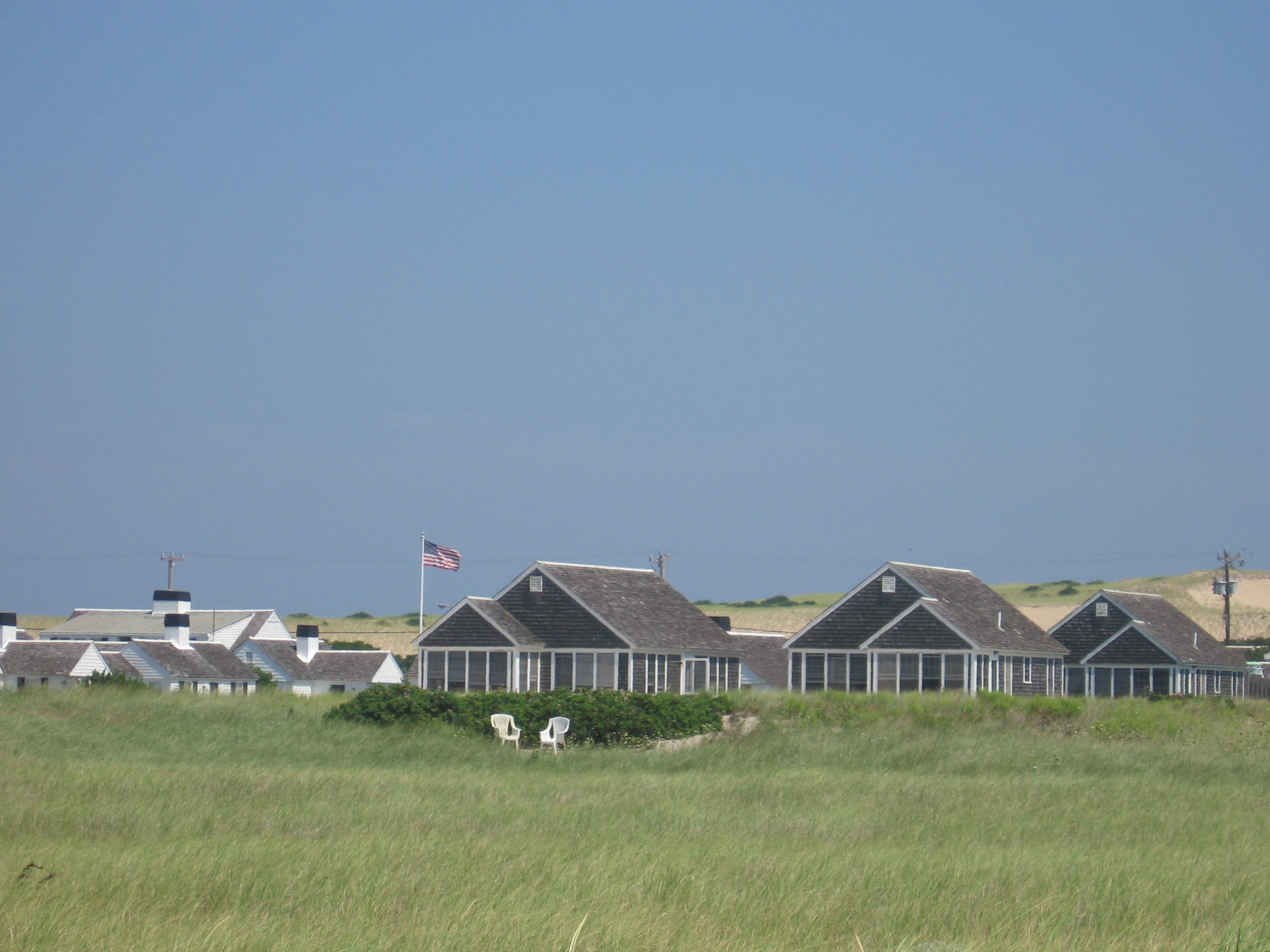
That trip made me reassess the Cape Cod complex that H’s family has visited for over thirty years.  Some cottages are covered in white clapboard, others in weathered cedar shakes.  All are small but charming.  They cluster, like the homes of a compact village, around two spacious central greens and a pool. It’s timeless, quintessential Old Cape Cod, exactly the picture conjured by that 1950s Patti Page song of the same name.  An immensely wide beach, unusual for Truro, provides a  buffer zone from the water.  Rather than the pounding surf of the Atlantic, there is the relative tranquility of the bay.  It suddenly hit me that this was a decidedly welcoming environment for small children and their parents.

CapeCod2010037
One of the greens, empty in the early morning, but soon to fill with friends.


CapeCod2011252
Before the narrow boardwalk was built, about ten years ago, the trek to the bay was rather daunting.

I realized that at the Cape there would be willing, helping hands, certainly those of Grandma and Grandpa, perhaps those of H’s sister and her husband. I wasn’t hoping to hand my child over completely, only grateful for any assistance that might be offered. I also knew by this time that our daughter tended to behave better when she knew there were other eyes on her besides those of Mama and Daddy.
0035
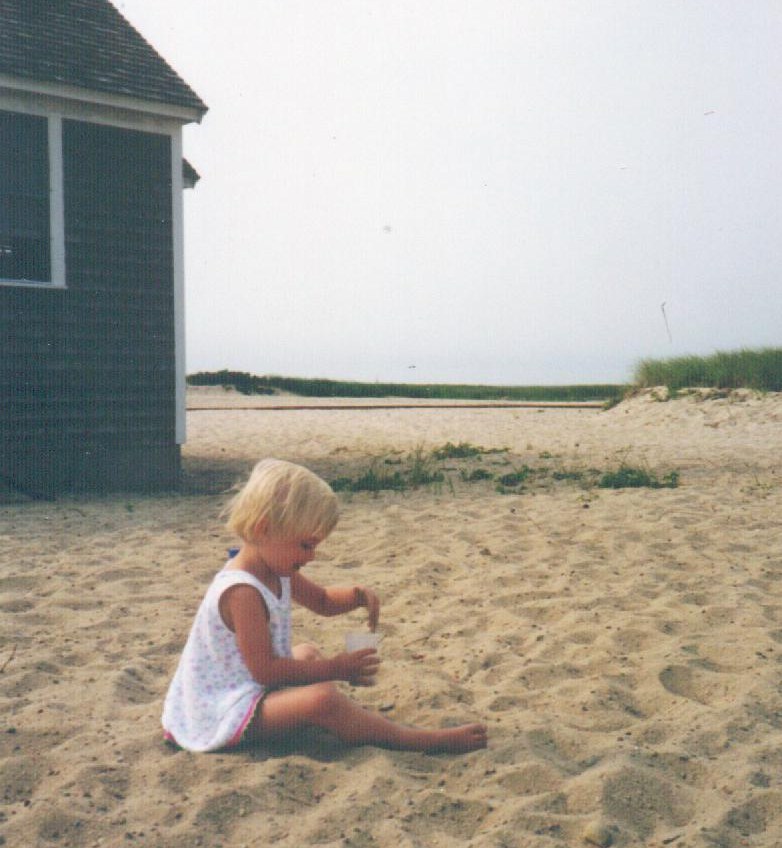
D, at two and a half, happily at work on her sand-pouring skills.

H’s family’s adopted Cape Cod village opened its arms to welcome our daughter, and for her it was love at first sight.  As children sometimes do, she appreciated the simplest things.  She found it supremely entertaining to sit outside our cottage, pouring sand into a cup; she didn’t even need a pail or shovel.  We would send her over to her grandparents’ cottage for cooking oil or butter, and she relished the responsibility.  H would use the walkie-talkie to tell his parents D was on her way, and we’d keep her in our sights during her short journey.  (There are no phones in the cottages, and before we were all so fiercely entangled in the web of technology, this meant an actual break from the typical work-a-day world.) Grandpa would signal D’s return, and she would arrive flushed and happy, more mature than when she had left.
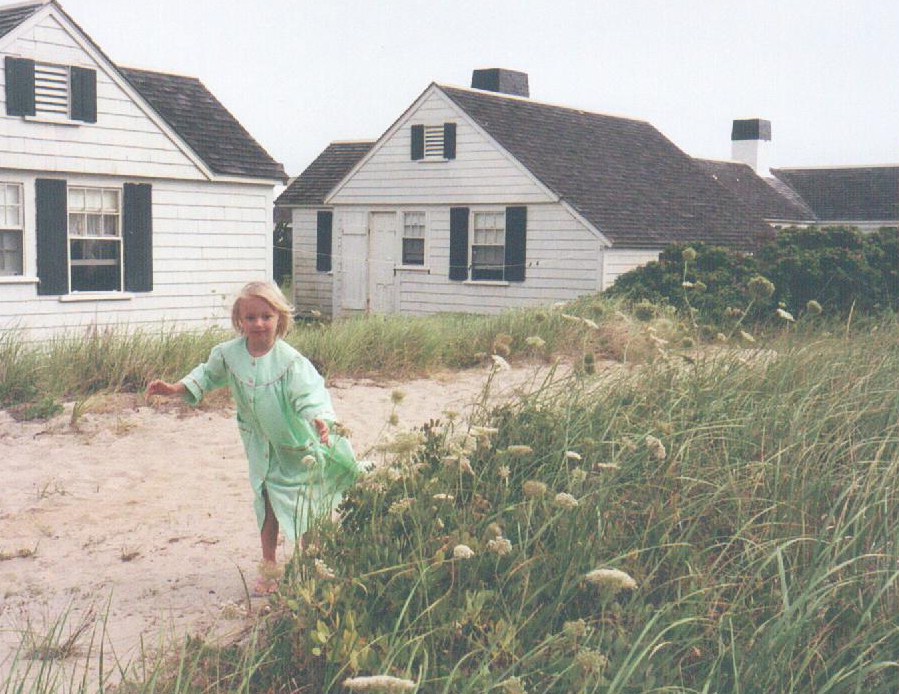
00127
D returns triumphantly from an errand.

There is a real sense of community in our vacation village, because families tend to return for the same week every year, and friendships are nourished.  Most of the parents who are now H’s and my age grew up vacationing here with their families.  Two sweet and thoughtful sisters, four and five years older than D, took her under their wings on our first visit.  Through these girls, D became acquainted with kids of all ages.  Even now, with one sister in college and the other a senior in high school, they remain close.  All the kids look forward to their annual reunion.  Friendships pick up seamlessly, as though no time has passed.
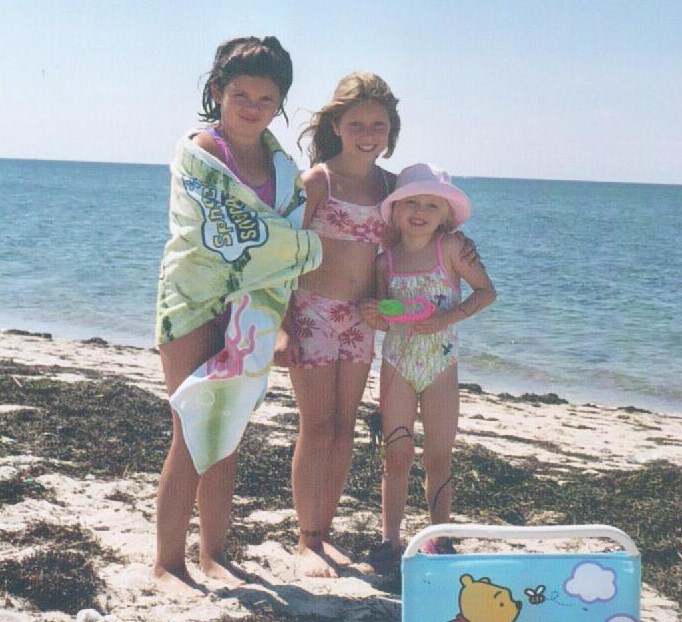
0053
D with her best Cape friends. All teenagers now, the girls are still close.


IMG1340

Above, D and her friends float in the calm shallows of the bay, a pastime that never gets old.  Sometimes the waves kick up and boogie boards come in handy, but the water is never as rough as the ocean. Having grown up with the Cape’s prodigious seaweed, none of the girls finds it objectionable (as I did, at first).  Neither are they squeamish about the amazing variety of life in the water, which includes tiny shrimp, eels, sea worms, insects we refer to as potato bugs, and a vast number of unidentifiable, speedily swimming slimy things.  Some years there are hosts of jelly fish, but typically these are the small non-stinging kind, drifting in the water like blobs of translucent white paste.  D and her friends have always collected these in buckets, examined them, and returned them to the water.  The blue crabs that lurk in the sand are ready to rumble, pincers poised for an unsuspecting, intrusive toe.  Occasionally we see multitudes of horseshoe crabs, the dinosaurs of the crustacean world.  And there are the furry-looking spider crabs, of which D is inexplicably fond, despite her distaste for true arachnids.

At low tide, the water of the bay empties out nearly completely, so it’s almost possible to walk across to Provincetown.  Starfish, sand dollars and scallop shells are revealed among the reeds.  It’s time for D and her friends to build expansive sand compounds, which they populate with feisty hermit crabs and slow-moving moon snails.  Before long, the tide turns and begins to inch back in.  Islands of sand appear and gradually diminish.  Soon the bountiful and diverse life of the bay is submerged once again.

CapeCod2012111
A view across the bay at low tide.


IMG1337
D and her friends congregate on the last remaining island as the tide rushes in.


KikoCCFriendsDC094
In the warmth of the late afternoon sun, the green beckons to villagers of all ages.


KikoCCFriendsDC132
A reed city in the sand, one of D’s ephemeral beach creations.


CapeCod2012119
Our little nephew examines his tummy in the shade of his peapod.

This year, it was a blessing to welcome the new baby on the beach.  It was also a blessing, at this stage of my life, to be the baby’s aunt rather than mother.  D’s newest cousin looked out on the summer landscape from the shade of his peapod tent.  When it appeared that even from that sheltered vantage point, the bright light made him cranky, Grandma and Grandpa went on a mission to Provincetown.  They returned with infant sunglasses that strapped around the head with an elastic ribbon.  This made their grandson, and all of us, much happier.

I had almost forgotten that magical essence of Baby.  What a gift is a baby’s smile!  How rewarding it is to share in his squeals of delight! Our darling nephew was just discovering his unique voice, and his vocal experiments were enchanting and enthusiastic. I had nearly forgotten the incomparable warmth and sweetness of a baby in my arms.

D treasured the time she spent with her cousin.  For one week a year at least, he was, and will be, a substitute for the brother she never had.  And I like to think that next year, when he’s old enough to walk, he will follow in our girl’s sandy footprints.  I can see the two of them now, wandering through the sea grass, making their way down to the bay.


CapeCod2012120
Still checking on the tummy, which is looking good.


Back to School Days, The Early Years

This first morning of school, which marks the start of my daughter’s eighth grade year, was a low-stress event.  By now, D is an old pro in the art of back-to-school.  But of course this wasn’t always the case.  Each September, I think back on some of the first of these first days.  The photos that follow were taken after D returned home from school each time.
00126
D was less than lighthearted on the morning she began preschool at our church.  She was not quite three years old, and she would have much rather stayed home with me.  I, however, very seriously needed some time apart from my darling child.  It was just three mornings a week, the perfect break, I was sure.  D was hesitant and apprehensive when I dropped her off.  But she was stoic enough not to cry.Three hours later, when I returned to pick her up, she was a different kid altogether: cool and confident to the point of cocky.  My parents, who were visiting, found it hard to believe the change.  It was difficult to say which child we preferred, the meek or the bold, as both were extremes.  Fortunately, she eased into a middle ground after a few weeks of the routine.


The first day of Kindergarten followed a similar script.  D did not like the thought of going to school EVERY SINGLE DAY, even though it was still only a few hours; all-day Kindergarten is a recent development in our area.  H and I hadn’t gotten used to the idea of daily school for our daughter, either.  This was the morning we both cried as we waved to our brave but butterfly-filled baby on that big yellow bus.  (See my earlier post, Moving Up to Middle School, October 2011.)

00211

The daughter that hopped off the bus, just before noon, was, once again, boldly self-assured.

 0044

On the first morning of first grade, it was the longer hours that had us all somewhat concerned.  How would D cope with nearly a full day away from her Mama, away from home?  She would eat lunch in that loud and crowded cafeteria, and she was so little!  How would I manage with her being gone?

Turns out, we were both OK.  D was more tired, and therefore not quite as full of herself as she had been on those earlier first days.  But she had learned that this school stuff wouldn’t be all that bad.  She could take it in stride, the ups and the downs.  I would usually manage to do so, as well.

It’s reassuring to reflect on these early firsts, to remember how our family adjusted to the new school year’s changing circumstances. 

But the look back also reminds me that the future is unpredictable and unknowable.  The day that followed D’s first day of preschool was September 11, 2001. 

Shore Road Scenes in Cape Cod


CapeCod2012390

One of the nicest things about returning to the same place year after year is having the time to take note of the small details, those that change, and those that stay the same. My favorite early-morning activity is a breezy walk along Shore Road. It hugs a narrow strip of land, bordered on one side by the bay, and on the other, by marshy ponds, dunes, and the Atlantic Ocean.  After years of making this walk, I have committed most of its imagery to memory.

CapeCod2012371

Quaint, lovingly maintained cottages, surrounded by lush flowers and foliage, abound on Shore Road. Scrubby, tenacious Cape Cod roses (Rosa rugosa), thrive in the sandy soil and salt air.

CapeCod2011099

This iconic Cape Cod cottage is as forthright as a child’s drawing, surrounded by hydrangeas  and set on a neat green lawn.

CapeCod2011018

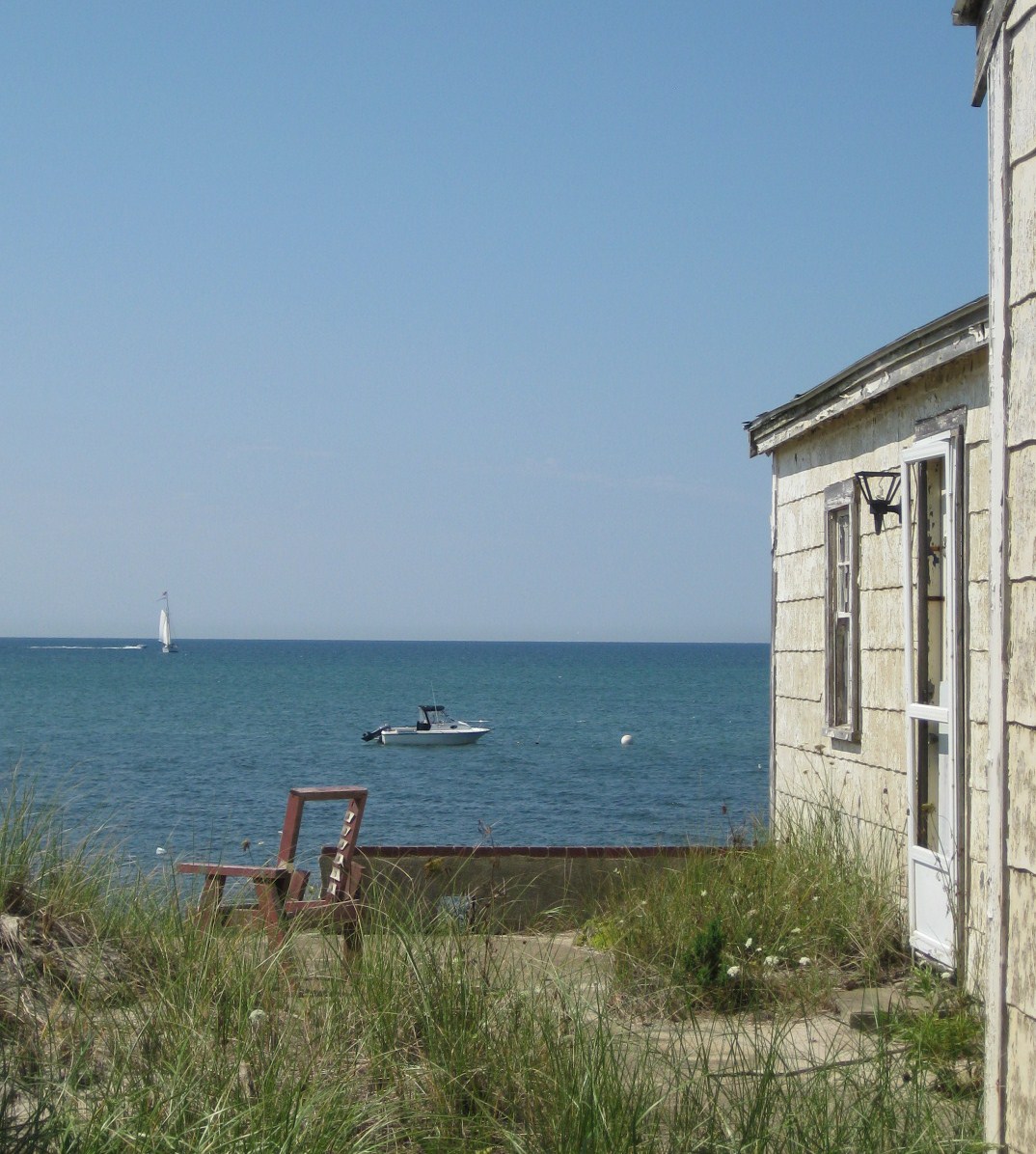
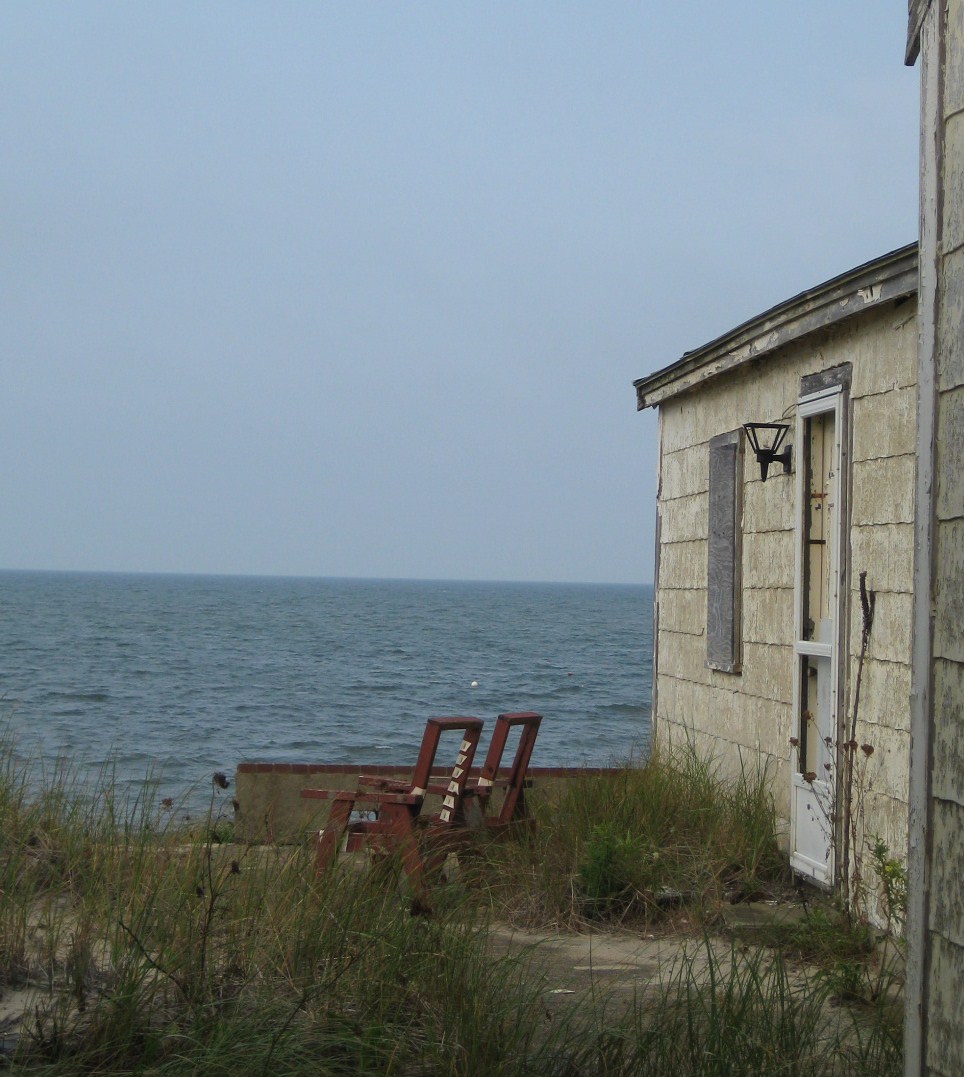
Not everything on Shore Road is postcard-perfect, I’m happy to say.  The picturesquely scruffy makes a showing, as well.  This small dilapidated motel property is perpetually for sale.  I photograph it every year, and its changes are minimal.  One or two decaying beach chairs always keep watch on the bay.  The above photo dates from August 2012.

CapeCod2010055

My photo of the same spot, from August 2010.

CapeCod2012382

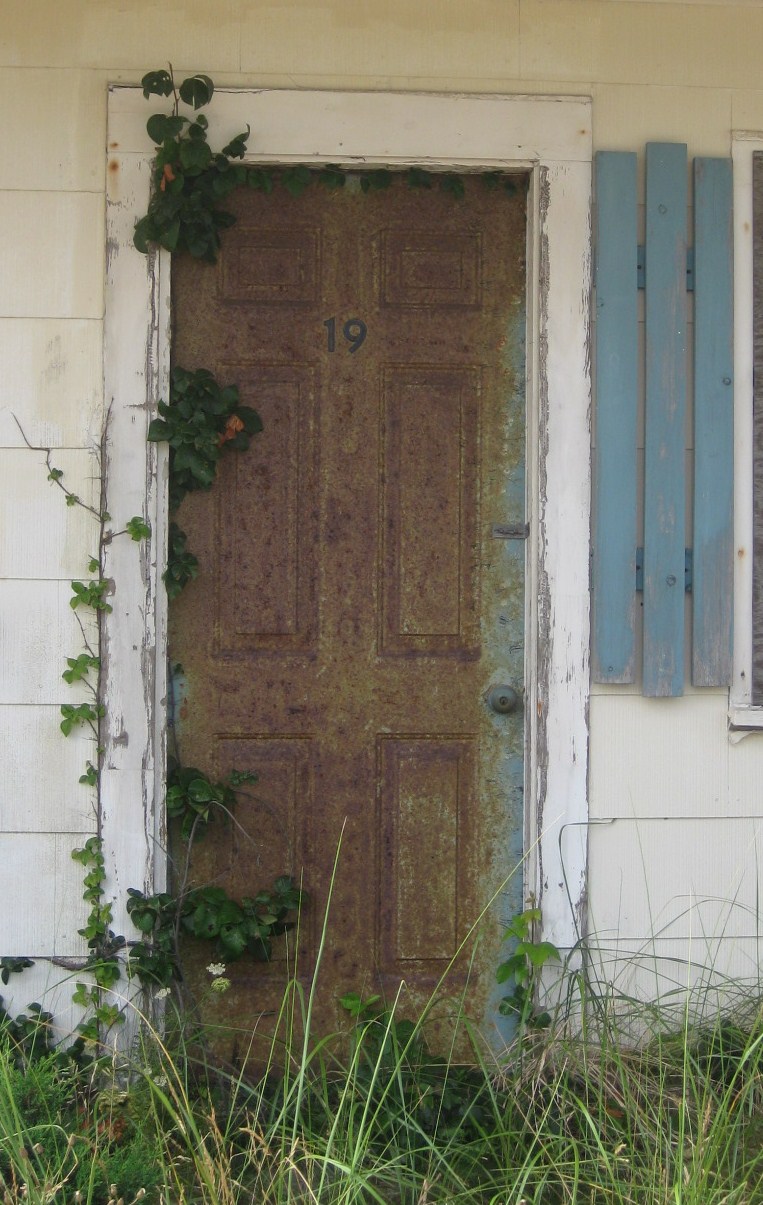
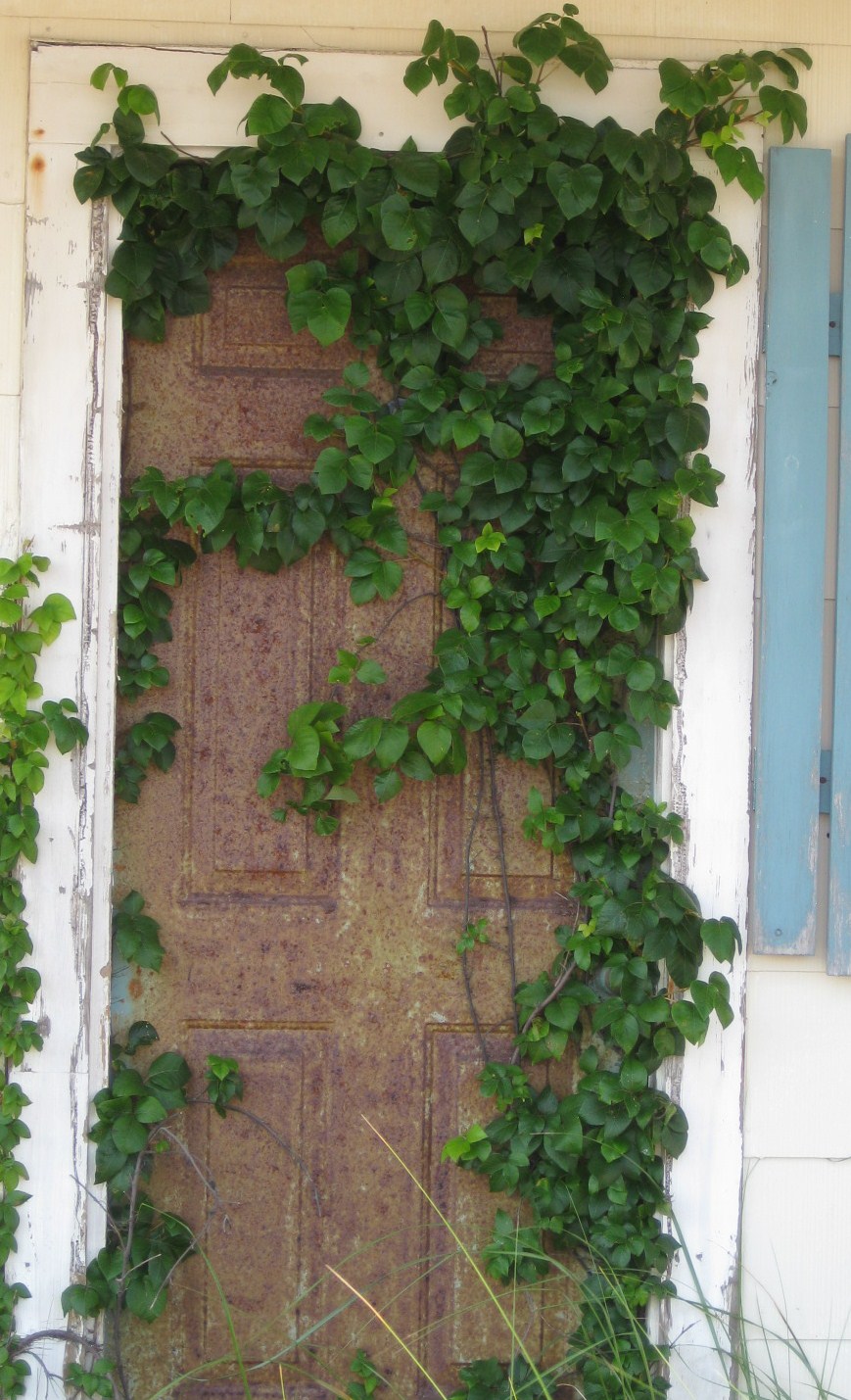
I document Door #19 of the old motel every year.  It varies only in the amount and configuration of its greenery.  Above is this year’s photo.

CapeCod2011017

Last year’s photo, with a greater abundance of vines.

CapeCod2012377

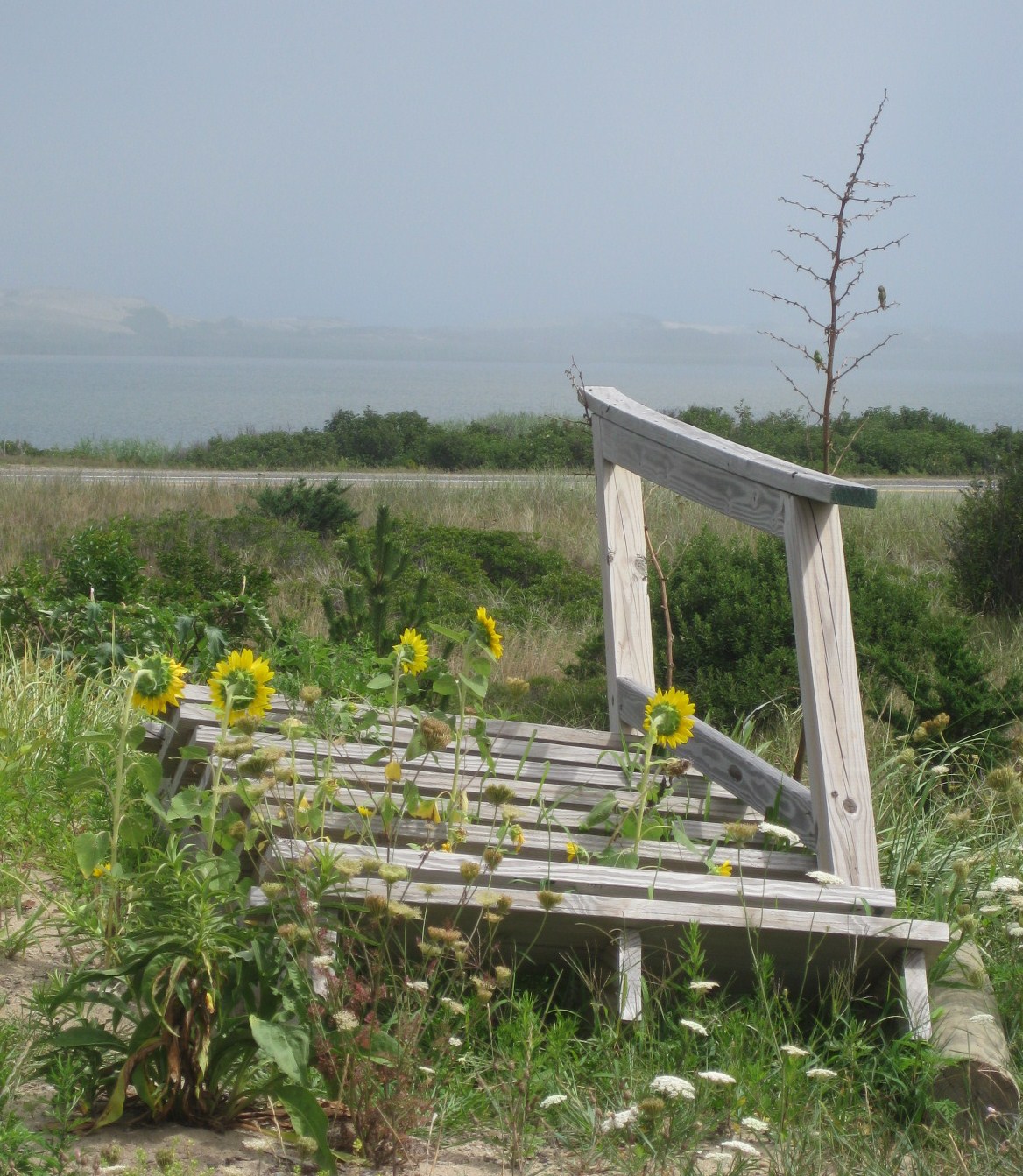
Sunflowers and Queen Anne’s Lace stake their claim to this forgotten fragment of a wooden porch.

CapeCod2012386

Two crows pose next to  a cross-like clothesline support.

CapeCod2011040

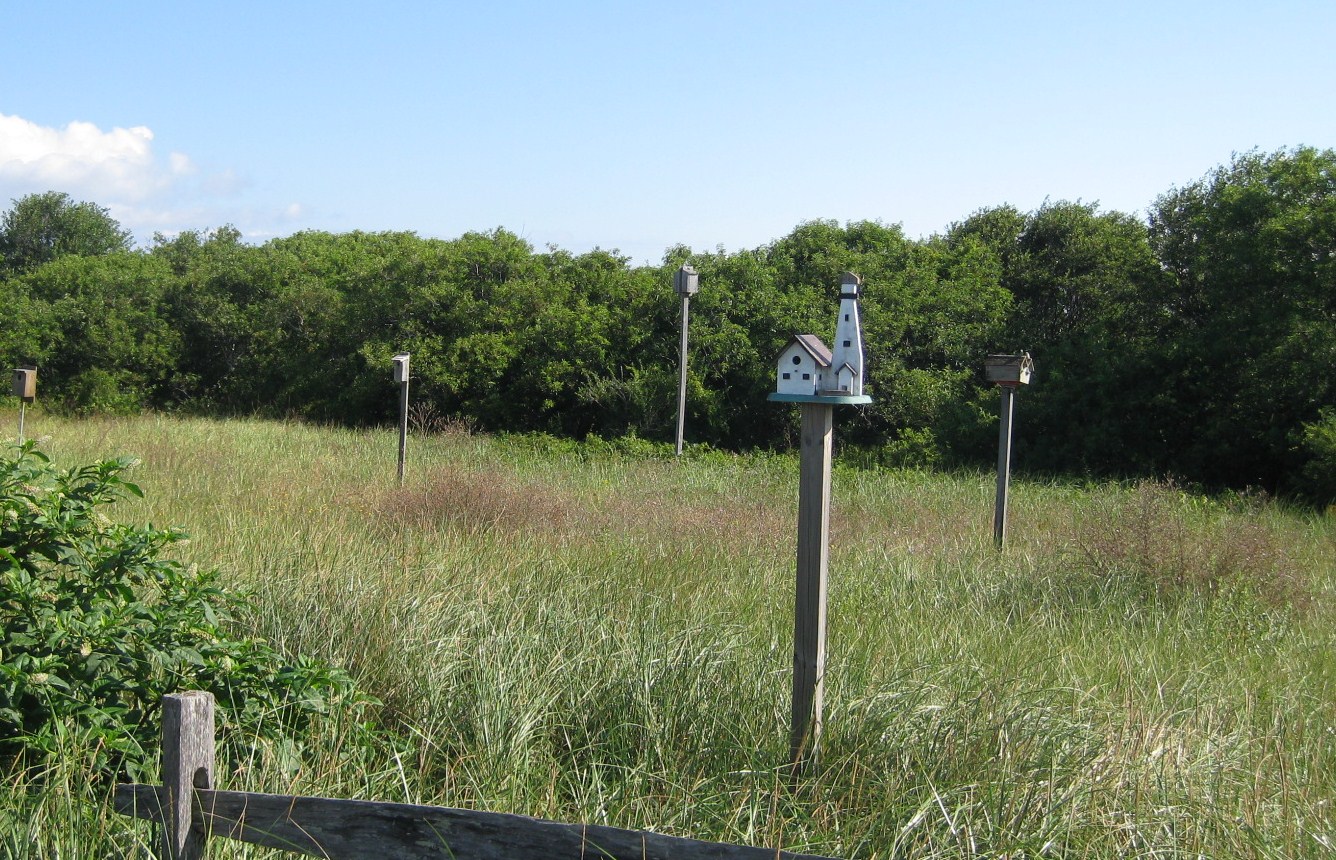
This vacant lot is home to a community of birdhouses, including a central caboose.

CapeCod2011040

Last year’s Birdland centerpiece was a lighthouse.


CapeCod20121231The neat white and green boxes of Days’ Cottages, set in a line against the bay, date from 1931.  Each structure bears the name of a flower, such as Freesia, Dahlia and Petunia.  This long-lived
and virtually unchanged cottage colony has a loyal clientele.  It is a popular subject for local artists.

CapeCod2011021

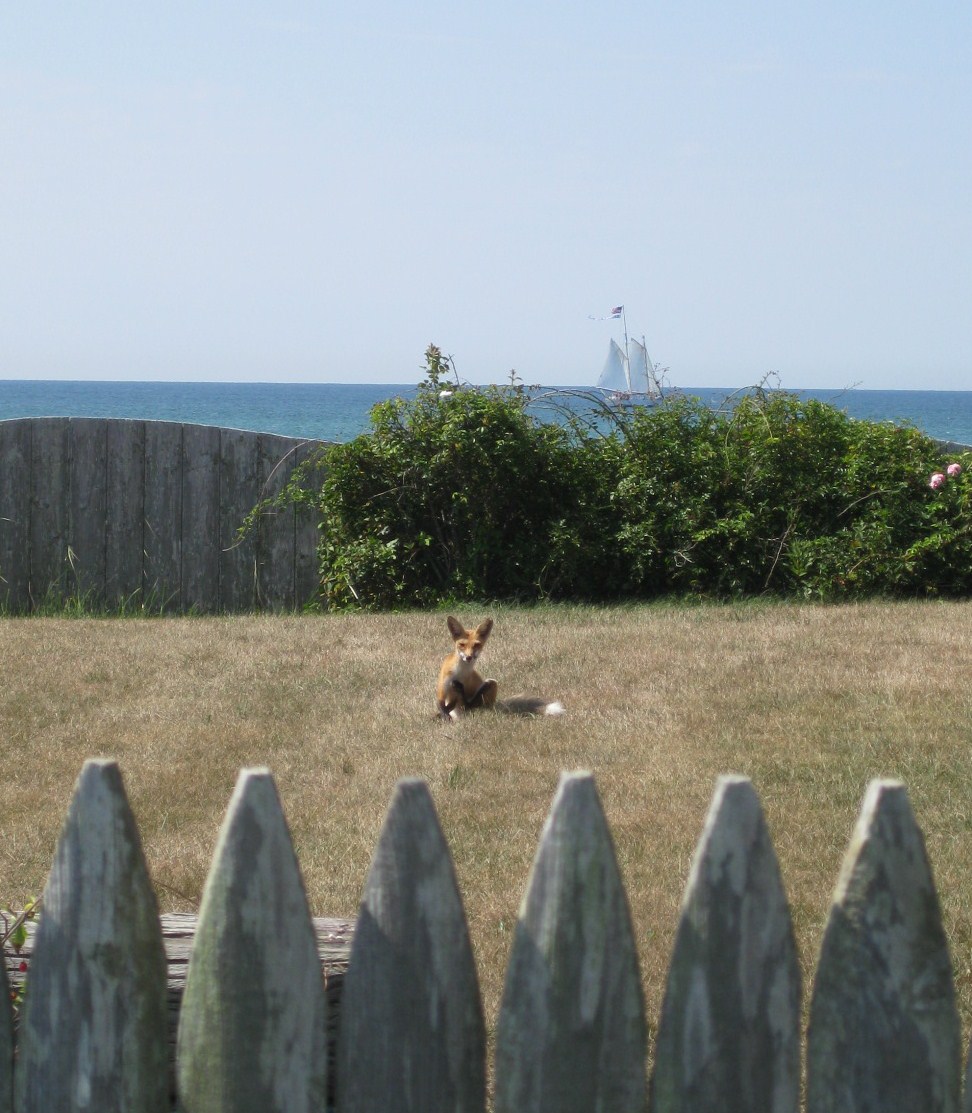
Last year I spotted this red fox enjoying the quiet of an enclosed yard.  He kept a keen eye on me as he scratched repeatedly, shook, and then trotted off unhurriedly toward the sand.  Of course he
reminded me of Kiko. On every walk along Shore Road, I somehow end up thinking about Kiko, and I wish he were walking with me.   

Back from Vacation, and Digging Out

Our family vacation to Cape Cod, immediately followed by Vacation Bible School at our church, has kept me away from Wild Trumpet Vine for three weeks.  I’m reorganizing and restructuring, picking through the accumulation.
It’s slow going. As everyone lucky enough to enjoy an actual vacation knows, the aftermath can be a struggle.  I’m not complaining, simply stating the facts.  There is, of course, the unloading of the jampacked car, after which the house becomes a confused muddle of disparate, sometimes nearly unrecognizable objects. Our vacation gear included bulky black plastic bags filled with slightly soured swimsuits and mounds of beach towels, still-sandy aqua-socks, a million pairs of other assorted footwear, enough damp rain jackets for a family of twelve, my Truro Vineyards wine, piles of sticky Penney Patch candy, the shells we foraged from the bay, the salt we boiled out of the sea, containers of half-eaten car snacks, and bundles of dog-eared magazines.
All this settled in uncomfortably with odd Vacation Bible School props such as Christmas lights, Bible-era robes, a blue wig, a garden trellis and a homemade catapult. Fortunately, H and D put most of the beach  paraphernalia–the sand chairs and umbrellas, boogie boards, the thousand and one toys for throwing and digging, and H’s windsurfing board and sails–straight into the basement. An enormous tower of mail soon arrived, nearly all of it unwelcome.  Kiko, back from the kennel, had begun to shed in dramatic earnest.  A single pat of his skinny back sent clouds of fur whirling through the air, the final seasoning to the late-summer stew we were simmering.  The clean-up is ongoing. 

 CapeCod2012321

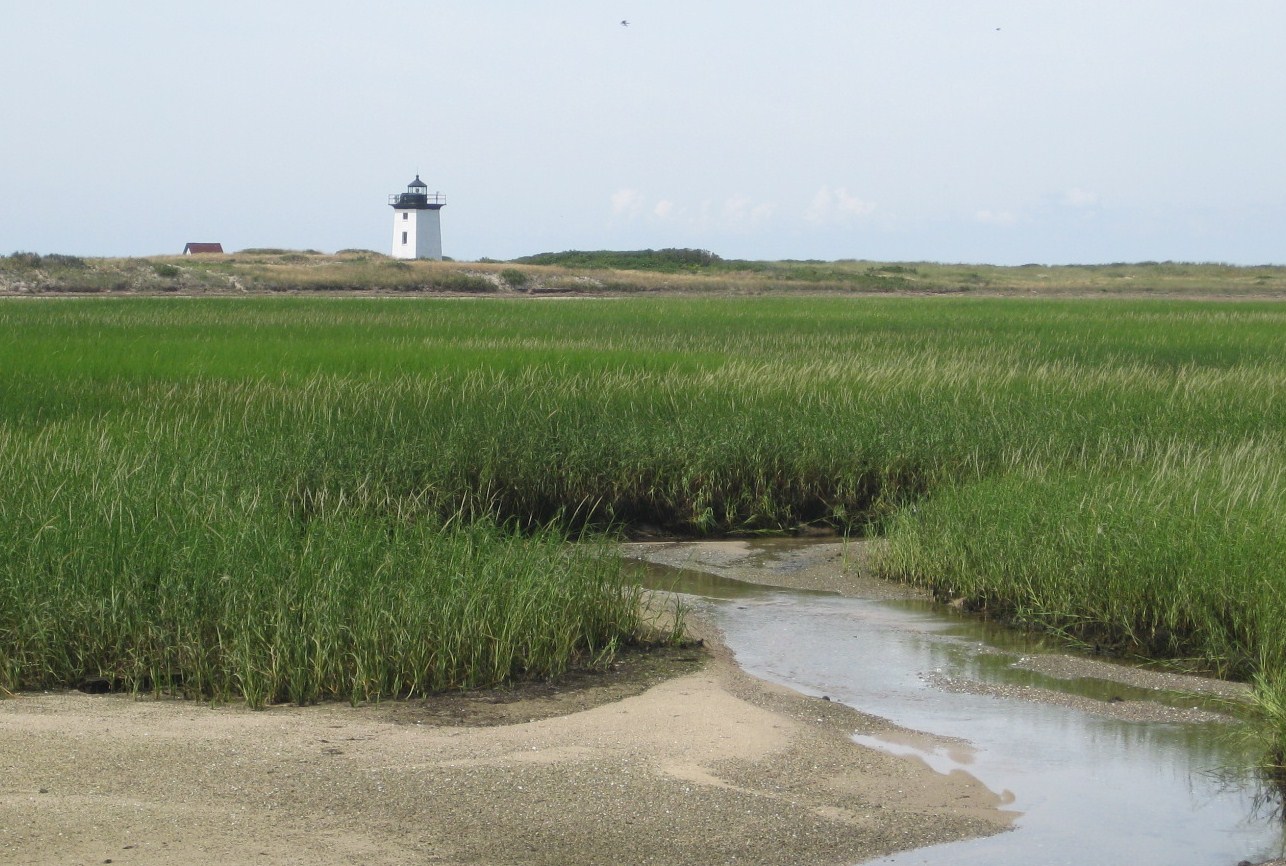
The lighthouse at Provincetown’s Wood End, seen from near the jetty.

CapeCod2011098

Provincetown Harbour, showing the Pilgrim Monument and the towers of the Unitarian Church and and Town Hall.

 CapeCod2012179

The Wood End Light, seen from our stomping grounds in Truro.

What if We Hadn’t Stopped the Road?

AtlantaJuly2011053
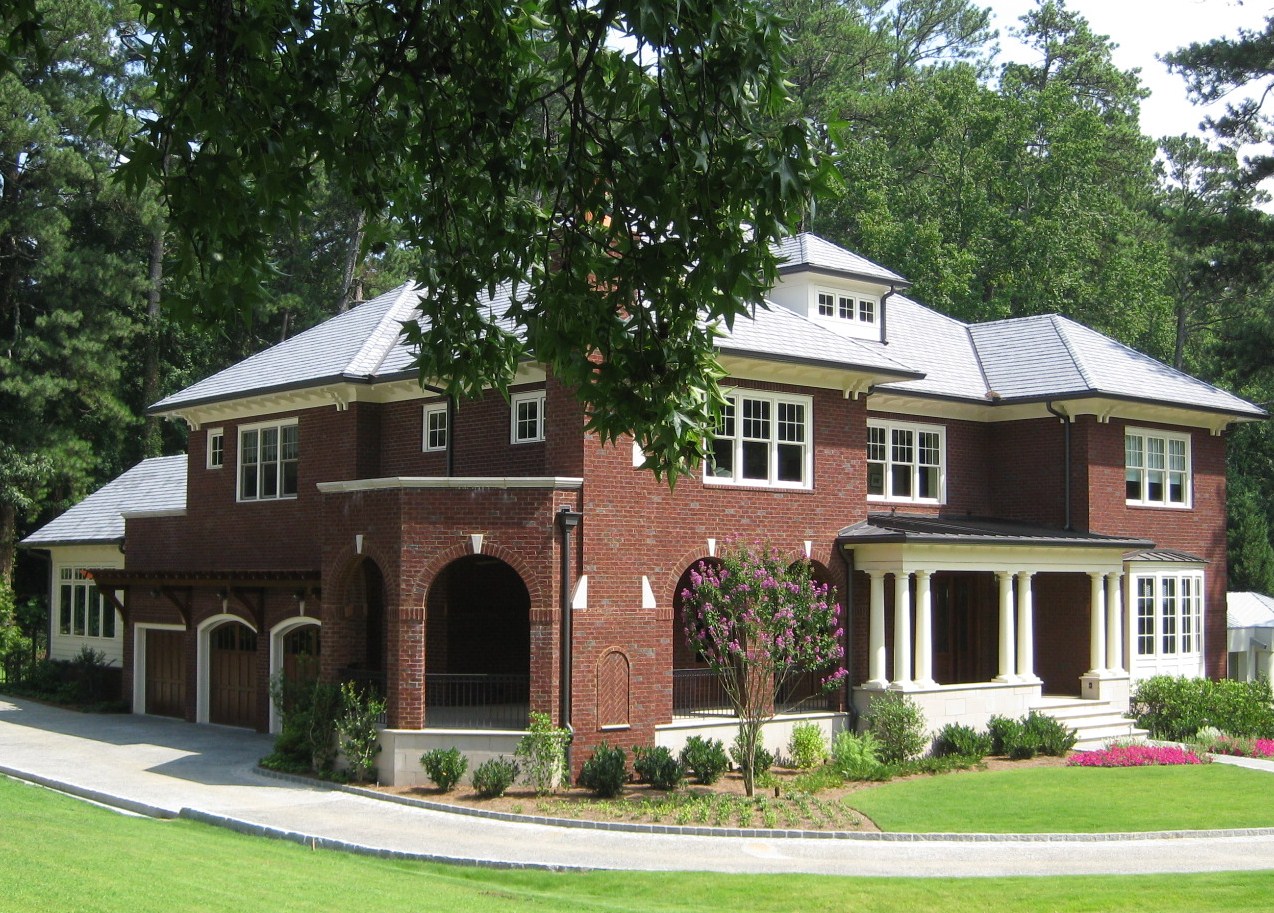
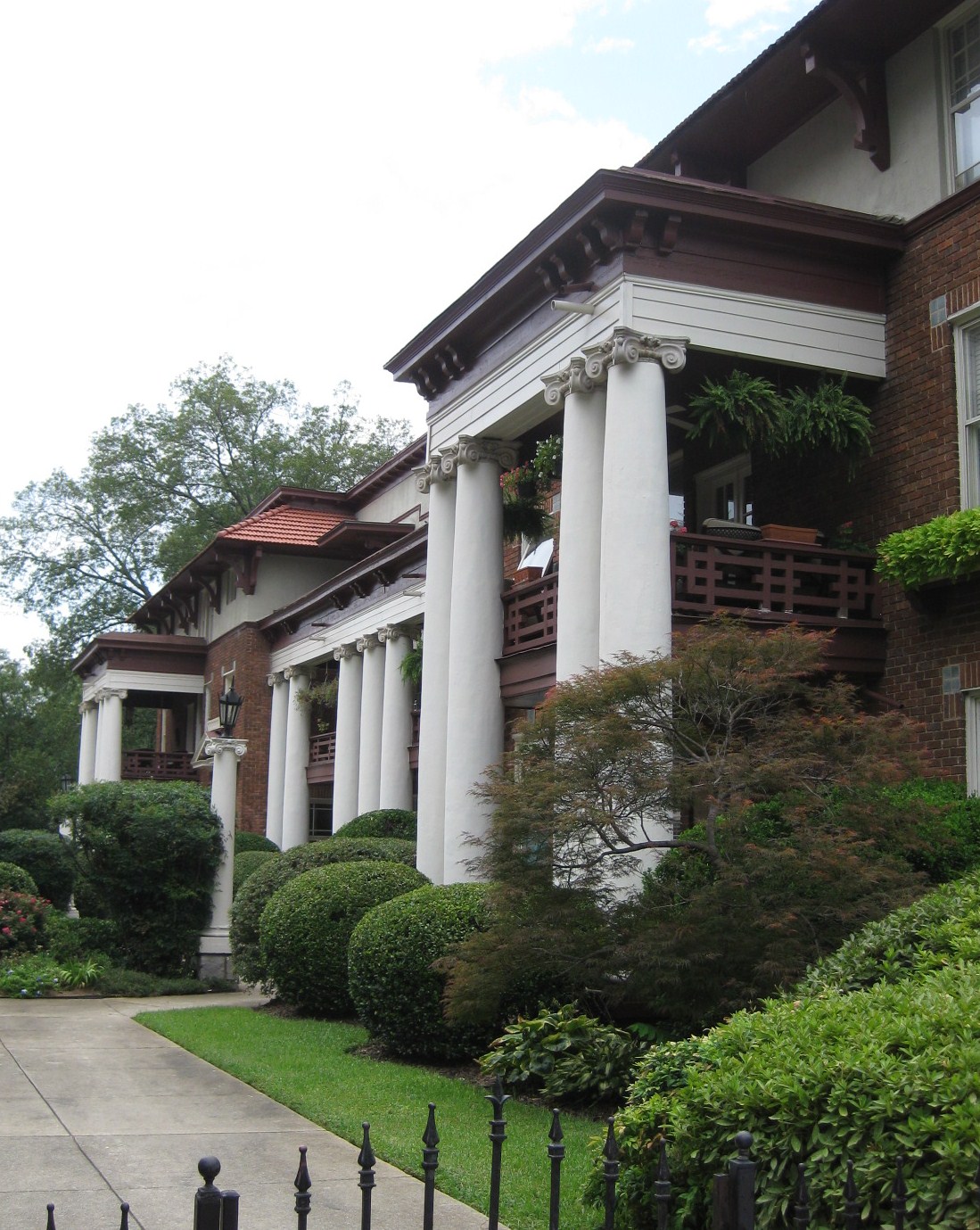
A large new Morningside home in the Druid Hills tradition.

Today’s residents of Atlanta can be proud that their city didn’t give up on the possibility of safe and pleasant neighborhoods flourishing near the heart of the city. The old was not sacrificed for the new simply because it fell briefly on hard times. I hate to think of how very different Atlanta might have been if the protests had been less robust, if I-485 had been built. It was a close call; it had been a sure thing, a project supported by the State of Georgia and City of Atlanta officials. By everyone, essentially, except those who lived in Morningside and Virginia-Highland.

Had a freeway been allowed to snake its way through these two historic neighborhoods, so much character would have been lost. Neighbors would be physically separated by concrete and steel. Trees and green space would be considerably diminished. Had I-485 been realized, there were plans for further widening of many area roads, as well as the demolition of Morningside and Inman elementary schools, both dating from the 20s. Today, both schools have been enlarged and beautifully restored, their architectural style of a piece with that of their neighborhoods.

In all likelihood, the area would have faded into a state of actual urban decay. Decades later, it might have recovered, to some degree. There would be owners who, out of necessity, would find a way to reconcile living along a highway ramp, a river of cars speeding through their back yards. Those monstrous sound-blocking fences might inflict further ugliness.

After the defeat I-485, much of its funding was diverted to MARTA. The city’s rapid transit system would not be as extensive and effective as it is today. Atlanta’s suburbs, now vast, might be even more sprawling, and the city’s mind-numbing traffic probably far worse. Morningside and Virginia-Highland are two of the most sought-after neighborhoods precisely because they are close and easily accessible to the real and varied life of the city. Their residents may avoid Atlanta’s terrifying freeways if they choose. Their homes are nestled safely in the eye of the storm.
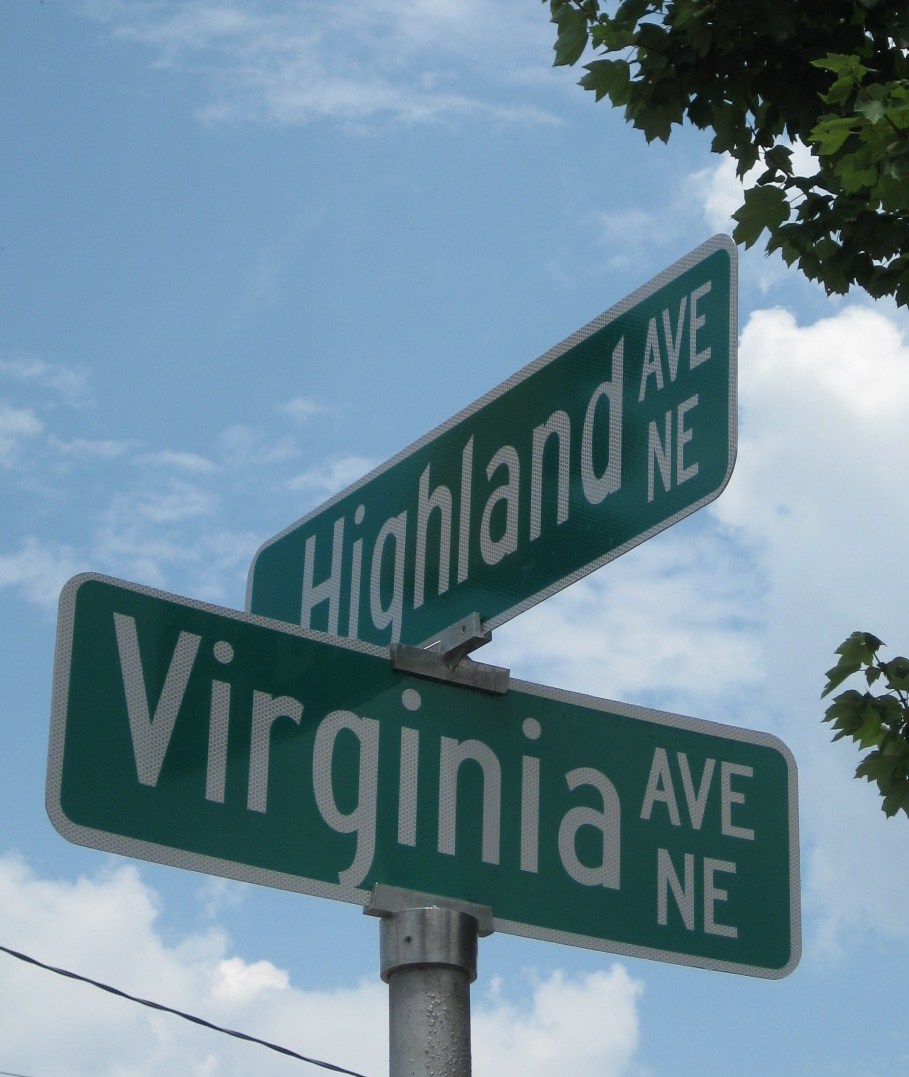
Without a doubt, Morningside and Virginia-Highland would not be the inviting neighborhoods they are today; people would not be flocking into the city to live there. Most of the older homes would not have been lovingly restored. The newer ones would not have been so thoughtfully and appropriately reconfigured to fit in with a unified vision for the neighborhoods. While there are large new houses being constructed, there is not a cookie-cutter McMansion in sight. The surrounding landscape is rolling and verdant, sheltered by forests of tall trees.

The successful fight against the highway resulted in Atlanta’s neighborhoods having a greater say in what is built in their back yards. The city now has a system of Neighborhood Planning Units to ensure that residents have a real voice in matters that affect their lives.

Having witnessed first-hand the battle of the old neighborhoods against I-485, I know how fortunate I am to have learned this very important lesson at a young age: if you love something, it’s worth fighting for. And when we join together with one powerful, clear voice, we can accomplish great things.

AtlantaJuly2011057
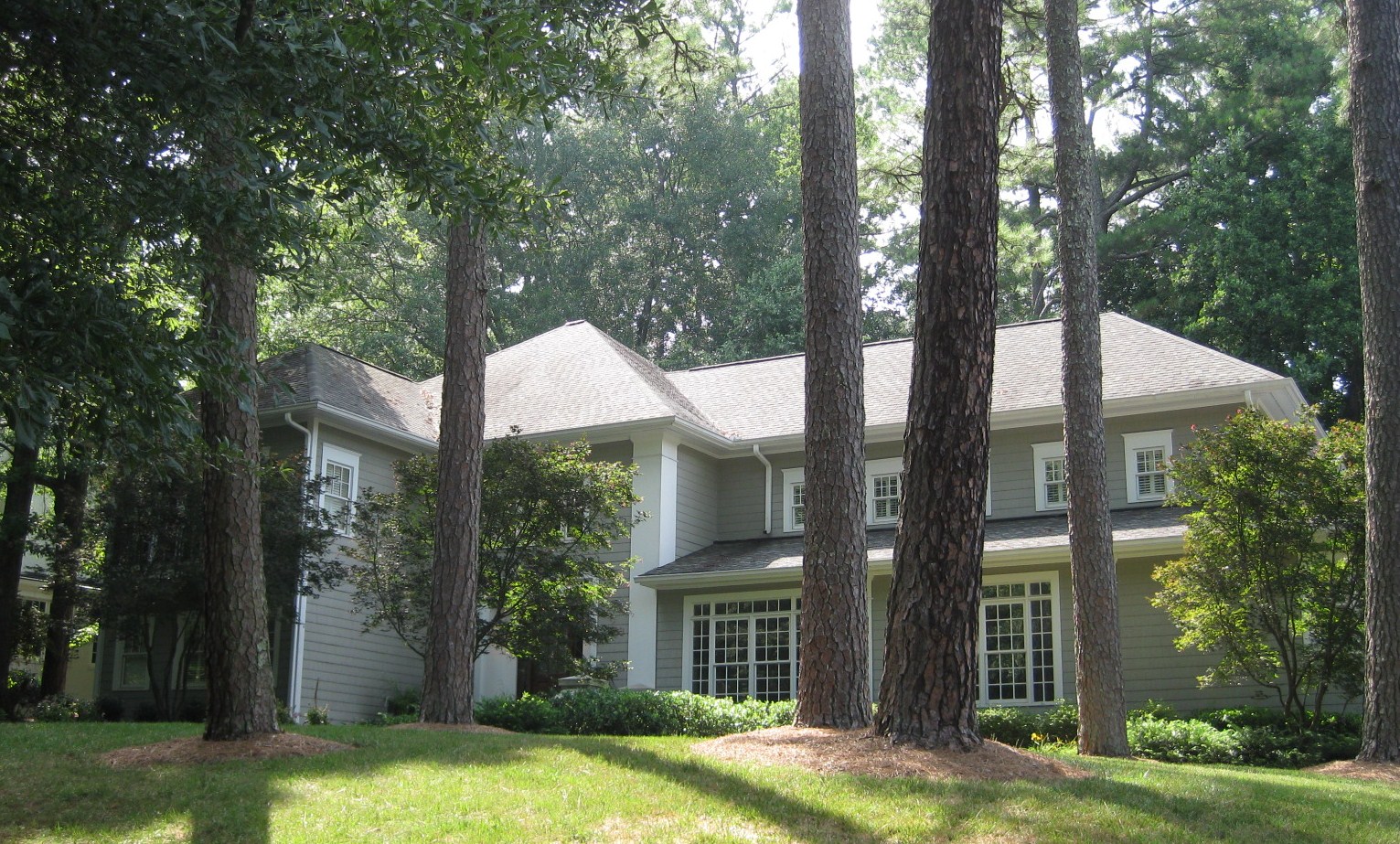
One of Morningside’s former 1960s ranches, enlarged and popped up.


AtlantaJuly20110561
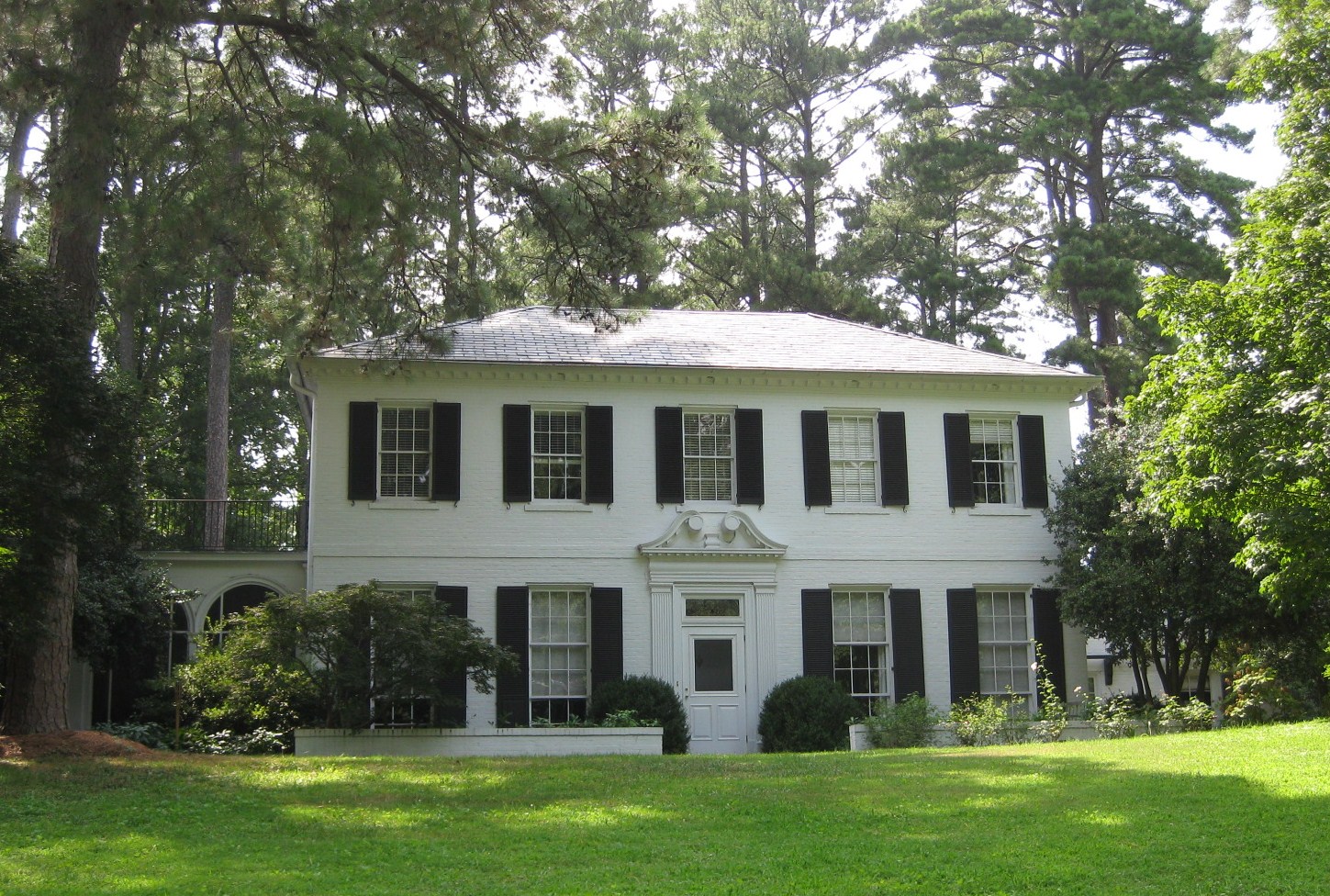
This Morningside home, refreshingly, looks almost exactly the same as it always has.

After Demolition, Green Space & Amazing Playscapes

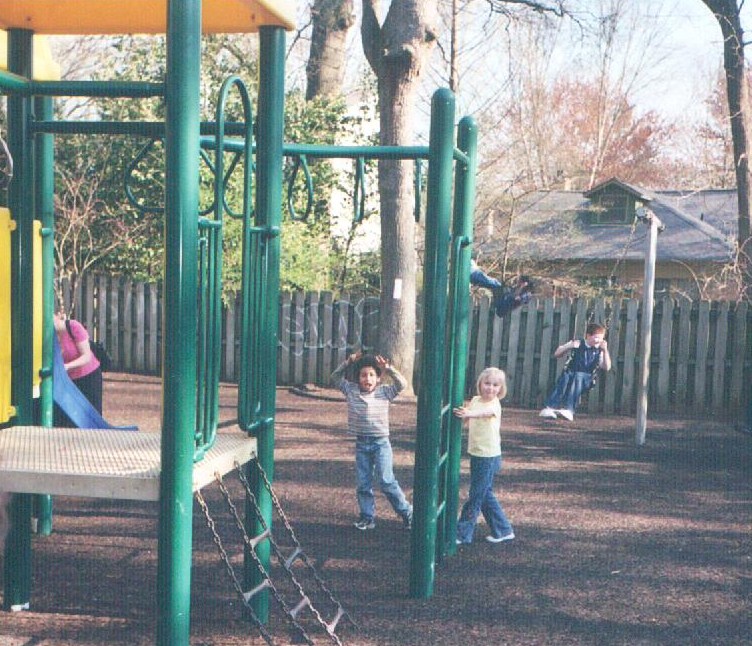
There were several large sections of Morningside and Virginia-Highland where multiple homes were demolished in anticipation of I-485. Some of these have been transformed into popular community parks. Exploring the inventive playscapes in these parks was, for my daughter, one of the highlights of every visit to Atlanta when she was growing up.

The most extensive of these once-vacant areas is on Virginia Avenue, across from Inman School (formerly Elementary, now Middle), where eleven houses were torn down to make way for a highway interchange. The land remained scrubby and untended for many years. In 1988 it became John Howell Memorial Park, named for a Virginia-Highland resident who helped lead the fight against I-485 and who died from complications of HIV.  Along the Virginia Avenue entrance stand eleven granite piers (modeled on those on St. Louis Place and elsewhere in the neighborhood), each bearing a plaque with an address of one of the lost homes. Appealing landscaping, a children’s playground and a sandy area for volleyball guarantee that the park is always lively.

One section of John Howell Park has become the Cunard Memorial Playground. In the summer of 2003, a sudden blinding thunderstorm stopped evening rush hour traffic throughout the city.  A huge oak tree, its roots weakened, fell across North Highland diagonally onto the SUV of a young family, killing Lisa Cunard and her two sons, Max, age three and Owen, just six months old. Her husband, Brad, who had been driving, survived physically unharmed. The parents had just picked up Max from preschool, and Lisa was riding in the back seat, as she usually did, to be closer to her boys.  Firefighters from that old Virginia-Highland station rushed across the street, ready to extricate victims and perform CPR, but it was too late. 

My daughter and I were in Atlanta during the tragedy. When the storm hit, with violent force, we were stuck in the car with my parents along another tree-lined road not far away. Atlanta’s trees are majestic and many, but they can also be a threat.  Our vulnerability, as lightning struck all around us, was imminently clear. The ride home was slow-going and nerve-wracking, but we were lucky; we made it. That night we heard the news about the Cunard family, who had been so terribly, horribly, heart-breakingly unlucky.

D has a particular fondness for the Cunard Playground. Like many Atlantans, we both feel a connection to the family, because we remember that hideous night so well. I knew the tree that fell; I knew the house in front of which it had stood. We had been in that exact spot many times.

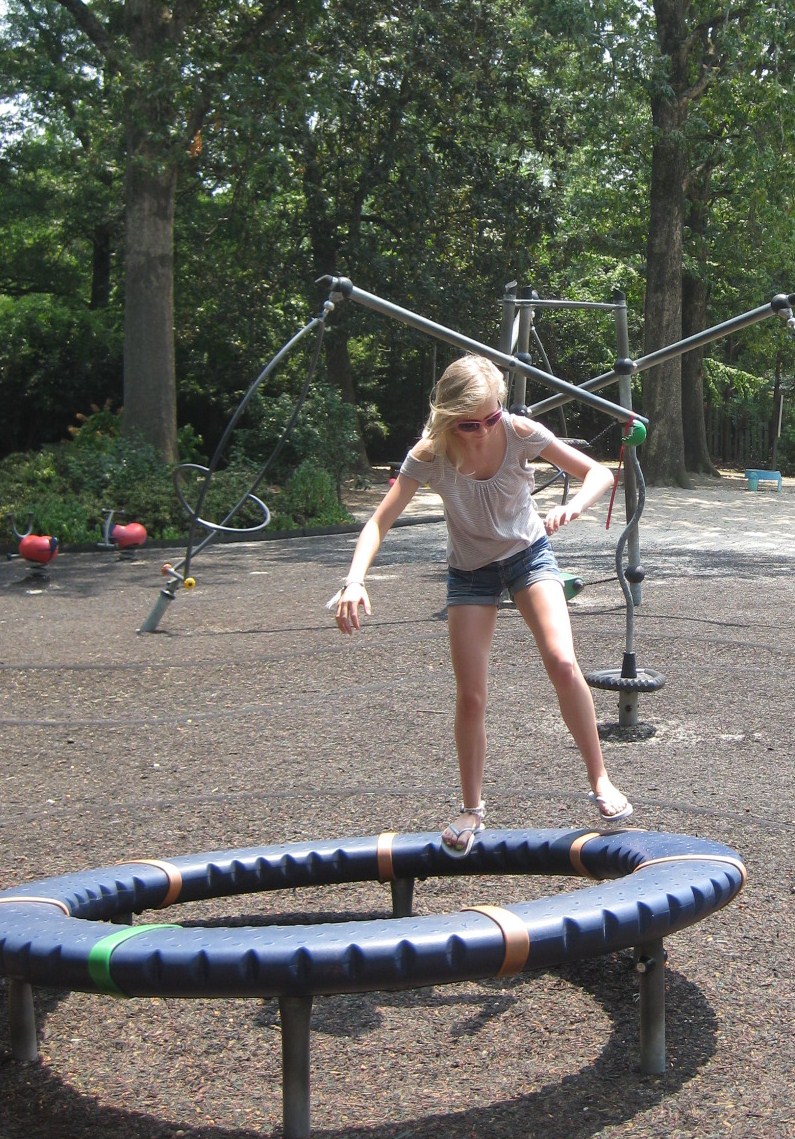
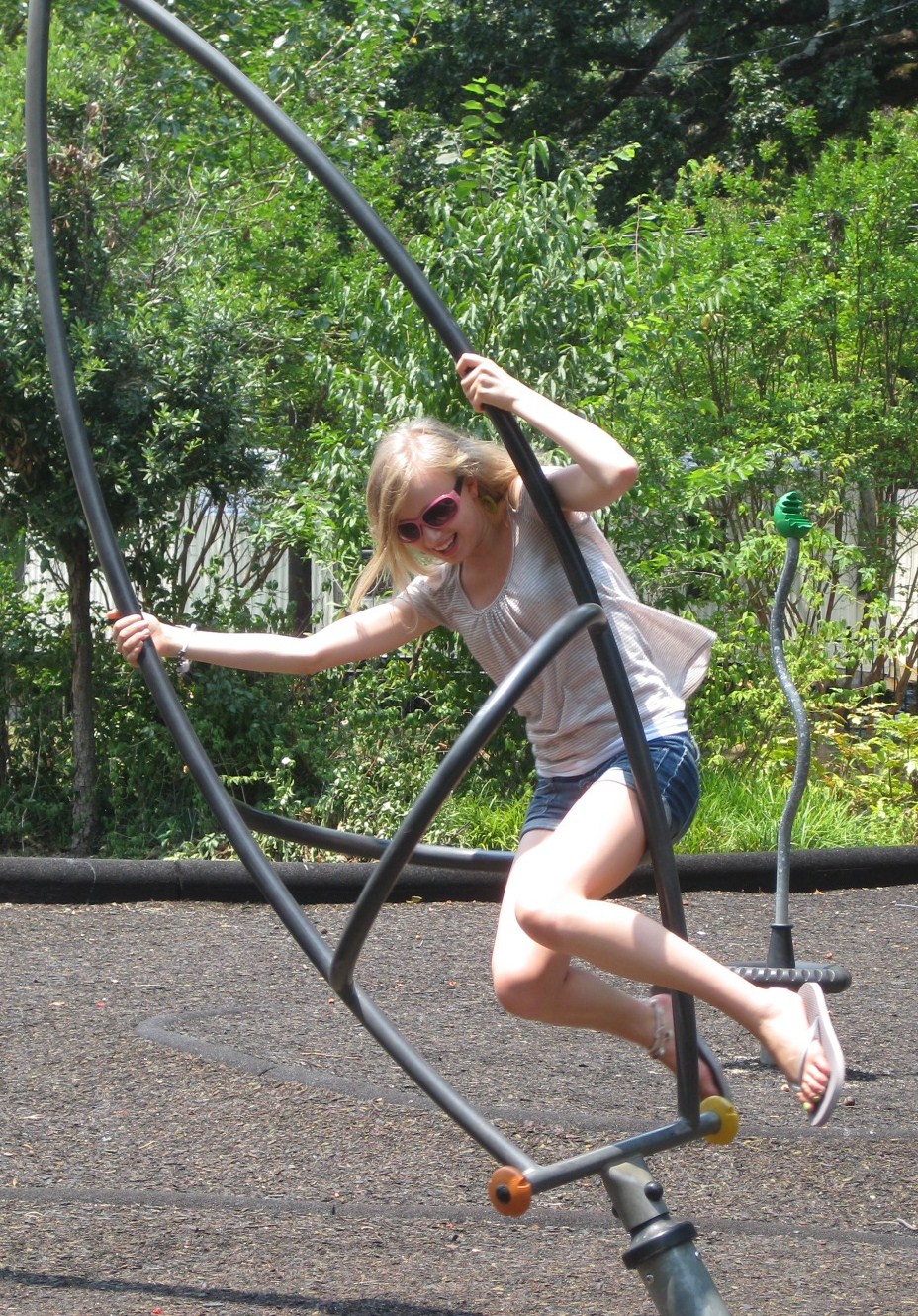
The playscapes at the Cunard include easy-going toddler attractions and some especially ingenious contraptions for older kids. I don’t have the words to describe these latter creations; I’ve never encountered such things before. As if to emphasize the need to live this short life to the fullest, they are apparently intended for determined daredevils. D has always referred to this park as the “spinny” park because it’s possible there to spin round and round, at varying speeds, in a crazy variety of ways. When she urges me to have a go on one of these whirling oddities, I know I’m a real grown-up, because I’m sure that immediate nausea would follow. I also know I would have loved all these inventively twirling things, just as D does, when I was a kid. My husband has tried them, and even he must admit that he also is an adult. 

The Cunard Playground was, like the defeat of I-485, a remarkable community effort. The grieving friends, family and neighbors of the Cunard family joined together to ensure that this loving mother and her two boys, so very young, will be remembered in a vital and meaningful way. The playground is  a unique and fitting memorial, an exultant space that Max and Owen would, no doubt, have cherished.

001
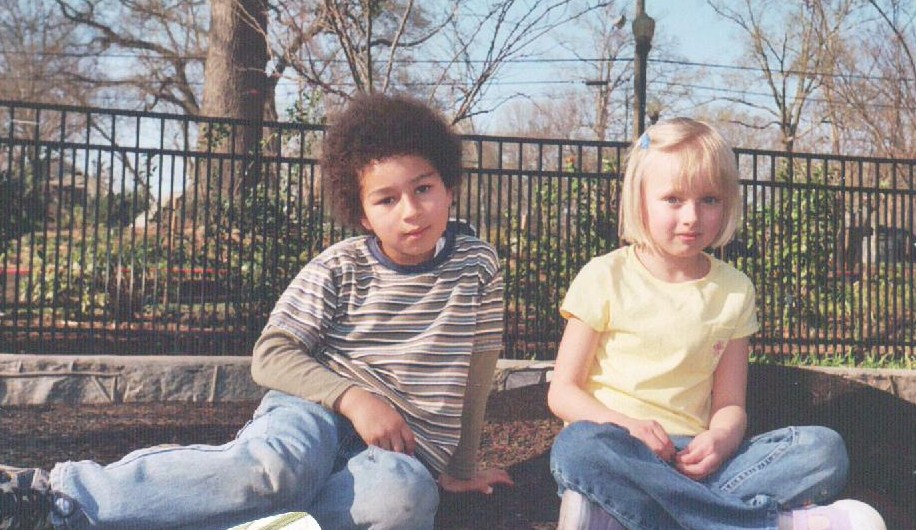
D and her friend who introduced us to the Cunard Memorial Playground.


002
A quiet, briefly non-spinning moment.
Spinny 2
I used to enjoy cutting and pasting so my one daughter would become two. Every day when she was young, though, I was thankful that she was not twins. Here, she attempts the spinning circle, twice.


Atlanta043
Our most recent Atlanta visit, of course, included a visit to the spinny park.


Atlanta039
This thing is one of D’s favorites. I don’t really get it.


Moving on Up, In Virginia-Highland

Atlanta, July 2011 079

St. Louis Place, a typical street in Virginia-Higland

Virginia-Highland took a bit longer than Morningside to get back on its feet after our neighborhoods succeeded in stopping the superhighway. A substantial section of Virginia Avenue had been decimated to make way for a highway interchange. The destruction had taken its toll on the surrounding homes that survived, many just barely.

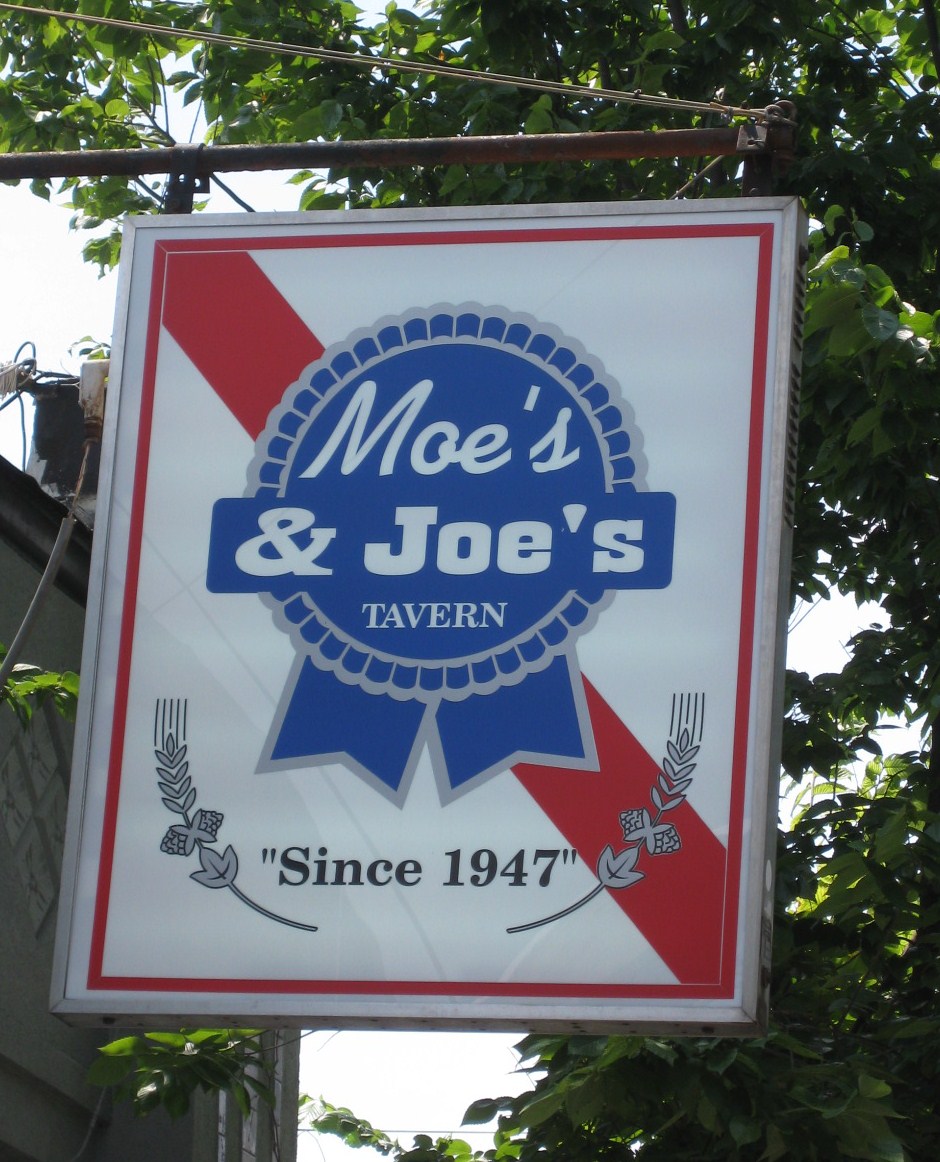
In my early teen years, Virginia-Highland was old-school, no-frills and decidedly untrendy. When we filmed a Super-8 movie for a school project, the neighborhood stood in for a sleepy fictitious Kansas town, quaint but down on its luck. There were vintage barbershops and gas stations, untouched since the 40s, family-owned grocery, drug and hardware stores, and the city’s oldest operational fire station, built in 1925 in the bungalow style like many of the homes around it. Some of the proprietors wore overalls and spoke with accents now associated only with deepest South Georgia. The two burger and beer taverns, Moe’s and Joe’s and George’s, which opened respectively in 1947 and 1961, were not yet hip. (My father appreciated both places when he first arrived in town and rented a room on Ponce de Leon. Mama and I spent that summer with my grandparents in Kentucky while Daddy looked for more permanent digs). I didn’t enter either bar until I was in college, but the predominantly elderly good old boys inside could be seen in the neon gleam of the Pabst Blue Ribbon signs.

Atlanta, July 2011 074

Atlanta, July 2011 069

The revitalization of Virginia-Highland (according to my, perhaps flawed recollection), began with the opening of Taco Mac at the intersection of Virginia and Highland in 1979. It started as a cheap spot for beer and Buffalo wings. In its first incarnation, its décor recalled a fraternity house rec room, all plywood and bad lighting. But for the first time in years, a younger crowd began pouring into the area. College kids from Emory and Georgia Tech found Taco Mac and then discovered the dingy ironic charm of Moe’s & Joe’s and George’s. On weekend nights the crowds in Virginia-Highland rivaled those along Peachtree in Buckhead.

JsiPhonePics3Atlanta079
My daughter caught her reflection in the door as she took this photo of one of her favorite VA-Highland boutiques.

These days, the area is healthier and busier than ever, at all hours. The cost of gentrification, of course, was the loss of many of the old mom-and pop stores that had served the area during the decades when it limped along. Still, the neighborhood remains a mix of the affordable and the aspirational. Highland Hardware, which began as a hardware store with a great woodworking section, evolved into Highland Woodworking, a specialized mecca for expert woodworkers. Jimmy Carter has been a regular patron of both. Now, if you’re not an expert of any kind, and you simply need a hammer, the nearby Intown Ace Hardware will happily sell you one.

In the clothing, accessory and home goods stores, my daughter and I enjoy browsing the interesting array of items, and occasionally she finds a great little something she can afford with her own money.  But we are not really big shoppers, and when we do shop, we like bargains.  Virginia-Highland isn’t the place for bargains.  It’s not the actual merchandise that draws us.  What we particularly appreciate in these boutiques is their fanciful atmosphere and their imaginative decoration of unique old architectural spaces. Owners tend to be fun, funky and welcoming, to humans and their dogs. There’s usually a furry friend snoozing peacefully beneath a sales table or behind the counter.  It’s good to know Kiko would be welcome, should we ever get him to Atlanta.

Atlanta, July 2011 071

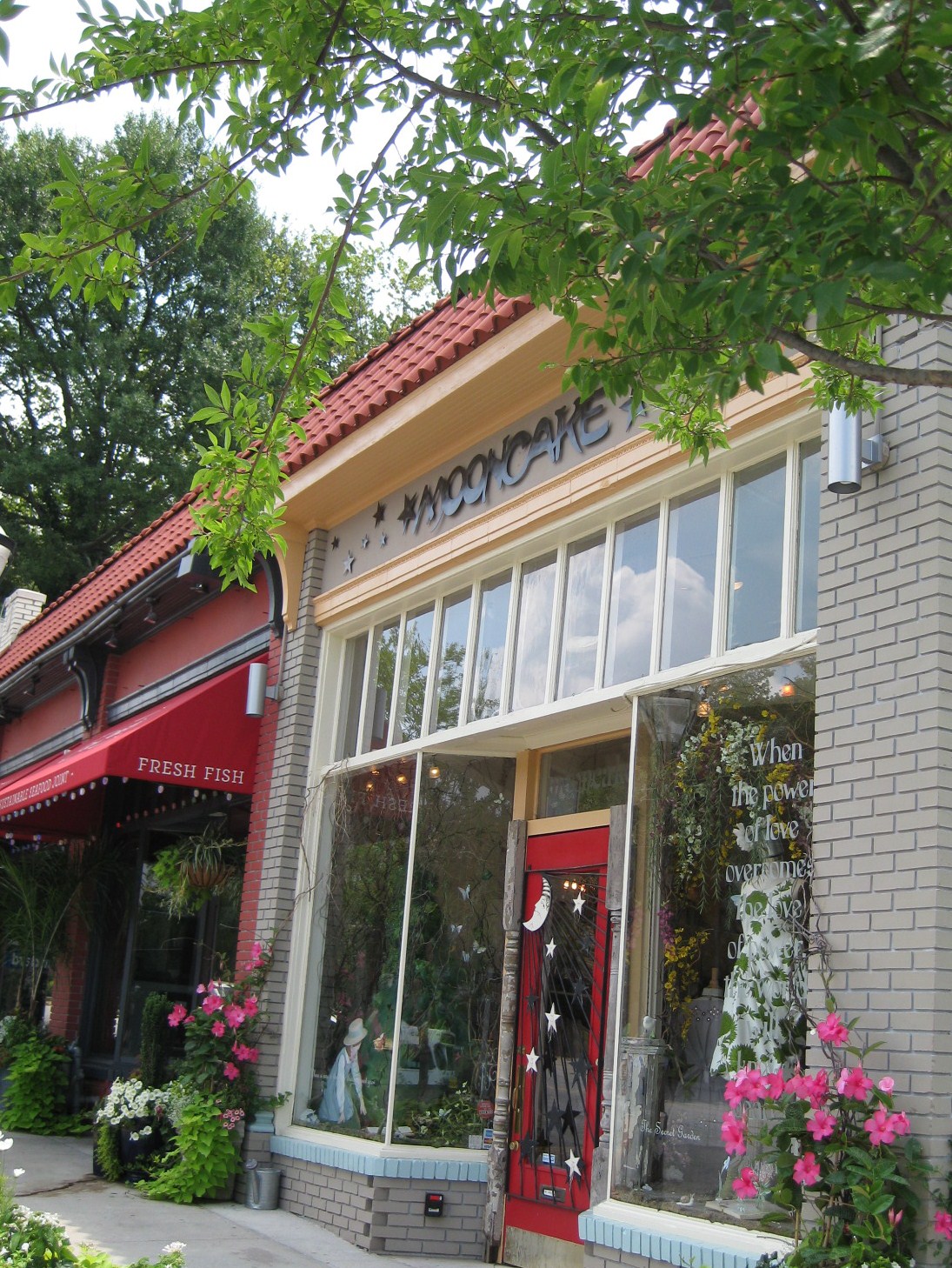
D and I were sad to see that Mooncake had closed when we returned this year.  An especially charming shop, it was mentioned in one of D’s favorite books, Peace, Love and Baby Ducks, by the Atlanta author Lauren Myracle.  Mama bought me a pair of my favorite earrings here, silver disks resembling manhole covers, stamped NYC Sewer.

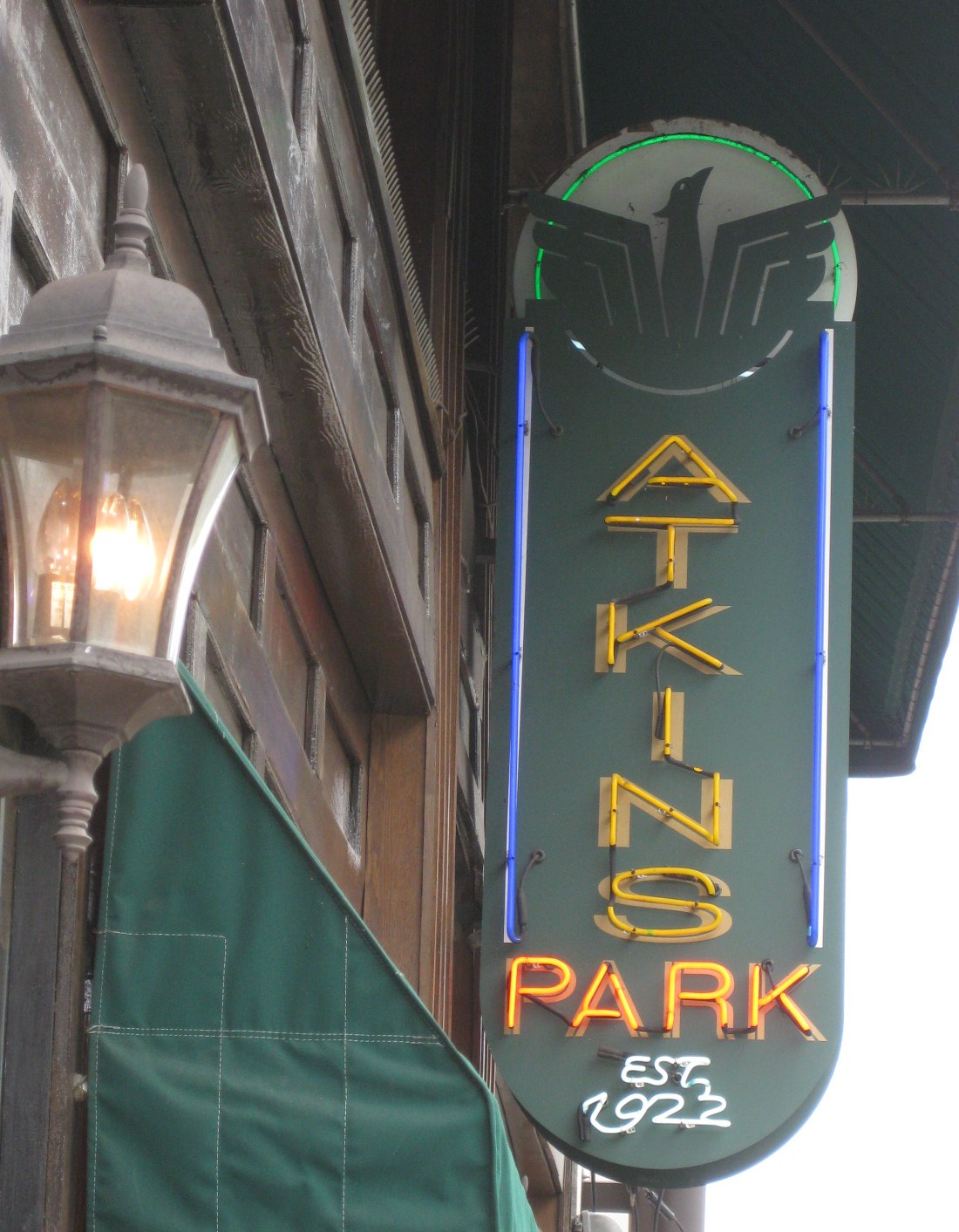
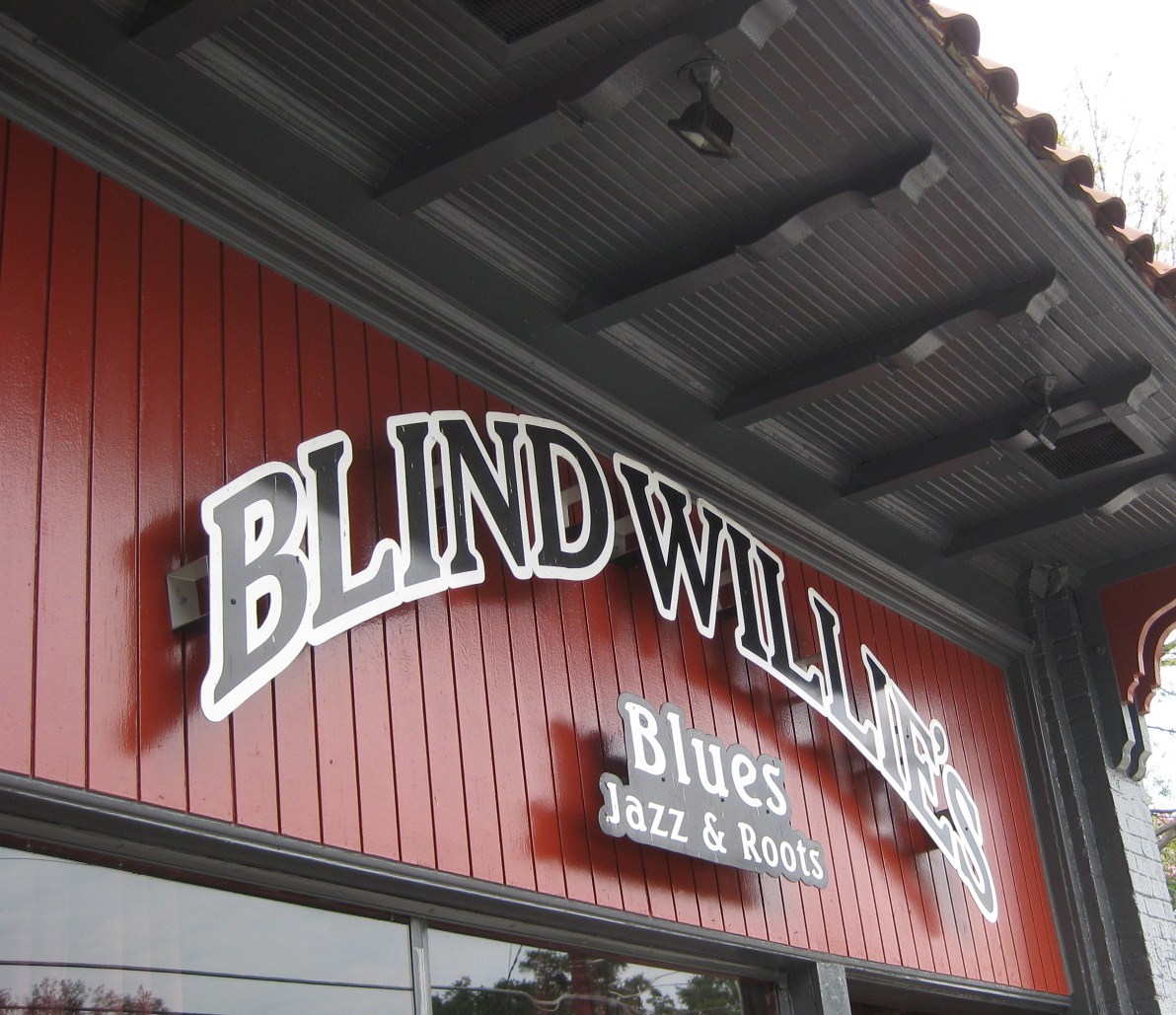
Virginia-Highland is known for its wide variety of restaurant choices. Atkins Park (which dates from 1922 and is Atlanta’s oldest operating tavern) caters to a diverse crowd by managing to be simultaneously up-and downscale. A boisterous crowd enjoys the front bar area, while elegant comfort food is served in a quieter, classic restaurant setting in the back.  Highland Tap, a fixture since the 80s, follows suit.  Depending upon the mood of the patrons and the hour of the evening, the subterranean space may feel like a loud college bar or an urbane steak eatery.  At Blind Willie’s, it’s possible to get basic food and listen to world-class blues and folk music. And for traditionalists and hipsters alike, Moe’s & Joe’s and George’s remain vital. These two spots have changed very little in appearance, other than the addition of flat-screen TVs (and a much younger wait-staff). My parents join my daughter and me for lunch at George’s each year after our boutique walk. I find it reassuring that there are some things in my fast-moving hometown that don’t change, at least for a few decades.

Atlanta, July 2011 075

Atlanta, July 2011 076

Atlanta, July 2011 082

Invitingly restored apartments on North Highland.

Morningside Begins its Comeback

Atlanta, July 2011 065
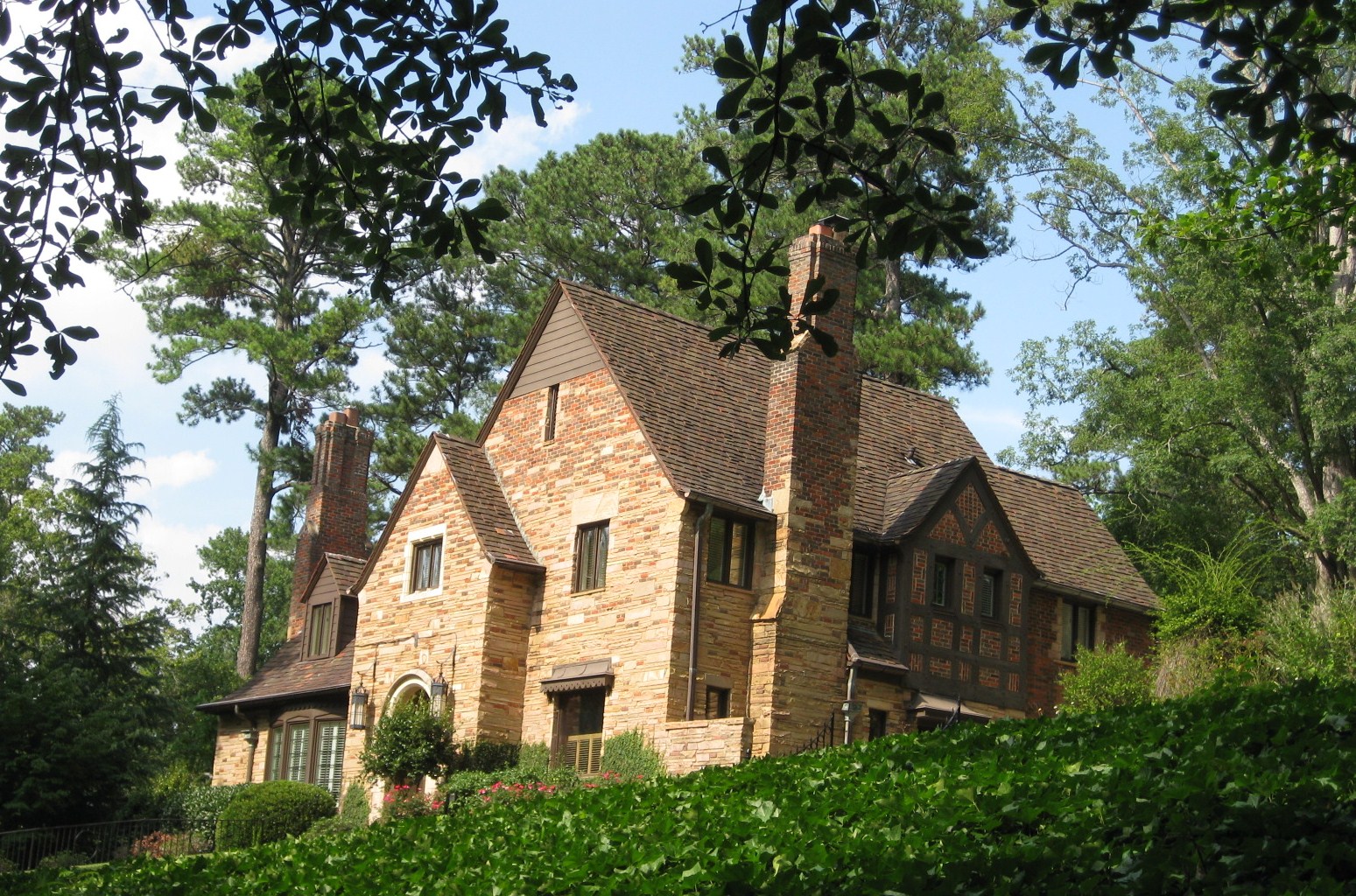
This original Morningside home was never in jeopardy. While larger than most of the 1930s-era houses, its Tudor style is typical.

Morningside recovered quickly after the defeat of I-485. Homes that had languished unoccupied for seven years sold at relatively high prices. Construction soon began on new, bigger houses on the vacant lots we had come to view as common property. This was the only drawback to the resolution of the conflict. My friends, my dog Popi and I had become accustomed to having the run of these quirky recreational areas during the day. The decaying houses were in a constant state of flux, offering new discoveries with every visit. A steady stream of odd objects and eye-opening reading material was left behind by other visitors. Vagrants obviously used the houses occasionally for drinking and sleeping, but they were almost always gone by daylight.

We loved the chaotic wildness of the overgrown lots, where we picked blackberries and flowers, gathered hickory nuts and cut holly in the winter for Christmas wreaths. We appreciated the accelerated pace with which Nature was reclaiming its space—the sturdy oak saplings that forced their way up through cracks in concrete patios, the ivy that pushed through crevices around windows to flourish in drafty old bedrooms. We roamed so freely among the ruins that we had begun to see it as our right.

Nevertheless we were respectful, not destructive, although we often confronted the appalling vandalism of others. Sometimes we found charred floorboards where fires had been set. Mantelpieces and chandeliers were ripped out and stolen. Windows and bathroom fixtures were smashed, purely for fun. We had known many of the former residents; we had been guests in these homes. A cloud of memories swirled around me each time we set foot in the house where my friend Deborah had lived. We had played together there before the road became a threat. I remembered the kitchen, where we shared after-school snacks, as cozy and inviting. It was now ill-used and desolate, its remaining appliances wrenched from the walls. Graffiti streaked across the ceiling of her former bedroom.  Her family had been forced out early in the fight. I wondered where they had gone. How bitter was it for them to know that they had been uprooted for no reason?

On our street, where no houses had been condemned or torn down for the highway, many owners began renovations that they had put on hold. Building permit signs were hammered into front yards and the first of a long parade of Porta-Potties appeared (the ultimate in-town status symbol). Our family embarked in earnest on removing the applied veneer of the early 1960s (linoleum tile, gold carpets, faux wood-grain wallpaper) that masked classic elements of our house. Morningside, its future at last assured, was on the up and up.

Atlanta, July 2011 061
Another of Morningside’s grander original homes, built in the Spanish Colonial style. While it dates from the 1930s, it has had several successive renovations.


GA_KYJuly2010016
The sun hits the eaves of one of Morningside’s smaller, more-typically sized homes.

Morningside, Virginia-Highland, and the Fight Against I-485

Atlanta, July 2011 073

During our time in Atlanta, my daughter and I usually spend part of one day browsing the eclectic shops of the Virginia-Highland neighborhood. Developed in the early 1900s as a “streetcar suburb,” with trolley lines to downtown, Virginia-Highland is now one of the city’s most inviting and vibrant sections. It wasn’t always this way.

When we moved to Atlanta in the late-60s, many such in-town neighborhoods were, to varying degrees, down at the heels. We found an affordable house in Morningside, which adjoins Virginia-Highland. Most Morningside homes dated from the 1930s. Small but well-built, many resembled English cottages. It was a neighborhood with great bones, but a bit tired and frayed. It had the look of a place whose heyday had passed. Most of our neighbors were elderly; Mama and Daddy were among the few young kids. Many homes were behind on routine maintenance. As anyone with a renovator’s soul and an affinity for hard work recognizes, this is the time to buy. Things will get better, my parents reasoned, and they would be instrumental in the upswing.

Atlanta, July 2011 085
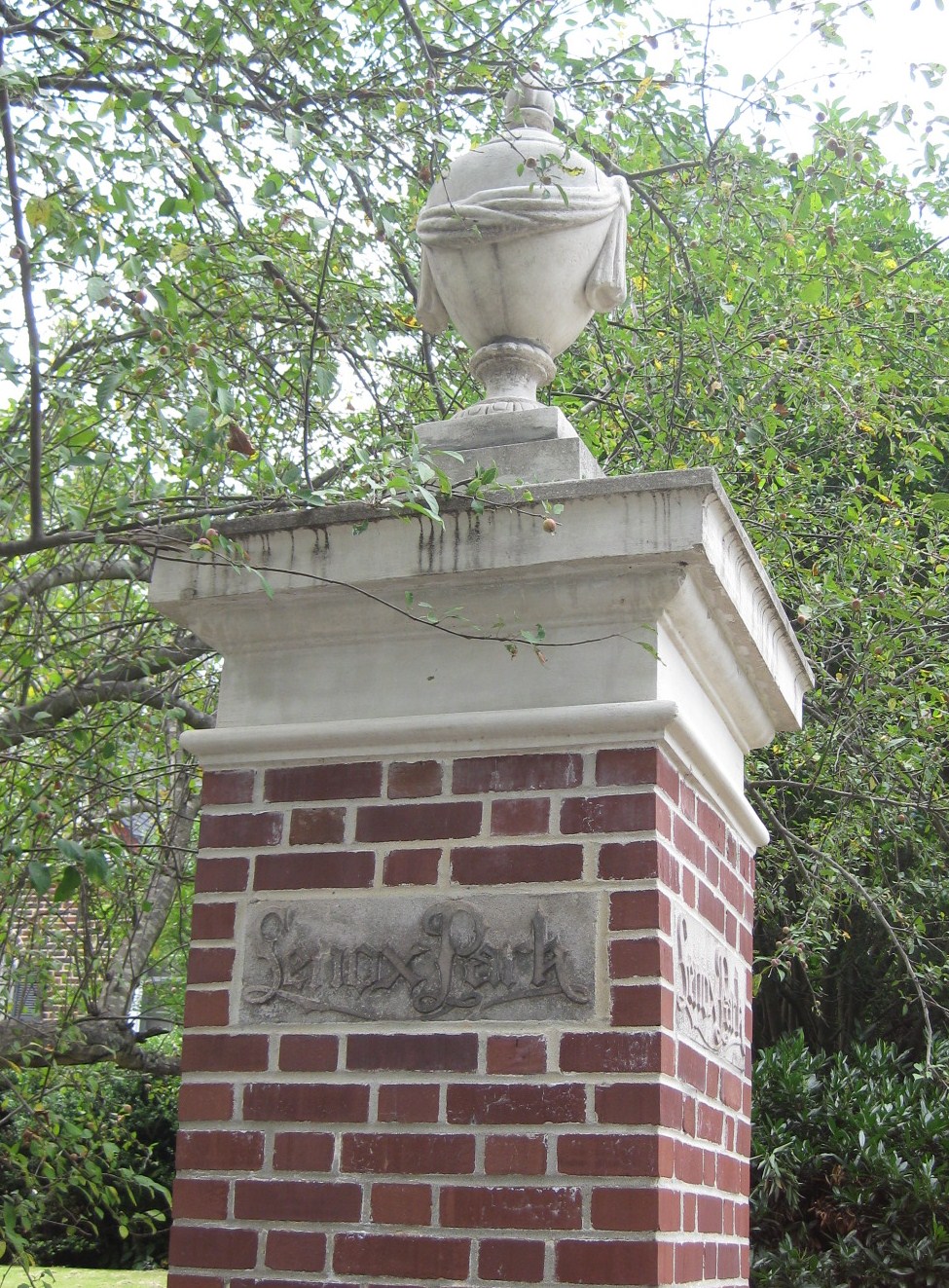
The original marker denoting the boundary of the Lenox Park section of Morningside.

Virginia-Highland was shabbier at the time than Morningside; it was older and had had more time to slide into dishevelment. Both neighborhoods were haunted, now and then, by the ghost of a rumor that a highway was being considered in the area. My parents, and others new to the area, decided to regard it as neither likely nor imminent. But in the years to follow, the threat became all too vivid.

The temper of the times was changing.  Fear of inner city crime was mounting. The conflicts over school desegregation never turned violent in Atlanta as they did in some cities, but they prompted more homeowners to sell and flee to the suburbs.  Older neighborhoods like ours were increasingly branded by state officials as futureless pockets of urban decay. What Progress required, according to the Georgia Highway Department, was a multi-lane freeway to whisk city workers safely home in the evenings to suburban promised lands. The highway, named I-485, would cut a frighteningly large swath through the hearts of Morningside and Virginia-Highland. The ghost was real, and it meant business.

Almost immediately, the state began a fierce program of land reclamation to prepare for the road. Many elderly owners were frightened into accepting low offers for their properties, which were quickly razed or left to deteriorate, unprotected from nature and vandals. It was heart-renching when the moving vans arrived and the slow exodus of boxed-up belongings began.  It was heartbreaking when the “Condemned” signs were posted.  There were a few brave owners, however, who refused to leave, even under threat of legal action. Some of these determined residents remained in the homes they had built, even as they seemed poised to tumble down around them.

Atlanta, July 2011 092
A Morningside garden angel, in prayer.

I-485 appeared unstoppable once the demolition machines were roaring. It could easily have been declared a lost cause. But a coalition to oppose the road had taken root, and like those who refused to move, this group wasn’t afraid to persevere. Several young Morningside mothers, including Mary Davis and Barbara Ray, who were parents of my friends, played a crucial role in countering the conflict.  Energetic and zealous, they rallied their friends and neighbors. They formed the Morningside-Lenox Park Association specifically to fight the road. They explored various legal angles and kept working even as other groups lost hope. There were several points when it looked as though the fight was unwinnable. But each time they persisted; these women did not give up.  After a while, some of the most pessimistic among us began to glimpse the possibility that together, perhaps, we might triumph. And if we didn’t, it was certainly worth our best effort. As the coalition gained in strength and numbers, the tide gradually began to turn. After several years of closely fought legal battles and imaginative grass-roots efforts, the freeway was stopped.

At first it was hard to believe that we had won. We had lived with the fight, and with uncertainty, for so long, but now it was history. The reality of relief set in. Thanks to five fiercely determined young mothers, our homes and neighborhoods were safe.  Now it was time to start the clean-up. We would be here for a while.

Hot in the City, And in the Suburbs

Atlanta113
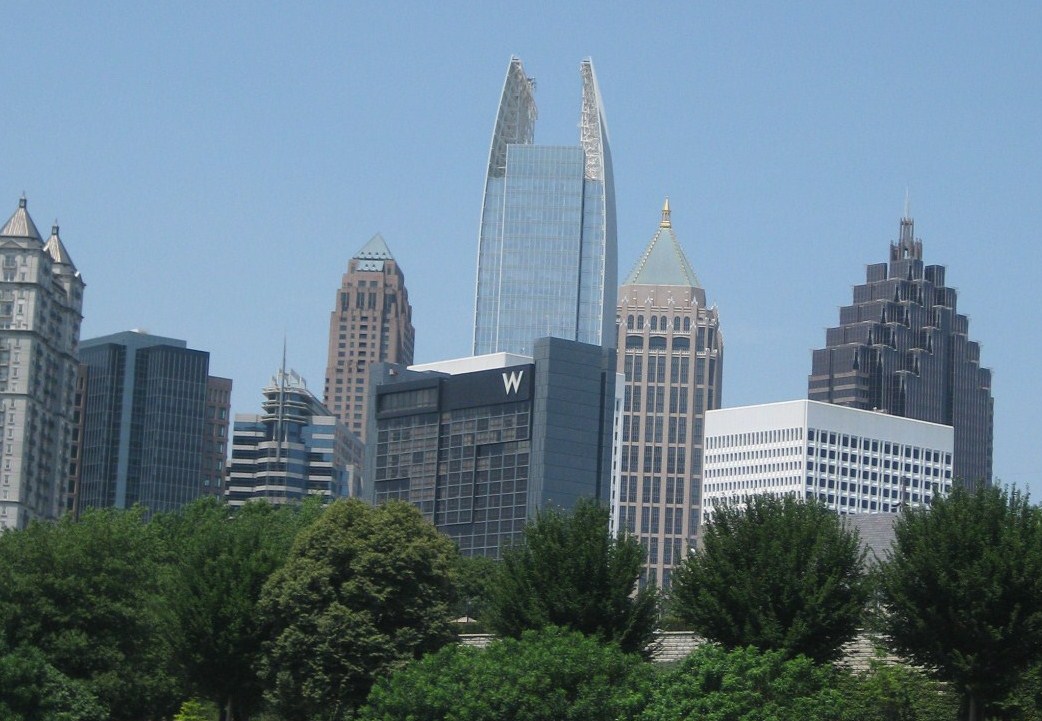
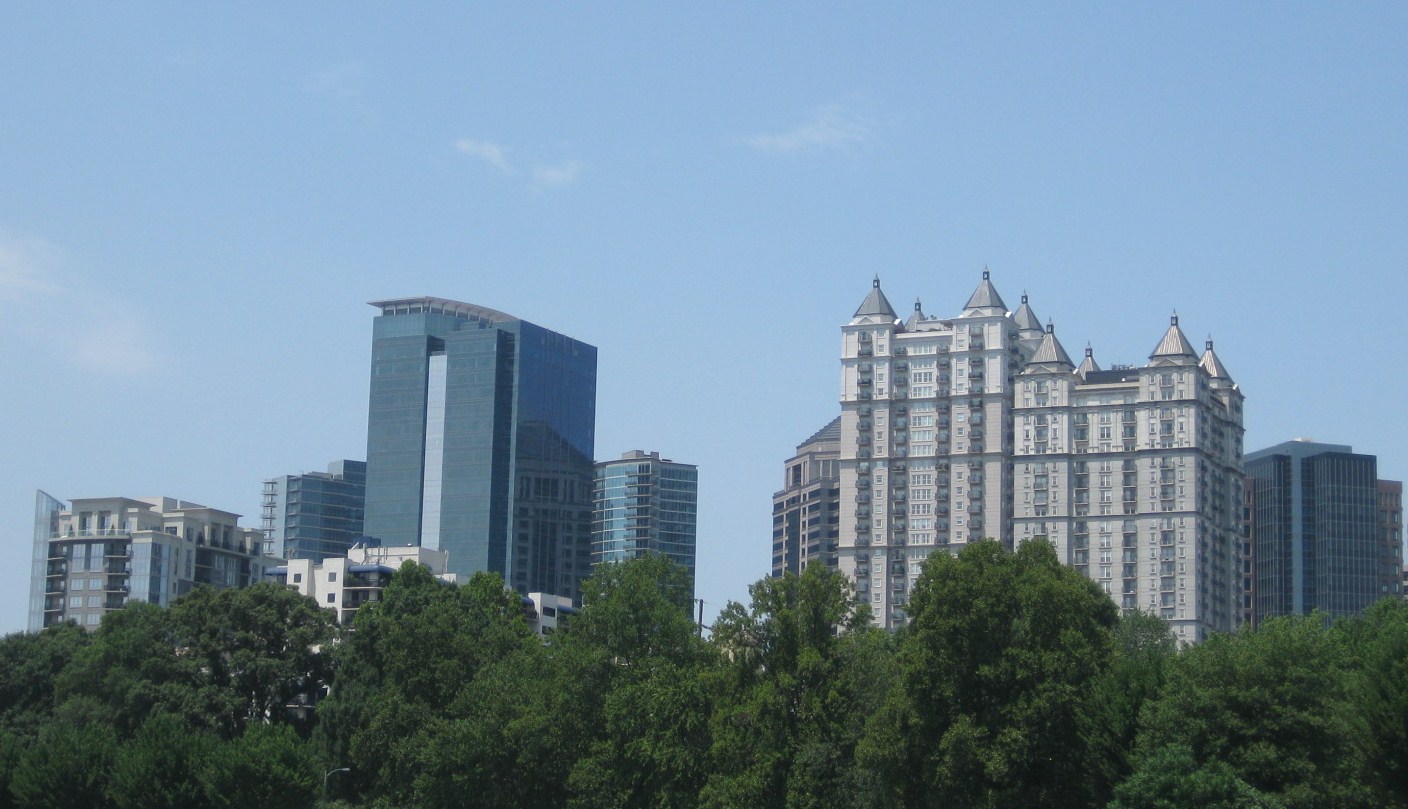
Midtown Atlanta, seen from Piedmont Park.

A late-June visit to Atlanta has kept me from writing for nearly two weeks. I’m still attempting to swim against the strong current that is the accumulation of life’s daily minutiae after a vacation. I’m distracted by tasks I can’t quite seem to finish—laundry, bill-paying, preparation for Vacation Bible School at our church, the ongoing need to assemble yet another meal. Can it really be time to start dinner again? How is that possible? The dog fluff is collecting like tumbleweed under all the chairs, even though Kiko was at the kennel (Puppy Camp, we like to say) for the week. For now I will ignore the dust and debris, the disordered jumble of papers on my desk. I have a free hour or two while D is at a tennis lesson, so I will try to turn my thoughts to Wild Trumpet Vine.

Every year, shortly after school is out, D and I allot a week for visiting my parents. In past summers, our travels South have been marked by excruciatingly long airport delays: at the gate, on board, then back in the airport after deboarding due to sustained bad weather or mechanical problems. At this point we have lost all hope of ever flying anywhere. (See Fun with Air Travel, October 2011.) Planning for the usual unpleasant eventualities, we left early in the day, to allow a big buffer zone.

On this trip, astoundingly, all went exactly as it should have. If we had spent any more time leisurely munching our breakfast sandwiches in the tranquility of Dulles Airport, we would have missed our flight. When we made our way to the gate, nearly all our fellow passengers had vanished. It was beyond our wildest dreams that boarding would begin on time, as it was that the plane would take off immediately, as it did. We rejoiced in our good fortune, and in a perfectly uneventful flight.

In an earlier post (Fun with Ground Transportation, October 2011) I noted the difficulties that typically arise when my parents pick us up at the airport. There is the conundrum of locating the car in the ever-expanding parking areas of Hartsfield-Jackson, followed by stressful negotiating of the ticket booths, capped off by an alarmingly speedy drive home through Atlanta traffic. I also said that on my next visit I would opt for MARTA, the city’s rapid transit system.  And so, this time, we did. 

Atlanta114
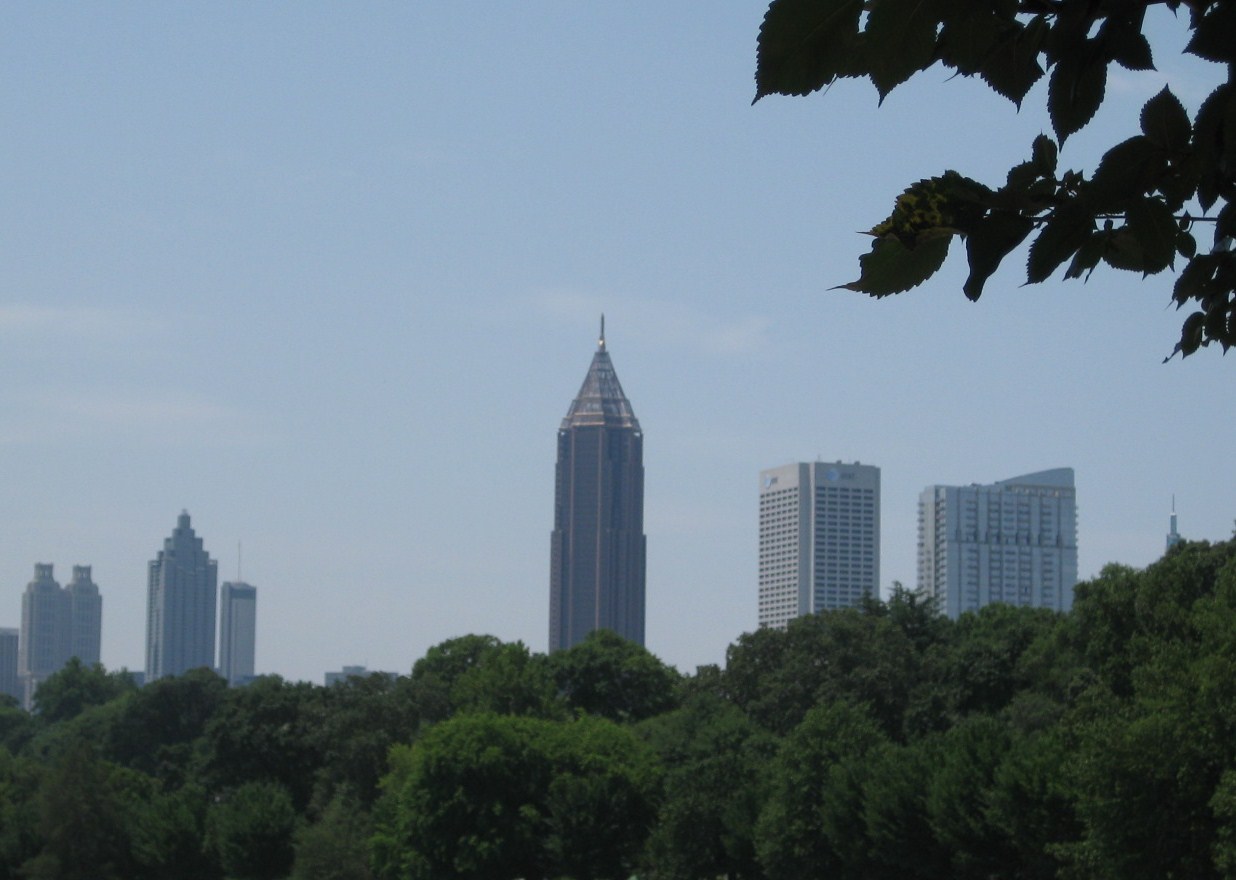
Another midtown view from the Park.

The day of our arrival marked the beginning of another heat wave, with the temperature in Atlanta on track to reach 105. Thankfully, the train station adjoins the airport, so we were able to postpone our foray into the oppressive heat. I am befuddled by ticket machines at transit stations; they always seem to be unnecessarily complicated. If I could confront those many buttons and questions in the privacy of my home, I would surely figure it all out, but in the hubbub of the station, I have some trouble. Fortunately D, like her father, excels at such puzzles, and with her expert guidance we quickly purchased two reusable Breeze cards. The train was cool and not especially crowded. The stops clicked by at a brisk pace: East Point, Lakewood, West End, etc. Mama and Daddy picked us up at the Arts Center, just a few miles from their house. The quick ride back was notable for its lack of cringe-inducing near brushes with death. MARTA is definitely the way to go.

H usually joins us for one weekend during our trip. To avoid taking a day off work, he generally schedules an evening flight. We have been picking him up at the Arts Center now for many years. He has finally learned to avoid provoking the ire of occasionally testy and sometimes drunken late-night MARTA passengers by not sitting, transfixed by his Blackberry, with his legs perhaps too outstretched or suitcase a tad too much in the aisle. His flight and train ride, like ours, were easy, on time and without incident.

The next morning, H’s parents called to check on us, their voices worried: Were we OK? Did we get held up by the storms? Did any trees fall on our house? We hadn’t watched the news or glanced at the newspaper, and so we knew nothing about the sudden monster winds that blew down trees and power lines across the mid-Atlantic. Incredibly, we had managed to get out of town before the storm hit. Our Virginia neighborhood, we soon learned, had been without electricity at that point for about 15 hours. Power in our area would be restored after almost three days, but many others suffered far longer. Lots of trees fell nearby, but none hit our house or did major damage in our neighborhood.

We experienced the suffocating heat in Atlanta, but only in short, bearable blasts as we hurried from car to house or other chilled interior. The parking garage at the Lindbergh Target, for example (where we went to buy my parents yet another DVD player—they are serial killers of these gadgets) felt like a furnace, but we had no need to linger there. Mama and Daddy, having spent the first portion of their lives without AC, now enthusiastically embrace a cool home environment. D and I typically have to forage in the attic for old sweaters and winter housecoats in order to be comfortable.

A week later, when I returned home to the task of discarding every last item in our refrigerator, it bordered on the enjoyable, so thankful was I that we had not been in Virginia to melt slowly along with our food. For those of you who were, I’m sorry for your misery.

Atlanta116