All posts by Wildtrumpetvine

A Fall Berry Harvest

I’ve always loved the many varieties of berries that ripen in the fall, adding to the season’s spectacular color.  I’m not especially picky–I have a soft spot for weeds and climbing vines some term pesky and invasive, as long as they produce nice berries.  Poke, privet, lyriope, elaeagnus–all these were readily  available in and around the yard of my childhood home in Atlanta.  We had a couple of holly trees, but they were not prolific berry-producers.  For fall and Christmas displays, we had to turn elsewhere.

Morefall001

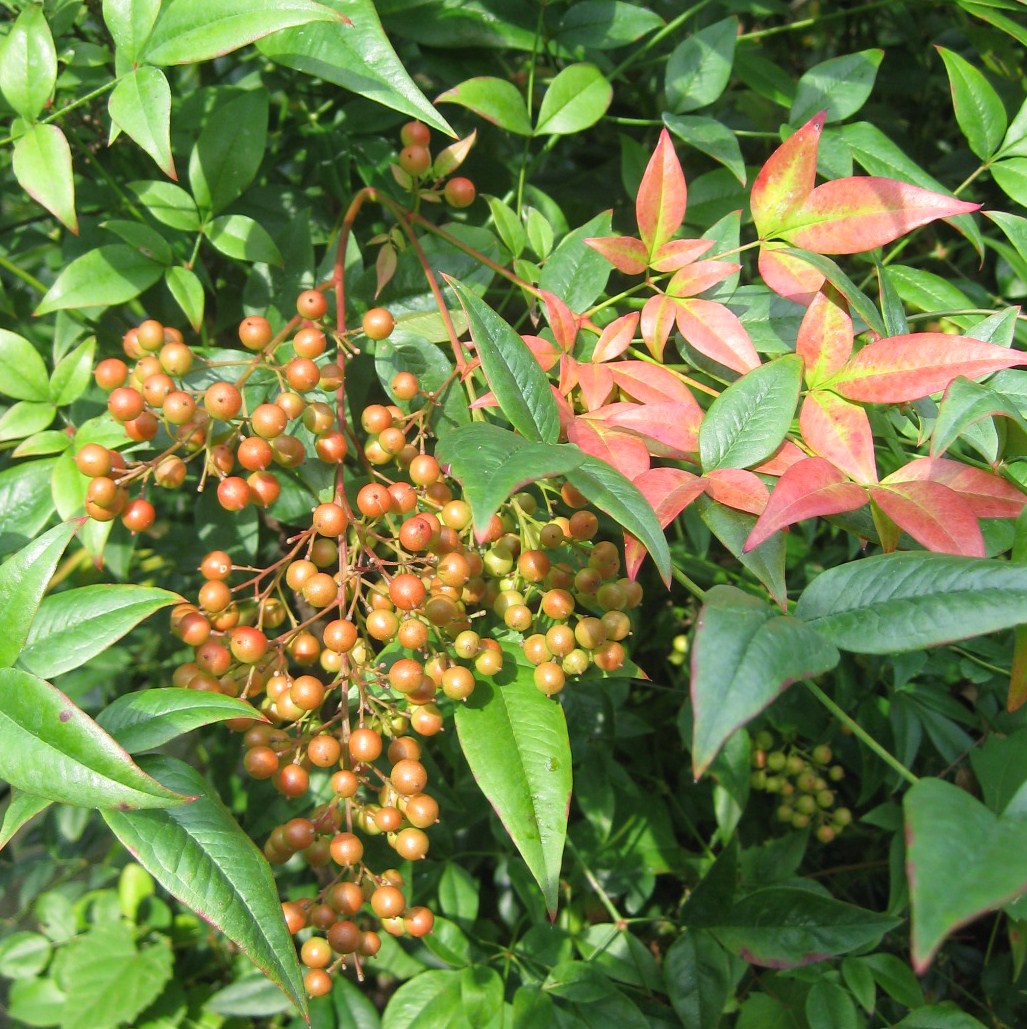
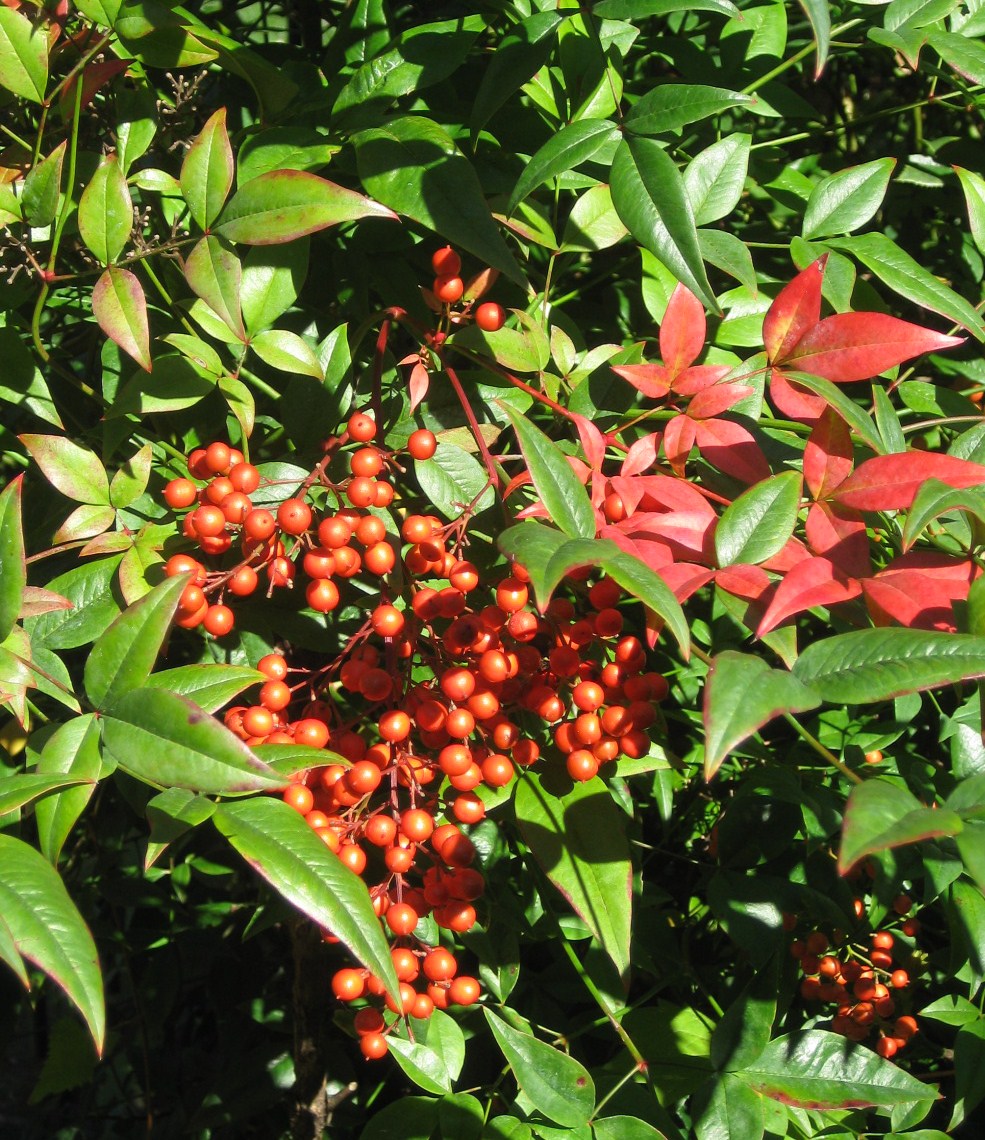
The neat, grape-like clusters of nandina were our stand-in for holly.  And when we transformed the concrete wasteland behind our Virginia house into a real backyard with actual plants, I knew I wanted to include nandina, or heavenly bamboo, which spoke so clearly of home.  The green, lacy foliage turns red in the fall, just like its fruit.  The nandina berries, I can happily say, are ripening now along our fencerow.  If the birds don’t eat them all, I’ll have some to bring in for Christmas.
Halloween2012012

About a week after the above photo, the nandina berries and foliage are brighter still.
Rochester005

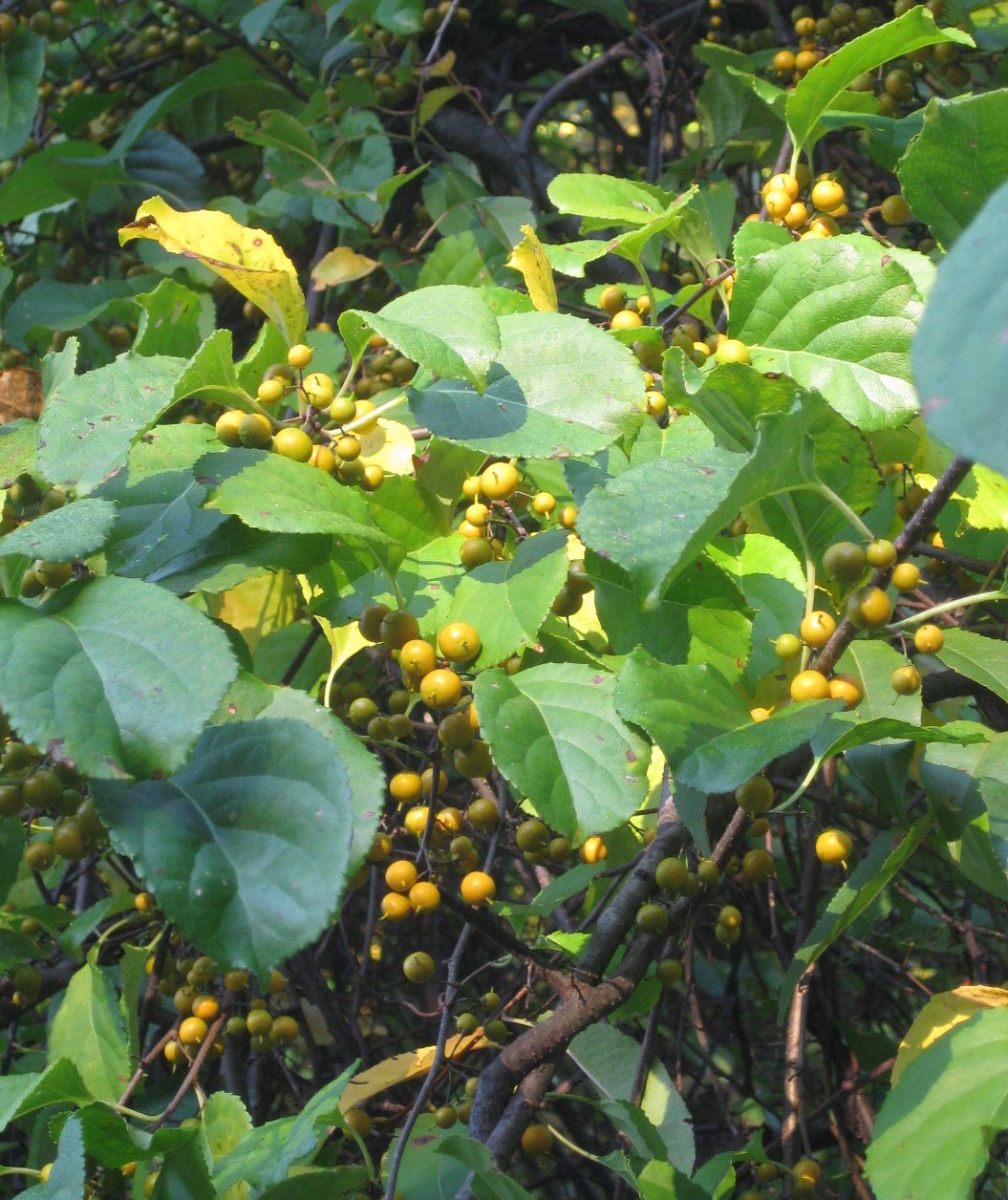
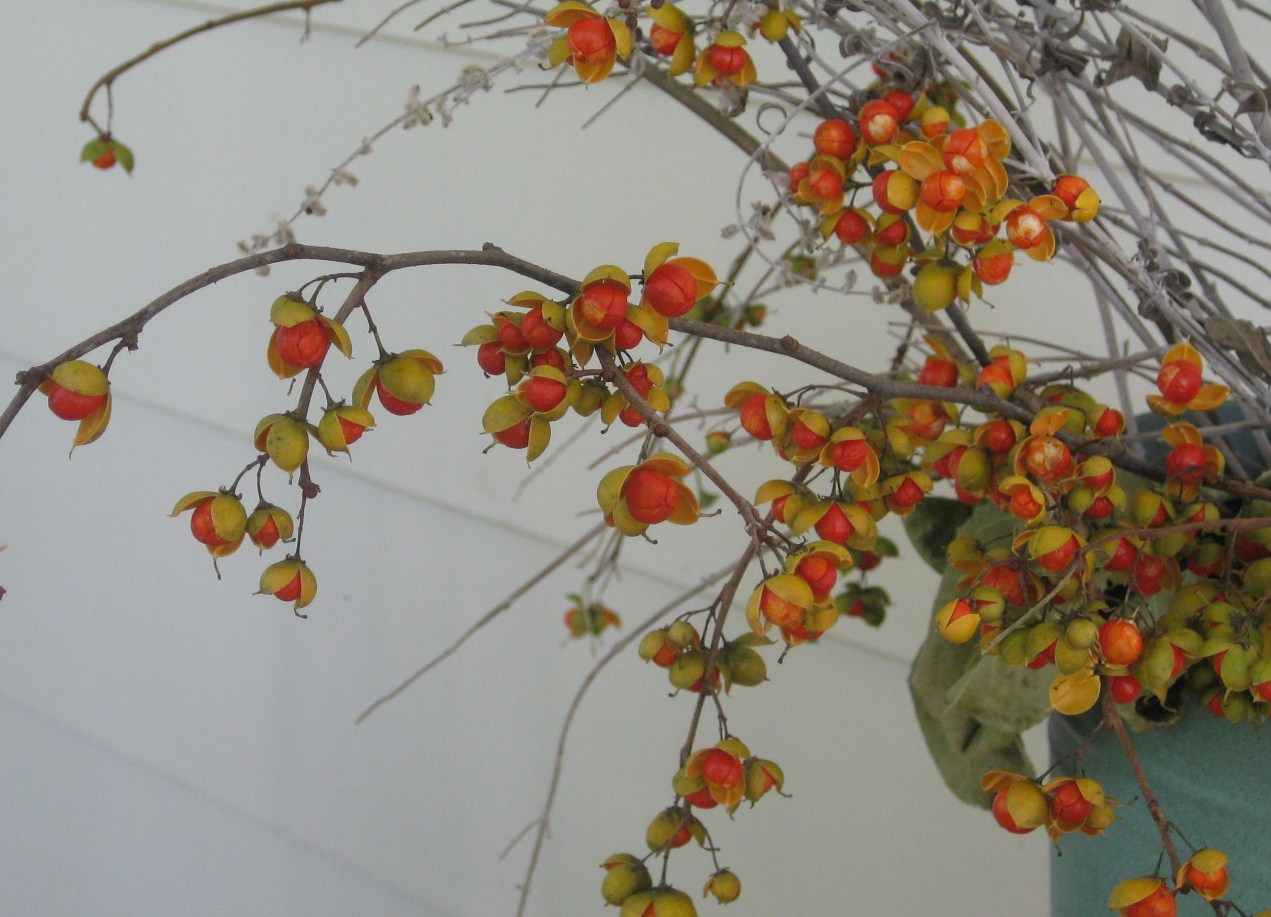
I find bittersweet to be a particularly enchanting vine. It didn’t grow in Atlanta, but I vaguely remembered it from my younger days in Kentucky. I rediscovered it in the woodsy surroundings of our first apartment in New Jersey.  I brought it in by the armful.  Like wild trumpet vine, it’s one of those climbing plants that can take over if left unchecked. Here in Virginia, we typically see bittersweet growing in a pleasant tangle at the edge of the woods. Its berries pass through several different stages, all interesting and attractive. In early summer, the new berries are bright green, surrounded by abundant leaves. Gradually the berries turn yellow, as above.  With cooler weather, the hulls pop open to reveal bright orange-red seed globes, segmented rather like tiny beach balls.  The pliable, free-form vines are easily wound into wreaths.
Fall2012004

      Once cut, the bittersweet pods quickly open to reveal their red-orange fruit.
Morefall010

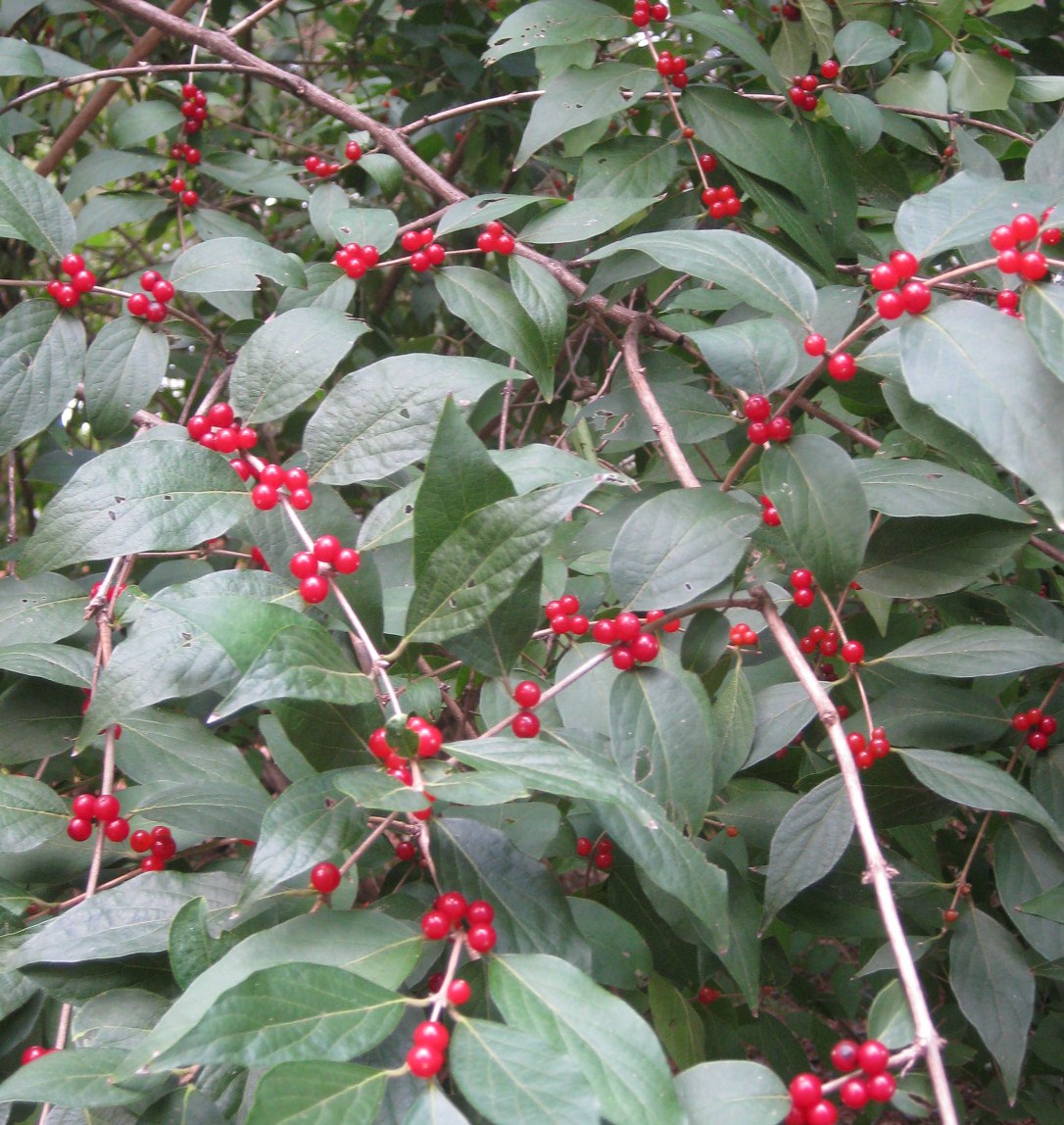
The bright cherry-red berries of fall honeysuckle shine with a silvery glow like bubble-shaped jewels. Each berry is perfect–perfectly red, perfectly round, perfectly sized. I learned the hard way not to bring these inside–they are very juicy and tend to stain tablecloths and rugs.

fALL2012028

This Japanese dogwood or Kousa Tree is laden now with its characteristically lumpy, globular fruit, which are edible and said to be tasty, although I’ve never sampled them.  For some reason, they strike me as vaguely futuristic, like something we might see on the Jetsons.
Fallberries009

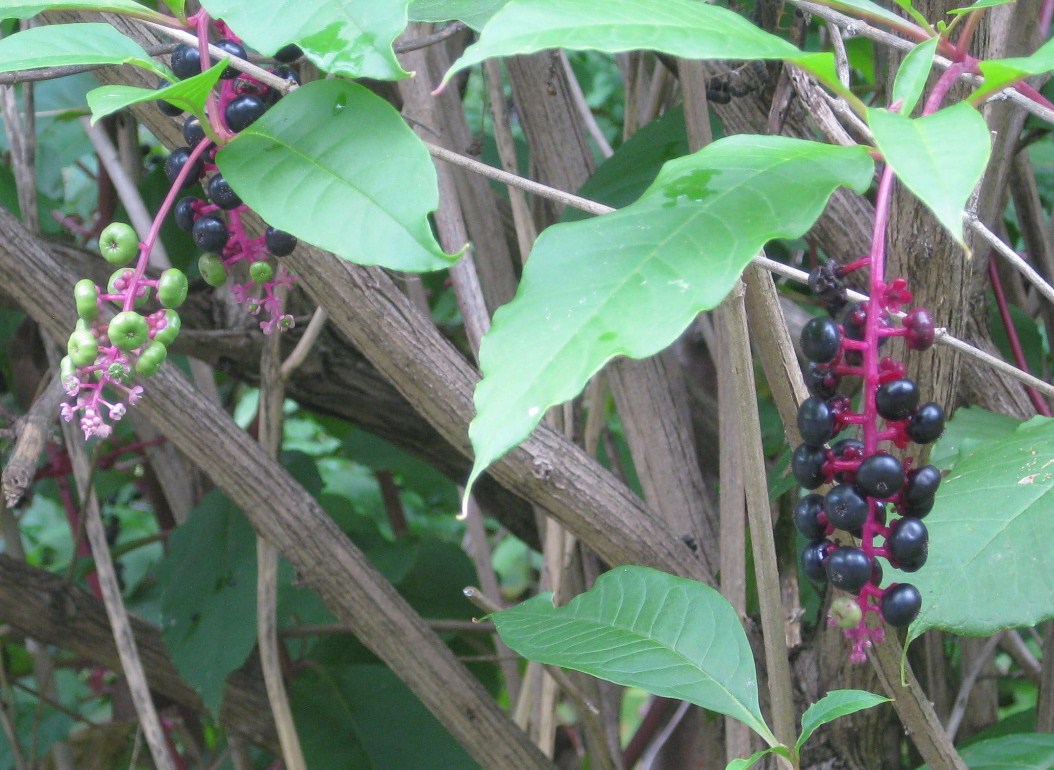
During the years before we renovated our backyard, one of our few touches of greenery was an immense pokeweed that sprung up every spring in a small patch of ground beside our old porch.  It offered some shade and color, and the birds flocked to its berry clusters.  I enjoy the plant’s evolving appearance.  At the ends of young stems, tiny, pale pink blossoms appear in early spring.  These are transformed first into bright green berries and, in late summer, into plump, dark-purple spheres.  The stems also change color, from a lavender pink to a bold magenta.  The vigorous heartiness of pokeweed, as well as its amazing rate of growth, make it a force to be respected.  Long used in herbal remedies, the plant is being studied as a possible cancer-fighter due to its established antiviral properties.  Children should nevertheless be warned that the luscious-looking berries can be toxic to humans.
Fallberries028

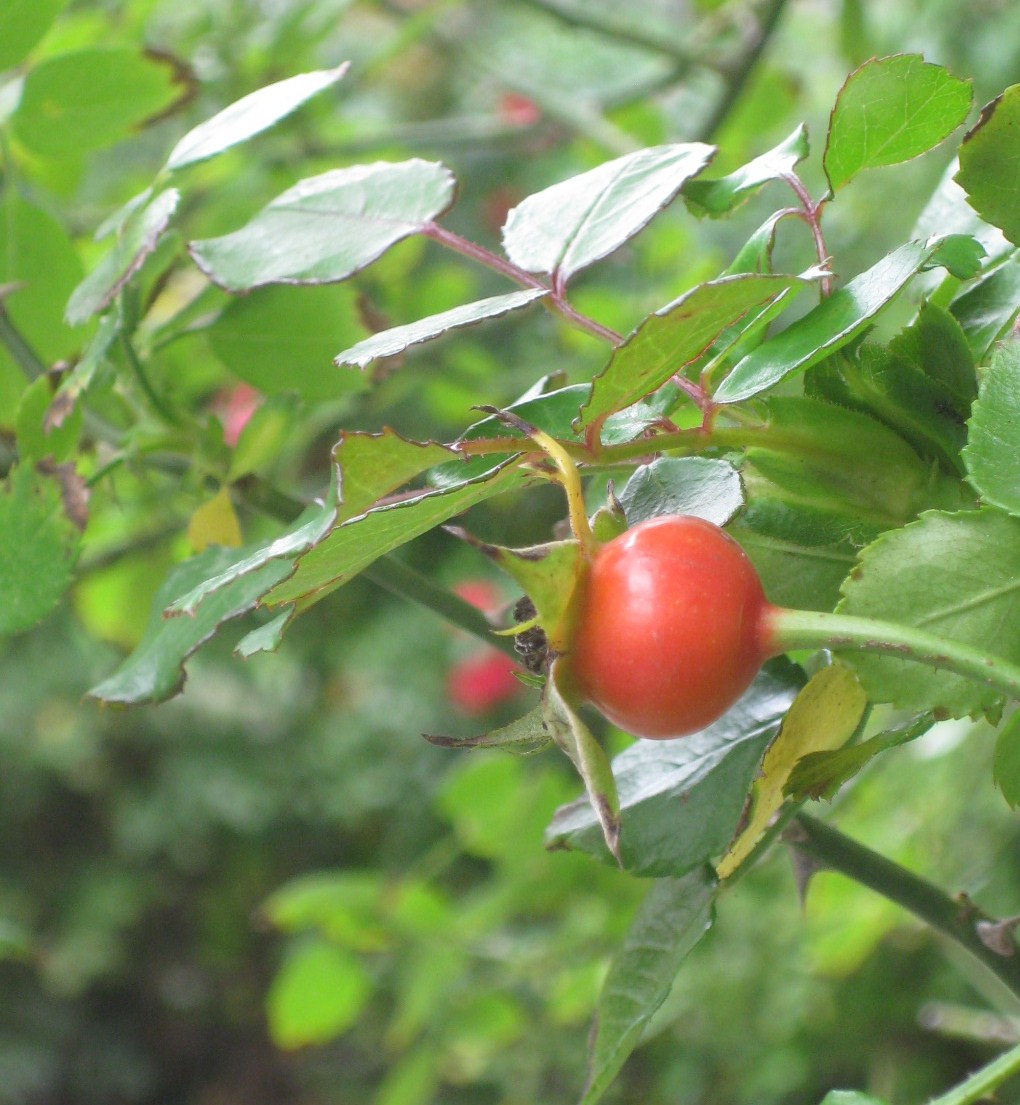
In late summer and fall, the pink climbing roses on our garage trellis give way to these jumbo rose hips that resemble large gumballs or miniature tomatoes.  A Martha Stewart disciple would laboriously harvest them for jam, but we are content to appreciate their autumn color.  Kiko occasionally awakens from sleeping in the sun to munch on a rose hip if one happens to have fallen nearby.  He seems to find them tastiest when they are rather shriveled and overly ripe. 
Glory in the Pumpkin Patch: The Ford Farm in Churchville, NY

Rochester189

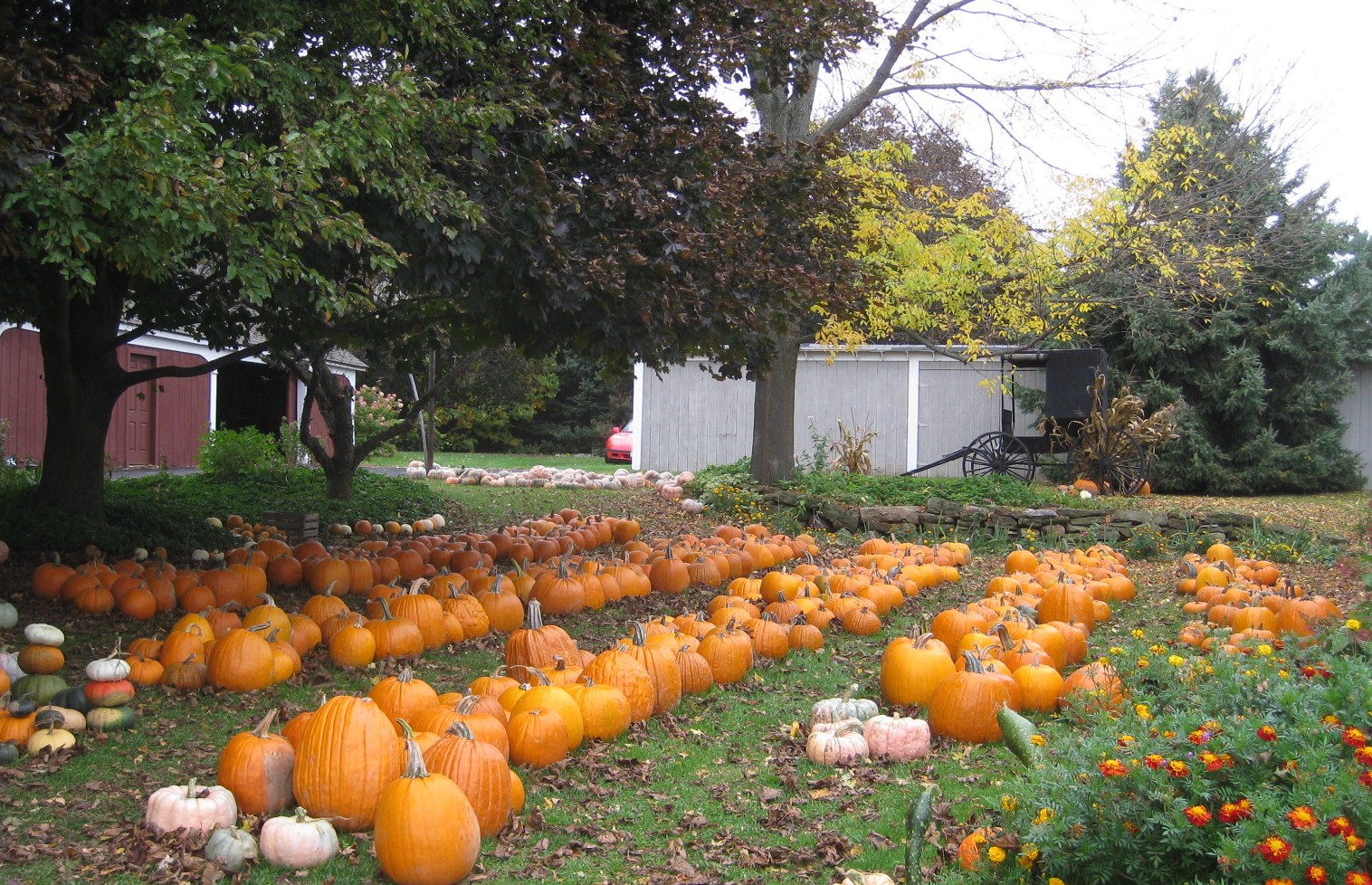
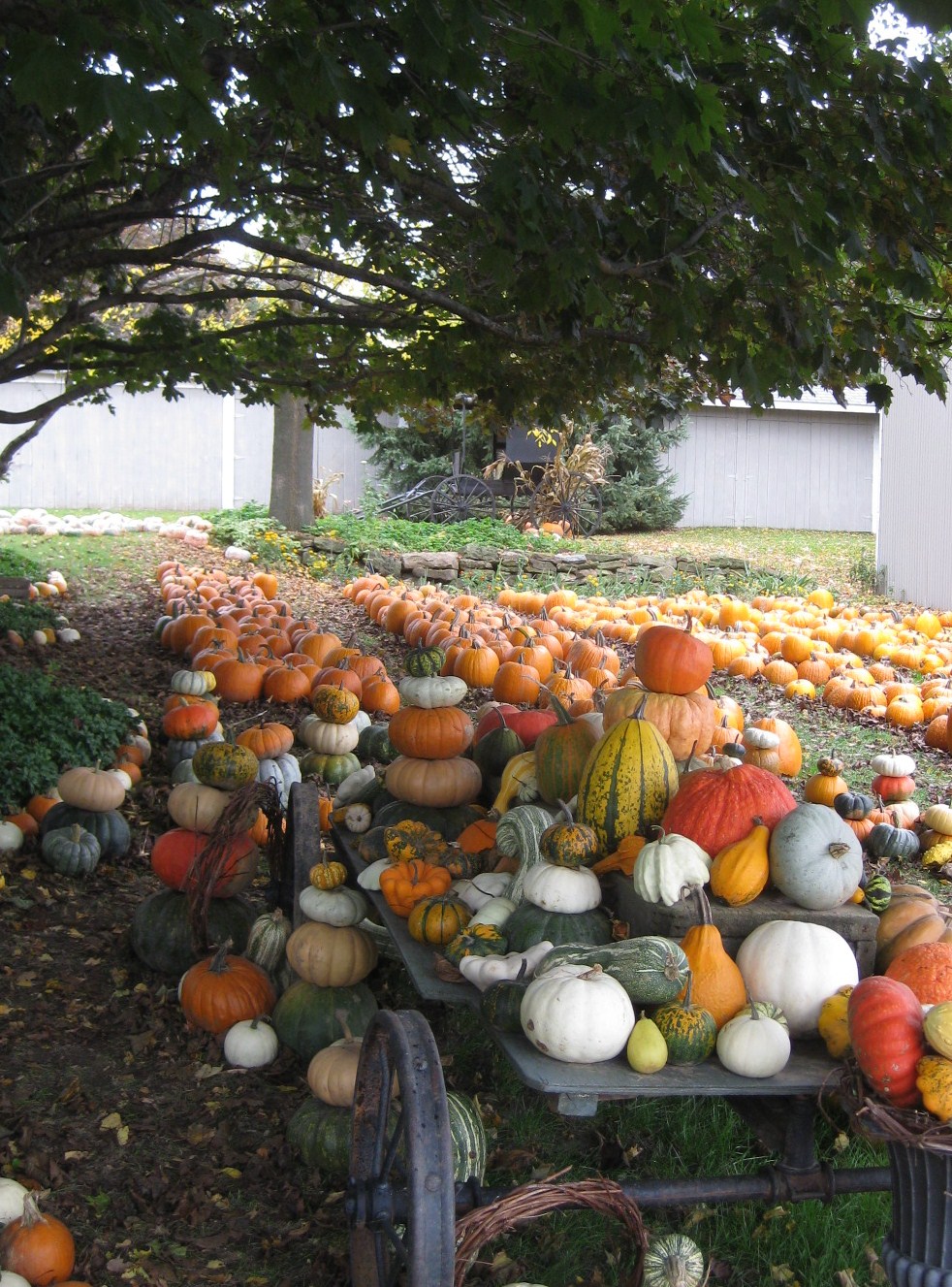
After our return from the railroad tracks, the predicted rain was not yet falling, so we walked past broad flat fields to the Ford Farm Market, a showcase of pumpkin glory and diversity.  On this beautiful old family farm, Tom Swain, a former middle school science teacher, grows a vast variety of pumpkins and gourds.  Signs proclaim the availability of pink pumpkins.  Indeed, some are peachy-pink.  There are pumpkins in nearly every conceivable earthy hue, including white and many shades of yellow, orange and green.  There are also multi-colored varieties, some speckled, some striped, some uniquely patterened.  The range of sizes is equally wide,  from tiny palm-sized pumpkins to enormous giants, and everything in between.  In years past, the largest Ford Farm pumpkins have topped 1,000 pounds. Tom’s wife Sharon is a pumpkin carver of great skill and imagination.  Each year she creates a series of gigantic, intricately designed masterpieces.  The family’s extensive and charming collection of Halloween decorations is displayed in the barn.

We made no pumpkin purchases because we would soon be flying back to Virginia, although D bought an apple for the walk back.  A cold rain was falling steadily by then, but our cheery dose of Ford Farm fall spirit sustained us along the way.

Rochester183

Rochester179

Rochester187

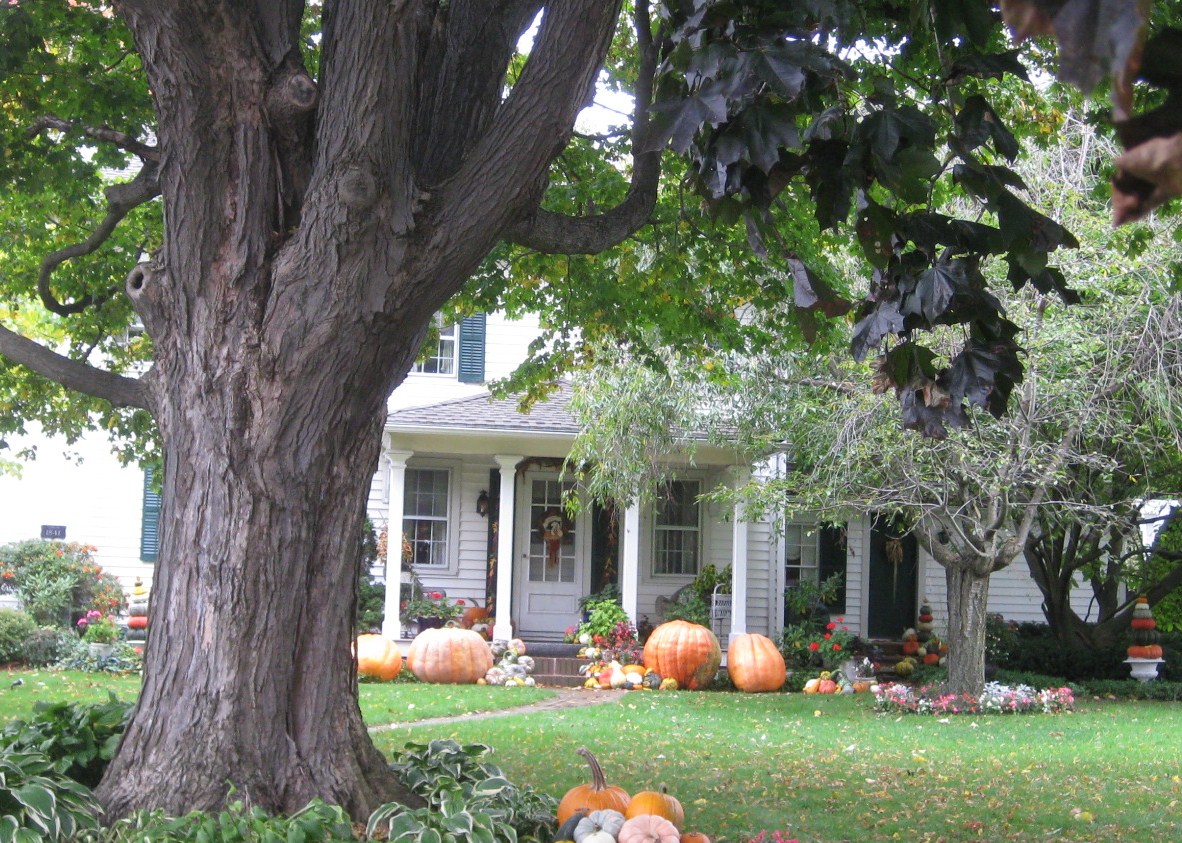
In front of the old farmhouse, more pumpkins, including some of the giant ones Sharon Swain typically carves.

Rochester1981

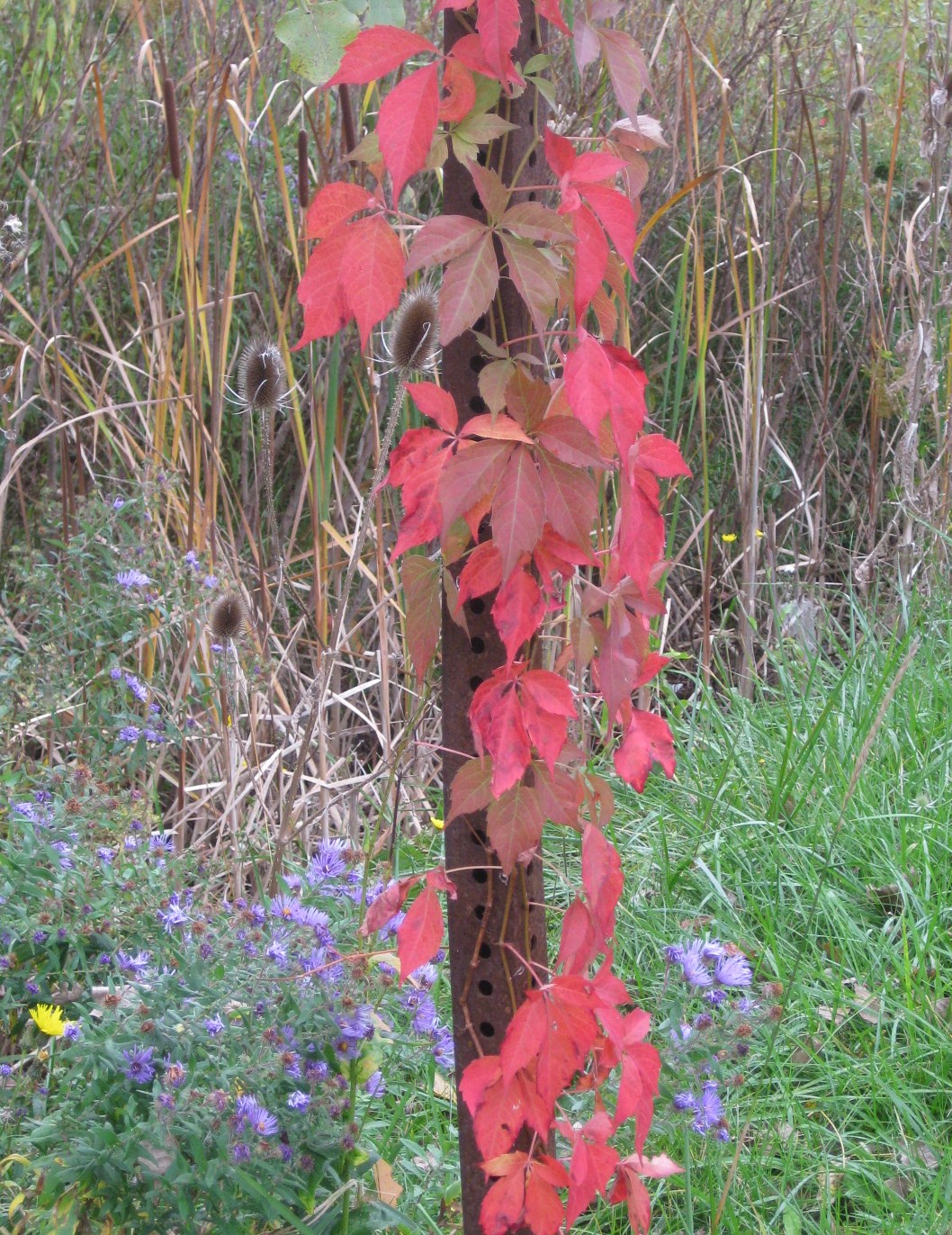
A colorful celebration of roadside vines and wildflowers.

Rochester193

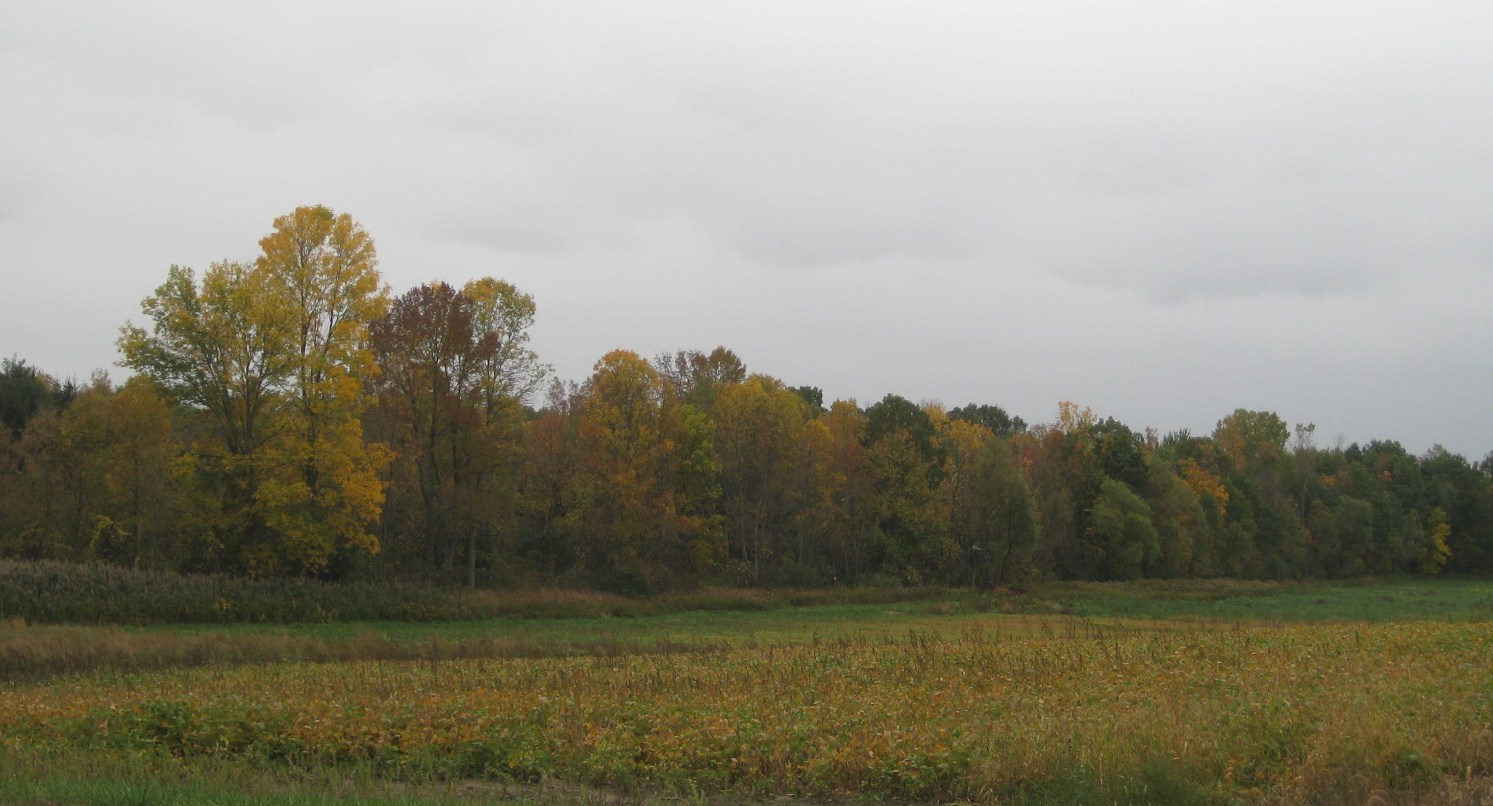
A view of the fields across from the Ford Farm.

Rochester, Down by the Tracks

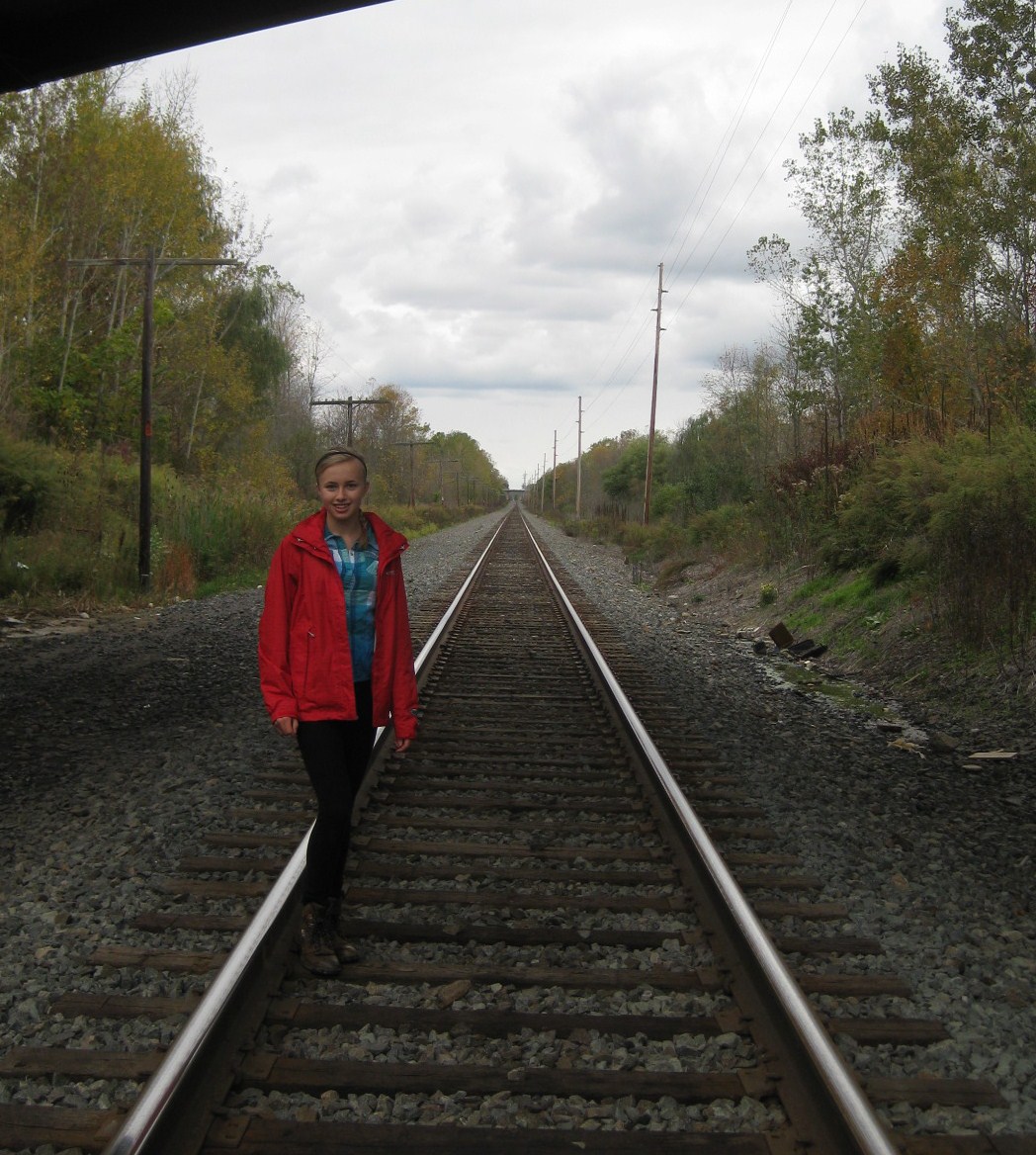
Rochester150

When I was young, I spent my summer days
Playing on the track.
The sound of the wheels rollin’ on the steel
Took me out, took me back.

Big train, from Memphis.
Now it’s gone, gone, gone, gone, gone, gone.

–John Fogerty, Big Train from Memphis

For many of those who grew up hearing the whistle and roar of passing trains in the night, the sounds evoke home, family and childhood.  My husband and I each became accustomed to the music of the trains, and we miss it here in Virginia.  When we return to Rochester or Atlanta to visit his parents or mine, we savor the familiar, comforting sounds of the train.

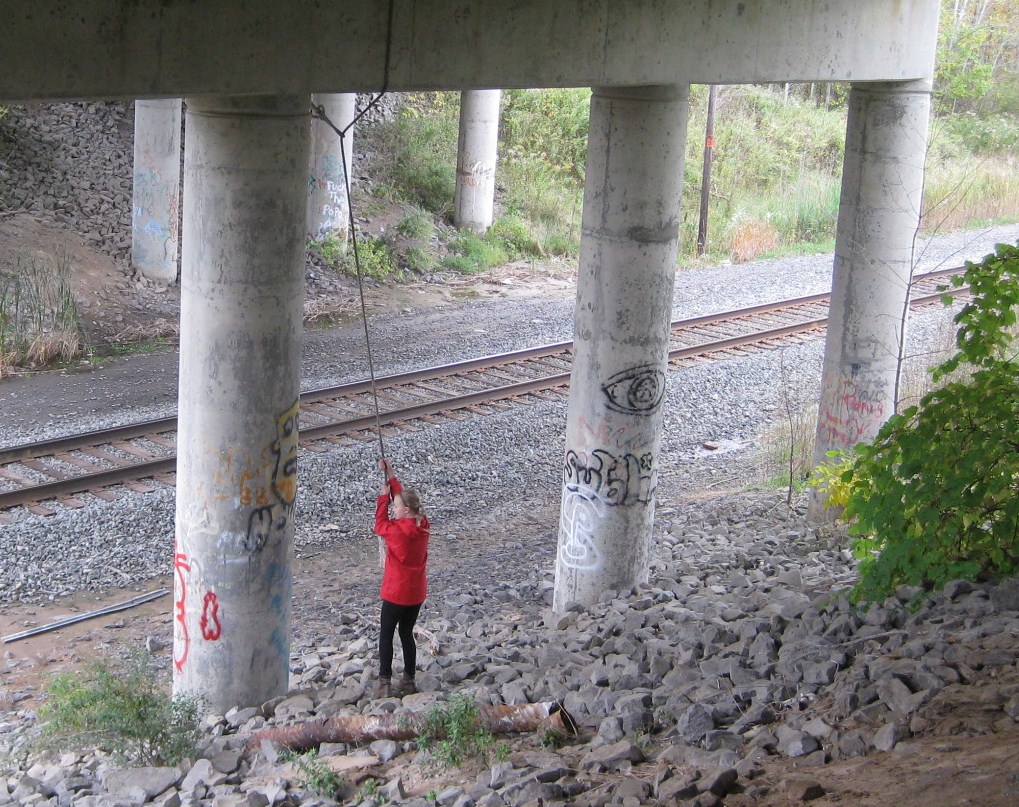
H and his childhood friends really did spend their summer days playing on the tracks and beneath the adjacent highway overpasses, at least when they were not deep in the neighborhood woods.  The tracks are easily accessible from his sister’s house in Rochester.  If we have time, we head over to see what’s new and what’s as it always was.  It’s a particular joy for H to explore the area again with his daughter by his side.  She appreciates his tales of boyhood adventure as well as the desolate beauty of the landscape along the tracks.

Rochester137

Rochester129

 Rochester146

D was delighted to find this sturdy rope well-anchored to the underside of the bridge. 

Rochester148

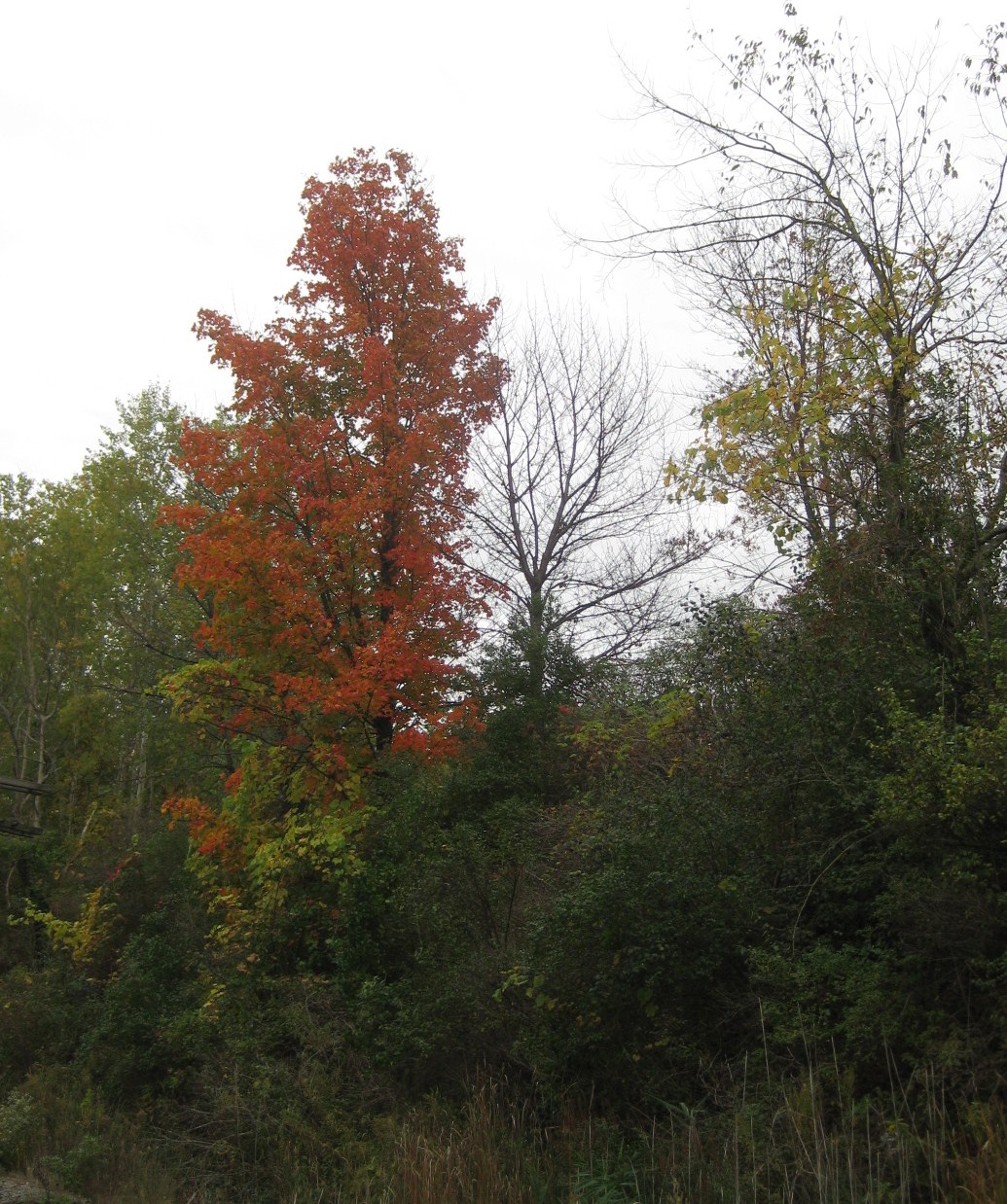
               The unruly landscape bordering the tracks gets a beauty treatment of fall colors.

Rochester172

           A mingling of the seasons: touches of gold and green among the fallen brown leaves.

Rochester168

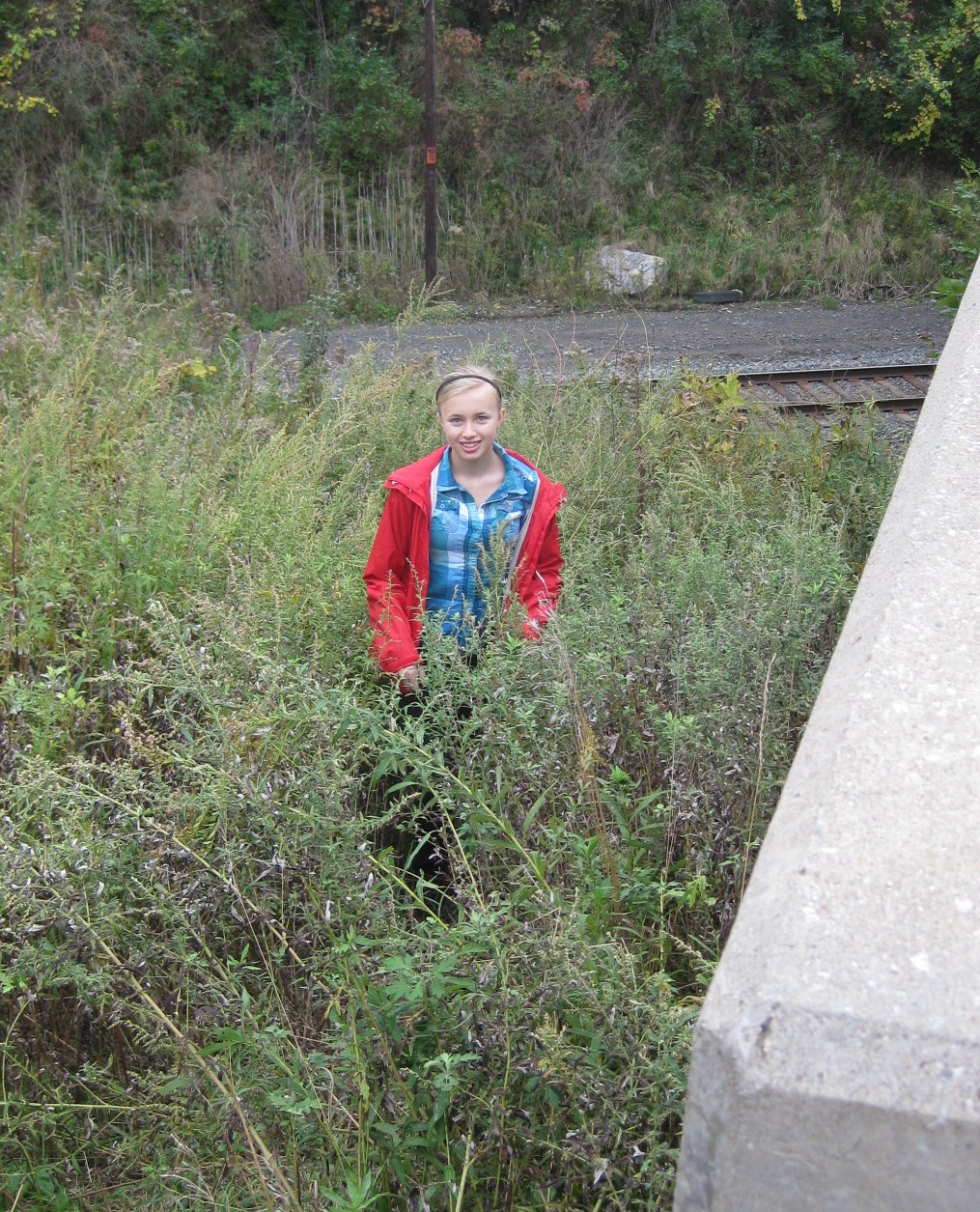
           D negotiates the tangle of weeds as she emerges from down under and years gone by. 

Rochester: Into the Woods

This past weekend we went to Rochester to celebrate Grandma’s birthday.  In between the frequent meals, the snacks, the cookies and the birthday cake, we managed to squeeze in an afternoon walk in the woods.  My husband wanted to show our daughter a spot much loved by him and his boyhood friends.  Enjoying a freedom from adult supervision nearly unknown to kids these days, they met there on their bikes after school.  Using found lumber and fallen trees, they built hideouts and forts, which they outfitted with discarded furniture.  They shot their BB-guns at cans (and occasionally, at each other, but with a strict one-pump rule).  They made campfires for roasting hot dogs and for the sheer joy of watching things burn.  Responsibilities were divvied up, and H brought the explosives.  (It’s no coincidence that he went on to study combustion in grad school).  He hadn’t set foot in these woods for decades, and he was worried that they had been developed or modified beyond recognition.

Rochester030

We were relieved that the entrance to the woods, several streets away from H’s childhood home, was just as he remembered. As we walked, it became apparent to him that some paths had been widened, neatened, or rerouted. But thankfully there was no sign of encroaching development, no nascent parking lots, shopping malls or townhouse complexes.  

Rochester024

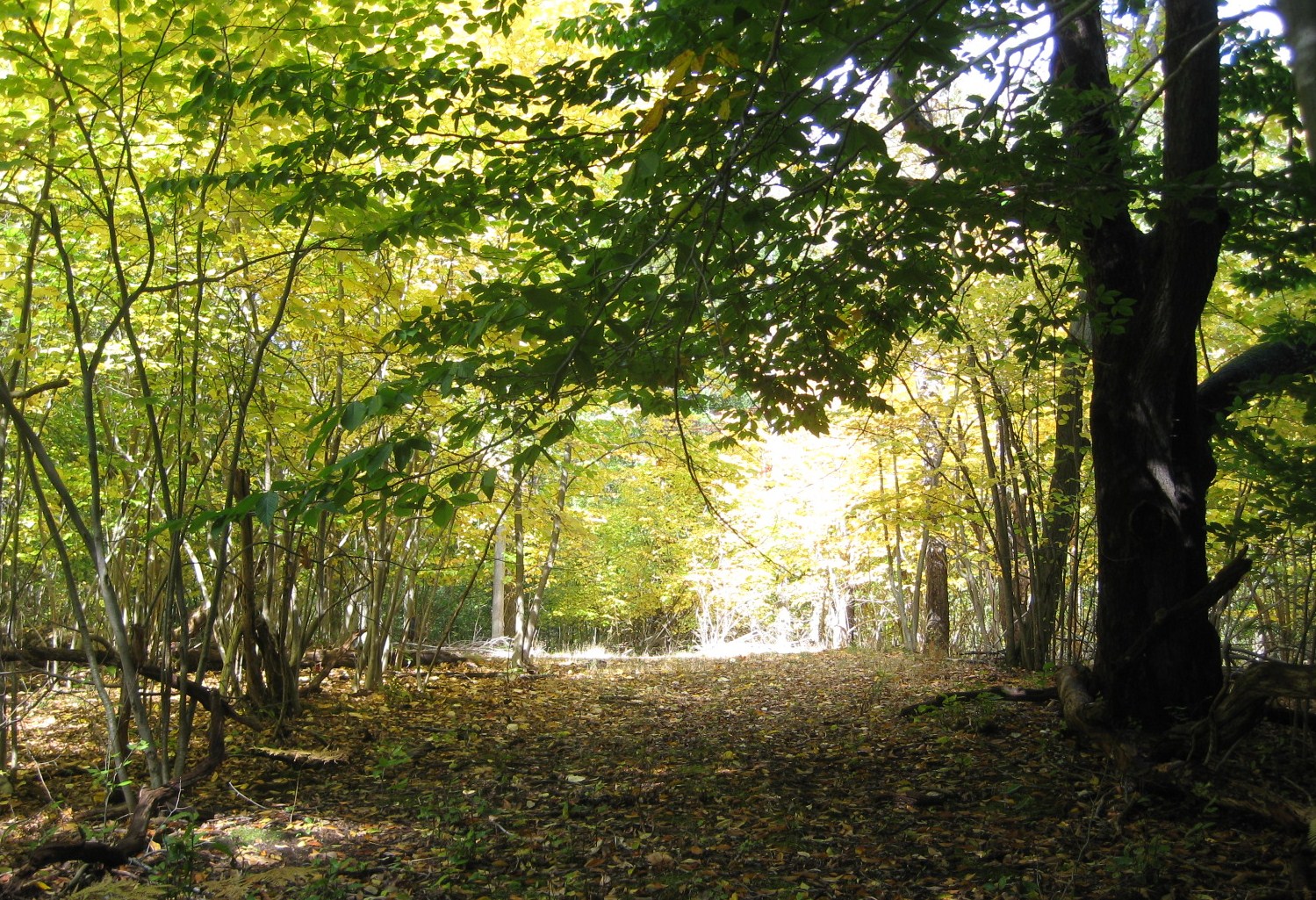
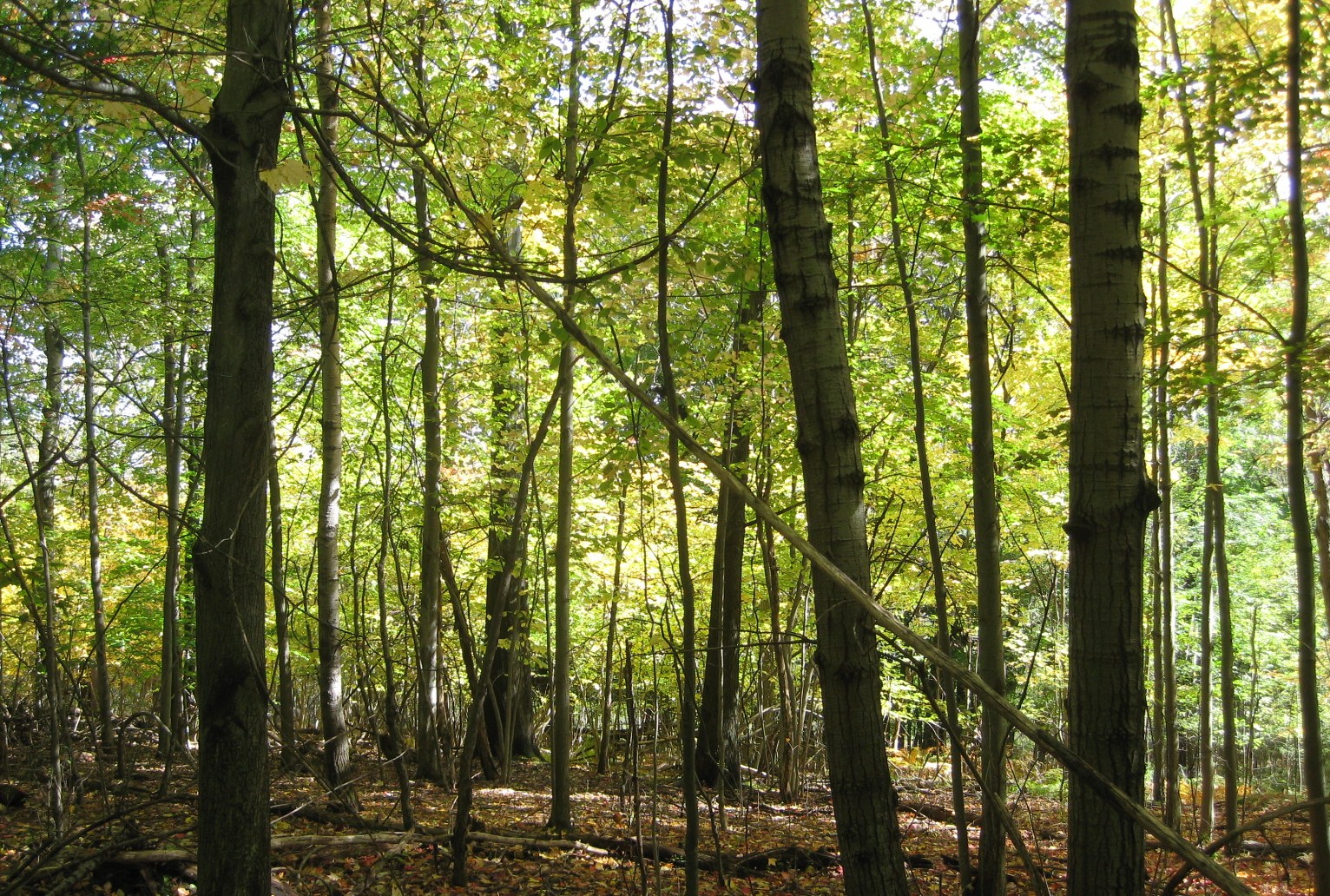
The weather forecast had predicted a full day of rain, but early morning showers had given way to a sunny afternoon. The light on the turning leaves suffused the canopy with a golden glow. The woods took on a magical, enchanted aspect.  Our daughter appreciated their appeal as keenly as H had when he was her age.

Rochester026

Rochester’s fall palette was bright and varied.  The yellows and oranges of the trees were especially brilliant.

Rochester044

The ground was carpeted with green moss and colorful fallen leaves.

Rochester 028

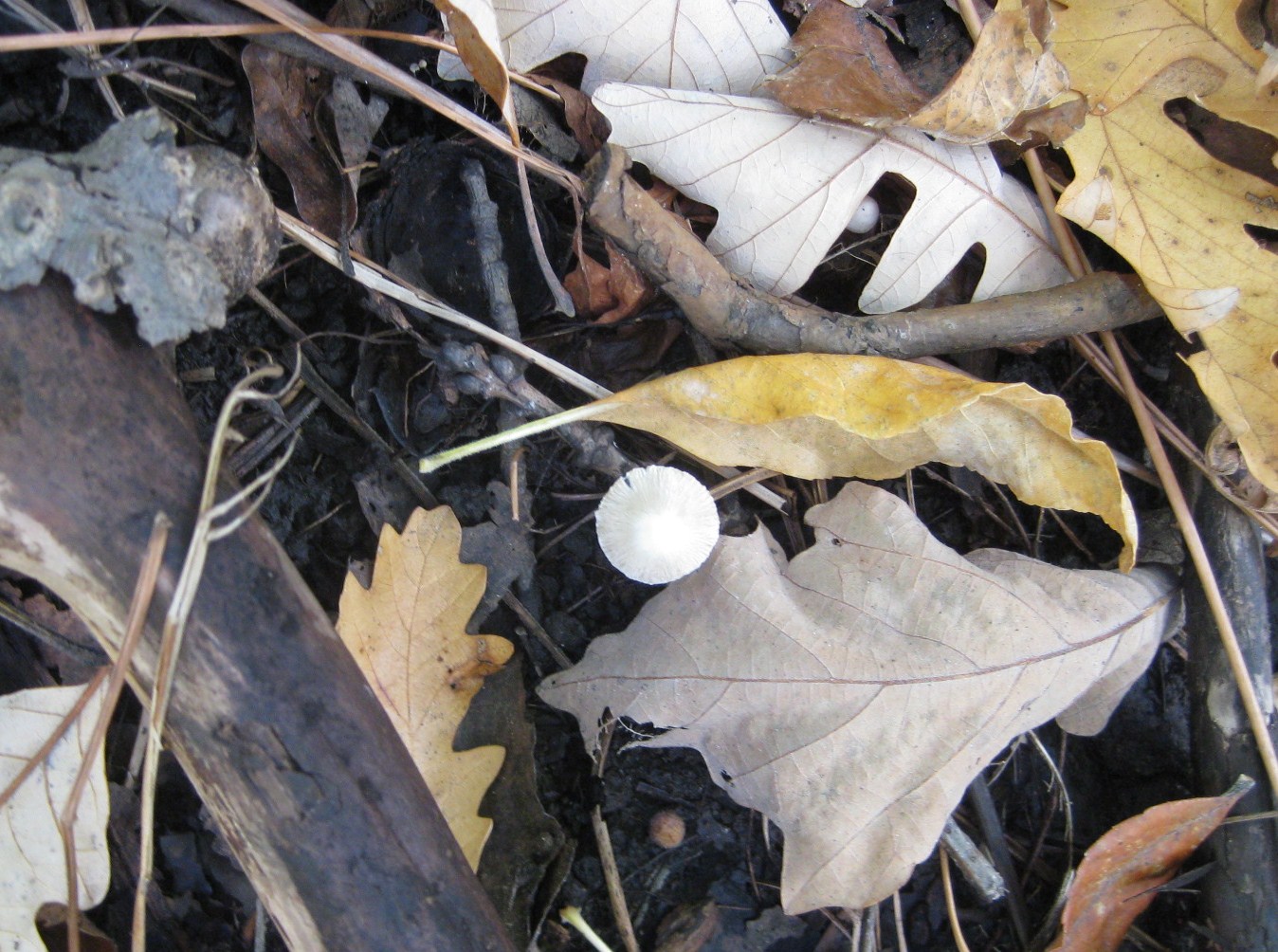
Perfectly formed mushrooms, the small white kind that fairies rest on in childrens’ books, were a frequent sight underfoot among the leaves.

Rochester051

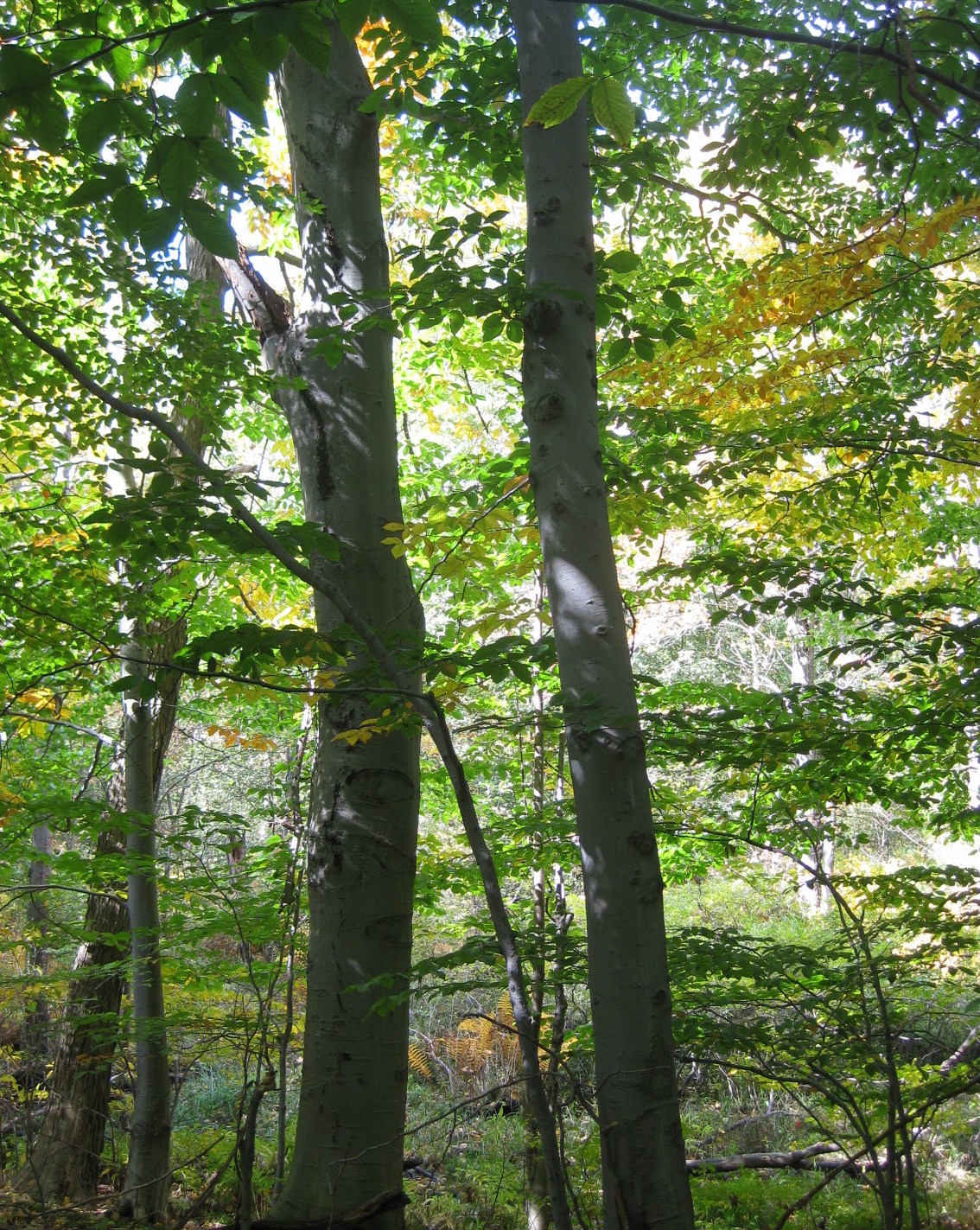
Beech trees, their leaves just beginning to turn yellow.

Rochester073

The kindness of trees:  one member of this group of trees, having lost its base, is supported by its neighbors.

Rochester060

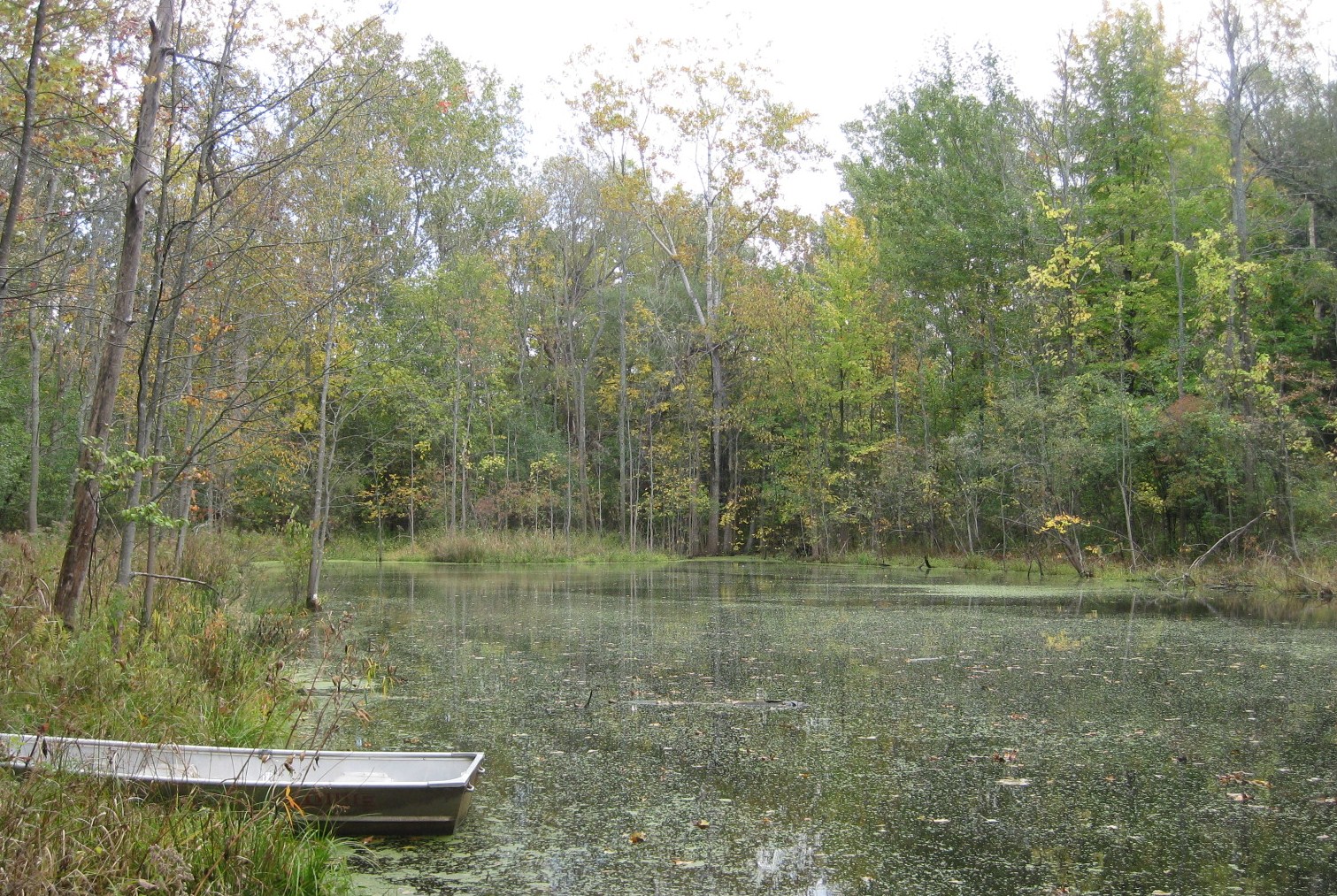
Our ultimate destination was the secluded pond where H and his friends had focused many of their boyhood activities.  D and I followed H as he wandered, searching uncertainly through the swampy, heavily tangled brush, looking for landmarks to point the way, such as the tree on which they had carved their names.  As my feet got soaked, I regretted not stuffing my hiking boots into my suitcase.   Repeatedly, the pond wasn’t where H thought it should be.  He began to fear we wouldn’t find it.  Finally, with the help of the GPS system on his phone, he located it.   It looked the same as it had all those years ago, H said, except for the greater accumulation of algae on its surface.  A small boat was tied up in the reeds by the shore, suggesting that the pond continues to be the haunt of local explorers.

The walk back to Grandma and Grandpa’s house was a happy one.  It was enormously satisfying to see that every once in a while, despite the fleeting pace of time and so-called progress, we can return to a place that still matches up with its treasured memory. 

For the Perfect Mother-in-Law, on her Birthday

004

I have the perfect mother-in-law. The only down side to this is that I’m unable to participate in the swapping of mother-in-law horror stories.  I’ve heard many such accounts, and other than gasps of incredulity, I have nothing to add.  I’ve  listened in amazement to tales of the mother-in-law who “helps” with the new baby by bellowing orders, complaints, and increasingly outlandish requests from a command center on the family room sofa.  I’ve heard about the M.I.L. who, determined to ensure that her son’s house run on her rules or not at all, regards each visit as an opportunity for a hostile takeover.  I’ve listened to anecdotes about the M.I.L. whose sensitive temperament is constantly wounded by imagined slights tossed off by a cruel daughter-in-law.  And I’ve heard everything in between.

001

With my mother in law, there is no drama.  She is sweet, good, and uncomplicated.  She is kind,  thoughtful and intelligent.  During visits to our home, she asks how she may help.  She is not overbearing.  She does not insist, but she never offers out of empty politesse.  It has taken me a while, but I’ve learned to accept her assistance.  I come from what may be a predominately Southern tradition of automatically refusing the first few offers of guests’ help, thereby forcing them to insist or be considered rude.  Now, when Grandma* asks if I need help with dinner, I tend to say Yes, please! She is a calm, easy presence, and it’s a pleasure to share the house, and the chores, with her.

Like everyone in H’s family, his mother welcomed me warmly at our first meeting, now over twenty years ago.  She has never implied (as some mothers of sons are known to do), that no living woman could be a worthy companion of the god-like boy-child she birthed.  She has a deservedly high opinion of H, and she has always treated me as his equal.

003

002

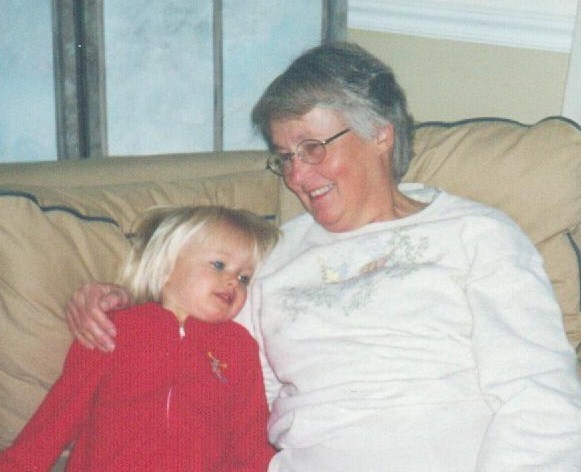
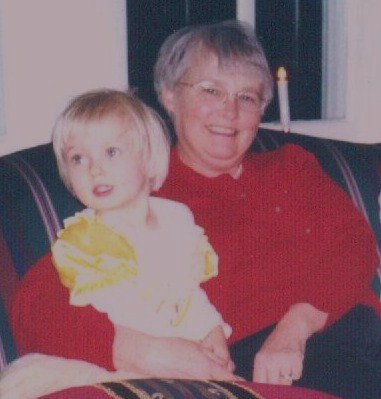
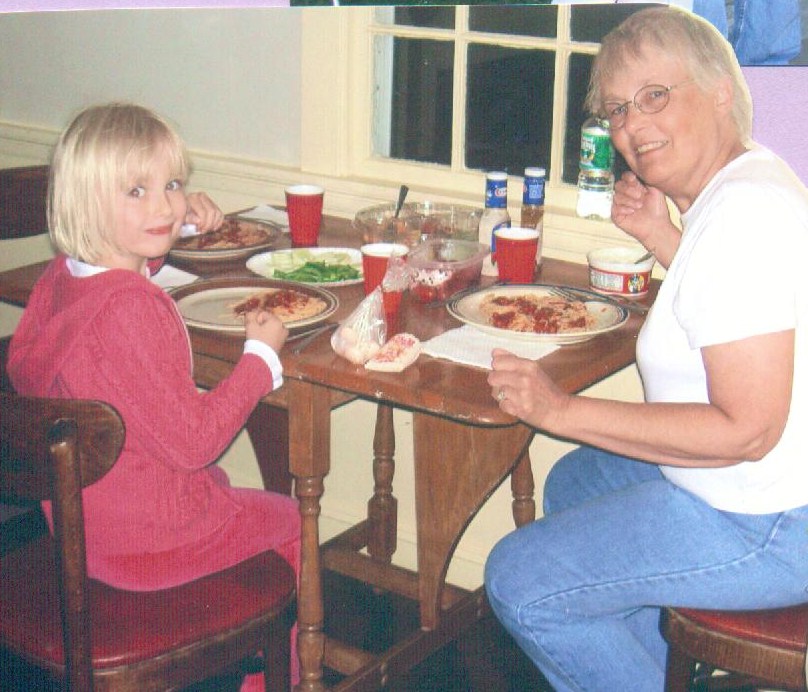
H’s mother is a loving grandmother to our daughter and to her other four grandchildren.  Gentle and fun, she laughs easily, and she remembers what it was like to a child.  I’ve heard about grandparents who cannot be trusted with their own grandchildren.  This was never an issue with either set of my daughter’s grandparents, thankfully.  When D was nearly three, my husband and I, along with my parents, took a trip to France, leaving our daughter in the care of Grandma and Grandpa.  We missed our baby girl terribly, but we had no worries about her welfare, either emotional or physical, during those ten days.  We knew she was in devoted and capable hands.

Grandma’s attitude is generally one of meekness, and some might take her for a pushover.  This, however, is not the case.  When she feels strongly that righteousness is on her side, she is tough, patient and determined to persevere. One year, when H’s windsurfing board went missing in Cape Cod, she summoned Grandpa to accompany her on a walk.  With slow, thorough deliberation, she surveyed the property, until she discovered H’s board leaning up against the wall of another cottage way across the green.  Thanks to her gracious yet firm intervention, H’s board was soon being carried back to its rightful place by those who, no doubt, had removed it.

006

Our daughter with Grandma at Cape Cod.  In D’s younger years, she always urged H and me to go out for date night during our vacation, so she could enjoy a full evening of food and fun with Grandma and Grandpa.

005

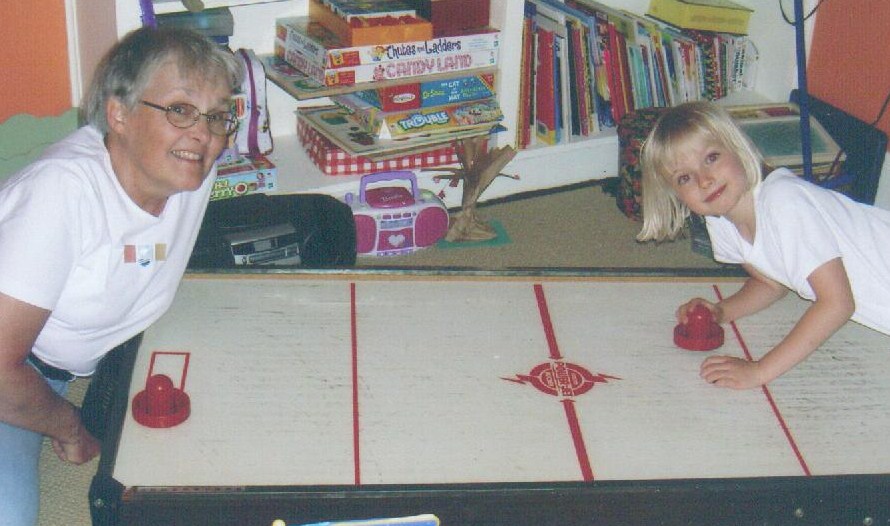
Grandma is always ready for a game with a grandhild, whether it’s air hockey, Chinese Checkers, Candyland or Chutes & Ladders.

002

Grandpa is a lucky man, and he knows it.  He has Grandma by his side, no matter what.  During their long marriage they’ve had their share of hell and high water, in addition to many joys.  They are a formidable team, and together, with their strong faith in God’s love and grace, they know they can weather any storm.  Grandma has a gift for finding and sharing that kernel of sweetness within the tough husk of the bad.

Thank you, Grandma, for enriching the lives of all those you touch.  Happy Birthday, and many more to follow!

*I address my mother-in-law by her first name, which is an unusual, very pretty name. It suits her. But here, I will refer to her as Grandma. When I wrote about H’s father, her husband, I referred to him as Grandpa (June 2012), so I’ll be consistent.

Signs of Fall

Here in northern Virginia, we are fortunate to have a long, luxurious fall season.  Typically, around the start of school, just after Labor Day, the weather turns, as with the click of a switch.  The dense humidity of late August dissipates.  The refreshingly crisp air of autumn starts streaming in.   Mornings and evenings are chilly, afternoons sunny and warm.  The switch usually clicks off again briefly, and summer’s hot blanket gets a few last chances to throw its sticky weight around.  But these are the final gasps of a lost cause; fall’s triumph is inevitable.  And by then, the visual signs of the new season begin to appear.

fALL2012011

The first signs of fall in our area are subtle.  In a cloud of green leaves, a few spots of yellow and orange pop up, as here at the big rock known as Freestone Point in Leesylvania State Park on the Potomac.

fALL2012036

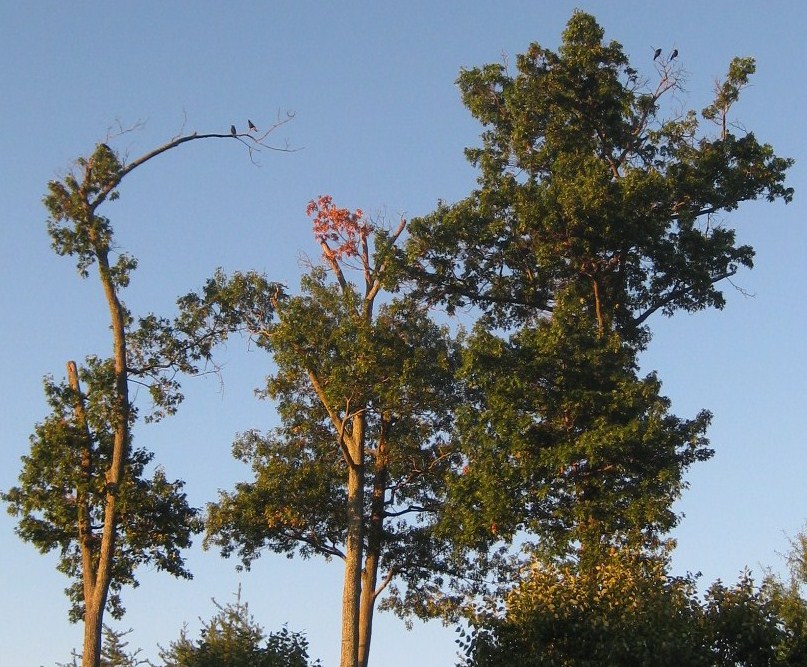
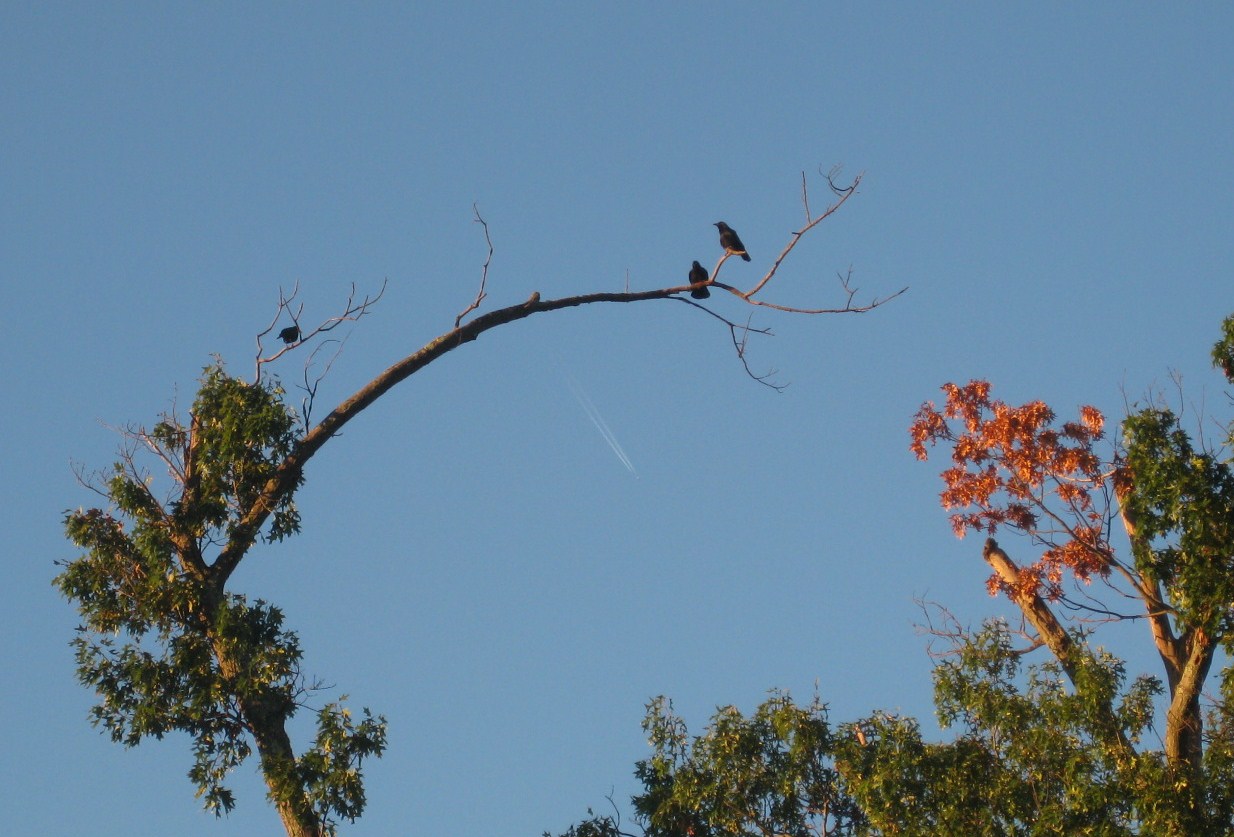
Here, above and below, the crows seem to appreciate the touches of red and gold that beautify their treetop perches.

fALL2012038

fALL2012046

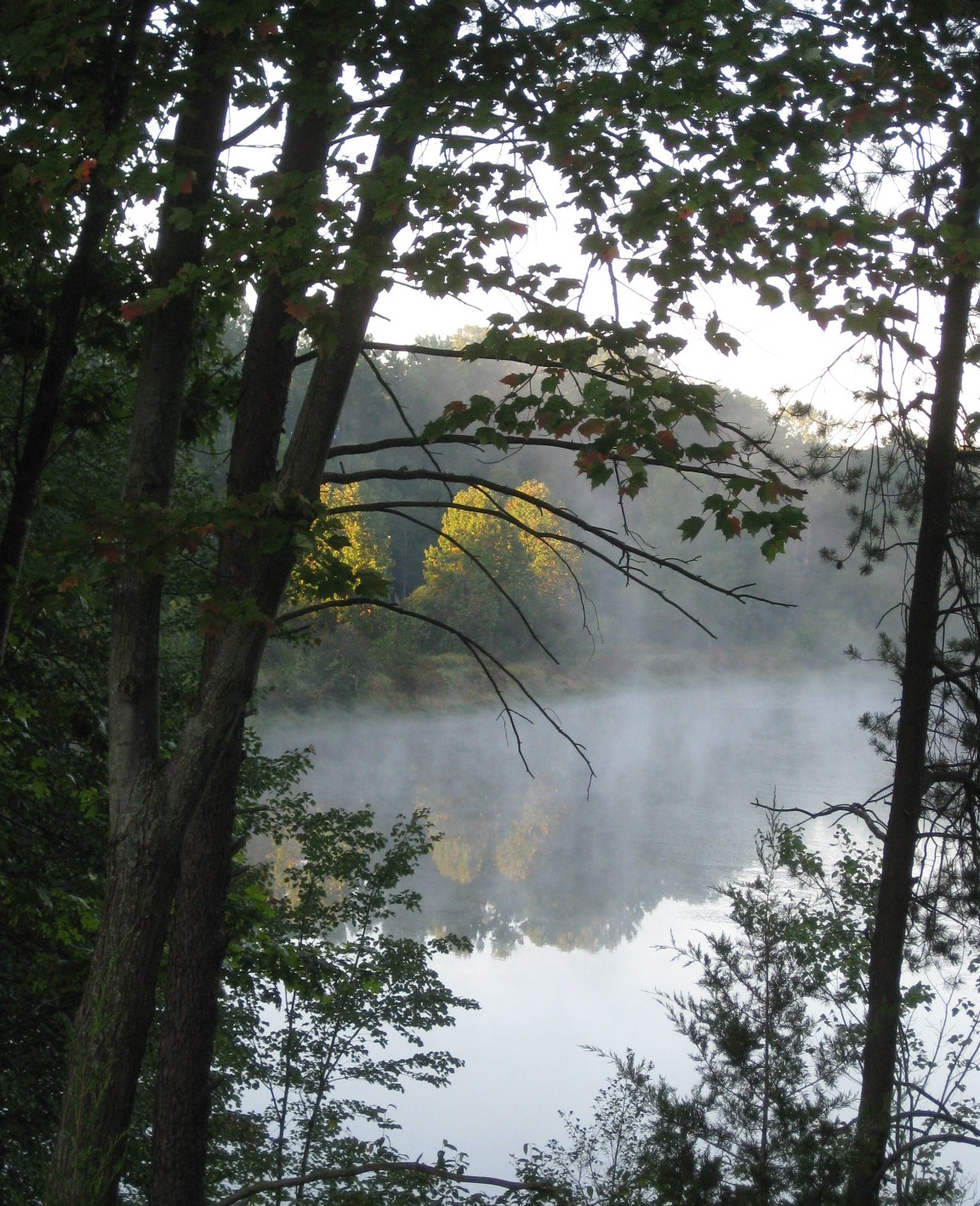
Morning sunlight cuts through the mist off the lake, intensifying the                        glow of newly golden leaves.

fALL2012056

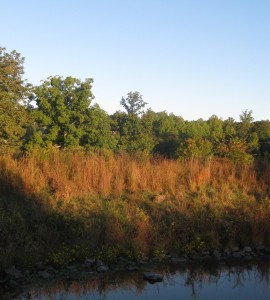
Scruffy, disheveled pond foliage assumes a dignified fall palette of bronze and copper. 

fALL2012057

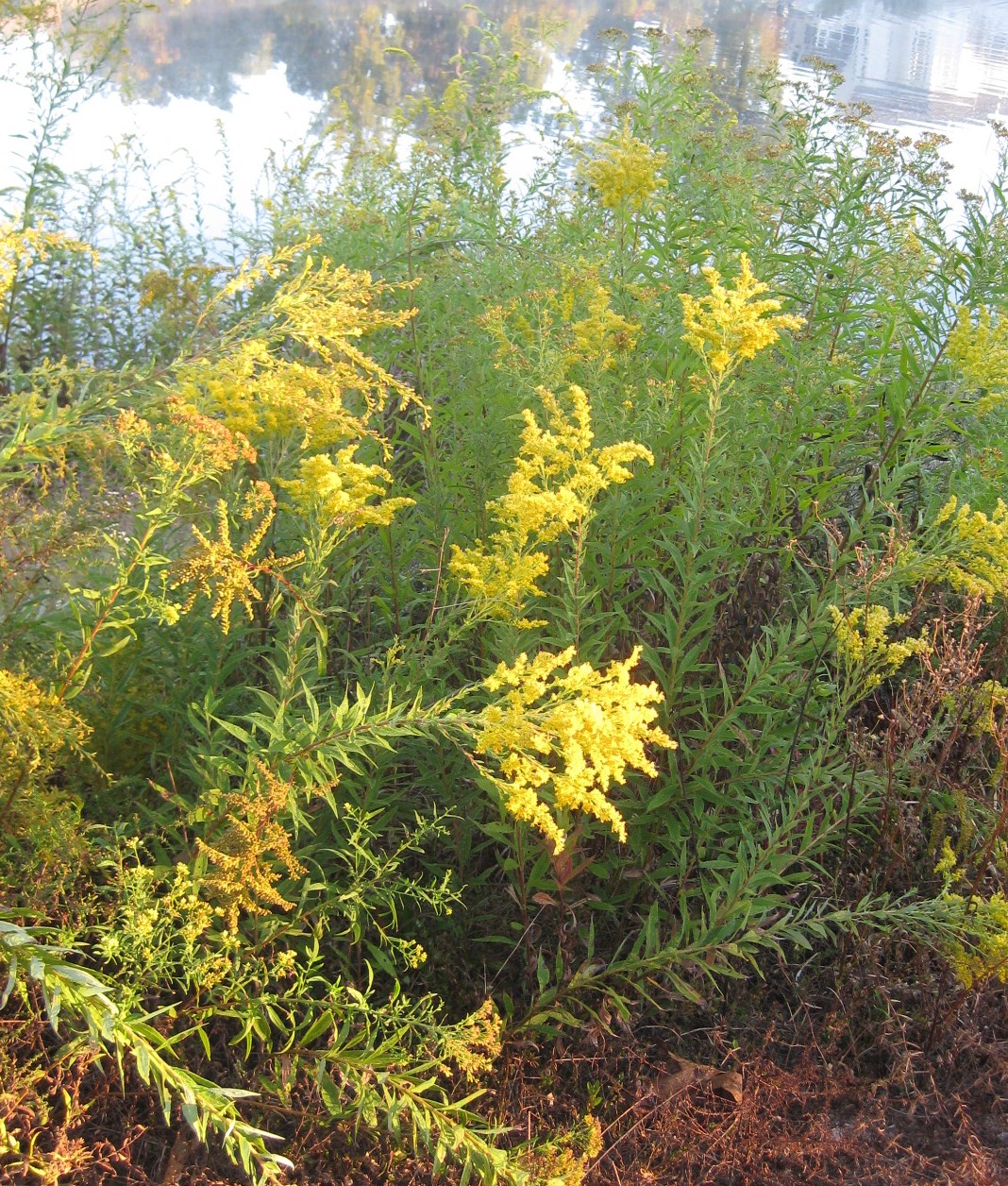
Goldenrod, like crystallized sunbeams, dresses up the banks of the pond.   

fALL2012030

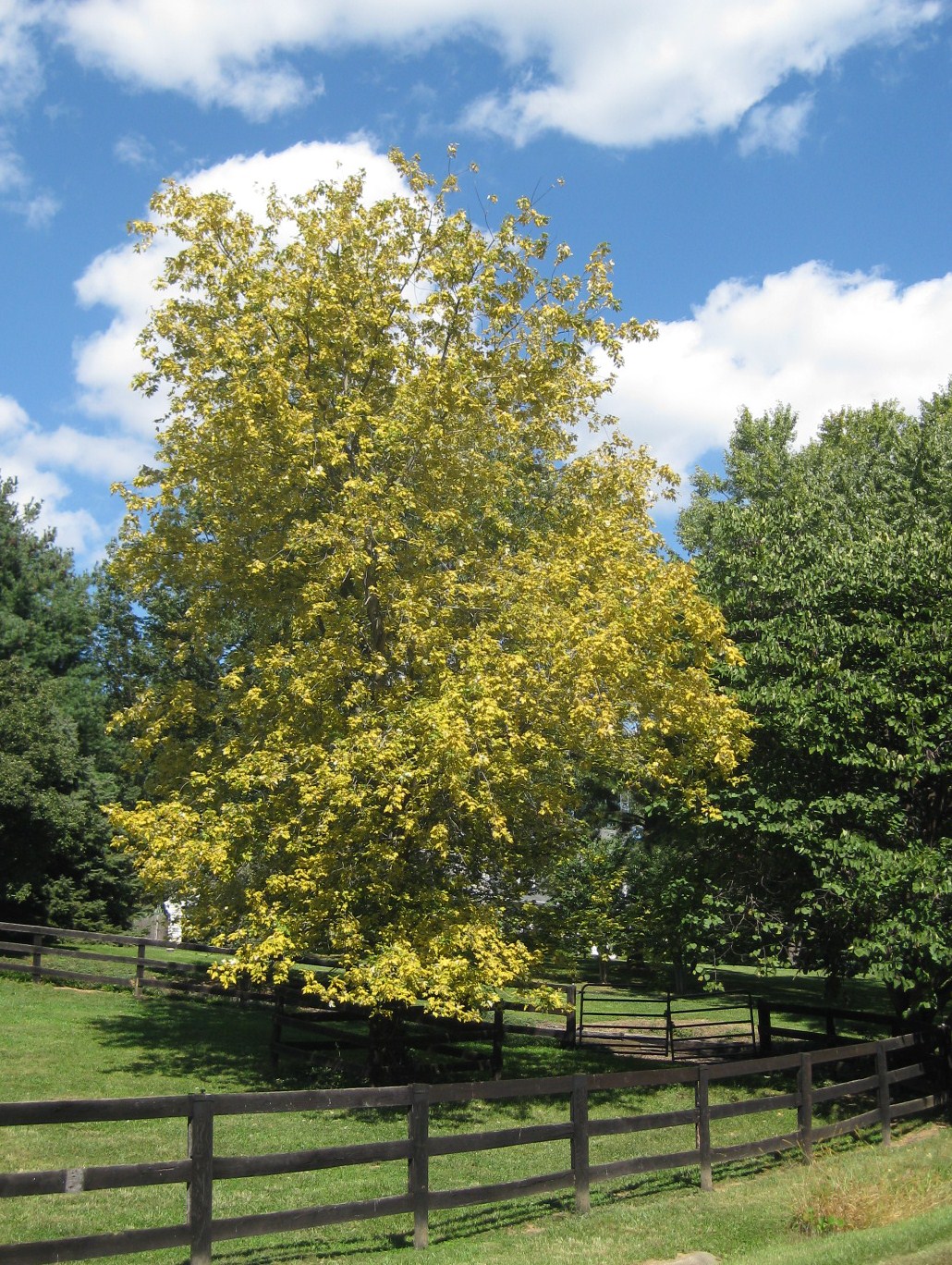
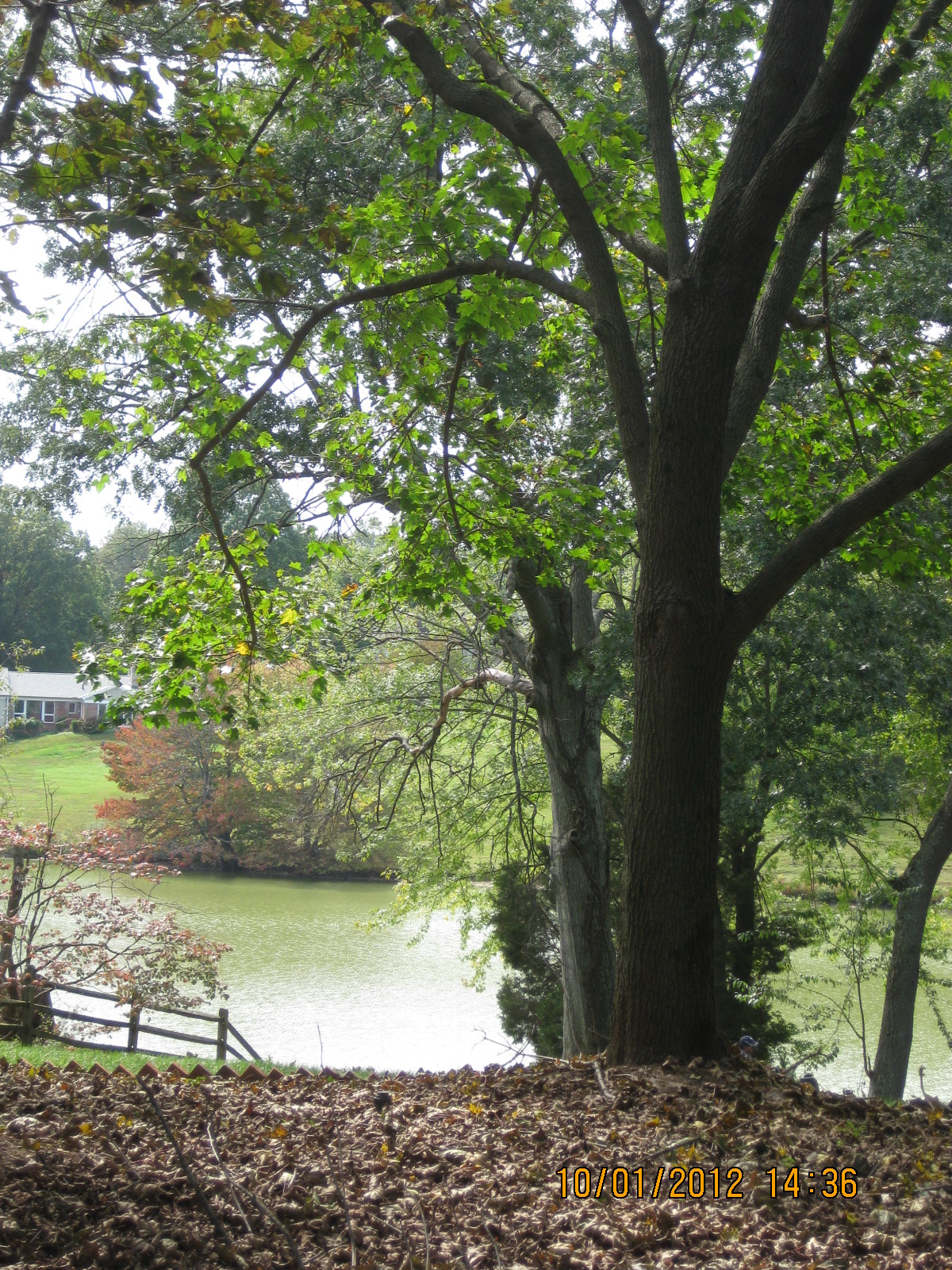
Before long, a few trees, like this maple, above, and the small dogwood in the
distance below, trade all their green for more flamboyant colors. 

October 1 004

In Provincetown: Serenity on Commercial Street

Commercial Street begins in Provincetown’s quiet East End, just across the line from quiet Truro.  The street name appears misleading at first, in this almost exclusively residential stretch, a mix of cottages, grand homes, and historic guesthouses.  The crowds of tourists are absent for the first mile or so.  My daughter and I especially enjoy exploring this serene section of the street, where lush gardens flourish and the waters of the bay provide a bright, sparkling backdrop.

CapeCod2011172

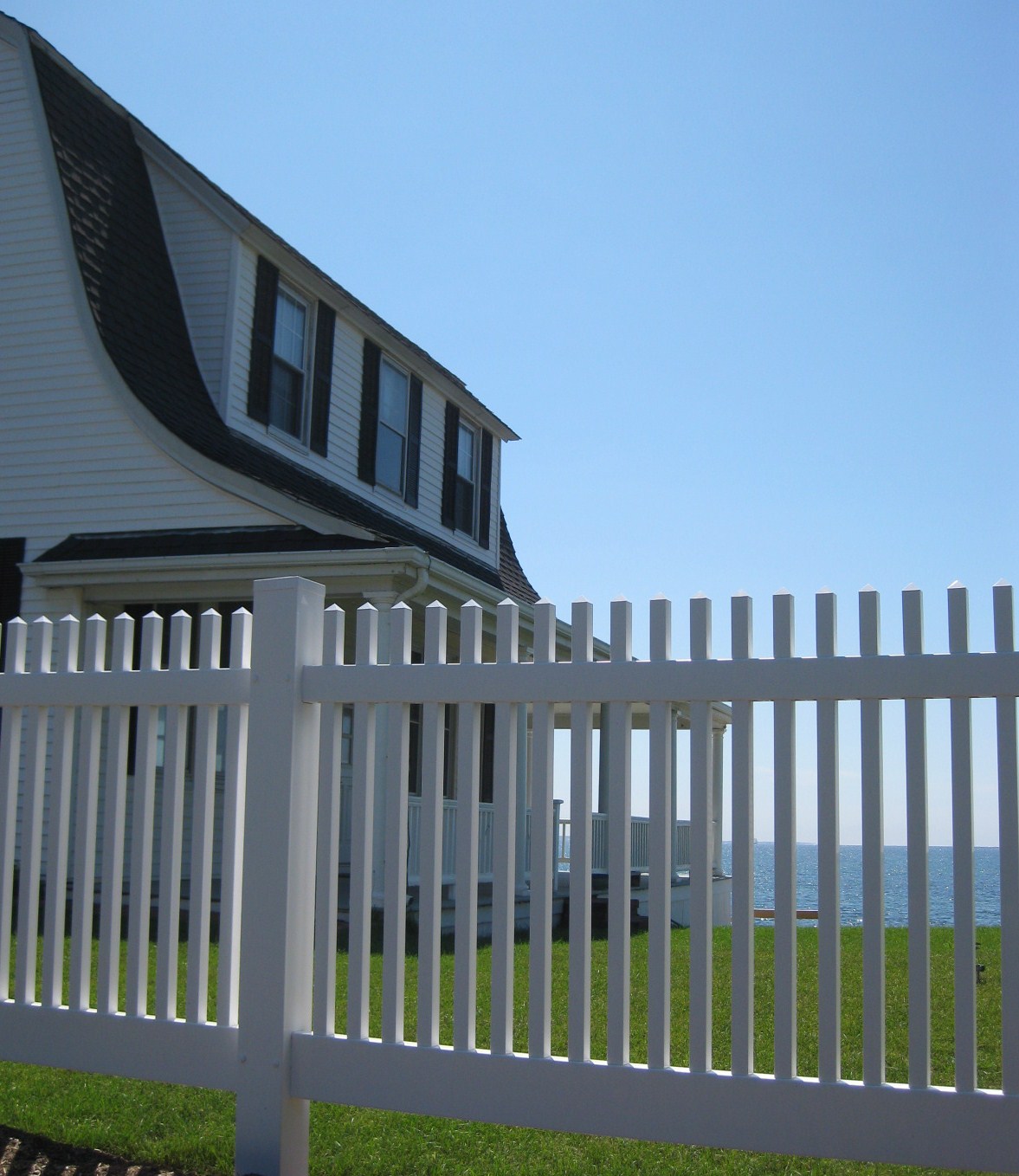
 A favorite subject of local artists, this white Dutch colonial, with its pristine lawn overlooking the bay, is the first home on Commercial Street’s East End.

CapeCod2011114

Pigeons keep watch over Commercial Street from the dormer of the sturdy brick house where Norman Mailer lived and wrote for 25 years.  After the author’s death, the home became the Norman Mailer Writers Colony.

CapeCod2011113

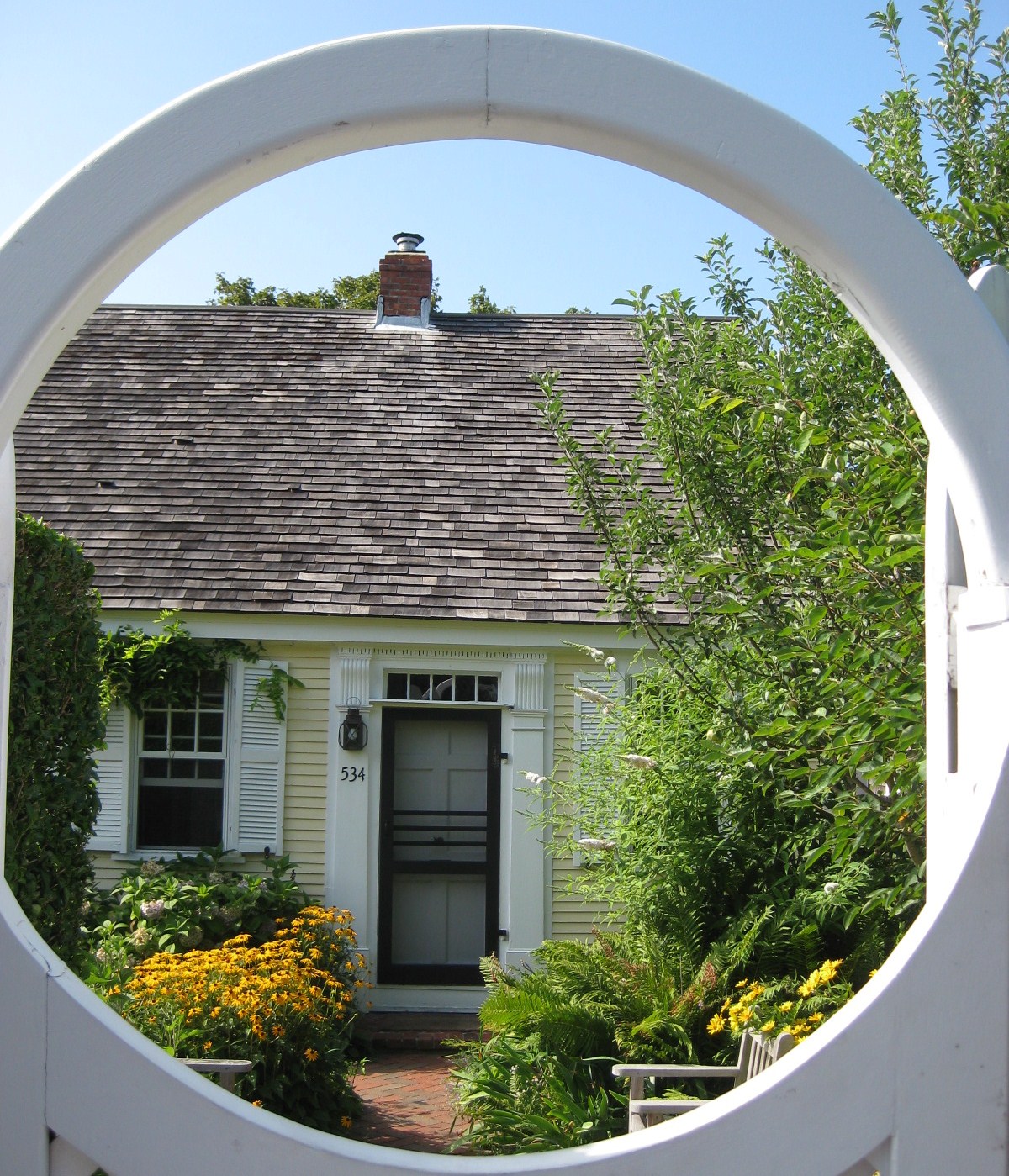
An eighteenth-century Cape Cod cottage, glimpsed through the garden gate.


CapeCod2011173

The gardens of Provincetown, though typcially small, are vigorously hardy, dramatic and colorful.

CapeCod20111121

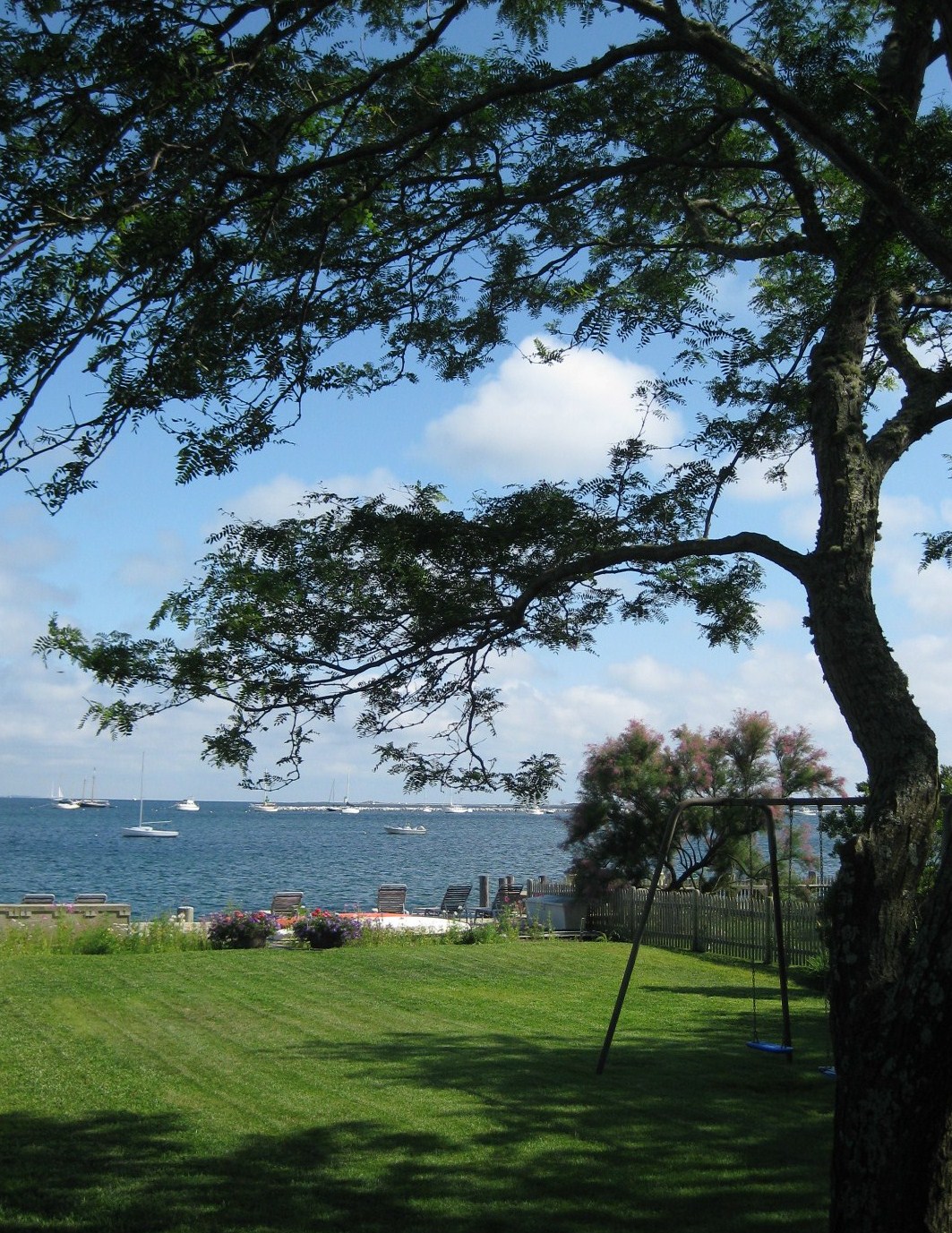
This spacious expanse of lawn, with its rugged old schoolyard swing set, is an odd, unexpected luxury in Provincetown, where bay-side land is at a great premium.

CapeCod2012029

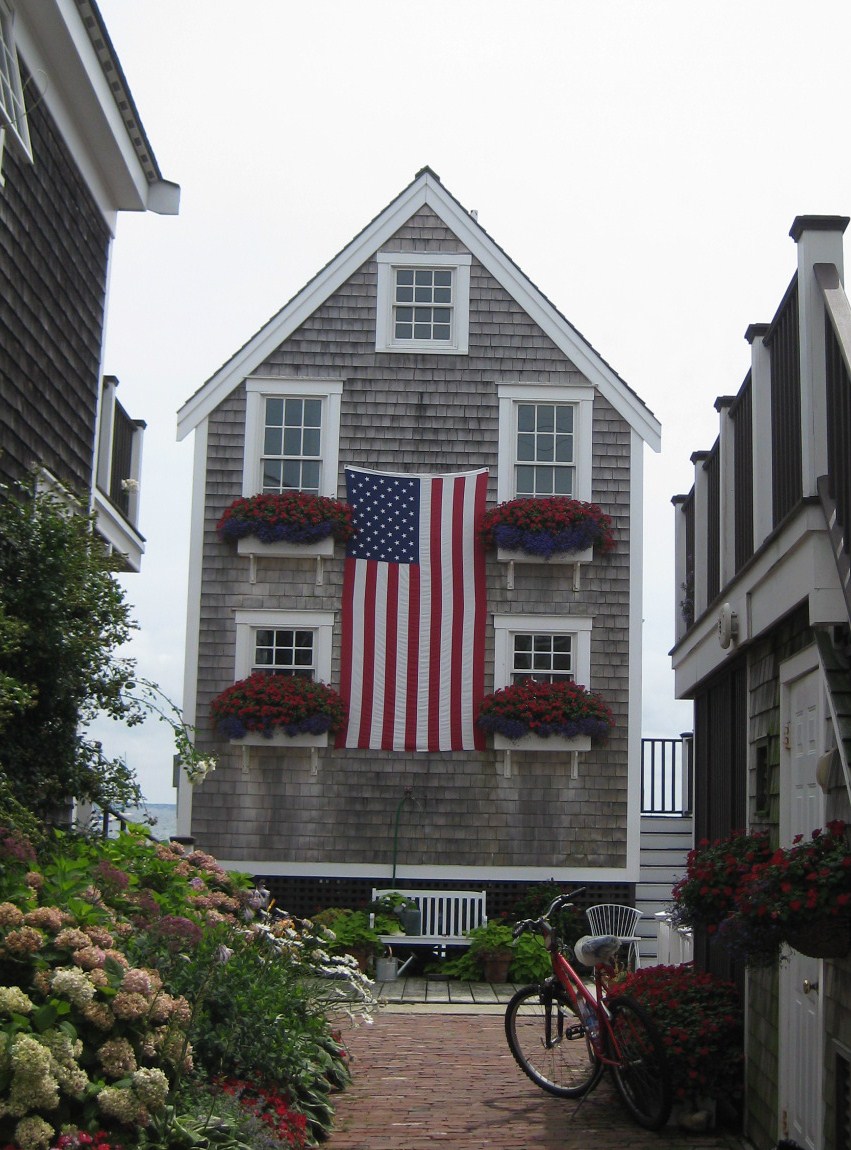
An artfully styled P-town compound, with a patriotic tableau of American flag and exuberant red and blue flowers in white window boxes.

CapeCod2012040

At the Sea Urchin cottage, a profusion of wild roses and a sandy path to the water.

CapeCod2010091

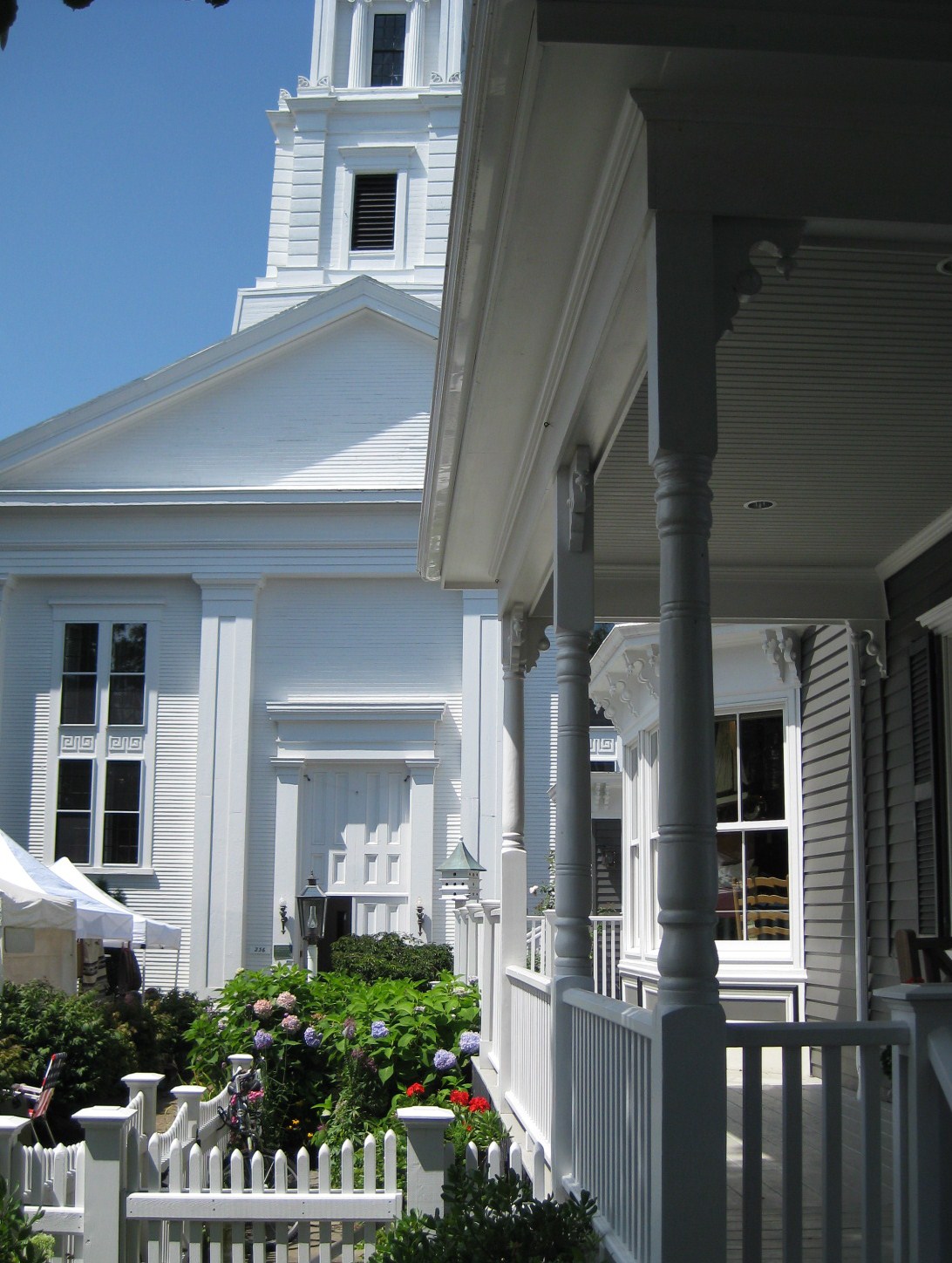
Tranquil spaces may be found even in the busiest section of Commercial Street, as here on the shady porch of Shor, a home furnishings showroom.  Next door is the Unitarian Universalist Meeting House, built in 1847.  The church’s front lawn, when not hosting an open-air market, offers an inviting escape from the crowds, as does its gracious interior, notable for the trompe l’oeil sculptural paintings in the sanctuary.

CapeCod2012080

             The beautifully detailed tower of the Meeting House.

CapeCod2010092

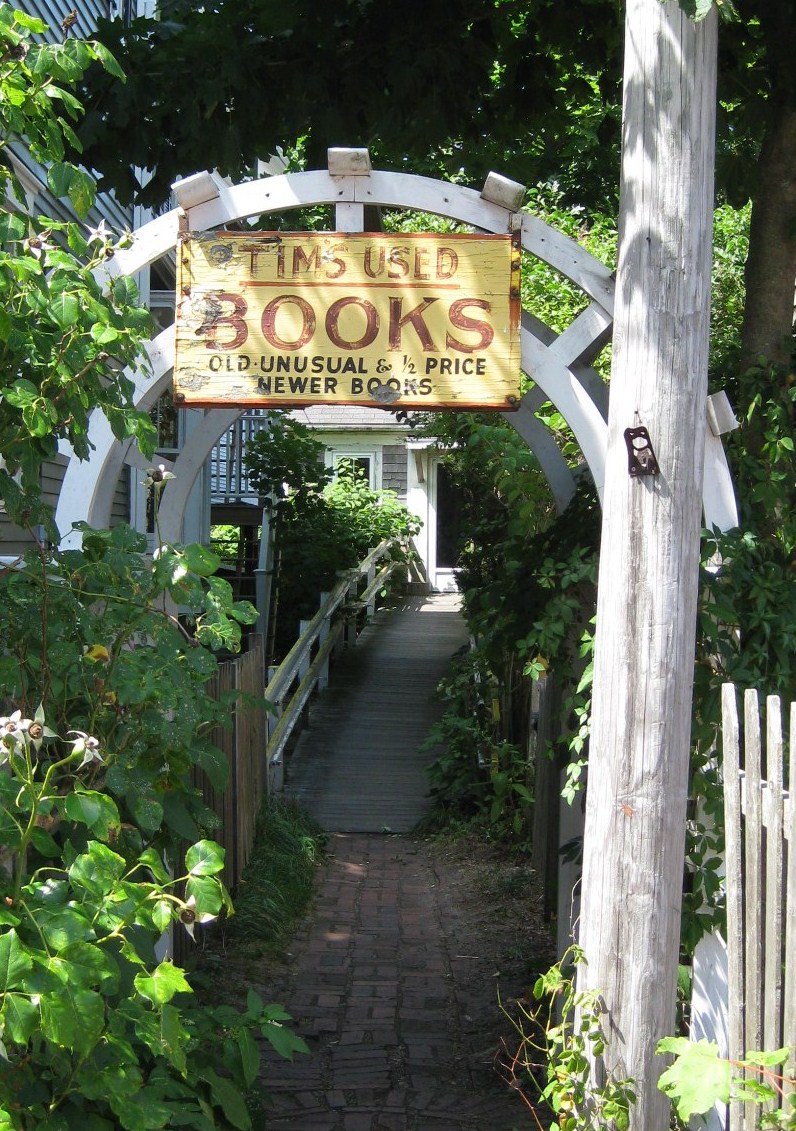
This charming book store, located in a little house behind and surrounded by art galleries in the midst of Commercial Street, is reached by a tree-shaded pathway.  D and I stop in at Tim’s to browse the shelves for interesting bargains and to enjoy the quiet.   

CapeCod2011166

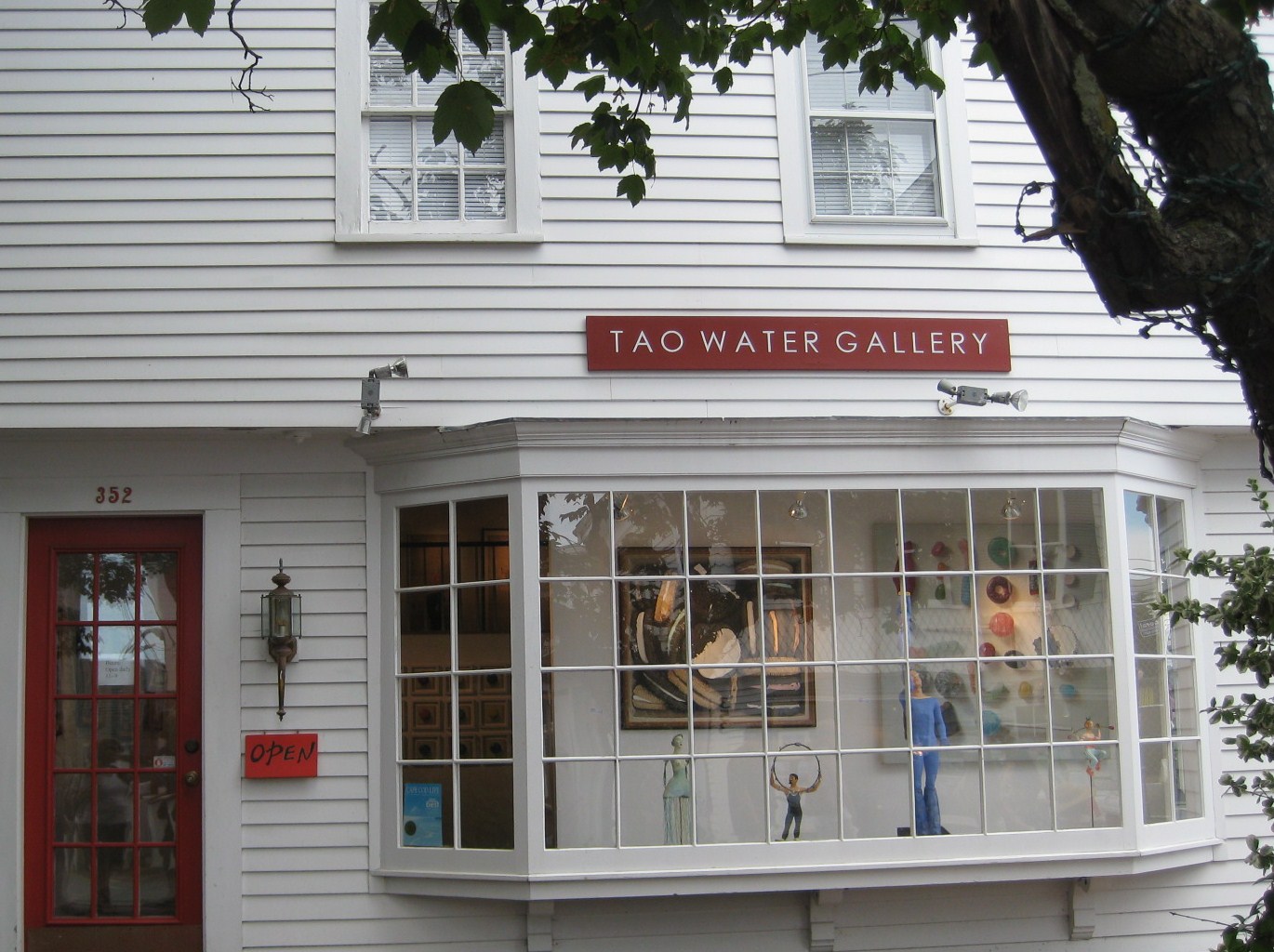
Artists began to discover the small fishing village of Provincetown in the last decades of the nineteenth century.  It quickly became established as an artist’s colony after Charles Hawthorne opened his Cape Cod School of Art in 1899.  Now, over 40 galleries display a wide range of styles.  In the hands of local artists, the regional tradition of atmospheric, Impressionistic landscapes, still lifes and figurative work remains vital and fresh.  The gallery above specializes in bold contemporary Asian art.  Many of the galleries are staffed by the artists themselves, who tend to be friendly and unpretentious.

CapeCod2010004

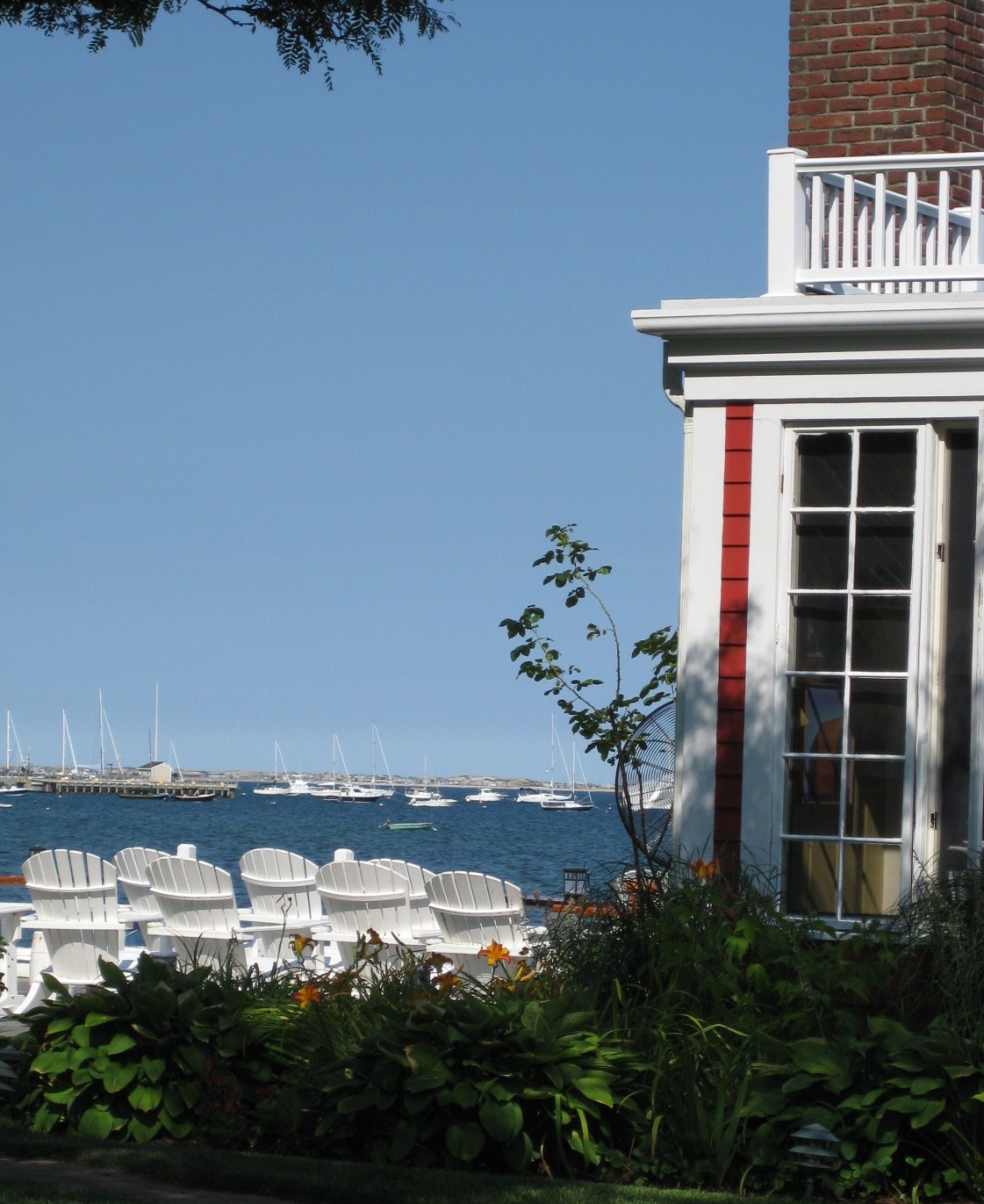
The 200-year old Red Inn, which hosts one of the town’s most acclaimed restaurants, is in Commercial Street’s far West End, past the reach of the heaviest crowds. The deck, with its view of the harbor, is a spectacular spot for a sunset drink. Here, in the repose of early morning, neat white chairs welcome the promise of another beautiful day. 

In Provincetown: The Heart of Commercial Street

Even though I’m glad to feel the September chill in the air, I find myself looking back fondly on August, to our time at the Cape.  Perhaps because the school year has begun, bringing its steady stream of routine duties and a deluge of paperwork, the echoes of those last lazy days of summer are especially sweet right now.
The appeal of our quiet little cottage complex in Truro is heightened by its location next door to bustling Provincetown, shoehorned into the narrow tip of the outer Cape.  It’s a tiny town with an expansive, generous spirit, urban flair, and an edgy sense of humor.  Eccentrics of all stripes, as well as tourists from the heartland, find a warm welcome in P-Town, where ecumenical diversity flourishes.
The central section of Commercial Street, the narrow main artery, is one long party during beach season, when it’s crowded with pedestrians and vehicles.  In Provincetown, the architecture is historic and charming, the street musicians are inventive and mostly talented, the food is excellent, offerings of art, musical theatre and comedy are vast and easily accessible, the drag queens are witty, the world’s most expressive T-shirts are available, and bay breezes blow.  It truly has something for everyone.

CapeCod2012243

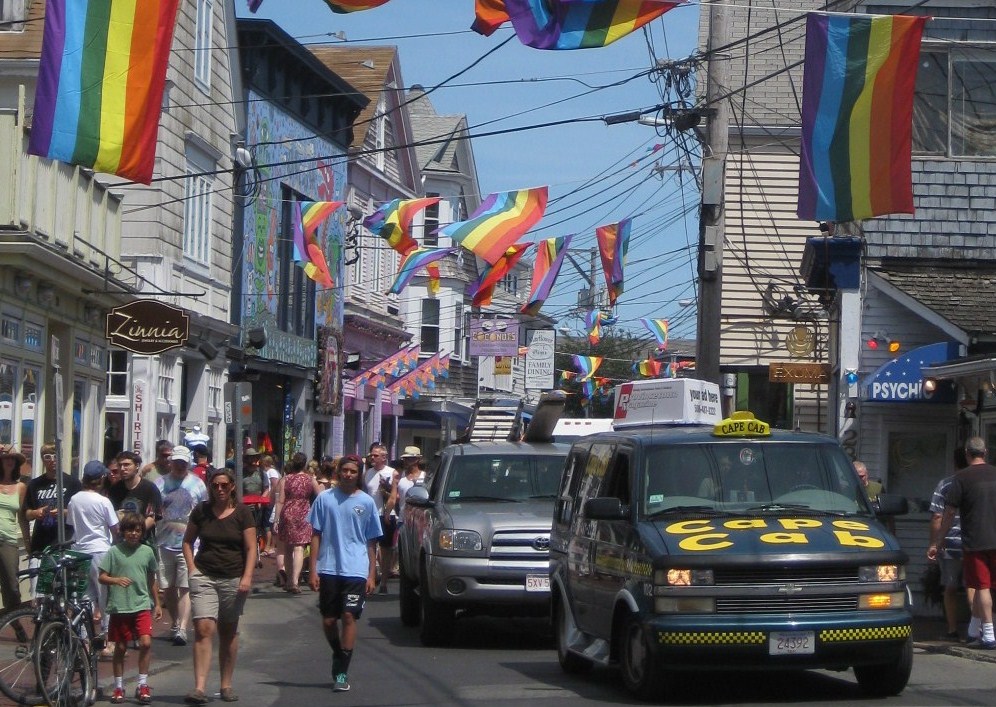
Above, the busy heart of Commercial Street, catching the ever-present Cape Cab in transit.  Its sister vehicles include two wildly painted mini-limos known as the Funk Buses, which offer on-the-road karaoke.  Provincetown is no place for a sensible Lincoln Town Car.

CapeCod2012244

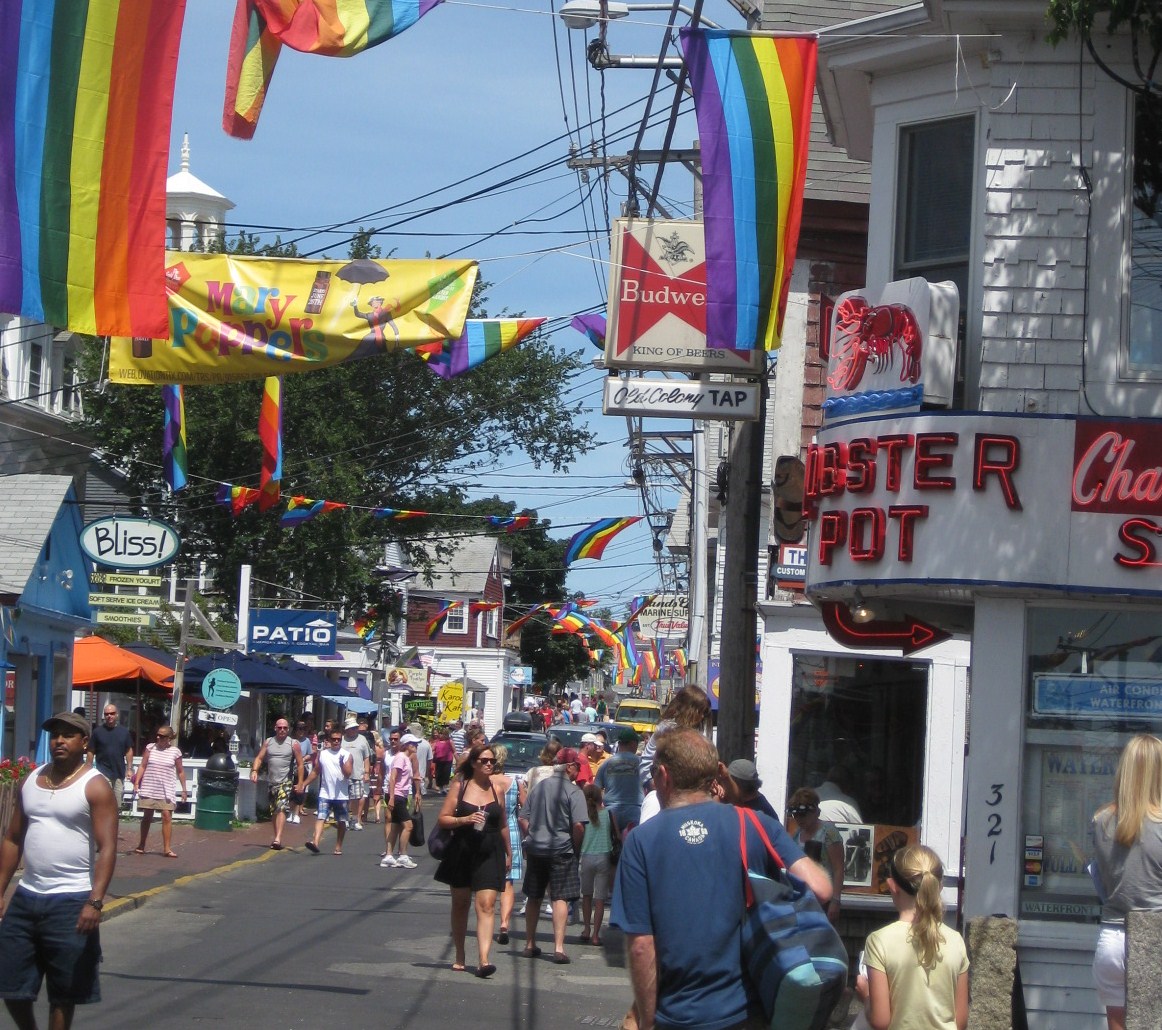
Another view of Commercial Street, above. The umbrella-shaded outdoor dining area at Patio is an ideal spot for people and dog watching.   Provincetown is an enthusiastically pet-friendly town, despite the notable absence of any dogs in this photo.  I counted thirty dogs in one hour last year during dinner at Patio.  Most were on leashes, others were pushed in strollers or carried in handbags.  There was even one puppy in some sort of dog-Snugli.  Because our place in Truro doesn’t allow pets, we can’t bring Kiko, but we almost always see at least one Shiba Inu.   My hope is that someday, somehow, he’ll be able to accompany us.  I like to think he has an artistic sensibility and would feel completely at home here.

CapeCod20120921

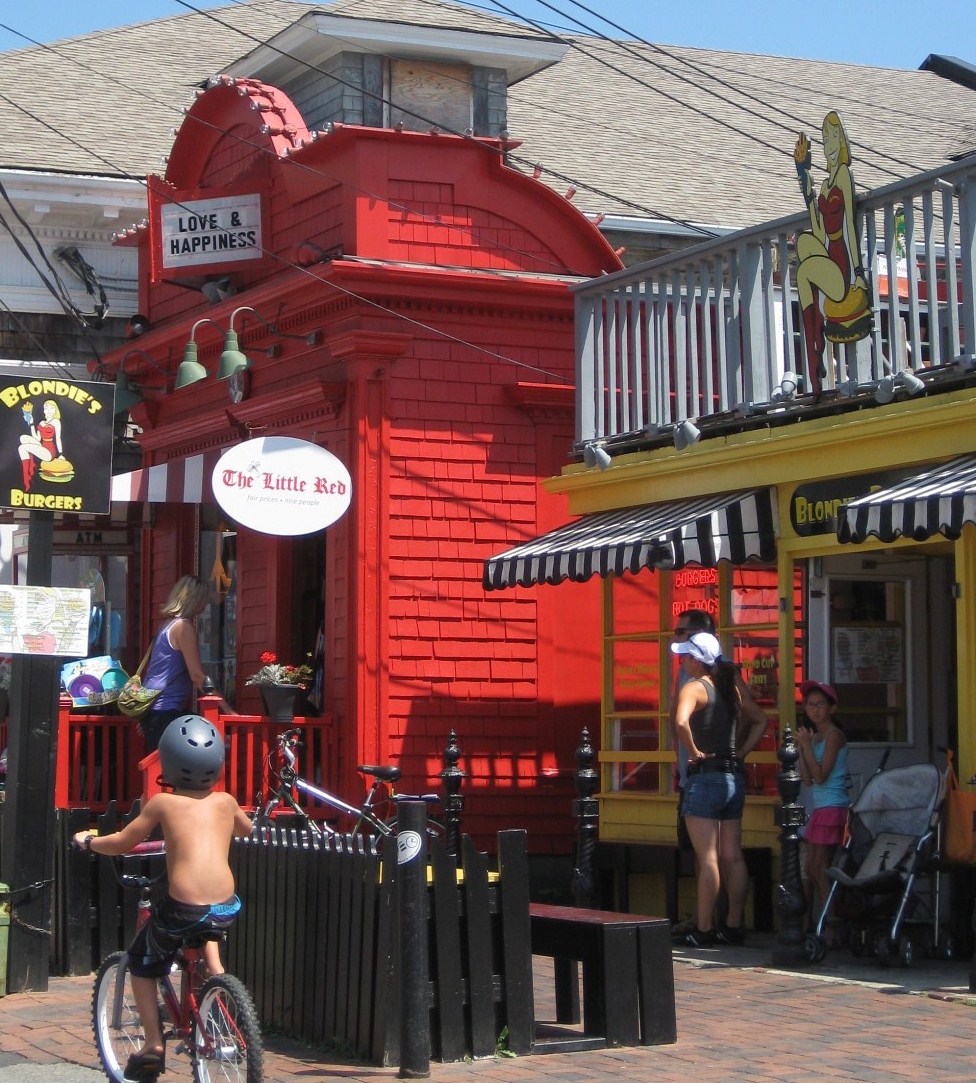
Provincetown, fiercely protective of its unique quirkiness, is resistant to national chains. You won’t find a McDonald’s, a Rite Aid, or a CVS.  No Starbucks, no T.G.I. Friday’s, no Applebee’s.  No Burger King, although, there is, appropriately, a Burger Queen. The Little Red, above, is a friendly, well-stocked convenience store, housed in what appears to be a brightly painted Victorian playhouse. 

CapeCod2010086

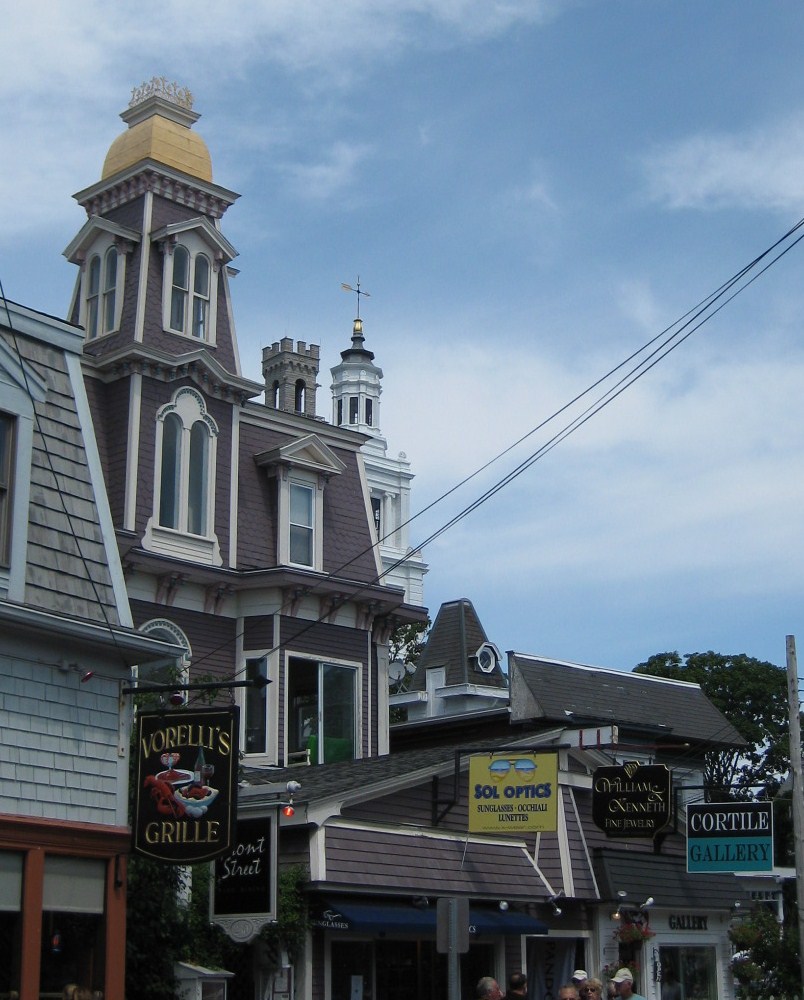
Like many buildings in densely populated Provincetown, this gray turreted house, which could easily feature in an Addams Family film,  has commercial space below and living space above.  The towers of the Pilgrim Monument and the Unitarian Church peek out from behind.

CapeCod2010096

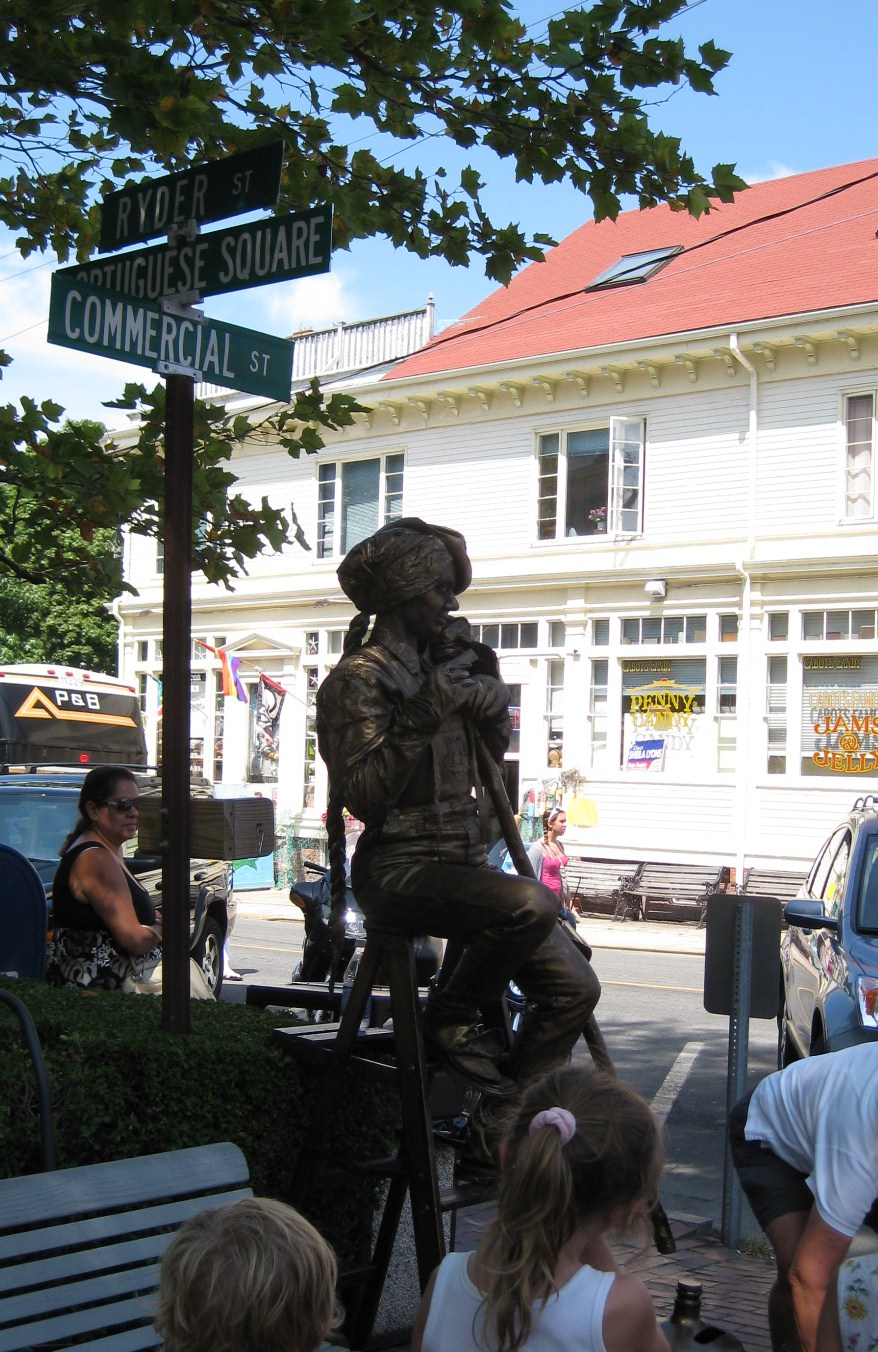
A living statue often occupies a prime spot in front of the Town Hall. Above, during the summer of 2010, Cady Vishniac posed regularly as a bronze figure of a Depression-era hobo. Richard Mason, inspired by Provincetown’s World War I Memorial statue nearby, occupied the corner in 2011, in the guise of a WWI soldier.

CapeCod20122621

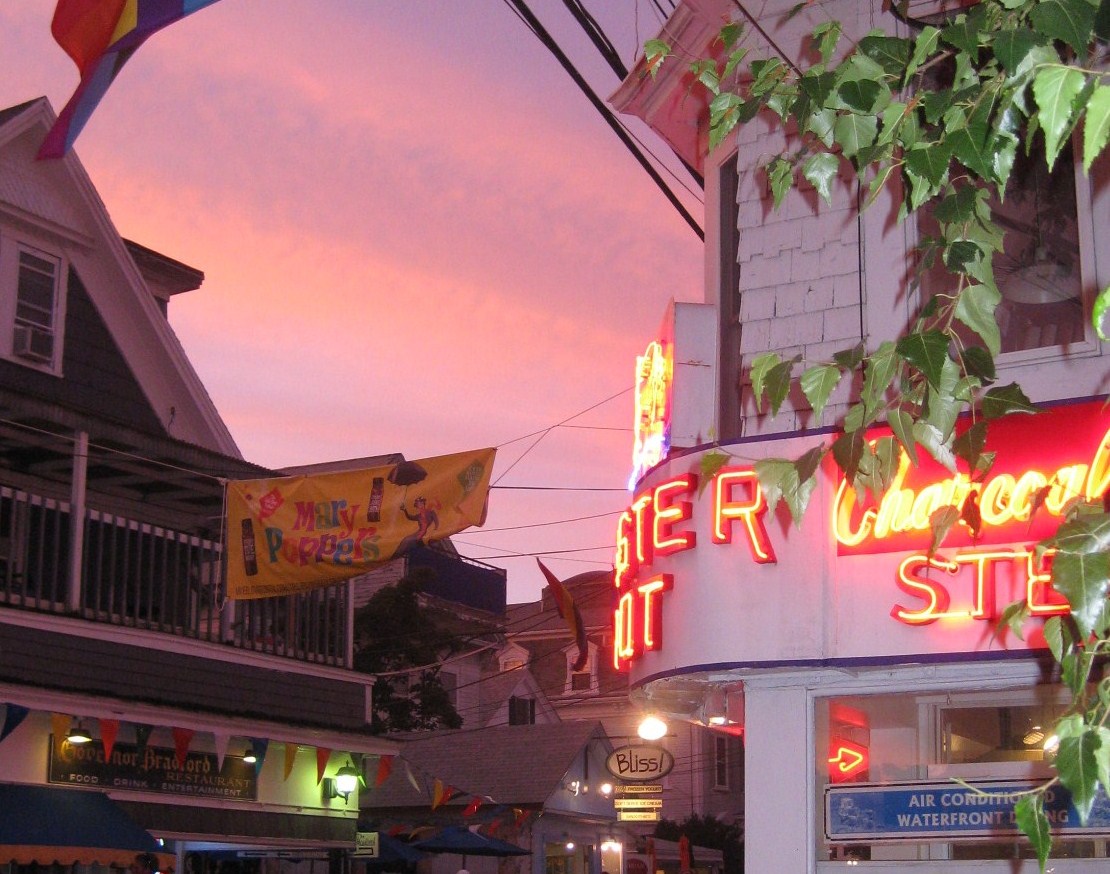
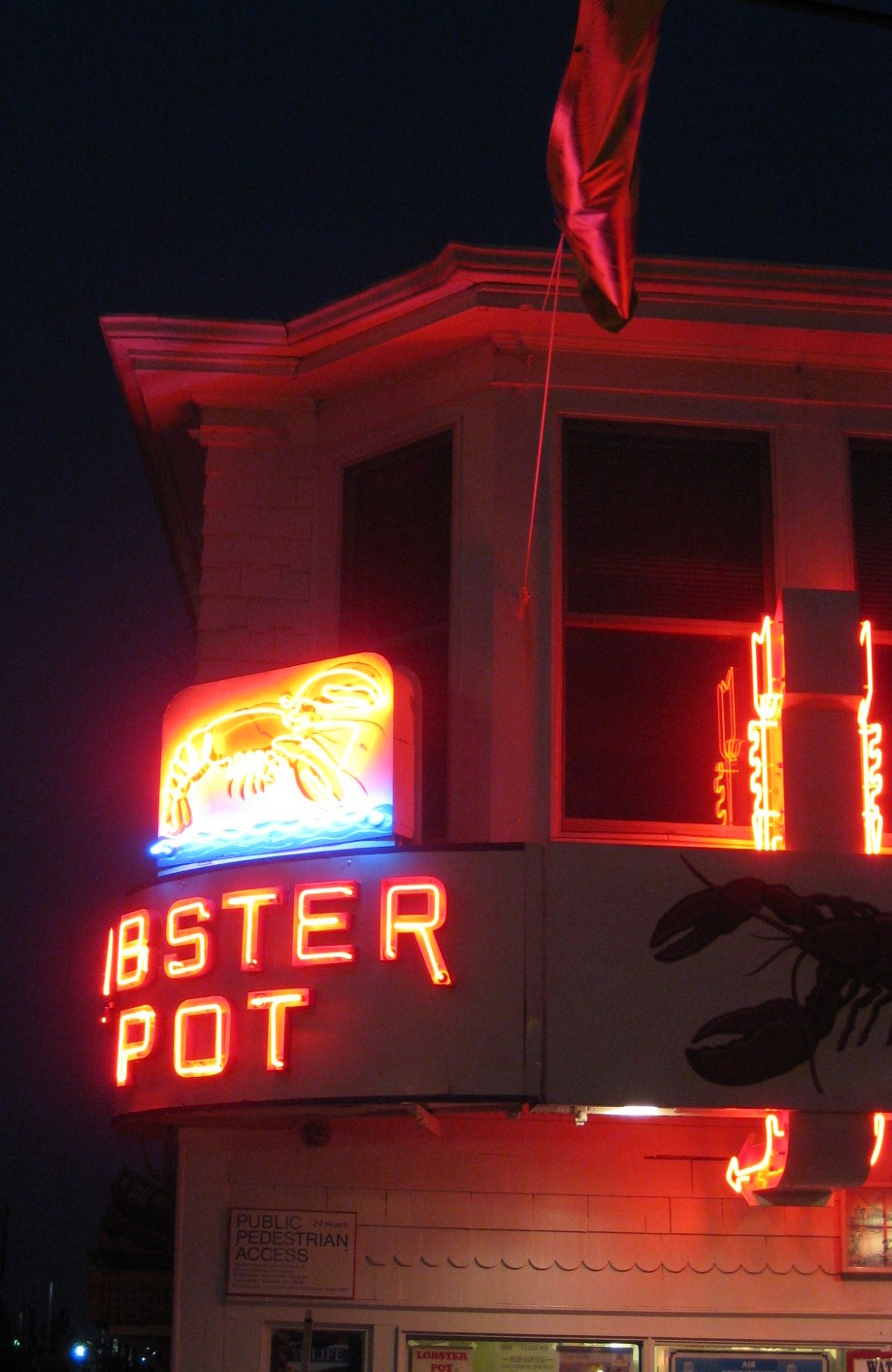
Above, the sun sets on the Lobster Pot and the Governor Bradford bar and restaurant across the street.  I’ve tasted nothing better, ever, I believe, than the pan-roasted lobster at the Lobster Pot.  If you think lobster is lobster, and cannot be improved upon, this will change your mind.  The Pot is always packed, but it’s worth the wait.  Get your lobster buzzer and wander through the nearby shops.

The yellow banner for Mary Poppers prompts me to note that this year, at last, we had a John Waters sighting.  The director and author makes his summer residence in P-Town.   I’ve never seen him riding his bike down Commercial Street, as many have, but we spotted him, unmistakable in his pencil-thin moustache, walking with friends on Bradford Street.  They were heading toward the Provincetown Theatre to see the popular Mary Poppins parody.

CapeCod2012265

The haunting neon glow of The Lobster Pot, a beacon for hungry tourists and locals.

Look for another P-Town post to follow soon: Serenity on Commercial Street.

A Happy First Birthday to Wild Trumpet Vine

CapeCod2012026

Just about a year ago, Wild Trumpet Vine was launched.  My husband helped me set up the domain and get started.  Without my Chief Technology Officer, I could not have entered the blogosphere, and I owe him thanks.

That first night, in a fit of inspiration, I composed the following two elegant sentences:

Welcome to my blog.  Please check back soon for new entries.

Since I was a kid, I’ve dabbled at writing, in fits and starts, rarely to satisfactory completion.  As I’ve said before, I’m a saver, an archivist of minutiae.  Boxes of messy, scribbled-over, food-stained pages document countless abandoned writing projects.  These fall into several phases, including the Smith-Corona period from high school and college, the IBM Selectric era (when my mother’s office upgraded, we purchased her old typewriter), and the Mac Plus/dot matrix printer years during grad school.  (When I bought my first PC, which had a screen somewhat smaller than the original Kindle, the Internet was hardly more than a vague, crackpot notion.)

Most of my writing, in addition to being fragmentary and unfinished, remains unread, except very briefly, by me. There is the exception, I hope, of the many letters to friends and family.  I turned these out at a particularly quick pace during my first job at the High Museum of Art.  I was a fast typist (this was my only real marketable skill), and after transcribing my boss’s letters, there was usually time to pursue my own voluminous correspondence.  I was in my twenties, my social life was active, and dear friends were newly scattered across the country.  Those were the days when I had much of consequence to report, and much on which to comment.  My letters were a substitute for the immediacy and intimacy of college life, together with friends, face-to-face, every day.

I almost forgot: there is one real writing project I did complete: my Ph.D. dissertation in art history, which is 345 pages long, accompanied by 150 pages of appendices and 289 photographs. It includes every obscure scintilla of information anyone could ever care to learn about a group of 14th-century English Apocalypse manuscripts. Most people, of course, are perfectly happy knowing absolutely nothing about these books. My tour de force was read by at least five people, my advisers. I’m sure of this because they scrutinized and questioned nearly every word during the four long years it took me to write it. My mother claims that she also read it. Now, impressively bound, the three volumes lead a life of quiet retirement on the bookshelves of our family room.

Other than my foray into medieval manuscript illumination, what I’ve always written about is daily life, and Wild Trumpet Vine continues along this course.  I learned decades ago that I have neither the imagination nor the inclination to write fiction. Even today, in sedate suburban middle age, I am impressed by the richness that day-to-day living throws my way. I marvel at life’s quirks, its absurd, unexpected turns, its unbelievable coincidences, its oddities and its unpredictable moments of intense sweetness, when meaning is glimpsed in the midst of nonsense, and love triumphs over cruelty.

Wild Trumpet Vine is, in some sense, a more efficient version of my letter-writing.  It refreshes existing links of friendship and family.  Because I have many more years under my belt, my friends are more numerous, and far more scattered, than ever. With marriage, my family network has expanded considerably.  I used to be an only child, now I have multiple brothers, sisters, nieces and nephews.  The blog has worked to strengthen long-standing family ties, as well.  Growing up, I knew many cousins only in name.  Now, building on the bonds of kinship and the power of shared memories, we’re  enjoying the blessing of friendship.

My little blog has a further advantage over letter writing:  it encourages a wider, stronger web of connectedness. When new acquaintances, or friends of friends, are  moved to comment, it is typically to say I know what you mean!  I feel the same way!  Their feedback emphasizes the depths of our common experience.  Differences of culture and background–the details that may separate us–tend to fade away as the light of our humanity shines through.

To all those who join me, either regularly or occasionally, at Wild Trumpet Vine, I thank you.  Your comments are always welcome–you needn’t agree with me to respond.  Stick with me as we continue the journey.

CapeCod2012054

Out of the Blue: A Prayer for 9/11

Sept11009

The weather is beautiful today here in northern Virginia.  The sky is clear and blue, the sun is bright, and the crisp, fresh promise of fall is in the air.  Eleven years ago, September 11 began just as gloriously.  We had no idea what was coming.

This morning, as I typically do on every September 11 since 2002, I find myself keeping an eye on the clock as 8:46 approaches.  Anything I might say about my memory of that day runs the risk of sounding trite or self-important, so I won’t attempt it.  All I can do is offer my prayer, in hopes that its power will be magnified as it joins and rises with the great cloud of kindred prayers around it.

On this September 11, I ask for God’s blessings on all those whose lives were irrevocably and tragically altered on that terrible day.  For the thousands who died, and for the many more loved ones who grieve for them.  For the children who grew up without a parent, for the spouses whose partners never returned, for the grandparents who became parents to their lost children’s children.  For those whose pain still pierces, and for those who suffer guilt because some healing has taken place, because cherished memories have dimmed.

I give thanks for the many heroes who sacrificed their lives or endangered their health on that day to save strangers.  For the firefighters, police and rescue workers who bravely answered the call to duty.  For unlikely individuals, like the passengers of United Airlines Flight 93, who rose to the daunting challenge.

I give thanks for the unity we feel as a nation each year on September 11.  I pray that it might outlast this one day.  In the poisonous political atmosphere of this election year, may it inspire us to set aside our bitterness, for a while, at least, so that we might work together.

And, most of all, I thank God for the good that always comes from bad, even if, in our sorrow and anger, we may not see it until months or years later.

May we be especially receptive to the vitality of God’s blessings on this September 11.  I pray that we will feel God’s mercy and love descending on us all, from out of the blue.

00128
The lower Manhattan skyline seen from Liberty State Park, NJ on August 19, 1991.