Category Archives: Parenthood

Shoe Storage, The Gift that Keeps on Giving

Toward the beginning of this Christmas season, my daughter printed out a Family Christmas List, with spaces for gift requests from each of us.  She posted it in a central location in the kitchen.  At first I couldn’t think of a single item for the list.   I have enough stuff.  And on those occasions when I do need something,  I generally prefer to pick it out myself.  Soon I thought of one thing:  a nice winter scarf suitable for dog-walking.  I’ve had the same one since 1987.  While it’s still perfectly good, another would be welcome, and D has a good eye for scarves.  Somewhat later, in a flash of light bulb inspiration, my dream gift popped into my head:  shoe storage!  This, indeed, may be a gift that keeps on giving.


Our house, as I’ve noted before, is closet-challenged.  It’s a four-square farmhouse built in 1920.  Closets and bathrooms were added during the early 1970s.  Orange shag carpeting was also installed in copious amounts at this time, one reason the house remained on the market for so long before we bought it ten years ago.  We have a wide center hall but no optimal storage on the first floor unless one counts the closets in a bathroom and in an office that doubles as a bedroom when overnight guests are plentiful.  Neither space is ideally located, to say the least.

For a family of three, we have an inordinate number of shoes, especially those for outdoor activities.  We have shoes for running, for gardening, for hiking, for use in snow, in rain, in rivers and oceans.  We have high boots, low boots and medium boots, most of which are typically caked with mud and leaf debris.  We have many pairs of old, scruffy shoes saved for the messiest of uses:  walking through mucky fields, exploring the creek, climbing trees, working in the garage or the basement, etc.  Some are very nearly too small or worn out but still may be of use in a pinch, if, say, all our other shoes were swept away in a tornado.  These are too shabby to be given away to any charitable organization, but too good, it seems, for outright disposal.  As H’s father would say, we have back-ups for our back-up shoes.  And then there are the comfy shoes, the legions of slippers, rarely worn.  They stay with us, it seems, out of habit and for the sake of occupying space.

Our  shoes tend to congregate in the kitchen around the back door and in the hall by the basement door.  Like so much household detritus, they evidently have the ability to multiply spontaneously.  Opening either door is impossible without first rearranging great piles of shoes.  I dislike this process as much as I dislike moving the little things off the kitchen table.

I’ve been complaining about our lack of shoe storage for nearly as long as we’ve lived here, to little avail.  I usually deal with it by stomping around angrily and muttering derogotory remarks about my beloved family members while hauling their shoes upstairs or downstairs.  This does not make me happy.

I finally realized that the problem might be solved by incorporating it into a gift request.  My husband and daughter take gift requests very seriously.  They excel at tracking down gifts (and they enjoy gift wrapping challenges, but that’s another story.)  Several years ago I began asking that the impatiens be planted as a Mother’s Day present.  Therefore, on Christmas morning, I opened a substantial package containing varieties of shoe storage:  hanging racks, standing racks, storage boxes with hinged lids, others that defy easy description.  On December 26, shoe storage solutions were installed and in use.  I was delighted.  Change had arrived.

H and D have adjusted swimmingly; their shoes are tucked away as intended.   The problem now seems to be that I can’t get used to the new system.  I keep leaving my shoes by the doors to the kitchen and basement.  I have received two tickets from the Home Improvement and Neatness Patrol for illegal shoe deposit.  I’m going to have to get with the program.  I can’t be responsible for the failure of shoe storage; I want that gift to keep on giving.
ChristmasDay012

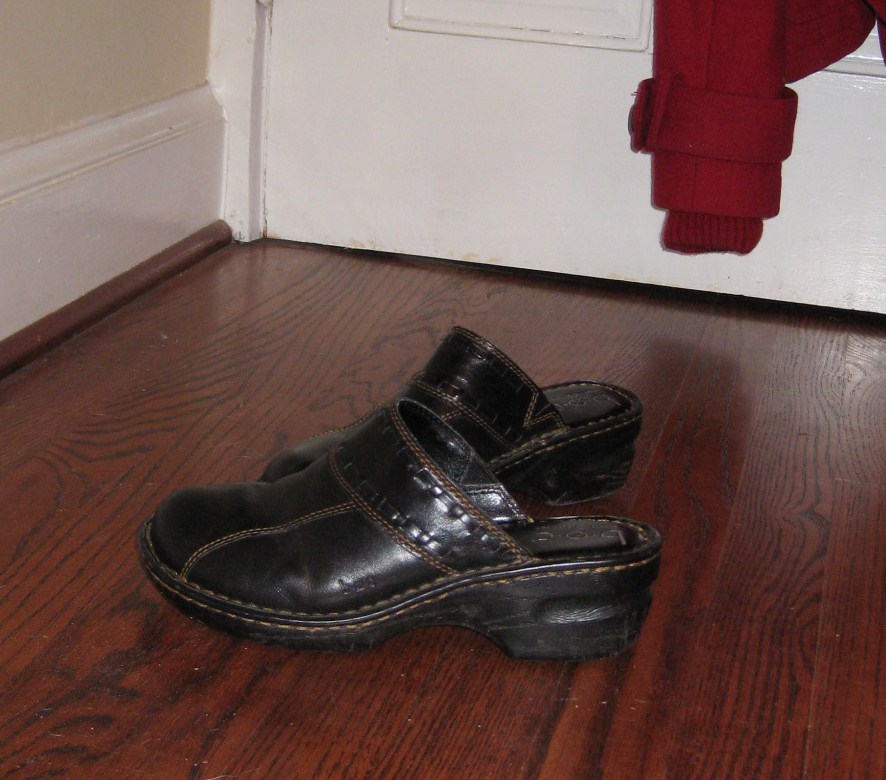
  My shoes, conspicuously all alone.  I resolve to do better!
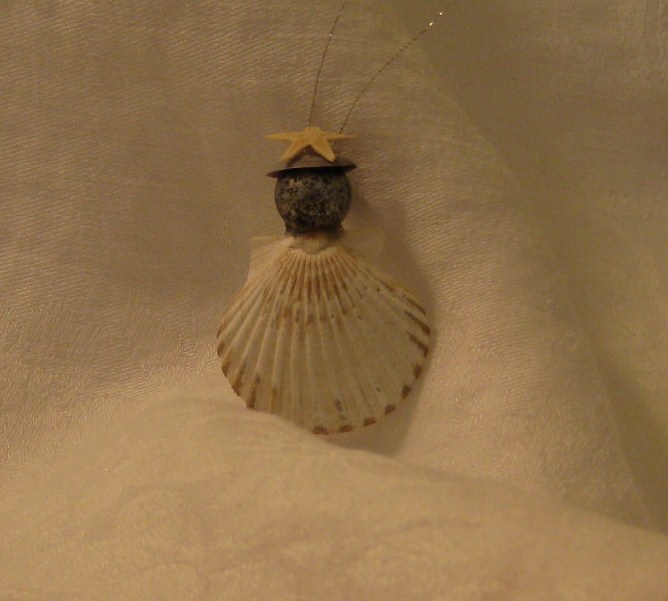
Cape Cod Shell Angels

Scallopshellangels017

My husband’s family has vacationed in Cape Cod since he was a little boy. They cherish their time on the Cape. It’s a Family Tradition marked by capital letters and exclamation points. They will battle illness and adversity to reach the Cape. Fortunately, I appreciate the unique environment as much as they do. We began taking our daughter there when she was two. Her love of the Cape was immediate, as natural to her as breathing. H’s parents were immensely pleased with the discerning wisdom of their young granddaughter.

Our quaint little rental cottages look out across the bay to the Pilgrim Monument in Provincetown and the lighthouse at the tip of the Cape. We feel privileged to spend time each summer in this transitional, luminous, glorious spot. As in such magical places as Cornwall, Mont St. Michel and Key West, the expected balance of land and water has shifted. The land resembles a narrow ribbon drifting on the water. The sky is vast. The light is awe-inspiring, ever-changing.

The land itself is in constant flux. I was unprepared for the quiet drama of the bay. Growing up, my beach experiences were limited to the Gulf of Mexico and the Atlantic coasts of Georgia’s  islands. Both are beautiful areas, but they lack the sharply defined tidal contrasts of Cape Cod Bay. Every year without fail, soon after we arrive, a knock at our screen door signals Grandpa’s delivery of our copies of the tide chart, our guide to daily life. At low tide, the flats extend nearly as far as the eye can see. The shallows glimmer like silver in the shifting sunlight. When the tide begins to rush in, the change is at first almost imperceptible. Before long, though, the water is swirling around us, its determined, unstoppable force clearly evident. At least once every day, we watch as the expanses of sand shrink into islands, smaller and smaller, before they become completely submerged again.

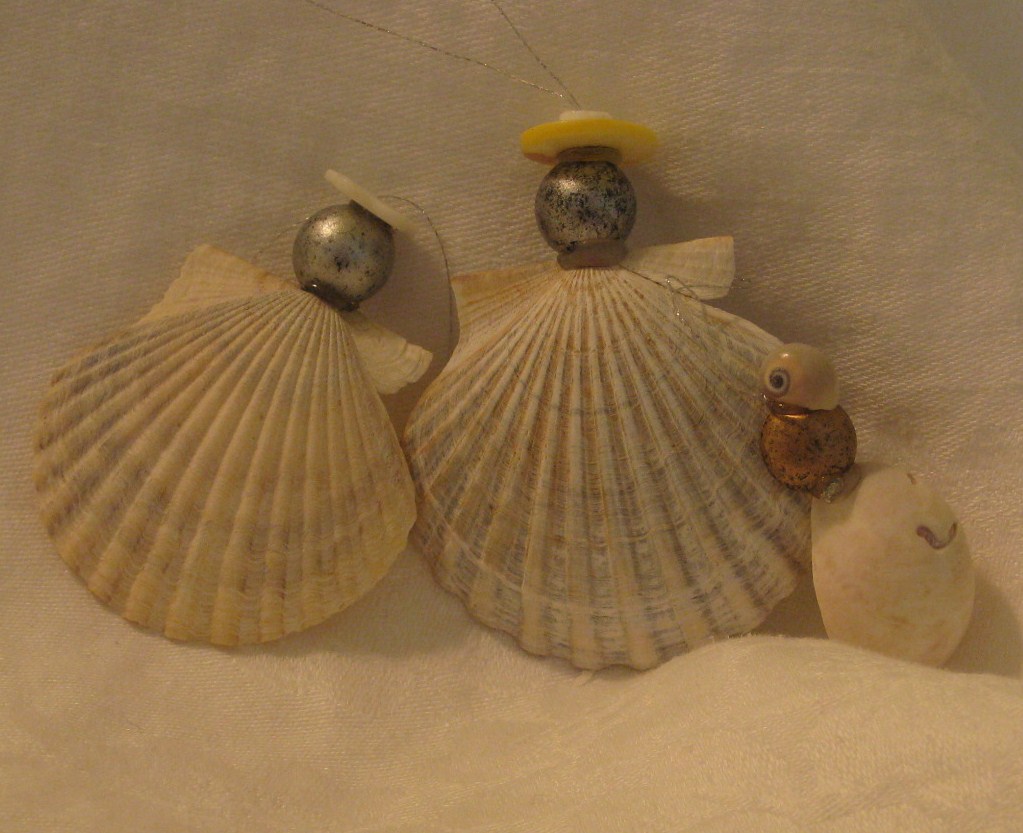
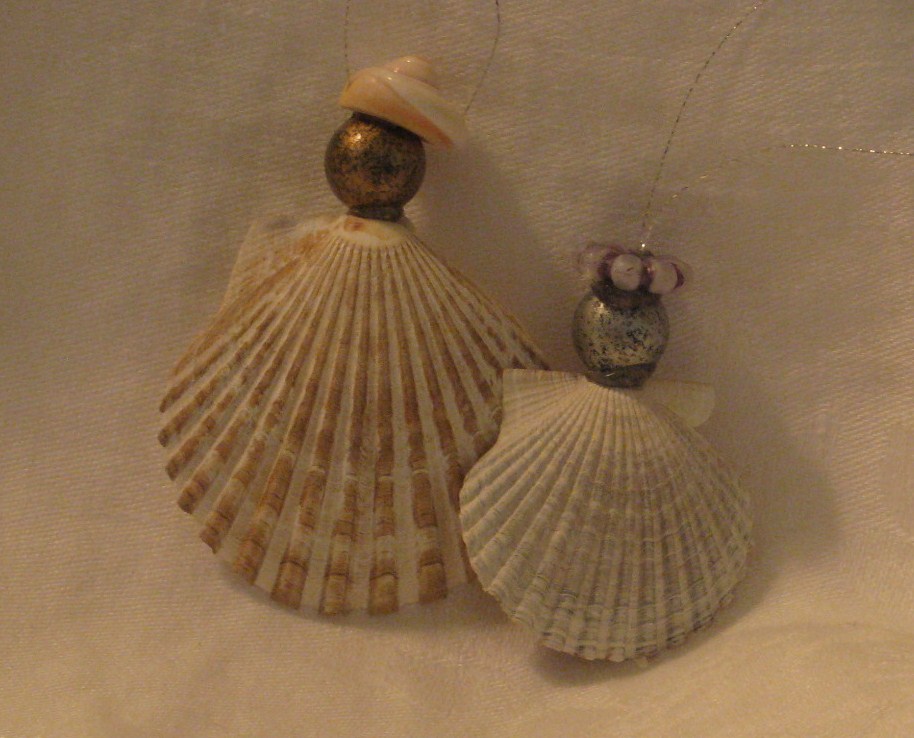
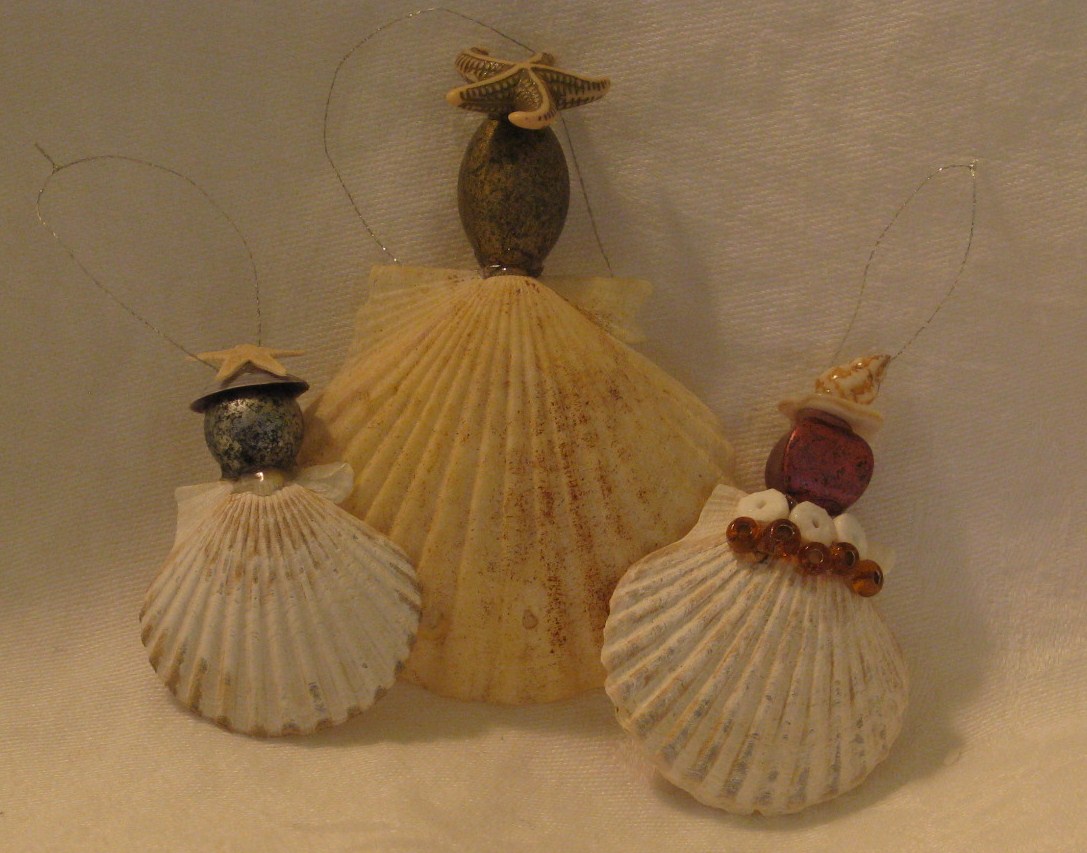
The bay is not a prime beach for shelling, but occasionally it offers up its particular treasures. Every so often, during an especially low tide, scallop shells dot the flats like pale, muted jewels, their colors subtle and austere. Naturally, my daughter and I collect them. Over the years we had acquired several sand pails full before we discovered an ideal, simple way to transform the shells into appropriate mementos. With the addition of a few beads and smaller shells, they became Christmas angels. (Once again, the hot glue gun allowed us to turn out a host of ornaments quickly and easily.)

Our little angels keep Cape Cod with us during the off-season. The medieval pilgrimage connotations of the scallop shell give the angels a certain dignity and make them all the more evocative. One of the world’s first souvenirs, the scallop shell became the emblem of the pilgrimage to St. James of Compostela, the several routes of which stretch through the mountains of France to northern Spain. Tourism on a grand scale was born in these pilgrimage routes, and the Way of St. James continues to attract pilgrims, many still on foot. Medieval pilgrims were, to some degree, tourists, just as many of today’s tourists are, in a sense, pilgrims. For travelers of the eleventh or the twenty-first century, whether navigating the perils of wilderness paths or the trials of Interstate 95, the goals of the journey are similar and elemental: an escape from the daily routine, the promise of adventure, a firmer grasp of life’s real meaning, and the opportunity for spiritual renewal. I love it that such richness of meaning is tied up neatly in the humble shell angels on our Christmas tree. *

*One final, fitting point of interest: our scallop shells wash ashore near the place where our country’s first pilgrims landed. As most of us learned and later forgot, the Mayflower’s initial stop in the new world was in what is now Provincetown Harbour.

Scallopshellangels019

Scallopshellangels022

Scallopshellangels020

Next-Generation Elves


PineconePeople025

My daughter was born on New Year’s Eve.  We attribute her outsized love of Christmas to her so narrowly missing it that first year.  She is definitely her grandmother’s girl—she inherited her talent for and love of Christmas crafts. She and I continue the tradition of holiday ornament-making that Mama started with me. Like her grandmother, D prefers to use found objects whenever possible. (Our family is historically green in the sense that we’d rather use what’s on hand, even if it means turning the house upside-down, instead of going to the store to get the exact right thing.  We like the challenge of improvisation.)  My daughter has always been a scavenger, a picker-upper of little things and bits of things that she sets aside for an unknown future use. She returned each day from Kindergarten with a different unidentifiable something she had found in the hallway or under a desk. Until recently she collected broken pencil tips. I give thanks everyday that she has outgrown the phase in which she pronounced every gray, forgettable rock along the road a priceless treasure: This is pretty! And so is this! And this tiny one is very beautiful! After even a short walk, our pockets were weighed down with gravel. I quietly returned them to the road later.

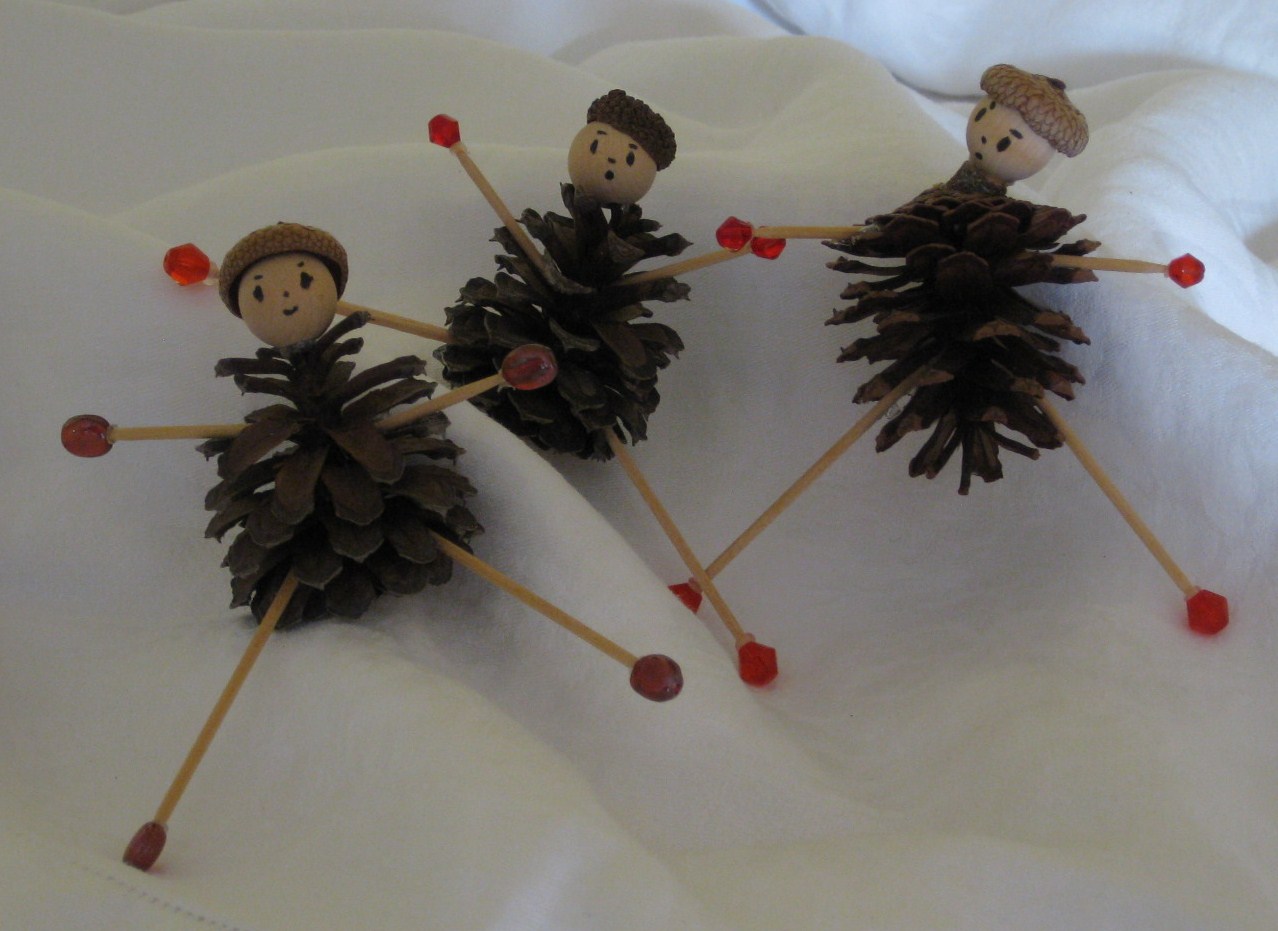
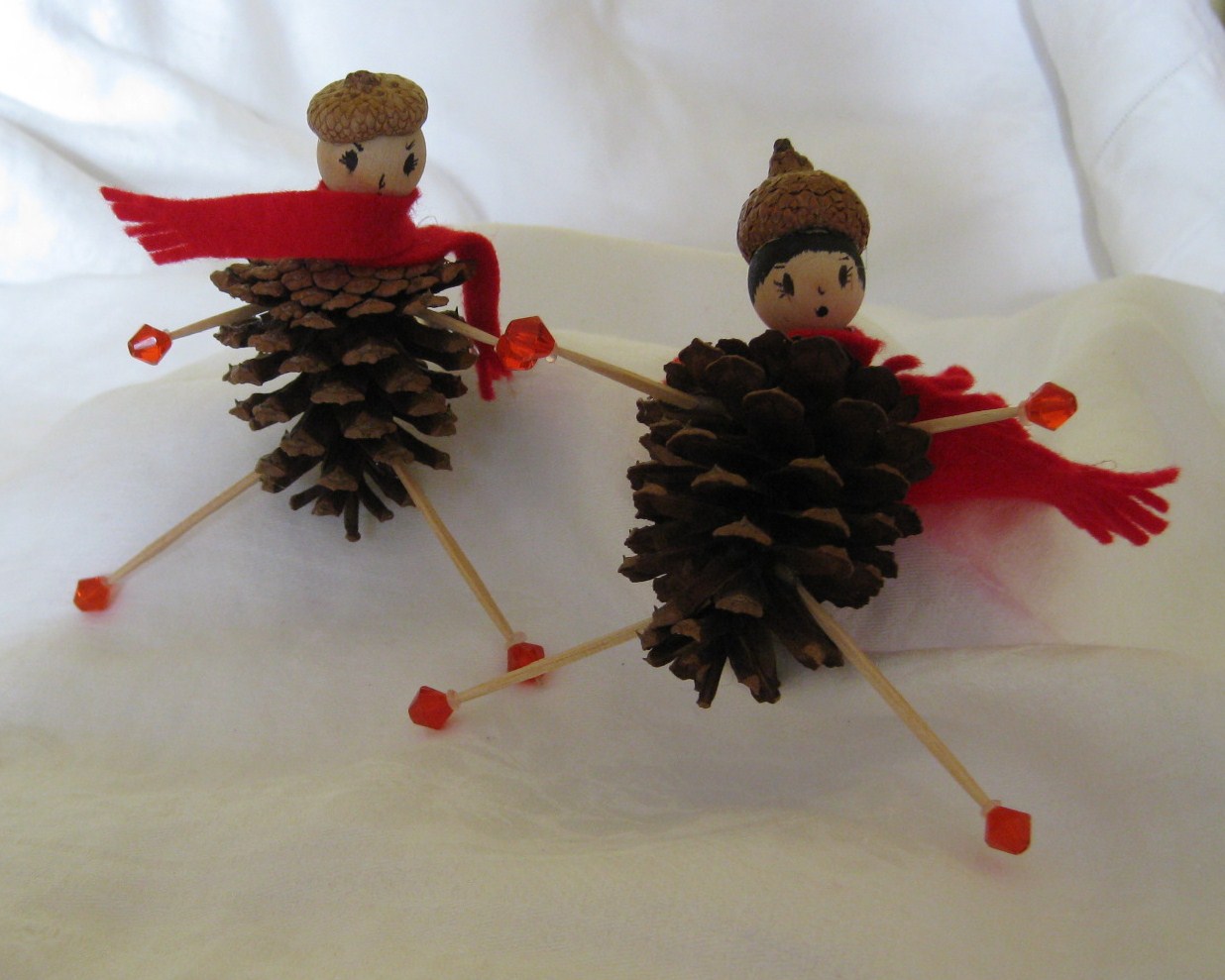
A more serendipitous find occurred one day after a pine tree in the neighborhood fell victim to a summer storm. We brought back many branches bearing perfect little pinecones. Even in the July heat, their need to be recycled into some kind of fat-bodied holiday creature called out urgently to both of us. Once home, we went to the craft closet to see what other materials were available. (It’s telling that in our old house, where closets are few, we have one devoted almost entirely to crafts.) We gathered popsicle sticks, toothpicks, large wooden beads, pipe cleaners (chenille stems in crafters’ lingo), plenty of small colored beads, and bags full of acorn caps (of course we collect these—I’m a real sucker for a cute acorn cap!)

D was still in preschool when we made our pinecone people, but she already had a good sense of design. She quickly pushed for toothpick arms and legs. I couldn’t see it—the contrast between the rotund pinecone body and the skinny toothpick seemed too great. But she persisted (she’s stubborn, as well as crafty), and so I agreed to give it a try. Thanks to the magic of the hot glue gun, it was possible to affix the toothpicks down in the depths of each pinecone. And D’s idea was a good one. The resulting figures are particularly active and expressive.  They sit, stand, or jump to attention. Wooden bead heads, jaunty acorn caps, and smaller colored beads for hands and feet completed our woodland people. We drew facial features with a Sharpie.  Some of these piney creatures come out in early fall to mix it up with pumpkins, gourds and leaves. Others, outfitted in red felt capes and scarves, don’t appear until December.

I love the charming simplicity of our pinecone folk.  They remind me that a little magic may be born of the most ordinary circumstances and materials, if we pause and open our hearts to the possibility.  Such opportunities between parent and child become increasingly rare as our children mature.  My advice as the mother of an almost-teen:  recognize and treasure those moments!

PineconePeople042

PineconePeople031

PineconePeople040

PineconePeople033

Working like Elves

When I was growing up, every year beginning in early November, my mother and I went to work on hand-crafted Christmas ornaments. Mama is an expert in the D.I.Y. department. She can sew anything, upholster, refinish furniture and floors, paint, wallpaper, set tile, gold-leaf frames, create really lovely silk flowers, and man, is she a whizz at Christmas ornaments. As the first cool breeze of fall could be felt  in Atlanta, she was bursting with ideas she had picked up from magazines, craft programs on TV, and her own lively imagination.

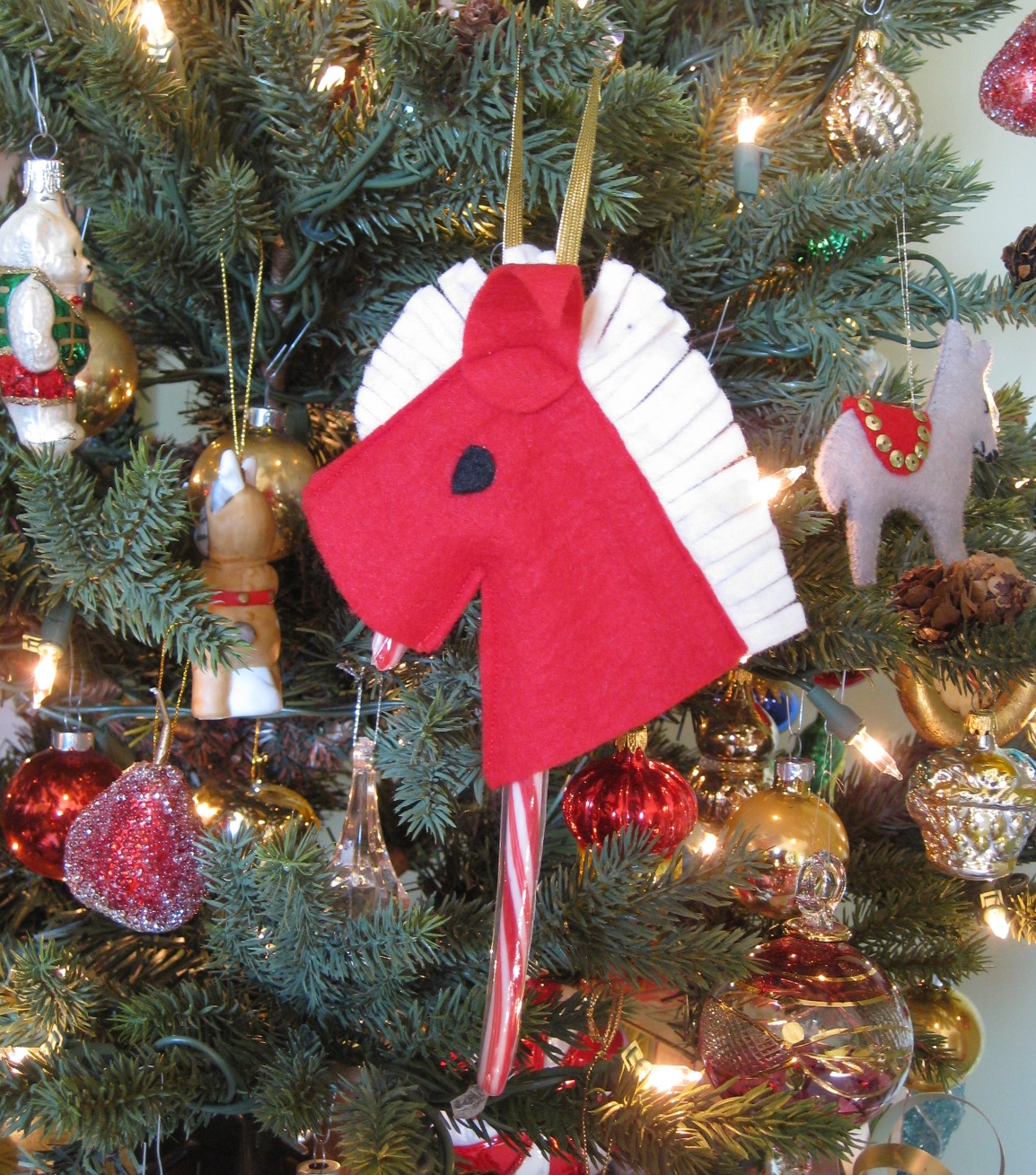
So, like Santa’s elves, we worked.  Mama and I hand-stitched many ornaments from brightly colored felt: candy cane stick horses, stuffed angels, Rudolfs, and tiny Raggedy Ann & Andy dolls.  There were mice peeking out of stockings, as well as free-standing mice dressed as Santa, Mrs. Claus and elves. One year we produced a huge outpouring of painted bread dough ornaments. These didn’t last for more than a few seasons due to insect invasions. When I was about twelve Mama ordered a big set of pre-cut wooden ornaments for me to paint. Then there were the clothespin toy soldiers and the drums made from spools. I returned from college one December to find that my father had gotten into holiday crafting spirit. His specialty was the adorable pasta angel (rigatoni body, bowtie wings, anellini or stellini hair), and he turned out quite a crowd. We shared our ornaments with friends and relatives, often tying them onto gifts, and there were always many left over for us.

One year when Daddy took a rare out-of-state business trip (he went to Reno, and I still have the postcard he sent me), Mama decided we should undertake an especially ambitious project:  ornaments resembling stained glass. The “lead” framing was a stiff bread dough that we attempted, with much difficulty, to force out of a pastry gun. The “glass” was formed from melted, cracked hard candy (we used a mallet to beat the candy, wrapped in a tea towel, on the kitchen counter). This was a project that required the unlikely combination of brute strength and extreme patience.  I’m not saying we weren’t up to the job. We got it done, but it took its toll. Mama remembers that I stormed out of the kitchen at one point, around 2AM, yelling about the violation of child labor laws. But I came back in, and sometime before dawn, we finished the last ornament. They really did look like stained glass, and they were beautiful. But I’m not sure if they were worth it.

Due to the flurry of holiday preparations, as well as our family tendency toward holiday illness, I know I won’t be writing much, so I’ll devote the next few posts to photos of some of our favorite homemade Christmas ornaments.

Christmas decorations 002

The felt and candy-cane stick horse. 

Thanks to Mama, these began to roam freely
throughout our Atlanta neighborhood during the 70s.

Does your family have a tradition of home-made ornaments?
Childhood memories of making ornaments under duress?  Let me know! 

At Long Last, Our Puppy

It took a while, but I found an experienced breeder of Shiba Inus in our area. Debbie has been in the Shiba-breeding business for nearly twenty years, and her integrity and knowledge are evident. We made a couple of preliminary trips to her kennel to see the dogs and, I hoped, to persuade her that we were a Shiba-worthy family. Debbie values quality over quantity; her puppies are precious and few. There had been none for a while, but in mid-August, a litter of five was born, and we were on track for a male. We had been approved!


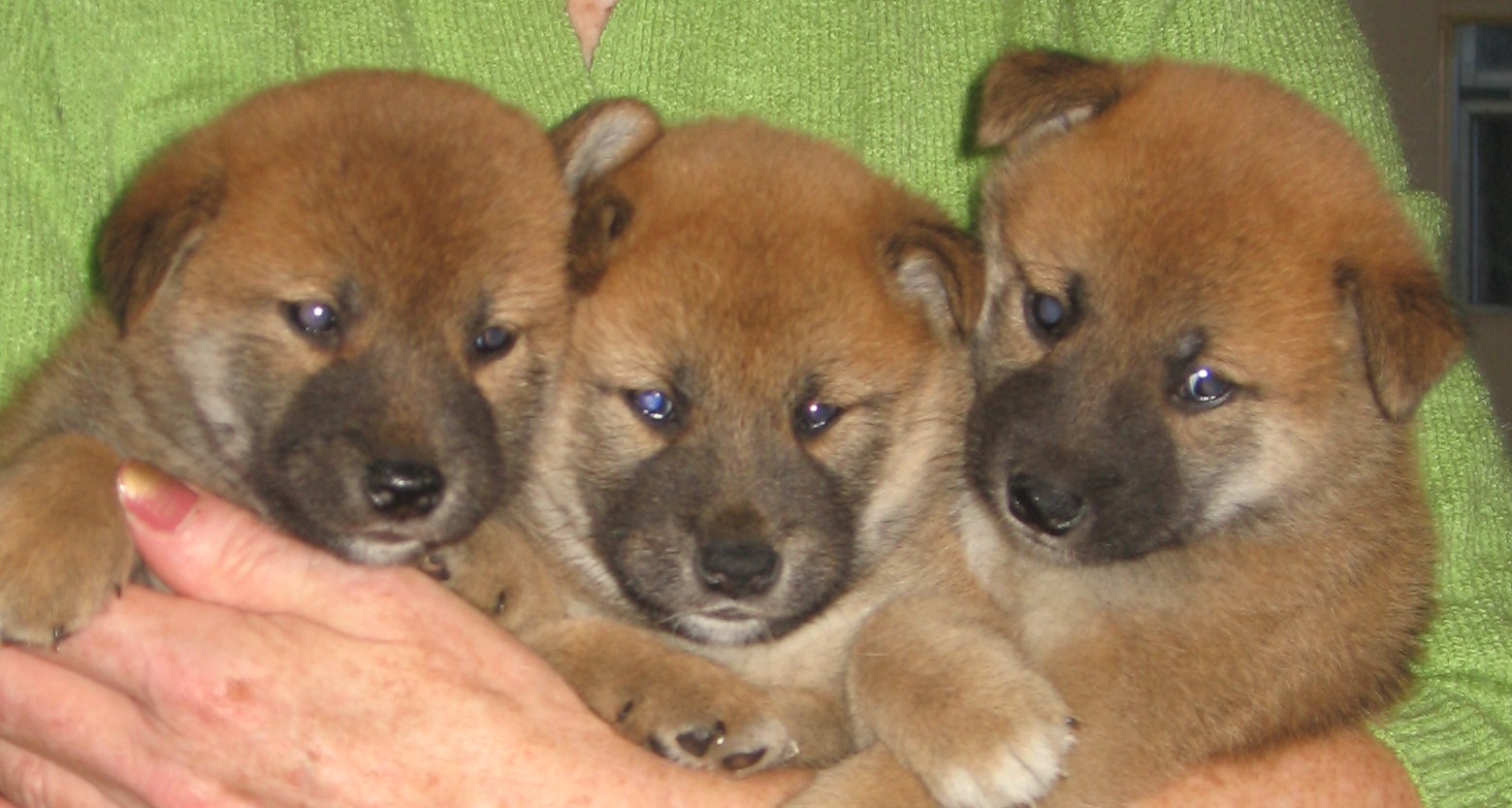
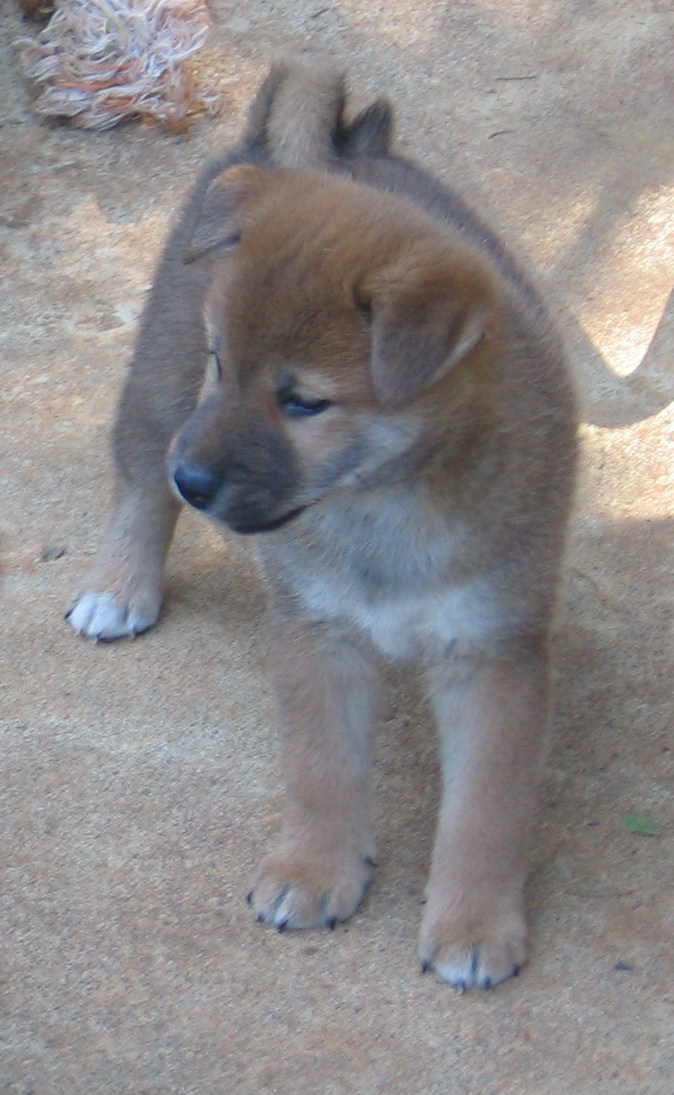
We first saw the puppies when they were just over a month old and past the point at which they are susceptible to human germs. A tiny Shiba pup can hardly be surpassed for cuteness: a roly-poly bundle of red fur, soft as mink, with a face resembling that of the ideal Teddy Bear. The short muzzle is dramatically dark, and the ears, which will point straight up in a few weeks, still flop over at the tips. The tail is a little thing that could fit on a chipmunk, a far cry from the bushy doughnut-like shape it will take on. So new to the world, the puppies appeared meek and uncertain when we arrived. Four became increasingly active during our visit. They explored the limits of their small home with growing boldness and persistence, while the fifth snoozed soundly. Cuddling a furry bunch of pure sweetness the color of brown sugar, I didn’t mind (too much) when I realized it had peed on my shirt. (We’re pretty sure this was our boy-to-be).

IMG_2942_2
Kiko (in center) and his two brothers, at four weeks.

Because the “pick of the litter” male and female had been reserved for buyers in the dog-show world, we couldn’t simply choose a puppy. Debbie was evaluating the pups during their first two months, to determine which would make the best show dogs. In our eyes, only very subtle markings set the five apart, and they all looked perfect. The dog show circuit was not for us. One of the males was somewhat darker that the others. He had inherited his father’s rich red coloring. This would turn out to be our Kiko.

IMG_2944
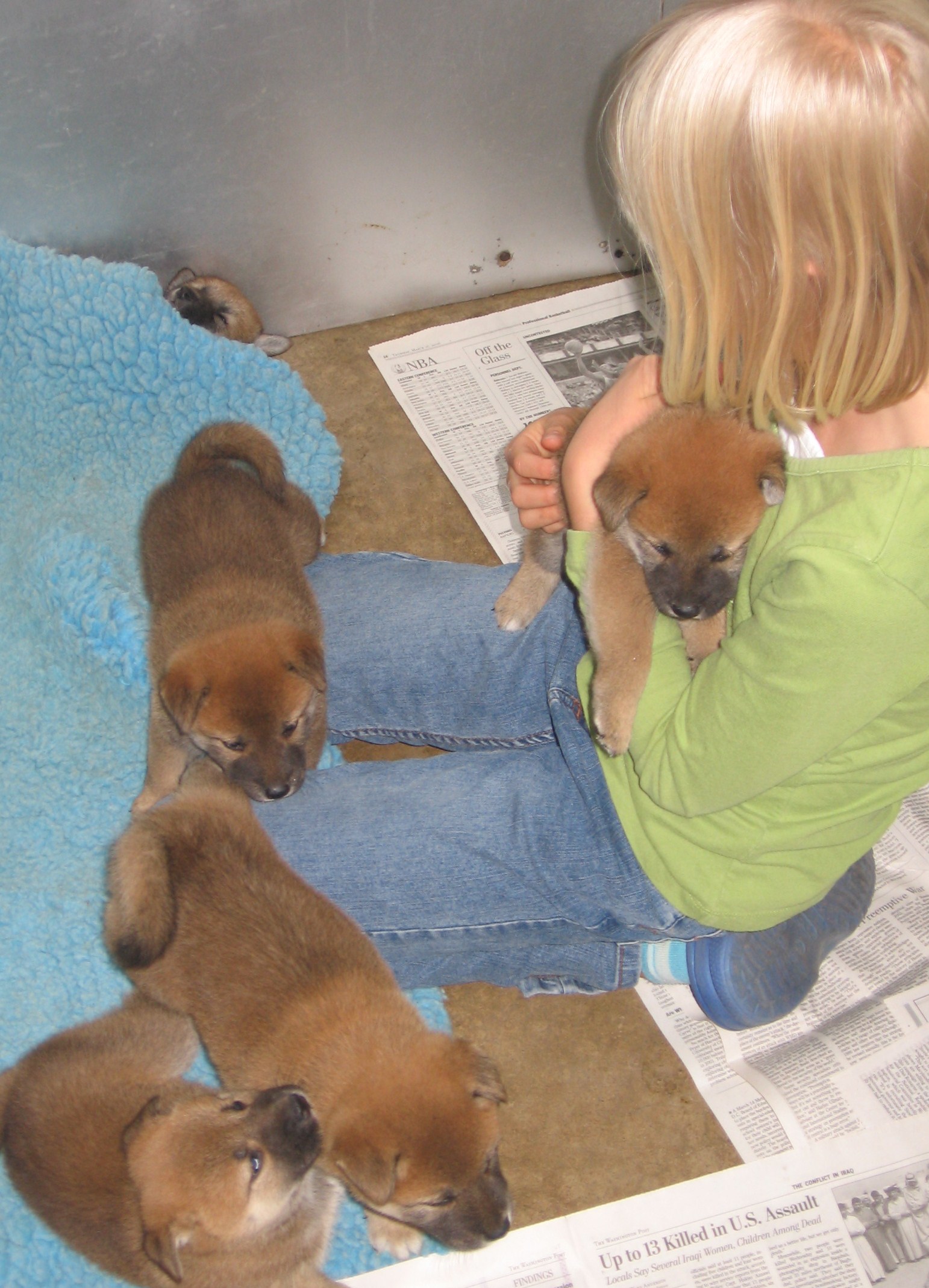
Our daughter in the puppy pen with the litter at four weeks.

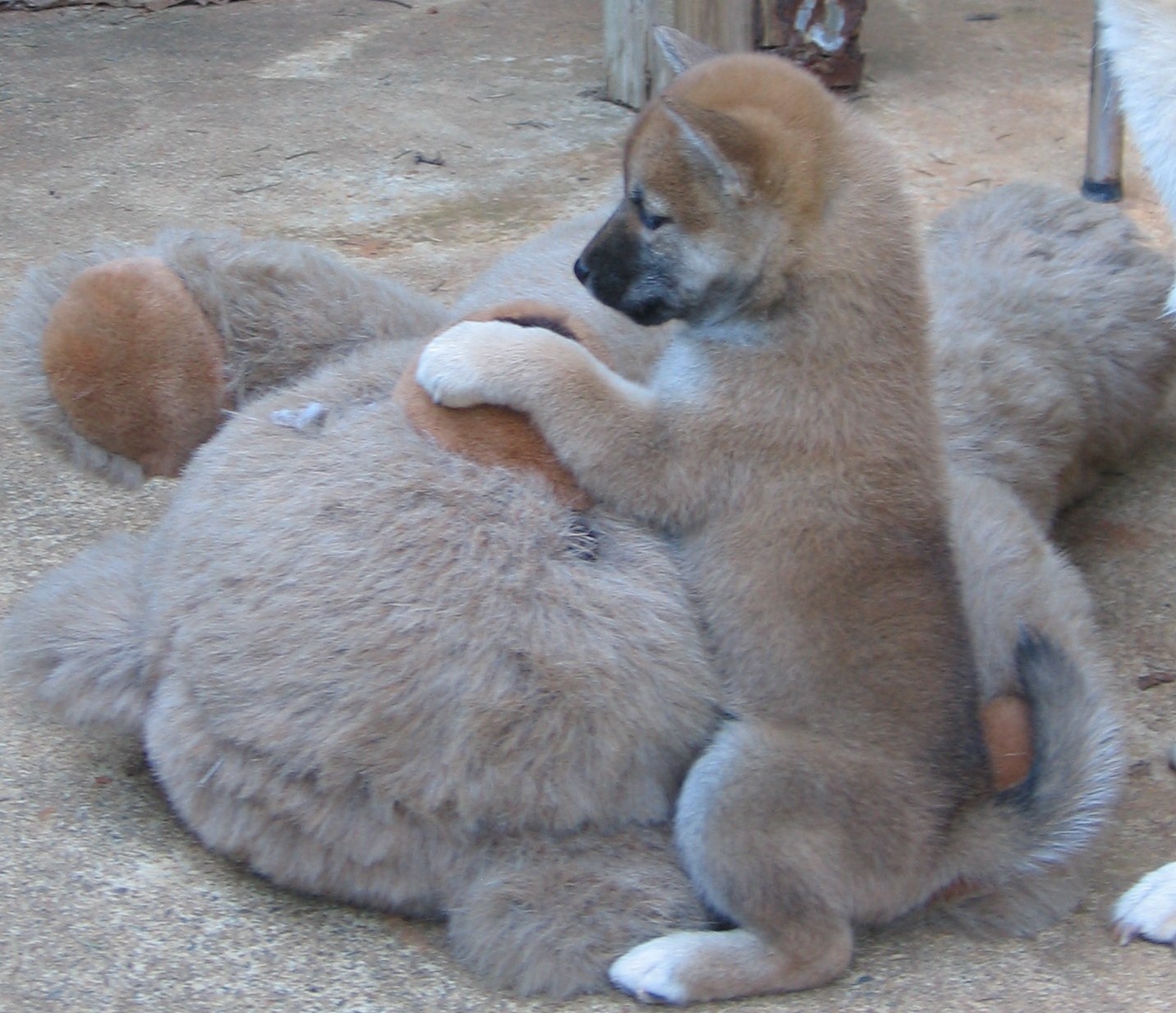
When we visited again in two weeks, the puppies had grown considerably and blossomed in personality. Their bodies were sturdier, their ears stood up, their tails were furrier. This time we went out with them into the enclosed yard, where they exhibited a wildly exuberant fierceness. They ran, they tumbled, they attacked a big stuffed bear. And they assaulted one another (and us) repeatedly with their teeny sharp puppy teeth and toenails. The two females were especially aggressive, often leaving their brothers reeling with bewilderment. Not without good reason are female dogs called bitches. One of the males latched onto our daughter’s hair and clung on tenaciously. Again, this would be our Kiko. During his first weeks at home he periodically treated human hair as his own special toy.

IMG_2983
One of the pups, at six weeks, attacks the bear.
IMG_2978
Another pup at six weeks.

At eight weeks we could bring our puppy home. We had brought the travel crate, but we couldn’t bear to put Kiko in it. D was eight and still in her booster seat, so she got settled and took the puppy in her lap. He was understandably anxious, having just been wrenched from Mama and his pack. Clearly he wanted to be somewhere else, anywhere else, and D couldn’t hold the slippery, wriggly, strong-willed little guy. When I leaned back to get him, he looked up at me with such sorrow and confusion I almost cried. Debbie had given us a stuffed fox that had been in the kennel with the pups and had the smell of home. (Foxy is still Kiko’s favorite toy. I have re-stitched her seams several times.) I tried to cuddle Kiko and Foxy together, but the puppy was inconsolable. His instinct was to escape. He was determined to climb up the sides of the car, onto the dash, even onto H’s lap as he drove.

Once home and out on the porch in the sunshine, exhausted from the anxiety of the ride, Kiko promptly fell into a deep sleep in D’s lap. That night, Kiko endeared himself to H by sleeping on his foot as we sat on the sofa. All was peaceful. I marveled that this small fuzzy four-legged creature was with us in our home. I noticed that his little tummy was freckled and nearly hairless.  He looked vulnerable and defenseless.  Already I loved him so much. But some tough days of puppyhood lay ahead, for all of us.

IMG_3020
Kiko getting used to his new home, a few days later.

Prelude to a Puppy (Part II)

Now that the question of dog or no dog had been settled in the affirmative, my husband asked for only one consideration: a dog without excessive fluff.

At first this saddened and irritated me, because I love the fluff. While there are many short-haired, sleekly handsome dogs, my personal tactile preference is for thick, luxurious fur into which I can sink my face and fingers. I had envisioned a cuddly mixed breed puppy, perhaps with Chow Chow, American Eskimo Dog or Keeshond parentage. Or maybe we could find a black and white Popi look-a-like. (His full name had been Potpourri, to reflect his mixed heritage of Chow and Cocker Spaniel.) But when it hit me that I would be an adult instead of the child in this dog-human relationship, I began to see the housekeeping advantage of less fluff.  I would be the primary wielder of vacuum, Swiffer and dust-cloth. Still, I needed a dog with substantial fur.

Early on in our dog-decision process, I assumed we’d simply look for an appealing mutt at the Humane Society, likely the best place to discover a potential Popi II.  But as I considered my childhood dog’s personality in a less nostalgia-tinged light, I began to second guess both the shelter and the Popi aspects of the plan.  My beloved dog’s loyal devotion to my parents and me was a big plus. We were all the pack he needed. He had little interest in other humans or in his fellow dogs. He didn’t require doggie play-dates (an unheard-of concept then). We saw him as highly intelligent, discerning, unwilling to waste affection on strangers. These positive points had their corresponding negatives. Popi didn’t suffer fools; he didn’t take crap from anyone. On a number of occasions, when provoked, he bit people, usually children. He wasn’t vicious; he never bit without due cause, and he rarely broke the skin.  During those less litigious times, such behavior was more frequently seen as justified. Parents now tend to think a dog has no business biting their child, even if the kid does sneak up and roughly wrap a belt around the dog’s neck or try to stuff the dog into a box. I realized that while I still appreciated Popi’s aloofness, I didn’t want to deal with a biting dog, no matter how justified.

Another problem with choosing a shelter dog is our family’s soft-heartedness for animals. What if we saw a dog that tugged at our heart strings but somehow wasn’t suitable? I was afraid we’d be haunted by the memory. I still remember a dog that looked plaintively at me twenty years ago when I happened to walk past it at an adoption event at a shopping center. I was a student; I had no permanent address; I couldn’t get a dog. But I can’t forget that face begging for love. D and H are similarly inclined.

Gradually, I realized we should consider a purebred dog. I had been a lifelong champion of mutts, so this took some getting used to. With a purebred we could avoid the problems of uncertain temperament that can result from a mixed breed’s unknown parentage. The best path, we concluded, was to decide on a breed that fit our needs, then locate a reputable breeder. We would be more likely to get a non-aggressive dog. We would have a higher chance of getting a puppy. And we could better avoid the heartache of having to refuse a dog that wasn’t a good fit.

It took us a while to settle on a breed. Most were too large or too small, too clumsy or too yippy, too shaggy or too sleek, too friendly or not friendly enough. My daughter and I were watching the Westminster Dog Show when we spotted an unfamiliar breed, the Shiba Inu, of Japanese origin, a smaller relative of the Akita. This fox-like dog has a jaunty walk, proud bearing, pointed ears, bright slanting eyes, a tail curled to resemble a bagel, and red velvety fur that is thick but decidedly not fluffy. D and I were entranced. We felt sure we’d hit upon a dog that even H could love, or at least abide, especially when the announcer referred to the Shiba as very neat, clean and intelligent, “a big dog in a small dog’s body.”

The more I learned about the breed, the better it sounded. The Shiba tends to be reserved around other dogs, but not aggressive toward people. Maybe we could get a touch of Popi’s aloofness but none of his bitey-ness. D and I were excited; we could sense our dog dream becoming a reality.

001
Me with my little puppy Popi, around 8 weeks old. It was time to see my daughter with her own puppy!

Prelude to a Puppy (Part I)

After seeing Kiko again with Beau, his playmate from puppy days, I’ve been thinking about the protracted process through which we became a family with a dog. Popi, my childhood dog, was with me from second grade until after I finished college. I have felt his absence ever since. But our family doesn’t acquire dogs lightly. The time was not right, and so the years passed by, dogless.

My daughter began campaigning for a dog nearly as soon as she could talk. She was, no doubt, at least partially motivated by the Popi stories I had been telling her since she was born: how he once boarded the bus to Grant Park, as though seeking out his roots, his utter lack of fear, his unshakable self-confidence, his delight in the little stocking Santa filled for him each Christmas, his talents for hide-and-seek and squirrel scattering, his noble loyalty to family. Popi had become a legend, for me and my daughter. But the time still wasn’t right. My husband was traveling four days a week, and I could all too easily envision the complications of being an often-single parent raising a young child and a puppy. (I know my limits, and they are low.) Thinking back on my experience, I told D that I would be ready for a dog when she reached second grade.

H, however, was very firmly not in favor of a dog. He had grown up with a menagerie of pets: rabbits, birds, guinea pigs and a box turtle that lives with us still.  But no dog.  D and I set forth every possible justification: a dog is a surrogate sibling for an only child, a dog is an effective security system, a dog offers a unique, transforming love, difficult to comprehend until you’ve experienced it. By this point, my wish for a dog had morphed into a full-blown ache, and it wasn’t going away. I had now loved the dead Popi far longer than the living Popi. For me, the time was right, and getting more urgently right with every passing day. H worked longer hours and tried not to hear. (He would probably say this is an unfair assessment). Second grade came and went, and there was no dog for us. D continued to end her nightly prayers unfailingly with the words, “and dear God, please let us get a dog.”

H had one final defense to which he clung fixedly: he was convinced that his allergy to cats extended to dogs. And he was pretty sure that his daughter, so like him in many ways, would prove to be allergic, also. I had D allergy-tested. She had no animal allergies (not even to cats). At long last, H reluctantly agreed to testing. Unfortunately for him, he showed no allergy to dogs. Had he been a less honorable man, he would have tried to rig the test. He was out of ammunition, he had lost the battle. D and I were jubilant: we would be getting a dog.

0018
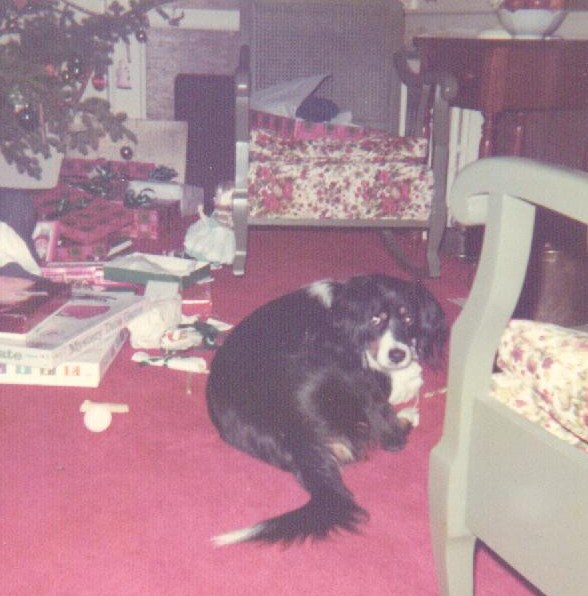
Popi on Christmas morning in 1970, with his stocking. My gifts in the background include the Game of Life, Mystery Date, and a Madame Alexander Alice-in-Wonderland doll.


Back Home in Atlanta (Follow-up to Fun with Ground Transportation)

The worst part of the drive from the airport is now over, and Daddy is beginning to slow down. We’re in my old neighborhood, and I’m trying to soak it all in, trying not to miss any detail. Some houses remain unchanged for the last two decades, still in need of loving care. Others are in the course of being popped up to three times their size. Some invite repeated renovation; each year sees a new style, wing, or entry. Others have disappeared completely, and I try to remember what used to be on each bare muddy lot marked only by a Porta-Potty. Ever since General Sherman burned Atlanta in his March to the Sea, the city’s state of flux has been fast-paced.

My parent’s house, though, looks very nearly the same as it did when I was last here this summer. It remains essentially unchanged since 1929, when it was built, in a leafy in-town neighborhood of small brick Tudors and Norman cottages. We moved there in the late 1960s, after two years in a suburban rental. Our new house was a mess, but it immediately felt like home. My parents spent years uncovering its classic features–hardwood floors hidden under gold-flecked linoleum and lavender sculpted carpets, plaster walls concealed by wood-grained wallpaper. We gradually updated the kitchen, which still contained its original appliances, chrome-edged, simulated stone Formica countertops and metal cabinets. But we made no structural changes or additions. My mother’s interest in redecoration has not dimmed, but the alterations are smaller in scope now. My childhood room is just as it was when I moved away: the same wallpaper, the antique cherry furniture inherited from my father’s aunt.

I know every quirky feature of the house by heart: the sharply curving narrow driveway littered in the fall with acorns, the sound of the brass knocker rattling as the heavy front door closes, every creak along the center hall, the loud click of the light switch in the stair hall, the bathroom faucet handles that rotate the wrong way, the back hall steps lined with walking shoes and cartons of Coca-Cola, the old ping-pong table in the basement used for storage and craft projects, the view of the back yard from my old bedroom window, and the unique, inimitable smell of home.

It’s somewhat unsettling to be here without my daughter. I keep thinking she’s upstairs in the playroom, which has become a sort of toy museum. She’s probably unpacking the boxes of baby dolls, stuffed animals and Barbies that my mother lovingly maintains. Or maybe she’s setting up a tea party at the little pink table in the alcove, or rearranging the furniture in the doll house. But the table, the doll house and my girl are all at our home in Virginia. And if my daughter were here, the toys wouldn’t capture her attention nearly as much as my old Seventeen magazines and the wardrobe bags full of vintage clothes in the attic. (My mother has a great gift for design and sewing, and for many years she was possessed of a phenomenal energy that led her to make more clothes than we could ever wear).

It’s disorienting, as well, that there is no dog here. If I happen to see a shadow out of the corner of my eye, I think it’s the dog. And each time we leave, I look around instinctively to hug him goodbye. But I’m not sure which dog I expect. Is it my childhood dog, who has now been dead nearly twice as long as he lived? I often think I hear him, my sweet Popi, my stand-in for a sibling. He was a black and white cocker spaniel and chow mix, as aloof to other dogs and non-family members as Kiko is friendly. He often nudged open a partially closed door with his nose, a sound I hear repeatedly in my mind. Popi was so comforting when I was upset—he’d put his muzzle on my knee and look into my eyes with such compassion. Or is it my funny Kiko that I think I hear or see? But Kiko has never set one neat little paw in this house.

Returning to a childhood home is a bittersweet pleasure. The things of the past get confusingly jumbled up with those of the present. Old memories collide strangely with current reality. My brain is stretched in uncomfortable ways, and I feel young and old, happy and sad, at the same time. I guess it’s a good thing I don’t often go back alone to my old home.

0014

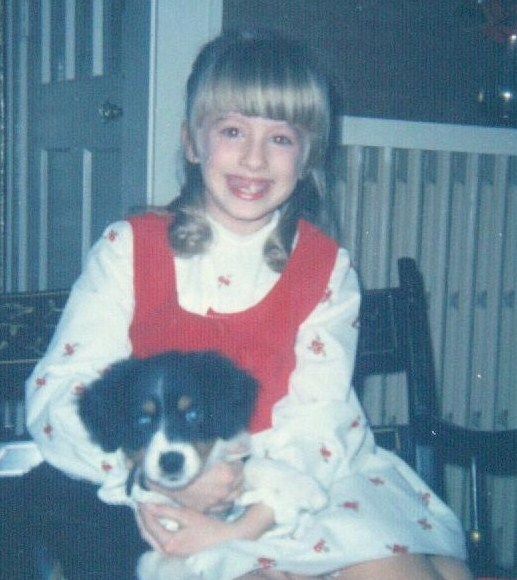
Popi, as a puppy, and me.  It was his first Christmas, and our first in the new house.  Of course Mama made my dress and vest, and my daughter wore them, as well.

003

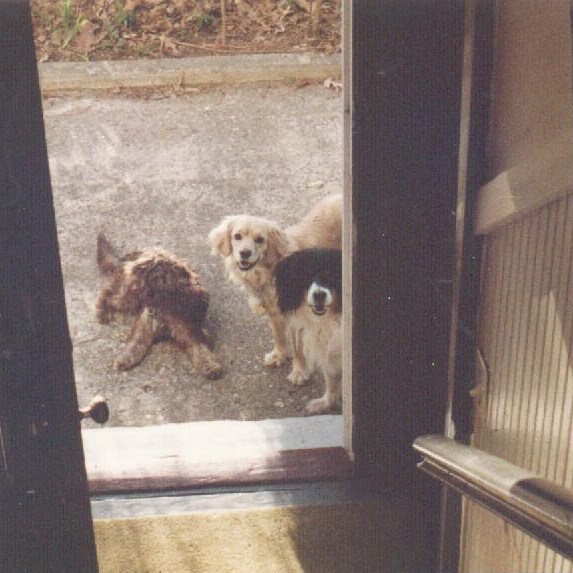
Popi with next-door dogs Felix and Cocoa, outside our back door.
He didn’t like them, but he tolerated them occasionally.

002

Popi, not long before he died, at age 15.

On Improving Halloween

Day after Halloween 004

Now that another Halloween has come and gone, I find myself reflecting on the evening, considering some ideas that may improve next year’s experience.

This Halloween we welcomed fewer trick-or-treaters than in previous years. The weather was chilly, but a cold, clear night seems to pep up the kids, not keep them home. The main reason for the deficit, I believe, was that Halloween was on a Monday night.  A Monday night!  For children, it was a day of school and homework, with another early morning to follow.  For working parents, it meant rushing home in traffic to handle costumes and try to deal with dinner.  There is no way around it—Mondays (and all weeknights) are awkward nights for Halloweening.

There is a solution. Halloween should be celebrated on the final Saturday of October.  If we can move Presidents’ birthdays, why can’t we move Halloween?  Congress has the perfect opportunity to make things right with the American people for the distress they caused during the debt-ceiling debacle: they can pass a Halloween-observance law.  I am almost serious when I suggest writing our representatives.  This is the chance for legislators to do something worthwhile, something that would benefit Americans in all income brackets.  This is the first step towards improving Halloween.

The next step is to encourage trick-or-treating among teenagers. I know it’s become acceptable to gripe about “all these big kids” expecting Halloween handouts.  But why should we mind so much?  Isn’t it good for the collective health of a neighborhood and our country that teenagers are out with the younger children accumulating treats?  On this one night each year, shouldn’t we reward their continued interest in the childhood pleasure of candy?  Would we rather they be elsewhere attempting to buy alcohol, cigarettes and drugs?  These older kids, of course, should abide by the same rules we try to instill in the younger ones:  wear a costume, say “Trick-or-Treat,” be polite and show gratitude.  I agree that a logo T-shirt is not a costume, and a sullen silence at my door will not earn candy.

Day after Halloween 002

We found the teen trick-or-treating presence negligible this year. Our daughter and her six middle school-age friends were among the very eldest of our trick-or-treaters.  The only more senior group consisted of three courteous ninth-grade boys who came to the door toward the end of the evening, almost as an afterthought, as though they wanted to see if they could still get candy.  We were more than happy to give them chocolate.  My daughter will soon be a teenager, and I hate to think her trick-or-treating days are severely numbered.  This is only the second year that we have allowed her to go out unaccompanied by an adult on this night.  She and her friends are just starting to hit their Halloween stride; it would be a shame for them to have to stop.

It seems to be the tallest children who provoke the most negative feedback when trick-or-treating. Short kids may observe Halloween without community comment until they go off to college, but those blessed with height better stay home once they reach sixth grade.  Isn’t this height-based discrimination alarming?  My daughter is on track to be taller than me by next year, so I am understandably worried.

If anyone is really working the system, it’s not the teenagers, but the adults who tote around their babies costumed adorably as peapods, caterpillars, fat pumpkins and such. Parents who would never think of allowing their six-month old to put one pearly tooth near a Snickers bar are out on Halloween encouraging tiny fingers to pick out something good and big from the candy bowl.  But that’s accepted behavior, and my husband and I capitalized on it, like everyone else, during the first few years of our daughter’s life.  An essential part of the Halloween social contract is pretending that the candy is intended for those babes in arms.   Because babies are small, cute and very short (again, it’s a height issue), they therefore deserve mass quantities of sugary treats.

And finally, one last point for Halloween improvement: enough with the healthy snacks!  On this topsy-turvy night, when the focus is on the weird, the unusual and the unexpected, let’s get with the spirit and allow our kids (the tall and the small) to indulge in the glory of real candy.  And let’s stop trying to pass off raisins and pretzels as coveted treats; they have their merits, but they are for the other nights of the year.  Halloween should be a much-anticipated departure from the norm.  If we start eating healthier on the other days, we’ll really be able to enjoy breaking the rules on that last night of October.

Day after Halloween 005

Moving up to Middle School (As a Parent)

My daughter began middle school this fall. Things have changed around here. The whole family now gets up before dawn, when the sky is so dark that even the possibility of a sunrise seems remote. D has always preferred staying up, and sleeping in, as late as possible, so the adjustment has been difficult. She tends to be in her deepest sleep phase when the alarm sounds, and continues to sound, unheard and unheeded. The intervention of a parent is required to get her moving. Because she can talk coherently and convincingly from the abyss of sleep, any mere verbal claim of being awake must be ignored; some physical proof is needed. It’s best not to leave the room until seeing her open her eyes or begin to transition from the horizontal to vertical.


After completing my duties as wake-up enforcer, my willingness to make breakfast and lunch is still expected. Reminders to bring permission slips, homework projects, violin, etc., continue to be appreciated. The revised parenting rules for middle school apply as soon as D steps out the back door.

The first rule is very specific: No parents at the bus stop. Unless, of course, it’s raining hard and the shelter of a car is valued. For seven years, I accompanied my elementary-school child to the bus stop. For the last four, Kiko came along; he loved to smell the children and their lunches, maybe meet another dog. The elementary bus stop offered a quick social opportunity for parents too busy to get together any other time. I’m fine with not going to the bus stop, now that no other parents are there. Kiko, however, is not. He wants desperately to be in the center of that cluster of kids, and if he can’t, he wants to watch as the bus leaves. If I try to pull him in the opposite direction, he balks and performs his dead-stop move. When the bus passes us, he’s ready to get going, but I can tell that his feelings are hurt.

The second rule is more general, and may be summed up simply in two words: step back. Parents are not to hover, meddle, or fight a child’s battles.  Physically, I’m content to step back.  I’m relieved not to be volunteering at school in some aspect once a week or more. I’m glad to let D email or speak with her teachers to resolve homework difficulties. I don’t want to be the mother who tries to be one of the kids, who pals around with the gang and discusses tween gossip. And it’s gratifying to see my daughter developing a sense of responsibility and maturity.

What I find difficult, however, is distancing myself emotionally. Watching D undergo disappointment or rejection really is more painful than experiencing it myself. I had often heard parents say this, but until I became a mother I doubted its truth. In some cases, my own past sufferings have led to a sense of perspective, and even, once in a while, to a degree of wisdom that allows me to help my daughter cope. But other times, when her hurt is intense, I get the sensation of a scab being ripped from a wound. Various forgotten disappointments in my life come roaring back. I feel my old pain and her young, new, fresh pain, all at once. And then I get angry. I want to stomp around and yell. I’ve learned not to throw or hit things, because the revenge of inanimate objects is sure and swift. My display of anger, I’ve learned, only makes D feel worse.

This school year, I will try to remember that I can’t protect my daughter from all life’s difficulties. I will remind myself, over and over, that a certain amount of frustration and failure is a requirement for growth. I will recall that we didn’t bundle her in bubble wrap while she was learning to walk (although we wished we could have). I will tell myself repeatedly that she won’t learn to deal with and heal from disappointment if I try to bubble-wrap her emotionally.

It doesn’t seem like seven years ago that my husband and I watched the Kindergarten bus pull away with our daughter on board for the first time. We saw her little blonde head peering out from the window, and both of us were overcome. We hurried toward home, fighting back tears. That was in the days when we couldn’t be too involved or protective. We had asked a reliable neighborhood boy, a safety patrol, to see that D got to her classroom. For an extra measure of reassurance, H followed the bus to school in his car. He watched from a distance while D waited beside the patrol as the other children exited, and he saw the two of them walk into the school. He called me to report that all was well. This is the kind of parenting I really understand. I was starting to get the hang of it just as it fades into obsolescence.