All posts by Wildtrumpetvine

Our House Was the One with the Old Maples

With my daughter, in front of the house, December 1999

It was the day after Thanksgiving in 1999 when we first saw the house that would become our home.  We’d moved to Northern Virginia from New Jersey the year before, and we were renting a small townhouse near my husband’s office.  Our daughter was eleven months old.  We’d gotten the hang of packing her into her car seat and settling her in her stroller, and she was typically a happy short-distance traveler.  Our primary weekend activity had become house hunting.  House looking, really, because we weren’t yet prepared to buy.  It was free, entertaining, it got us out of our increasingly cramped space, and it was a good way to get to know the area.  Most homes were well beyond our means, but we looked at everything we found vaguely appealing; we wanted to get a feel for the wide scope of the market.  At an open house that fall we met a realtor with whom we felt an immediate rapport.  We appreciated her humorous quips, made all the more amusing when delivered in her posh British accent.  She won me over completely when she referred to our daughter as that “ex-quisite child.”  (Dawn Jones is savvy.)  She was determined to take us under her wing.  We told her we weren’t sure how serious we were about buying.  Nevertheless, she persisted.  

Buying a home was a very big deal for us.  We were used to university housing and eccentric rental spaces.  As a grad student, I lucked into a cushy house-sitting job on lovely Battle Road for a Princeton professor.  I even managed to get my husband-to-be a similar gig in another beautiful home right across the street.  We relished being mortgage-free high-end real estate dwellers.  And then we began our married life at the other end of the spectrum,  in Princeton’s bare bones and now-demolished Butler Apartments, built in the 1940s as temporary quarters for returning GIs.  We’d never had a place that we could truly call our own.   

We’d seen several homes with Dawn when I found an online listing that seemed promising, if oddly worded and rather puzzling.  The internet was fairly new back then, and I was proud of myself for using it to browse local real estate listings.  The photo showed what appeared to be a sizable white house, far bigger than we expected to afford.  But surprisingly, it was in our price range.  The description read as follows:  This is a lovely home that can also be remodeled.  The garage can be fixed.  Painting done, finish the basement with bedroom and full buth (sic), price would be $150,000 more.  It had been on the market for months.  Worth a look, we thought, but there must be something seriously wrong with the place.  

The photo from the real estate listing, 1999.

We anticipated disappointment as we went to meet Dawn at the address.  We expected to find a dilapidated shell, an extreme fixer-upper in need of a daunting amount of work.  What we saw was a plain, unassuming American Foursquare farmhouse with a central block and two symmetrical wings.  Aluminum siding on the outside.  Inside decor featured mid-1970s stalwarts like orange shag carpeting in every upstairs bedroom and faux French provincial white and gold detailing in the bathrooms.  In the kitchen, there was a sort of fake shake roof thing that extended the full length of two walls.  The former owner had been a heavy smoker, and the copious wallpaper, thick carpeting, heavy draperies and all the woodwork were yellowed with nicotine.  Structurally, the house appeared to be sound.  It was spacious, and we loved the floor plan, with a central hall surrounded by four large rooms on each level.  In short, it seemed to be a good, solid house with unfortunate surface treatments.  Familiar territory, for me, from my childhood home in Atlanta.  We could make this old house our own.  

Our house in December 1999. Our daughter, in her stroller, wearing a red knit cap, is on the front walkway.

And then, there were the trees.  

The photo from the real estate listing showed parts of two big trees that appeared to frame the house.  Turns out they were silver maples, much like those outside my grandparents’ farmhouse, the beloved central focus of my childhood.  Lots of people dislike these trees.  They grow quickly but tend to shed their bulky limbs regularly.  Their knobby roots, spreading far and wide, are the enemy of a pristine lawn.  But I was delighted to see that a semi-circle of six grand old maples sheltered the front yard.  As I wrote in a post from 2012, those trees spoke to me.  They said, “You’re home!”  

The house dates from 1920, and the trees are of the same vintage.  Not long after we moved in, church friends helped me contact a woman whose family had built the house.  In her 90s at the time, and living in southern Virginia, she spoke with great fondness about her childhood home.  Back then, it was on two hundred acres, on which they raised wheat.  When I mentioned how much I loved the big maples, she told me that as a very little girl, she had helped her parents plant them “from switches!”  

Since settling in, in January of 2000,  we’ve described our home as the old white farmhouse with the old trees in front.    

That description is less accurate as of this summer.  Due to recent weather events, only one maple remains.  


More Squirrel-Planted Sunflowers

Around this time two years ago, I wrote about the sunflowers that were unexpectedly appearing throughout our back yard.  They were planted not by me, but by squirrels.  We shouldn’t have been surprised at the flowers’ emergence.  We’d been watching our squirrel friends as they chose a single a sunflower seed from below the bird feeders, carefully placed it in the ground (usually on the lawn, to my husband’s dismay) and covered it with soil.  They’d pat down the earth thoroughly with their delicate hands, hop back for another seed and repeat the process.  

Evidently squirrels can be as forgetful as humans, because we have a sunflower garden now.

This summer, the squirrel-farmed yield is particularly plentiful.

Some  lowers are larger than ever.  They stare at me, eye to eye, high atop perches on  thick, prickly robust stalks.   

As I observed in my earlier post, the sunflower is among nature’s  artful miracles of geometry.   A sunflower head is, in fact, a compact colony of tiny flowers.  What appear to be petals are individual flowers known as ray florets.  Their bright yellow color attracts pollinators to the numerous minuscule disc florets of  the center.   Our sunflower garden teems with bees and butterflies.  The  disc florets begin opening around the flower’s outer rim, so that the amazing inner spiral is eventually surrounded by a shaggy, deep golden fringe.  Each one of these florets is a perfect, five-lobed tubular bloom, rather like a lily, sized for a fairy. They will, in time, grow into seeds.  

The individual florets that make up the center are visible in the two photos above.  

I love the way the petal-like ray florets unfold in sections to reveal the sunflower’s round center, as in the photos below.  I’m reminded of a winking eye, or a child playfully peeking through her hands.  

As the flowers age, the disc florets are transformed into seeds, and the ray florets wither.  Once they pass their prime, they attract seed-loving birds, especially similarly colored goldfinches.  The elderly flowers below may lack their youthful loveliness, but they continue to fulfill their purpose.    

If I pause for a moment to survey our squirrel-planted sunflower garden, with flowers at varying points in their life cycles, I can sense that elusive but perpetual presence of the sacred.  It’s evident as the big flowers turn their heads to follow the sun.  I’m reminded that God’s creation is ongoing.  It’s happening all around us, despite the toxic fog of human meanness that we allow to cloud our world.  I can hear the sunflower offering valuable advice:  Follow the light, be a beacon to those who need you, and live abundantly, at every stage along the journey!  

Mother’s Day, 2025

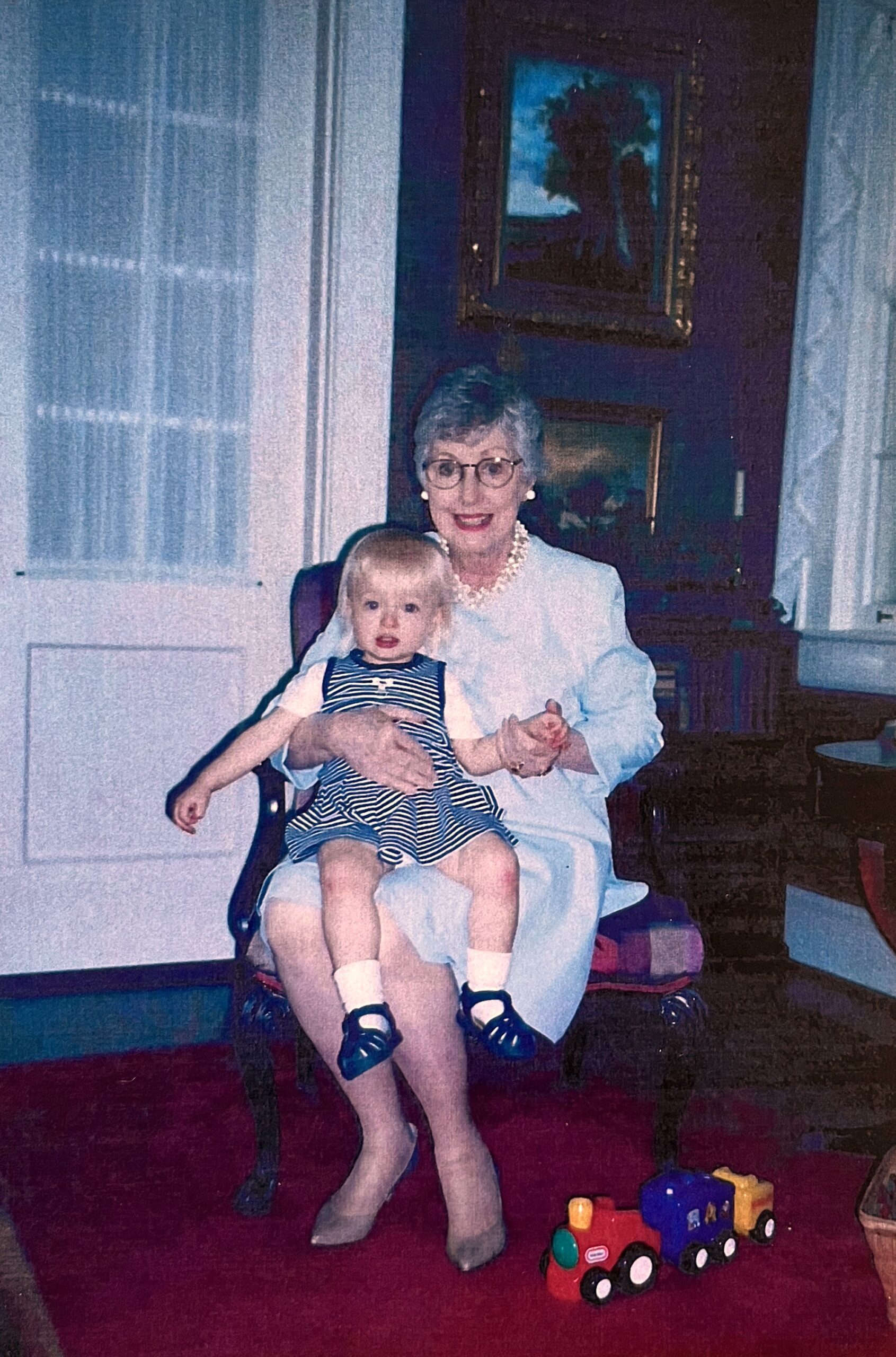
My mother with my daughter, at age 2 1/2, in Atlanta.

To all the women who do the loving work of mothering, whether to your own child or children, and/or to other family members and friends, human and non, thank you! Our troubled world needs your care, courage and kindness. May you feel cherished and appreciated on this day and every day!

Happy Mother’s Day!

From one Pope to Another

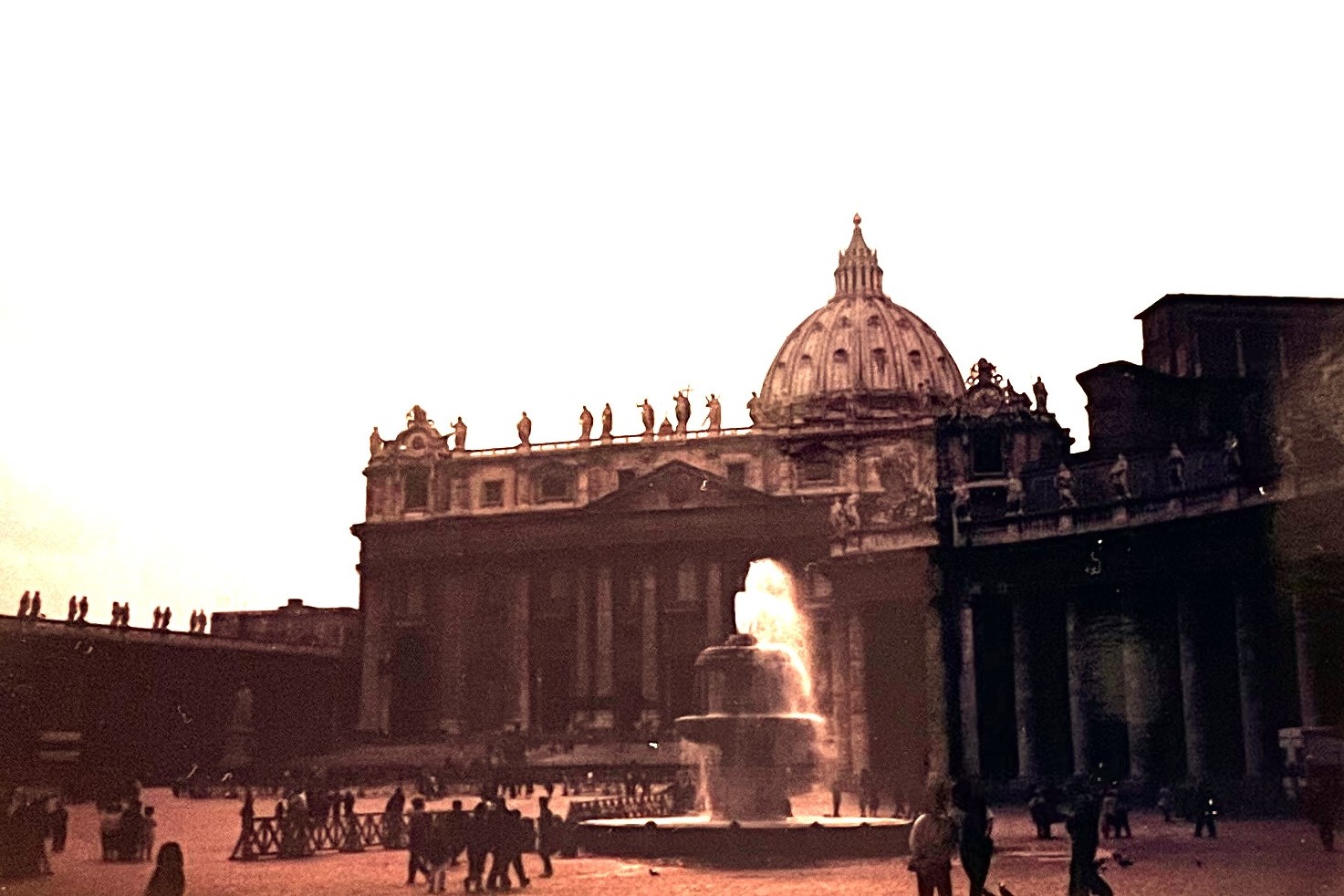
St. Peter’s Basilica on Good Friday, April 8, 1985, taken during my first, and perhaps only trip to Rome.

With the passing of Pope Francis last month, the world lost a rare spiritual leader, one who managed to remain uncorrupted by the power his prestigious earthly office afforded him.  He embodied humility.  He didn’t just preach about the need to care for the poor, the sick, and those on the margins.  He lived that calling, daily.  When he washed the feet of prisoners or shared a table with the street people of Rome, he wasn’t performing.  By all accounts, his goal was authentic connection with real people, not publicity stunts or photo ops.  Before becoming Pope, he’d been Jorge Mario Bergoglio, a pastor and good shepherd who led his flock with compassion.  As Pope, pastoral care remained a priority.  Like Jesus, he was concerned for lost sheep, for those who went astray.  Like Jesus, he interacted frequently with ordinary people.  Like Jesus, he lived a life of virtue; he didn’t merely signal it.   He gave the glory to God.  
I had feared, and rather expected, that a new Pope would mean a shift away from Francis’s emphasis on humility and concern for the downtrodden.  I was afraid that Francis’s successor might be one who put more emphasis on the imperial majesty of the Papacy and strict adherence to the finer points of Church doctrine rather than on living out the message of Jesus.   

And so I was surprised and relieved when Robert Francis Prevost from Chicago was announced as the 267th Pope.  An American who spent much of his life in Peru, he began his first message to the world with the words “Peace be with you.”  He connected that greeting, the first words of the resurrected Jesus to his assembled disciples, with Pope Francis’s final Easter blessing.  He spoke in Italian, Spanish and Latin, but not in English.  He spoke of the need to build bridges through “dialogue and encounter.”  He spoke of a universal Church that opens her loving arms wide to all, as welcoming as the long, curved colonnade of St. Peter’s Basilica.  He quoted St. Augustine in saying, “With you, I’m a Christian, but for you, I’m a Bishop.”  He spoke of a Church that works together in service for justice and the common good.  And he said, with firm resolution: “God loves you all, and evil will not prevail.”  

Cardinal Robert Prevost, or Bob to his friends, chose the Papal name of Leo XIV.  The last Leo, who held the office from 1878 – 1903, was a champion of the working poor and an advocate for social justice.  The new Pope’s name choice signals his like-mindedness.  His initial message yesterday as Pope, as well as the impressions of those acquainted with him, suggest that he will not veer substantially from the path set forth by Pope Francis.

I’m a lifelong United Methodist, not a Catholic, but the Pope is considered by many to be a prominent representative of Christ here on earth, so  his words and actions matter to me.  I happened to see Pope John Paul II heading towards St. Peter’s on Good Friday, 1985.  I was in Rome with my boyfriend at the time, an avowed agnostic, disdainful of organized religion, yet possessed of a strong moral compass.  When all those around us burst into cheers at the sight of the Pope waving benevolently to us from behind the glass shield of the Popemobile, Jonathan joined me and the crowd in exuberant applause.  The Pope is a significant figure in the world, even to those who may think they see him as irrelevant. 

I hope the leadership of this new Pope will serve as a reminder to all Christians, but especially to Americans, Roman Catholic and Protestant alike, that Jesus beckons us to a faith surpassing all boundaries made by human hands.  The resurrected Christ called his followers to make disciples not just of their fellow Israelites, but “of all nations” (Matthew 28: 19).  The concept of “Christian nationalism” goes against the very principles of love and inclusion preached and modeled by Jesus.

Habemus Papam.  We have a Pope. 

May Pope Leo XIV be an ethical inspiration for people the world over, no matter their faith, or lack of it, to work together, with patience and kindness, toward peace.  

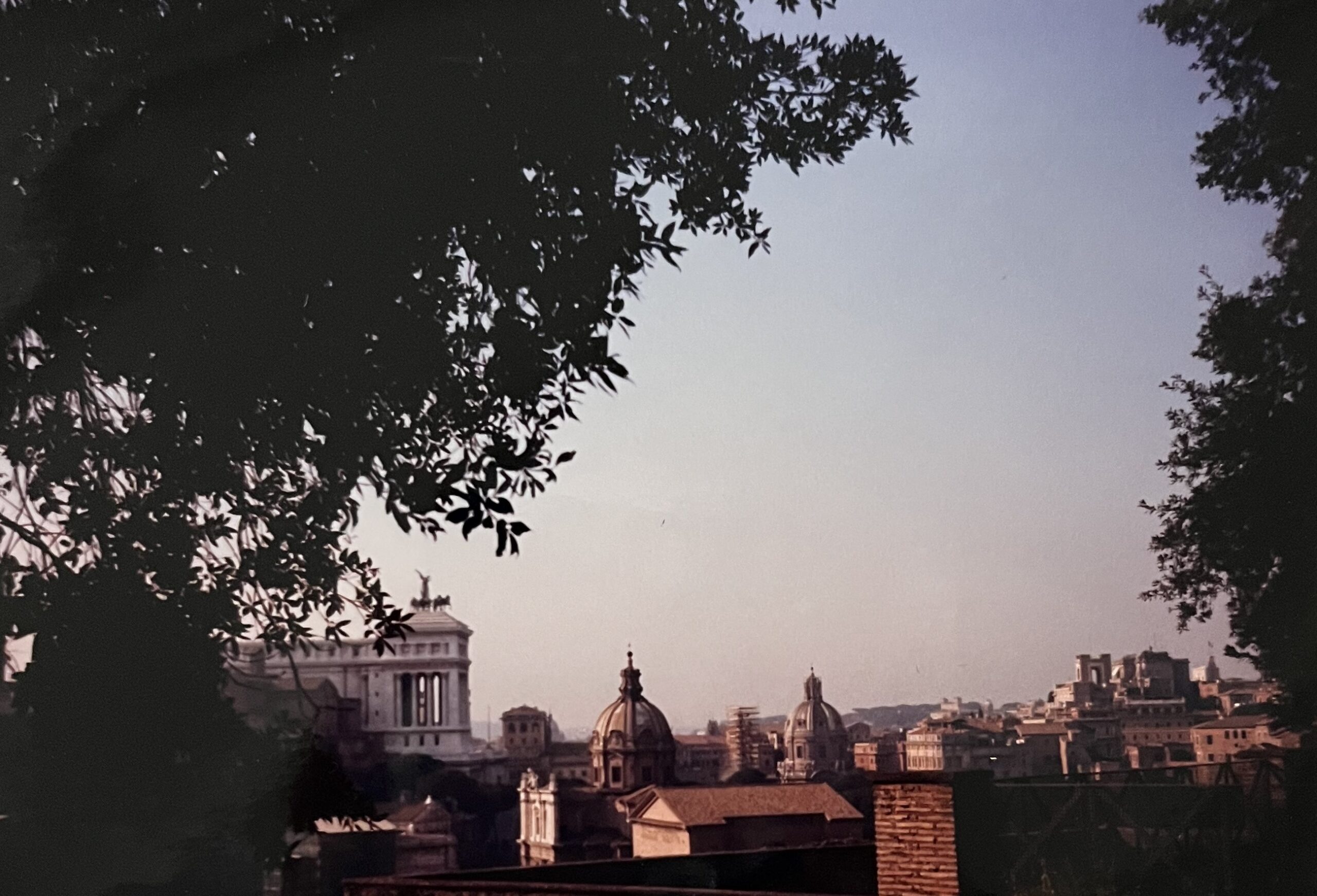
View of Rome from the Forum, April 1985.


On Good Friday: It is Finished!

“It is finished!” And he bowed his head and released his spirit.

The Gospel of John (19: 30) records these final dying words of Jesus, spoken from the cross. A quick reading might prompt one to hear this utterance as the sad lament of defeated man. Not so fast, though. The Gospel writers Matthew (27:50) and Mark (15:37) don’t report Jesus’s last words. They tell us only that he “shouted out again” or “cried out again in a loud voice” before breathing his last. If we use all three accounts as evidence, what the Son of God likely said was a single word evoking not loss, but satisfactory completion. He spoke in Aramaic, but the original Greek of John’s gospel translates it as “tetelestai.”

This word would have been familiar in several contexts to the people of first-century Palestine. Having completed the last task of the day, a worker might tell his boss, “Tetelestai.” An artist, putting the final touch on a painting, might use the same word. A debt paid in full would be stamped “Tetelestai.” For Jews, the word would have been the Greek equivalent of a familiar Hebrew phrase announced by the High Priest each year on the Day of Atonement. After offering the proper sacrificial animals at the altar of the Holy of Holies at the Temple in Jerusalem, the priest emerged to tell the assembled crowd that God had accepted the sacrifice of the people.*

Jesus’s final cry before dying was therefore no whimper of pained surrender. Instead it was an exclamation of triumph.** The various frames of reference for “tetelestai” mentioned above are all helpful in understanding Jesus’s use of the word and what his death means for us. His earthly work is done, the masterpiece completed, the debt paid, the perfect sacrifice offered and accepted. In other words, “Mission Accomplished!”

Three of the Gospels include an often overlooked, but immensely significant detail that stands as proof of the change ushered in by Christ’s death. According to Mark 15: 38: “And the curtain in the sanctuary of the Temple was torn in two, from top to bottom.” This was the curtain in the Temple of Jerusalem which separated the Holy Place from the Most Holy Place. This sacred space housed the Ark of the Covenant, considered by the Jewish people to be the very throne of God. Only priests could enter the Holy place. The High Priest alone entered into that sanctified inner realm, the Holy of Holies, and then, only once a year, on that holiest of all days, The Day of Atonement, or Yom Kippur.

Although sometimes referred to as a veil, the Temple curtain was no delicate, gauzy thing that might have ripped easily in a gusty wind. It was a heavy, brocaded cloth, woven with images of protective angels. Only an intentional act of great force could have caused the Temple curtain to be torn fully asunder. Both Matthew and Mark tell us that it was divided from top to bottom, as though from on high. Human hands had no part in this. This was God’s work.

Having destroyed the barrier to the Holy of Holies, God invites his people to approach him directly. Middlemen are no longer needed. The ultimate gift of atonement invites us to be “at one” with God. Having willingly offered his own life for our sins, Jesus and his father tell us that animal sacrifices are a thing of the past. The perfect Lamb of God has paid our debt in full. We are redeemed. Tetelestai!

This is what Jesus referred to earlier at the Last Supper, when he took the cup and told his disciples, “This is my blood of the new covenant, poured out for you and for many for the forgiveness of sins. “(Matthew 26:28) We, and all generations before and after us, are among the many. It was on this same night that Jesus reduced the entirety of his message to this one essential commandment: “Love each other. Just as I have loved you, you should love each other.” (John 13: 34) See yesterday’s Maundy Thursday post.
So, what then is required of us in these days of the New Covenant? It’s not a matter of mastering complicated theological concepts and demanding the same of others.  Instead, we’re invited to accept the gift  given to us in love by our brother and savior Jesus. To admit our shortcomings and try to do better. To focus less on ourselves and more on others. To get back to basics: “Do justice, love mercy, and walk humbly with your God.” (Micah 6:8) Think about that. We have a God who truly desires to walk with us. He wants to walk the road with us, to share in our sufferings as well as in our joys. And if we’re willing to walk with God day by day, in good times and in bad, loving him, loving our neighbors, we usher in his kingdom here on earth, as it is in heaven.
The Temple curtain has been torn. No barrier remains between us and our loving, faithful God. Tetelestai!

For I am sure that neither death, nor life, nor angels, nor principalities, nor things present, nor things to come, nor powers, nor height, nor depth, nor anything else in all creation, will be able to separate us from the love of God in Christ Jesus our Lord. (Romans 8: 38-39)

*Michael Maynard discusses the various meanings of “tetelestai” here: It is Finished. . .The Last Words of Jesus, June 25, 2017. 

** See Final Words from the Cross, by Adam Hamilton, pp. 103-104.

On Maundy Thursday, Why Not Choose Love?

Today is Maundy Thursday, the day in the Christian calendar that commemorates Jesus’s Last Supper. The unusual word “maundy” (not Maunday) comes from mandatum, the Latin for command, because we remember the new commandment that Jesus gave his disciples on his final night with them.  I wrote a version of this post four years ago, but it’s perhaps even more relevant today, when it appears that meanness, it all its many extravagant forms, is glorified.  If those of us who call ourselves Christians were to take the message of Jesus to heart and actively try to follow his example, rather than that of the religious leaders who condemned him, wouldn’t the world be a far better place? 

On the night of his betrayal and arrest, Jesus gathered with his disciples for one last Passover meal together. He knew his life on earth was drawing to a close. He had tried to explain to his dearest friends that he would soon be facing death, and doing so willingly.  But the disciples, understandably, didn’t understand. Probably some of them were expecting to witness a magnificent earthly triumph. Judas, the betrayer, may have been counting on such a victory. None of the disciples, it seems, were expecting their friend, teacher and Messiah to die an ordinary criminal’s death on the cross.

The group must have been fearful and confused. They were back in crowded, dangerous Jerusalem, where Jesus’s life had been threatened multiple times during clashes with the Jewish religious leaders. And so, on that fateful final night, Jesus had the full and rapt attention of his disciples. He chose his words, and his actions, with care.

According to the Gospel of John (13:1 – 17), after the meal, he did something completely unexpected: he got up from the table and began to wash the feet of his friends. In those days, traveling, for people of ordinary means, meant walking, in sandals, or even barefoot, along dusty, dirty roads, through fields and stretches of sandy wilderness. A servant typically washed the feet of guests as they entered a home. If there were no servants, guests usually washed their own feet from a basin near the door. John the Baptist refers to this practice when asked by Jewish leaders if he is the Messiah. According to John 1:27, he replies, “I baptize with water. Someone greater stands among you, whom you don’t recognize. He comes after me, but I’m not worthy to untie his sandal straps.” The disciples were clearly uncomfortable with their leader and teacher washing their dirty feet. Had foot washing been done upon entering the upper room that night? It’s uncertain. Maybe there had been no basin set up for the purpose until Jesus poured water into one, as mentioned in John 13:5. The Pharisees had criticized Jesus when they noticed that some of his disciples failed to wash their hands before eating (Mark 7: 1-5). Certainly, Jesus’s focus was not on Jewish rituals of purity. External, physical cleanliness was evidently not one of his primary concerns. He may not have been a stickler for foot-washing prior to that last gathering.

The disciple Peter’s reaction supports this (John 13: 6-11). Peter was fiery, passionate and impulsive. Like many of us, he was often a bit dense. He couldn’t stand the idea of Jesus abasing himself to wash his feet. Foot washing was the job of an underling, a slave. Peter jumped up and exclaimed, “You’ll never wash my feet!” When Jesus replied, “Unless I wash you, you won’t belong to me,” Peter was all in. “Then wash my hands and head as well, Lord, not just my feet!”

Jesus went on to explain his puzzling behavior. “Do you understand what I was doing? You call me ‘Teacher’ and ‘Lord,’ and you are right, because that’s what I am. And since I, your Lord and Teacher, have washed your feet, you ought to wash each other’s feet. I have given you an example to follow. . .Now that you know these things, God will bless you for doing them.” (13:12-15, 17).

Jesus wanted his disciples to understand that he had in mind much more than literal foot washing. Following his example is to mean humbling oneself in order to serve and help others. To further drive home his point, he continued: “So now I am giving you a new commandment: Love each other. Just as I have loved you, you should love each other. Your love for one another will prove to the world that you are my disciples” (13:34-35).


Jesus had spent three years traveling with this rag-tag group.  They’d heard him teach and preach, seen him heal the sick and cast out demons.  On three separate occasions, he’d even restored the dead to life.  The disciples had been with him as he confronted the Jewish authorities and challenged their interpretation of the Law.  Sometimes his words and actions had been difficult to comprehend.  But on the night before his death, Jesus summed up the essence of his ministry in the simplest of terms:  Serve others.  Love others.  Just as I have served and loved you, so you should love others.

Simple words, but tricky to put into practice.  Why not at least give it a go?  Vindictiveness offers a brief jolt of satisfaction, but doesn’t it leave a bad taste?  In forgiving, we refuse to be destroyed by bitterness and anger.  The wise counsel of our dear brother Jesus is food that strengthens and sustains us, for the long term.  He urges us to be kind and compassionate, to all our neighbors, whether we like them or not, whether they are like us, or not.  Of course, we won’t always succeed. Sometimes we’ll backslide and act in ways that are selfish and petty. But if we persevere, we can change the world, little by little, through service and love. That’s what Jesus meant when he talked about building God’s Kingdom here on earth.  He wasn’t referring to a kingdom that can be built through military might or governmental power.  Attempts to do so only backfire.  The true kingdom is more like a community garden.  When we plant seeds of love, and when we nurture seedlings that others have sown, we can rejoice in the certainty that the garden is growing.  Its roots, we can be sure, are deep and wide-reaching.  Let’s try to do our part, in the time that we have, to tend this beautiful garden so that it may flourish and bring forth good fruit.  


Palm Sunday 2025

Palm Sunday begs to be distinguished from just any other first day of the week. It launches the period known by Christians the world over as Holy Week. Palm Sunday sets an expectant, celebratory tone, one that contrasts, shockingly and painfully, with the shattering disappointment of the terrible day we call Good Friday. In between falls the oddness of Maundy Thursday. So much is packed into the events of these seven days, which lead up to the triumphant culmination of Easter. Indeed, without Easter, the story of new life, hope and possibility would have been one of failure, death and despair. I’ve written about the days of Holy Week several times before. Below is my Palm Sunday post from April 1, 2012.

Palm Sunday: Everyone Loves a Winner

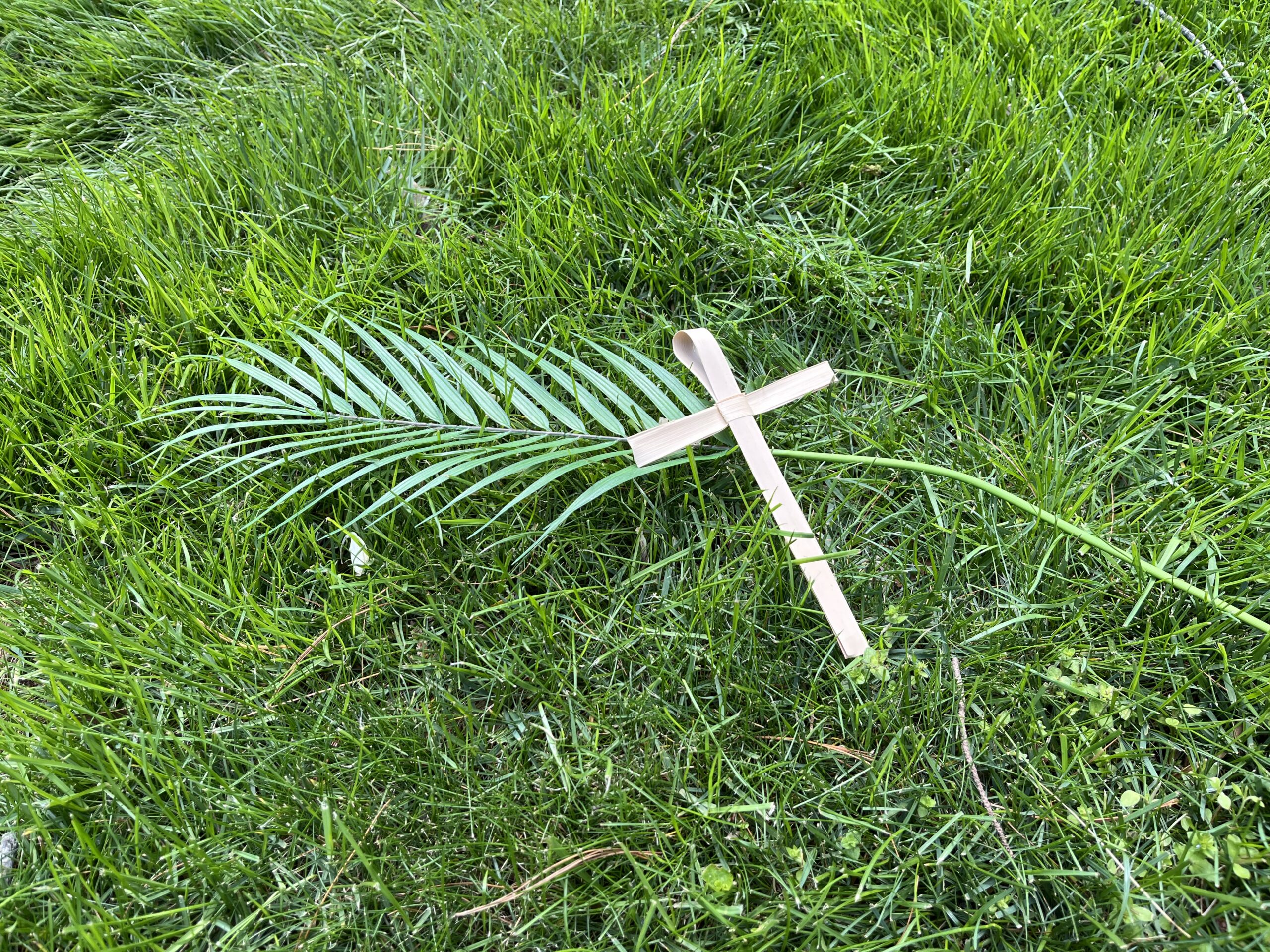
On the day that we’ve come to think of as Palm Sunday, Jesus was hailed as a celebrity, a military and political hero-to-be.  As he and his disciples entered  the city of Jerusalem, cheering crowds greeted him with cries of “Hosanna,” which means “Save us.” The news was out: at long last, the King of Israel was here.  He was the chosen one sent by God to restore power to the Jewish nation.  He rode on a donkey to fulfill the prophecy in Zechariah 9:9:  See, your king comes to you, righteous and having salvation, gentle and riding on a donkey.

PalmSunday0141


It was a brief time of great rejoicing for the people of Israel.  A new day of freedom and empowerment was dawning, thanks to the advent of the conquering Messiah.  The palm branches they waved were emblems of Israeli nationalism.

In just a few days, though, the tide would turn.  Jesus’s being hailed as the much-awaited Messiah would set in motion the events that would lead to his death.  The admiring throngs would scatter when it became clear that he was not the kind of king they had desired and expected.  Even his dearest friends would desert him.  He would be betrayed by one of his own, turned over to the Roman authorities and crucified. On Good Friday, it would appear that this man was no winner.

PalmSunday005

Good Friday, however, is not the end of the story.

The Time My Mother Met the World’s Tallest Man

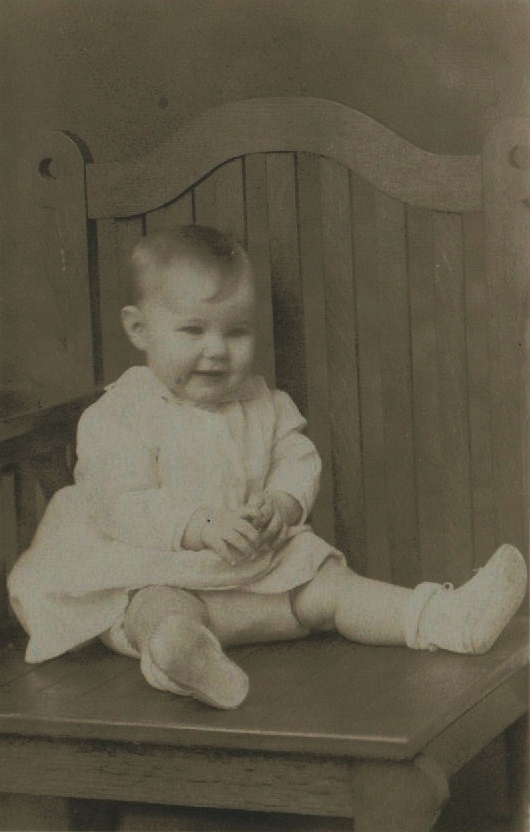
My mother as a baby, ca. 1935.

I thought I knew all my mother’s stories about her childhood and youth.  Most I’ve heard multiple times, which is to be expected.  My daughter would likely say she’s all too familiar with anecdotes from my past.  (Except for one, which she heard for the first time recently, and it truly surprised her.  But that’s for another day.)

Mama at about ten, ca. 1945.


 A while ago Mama’s memory was jolted by a segment in one of her frequently watched History Channel shows. The topic was Robert Wadlow, the world’s tallest man. At his death at the young age of twenty-two, his height was 8 feet 11.1 inches.   

Did she ever tell me that she met him when she was a little girl? 

What?  You met the world’s tallest man?  No!  How could you have never told me that?

My mother’s first grade school picture, ca. 1941.

She wasn’t sure. It must have slipped her mind, until just then.

As she remembered, her father’s brother Ben had taken her to a favorite restaurant on Main Street in her home town of Lebanon, Kentucky. This popular meeting spot, memorably called Humpkey’s, featured in many of Mama’s recollections.  Open from early till late, it had a soda fountain, candy and ice cream sales in the front, and café tables in the back.  Everyone, young and old, socialized, snacked and lunched at Humpkey’s.  I have a vague vision of going there with my grandfather when I was very young.  Apparently Mama’s uncle had heard that the world’s tallest man would be stopping by, and he took little Betty Ann, then no more than four years old.  She couldn’t recall her parents, or any of her four siblings, all much older, being there.  

But now she was starting to wonder if any of that had actually happened.  Had she just made it up?

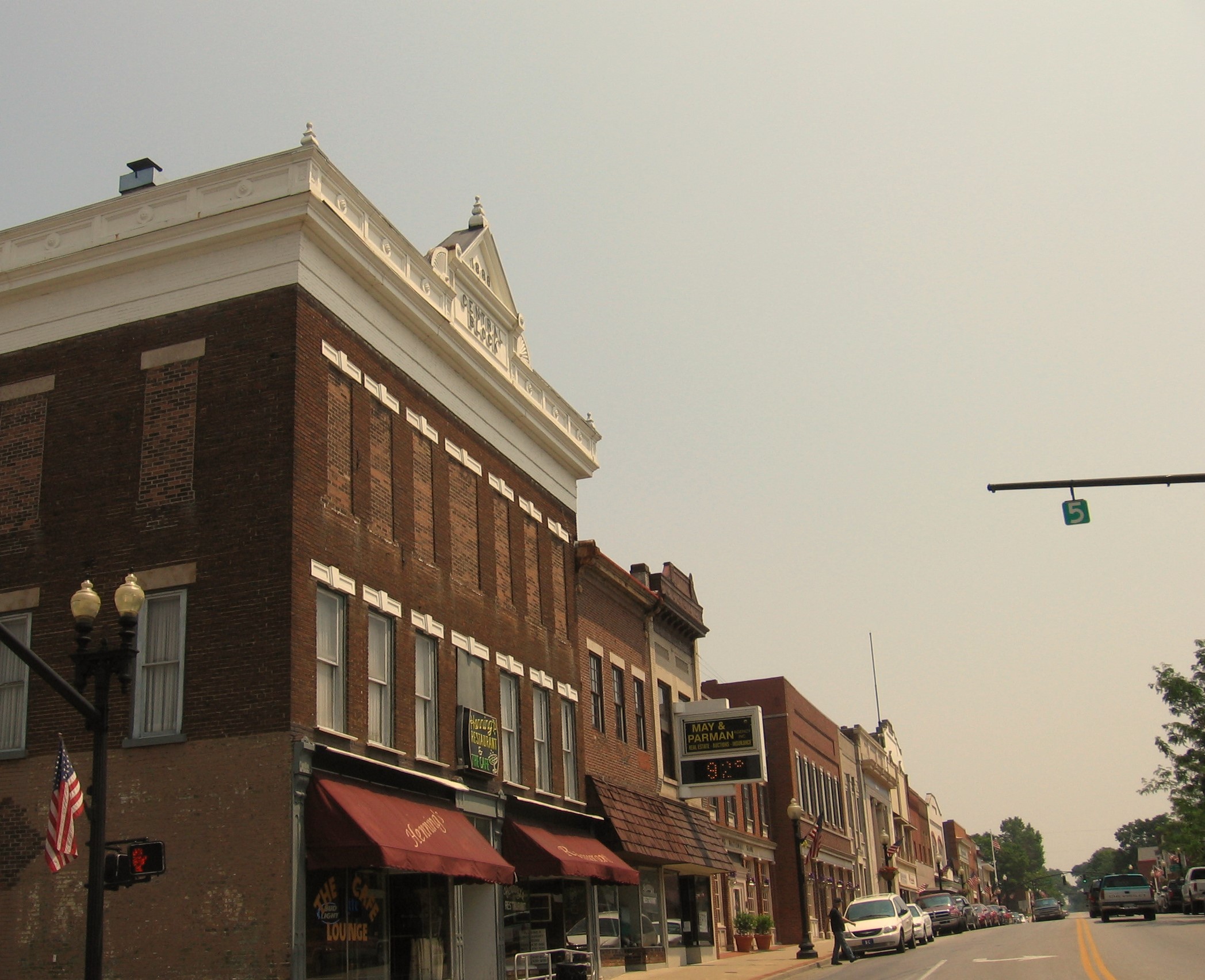
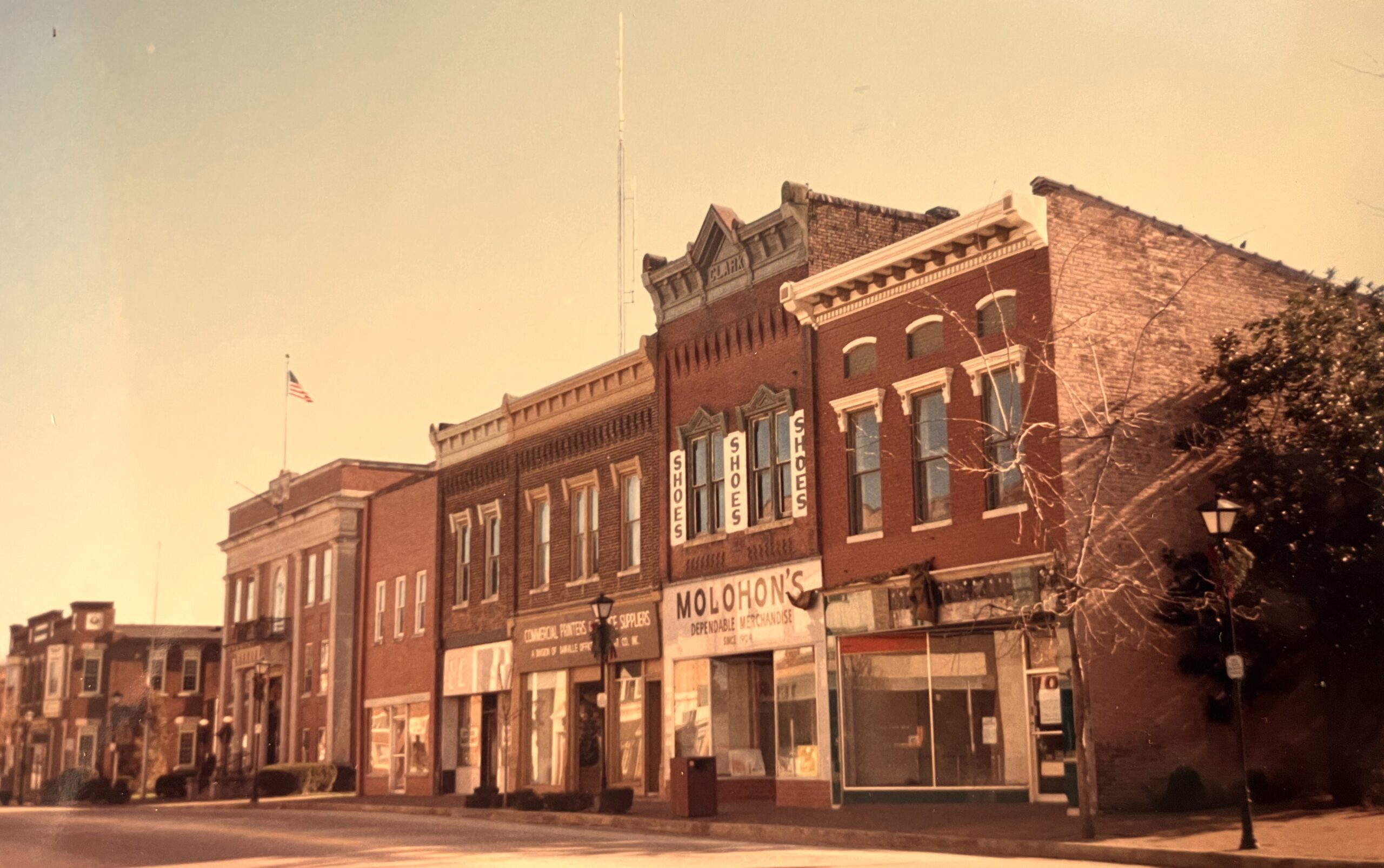
Main Street Lebanon, 1983.

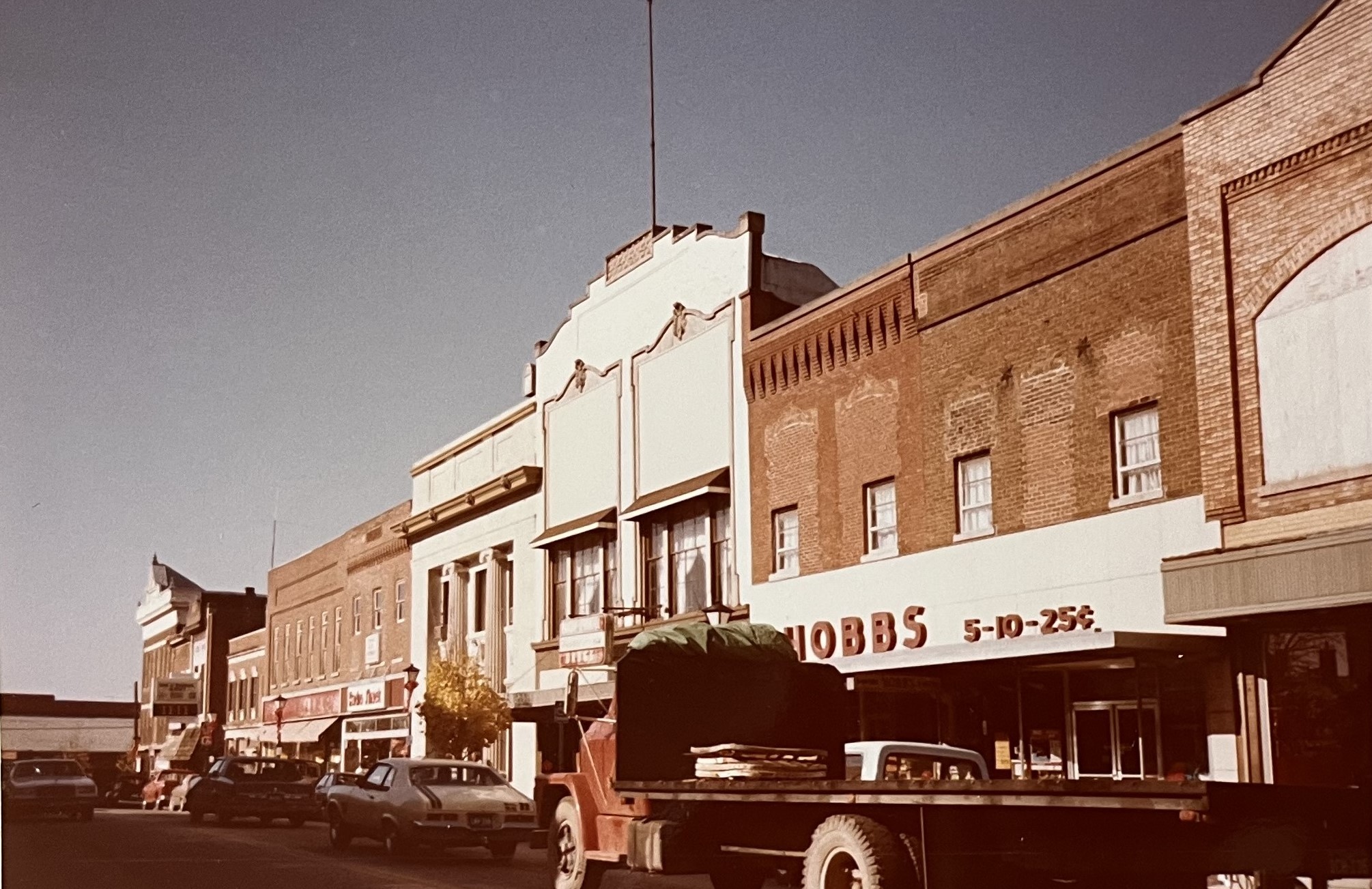
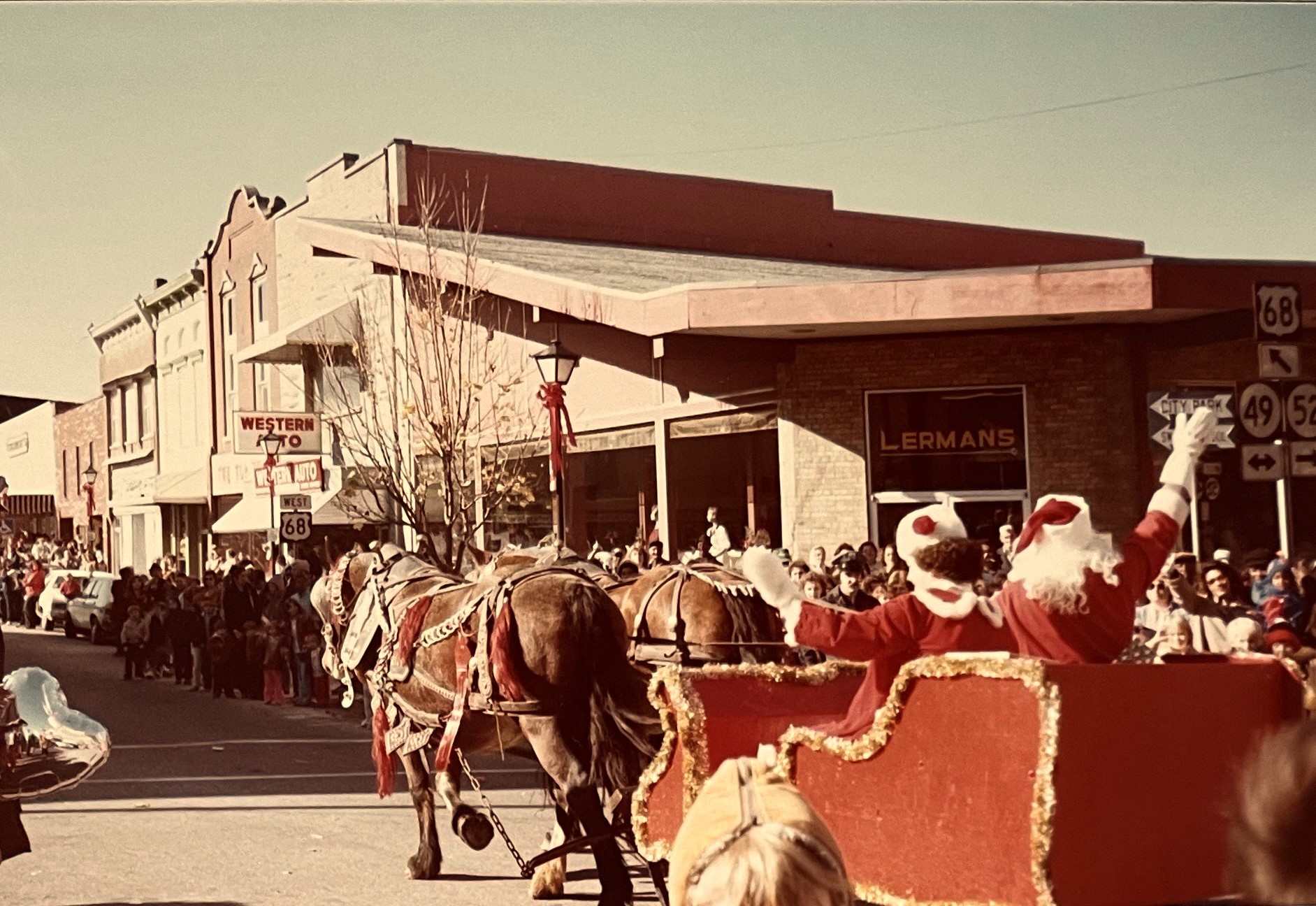
It was thanks to my late cousin Maryella, who lived her entire life in central Kentucky, that I was able to confirm my mother’s recollection.  Until her untimely and unexpected death, Maryella maintained a Facebook archive of old newspaper clippings on Marion County events.  Searching her site, I found an article from the local paper, dated May 8, 1939, on Wadlow’s visit to the town.  He was twenty-one at the time. For the past year, he’d been traveling the country as a representative of the St. Louis-based International Shoe Company, which supplied his size 37 shoes free of charge. Lerman Brothers Department Store on Main Street had invited him to make an appearance in Lebanon. 

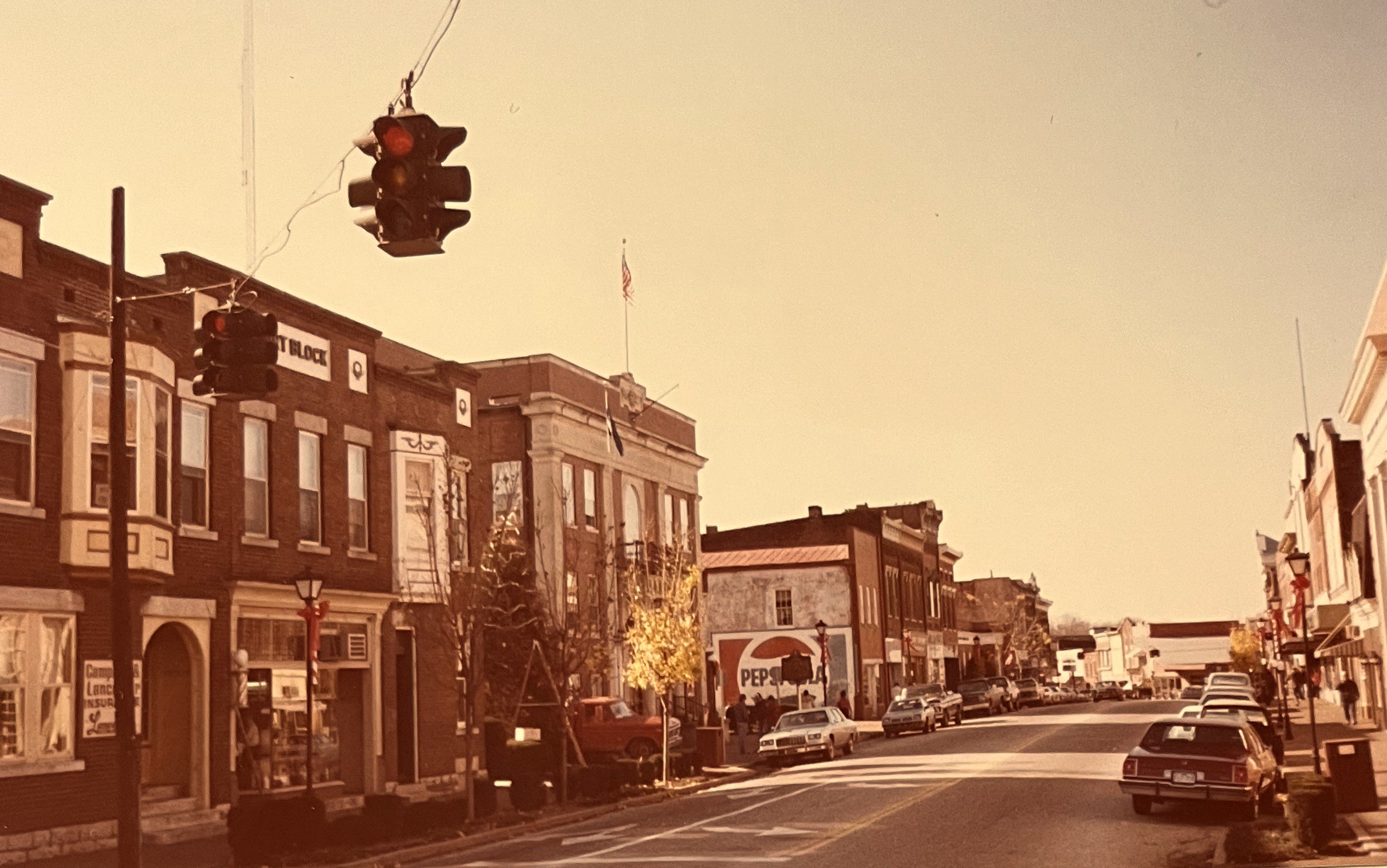
Main Street Lebanon, December 1984.

Robert Pershing Wadlow was born in 1918 in Alton, Illinois, a small town near St. Louis.  His great height was caused by hyperplasia of the pituitary gland, resulting in excessive production of human growth hormone.  At eight years old, he was already six feet two inches tall.  At thirteen, he became the world’s tallest Boy Scout, at seven feet four inches. As the eldest of five children, Robert was a caring and considerate big brother.  Growing up in Alton, he was a familiar figure in the community, accepted and well-liked.  To his peers in school (where he was a good student), church and scouts, he’d always been just Robert, who happened to be very tall.  But of course, he attracted attention everywhere he went.  In 1936 he traveled with the Ringling Brothers Circus. He didn’t think of himself as a showman, certainly not a side show act.  In his appearances in the center ring, he wore a suit and tie, not the flashy top hat and tails that circus bigwigs would have preferred. He saw his towering height not as a handicap, but as a feature that made him unique. Throughout his life, he was known for his kindness, humility, gentleness and quiet dignity. 

Main Street Lebanon, November 1983.

According to The Lebanon Enterprise article, a sizable crowd had gathered that day in May to await the celebrity’s appearance.  After arriving in the specially modified family car with his father, Robert climbed atop a flat-bed truck parked on the street as a viewing platform.  His father addressed the group and spoke of his son’s rapid development from an eight-pound baby born to parents of typical height.  Robert made a short endorsement for the International Shoe Company, but spent most of his time seated in a chair chatting amiably with curious townspeople. His demeanor was described as pleasant, humble and at ease. After a while, a few of the town’s tallest young men were invited to climb up and compare their stature with Robert’s.

Santa’s sleigh passes Lerman’s Store on Main Street in the Christmas Parade, 1983.

These details of Wadlow’s visit were news to my mother.  But the final paragraph in the article noted that “following his engagement, the party had lunch at Humkey’s (sic) Confectionery and then left for Campbellsville.”

“You did see him, after all!,” I said to my mother.  “And of course, it happened at Humpkey’s.”  

Main Street Lebanon, December 1984.

Robert Wadlow died just a little over a year after his appearance in Lebanon.  As he aged, his quickly growing body was under ever greater strain.  He wore braces on his legs and used a cane to walk, but he never resorted to the use of a wheelchair.  During a public appearance in Michigan, an ill-fitting brace rubbed a blister on his ankle. Because he had little sensation in his lower legs and feet, Robert didn’t notice the injury until it had become infected. Despite emergency surgery and a blood transfusion, the infection worsened, and Robert died in his sleep on July 15, 1940.  Penicillin, which might have solved the problem, wasn’t in regular use until later that decade. His final words were “The doctor says I won’t get home for the celebration,” a reference to his grandparents’ upcoming fiftieth anniversary party. 

The life of the world’s tallest man was unfortunately short, but his legacy is long.  When I mentioned his name to my husband, he recognized it instantly.  Not much of a reader growing up, he ordered a kids’ Guinness Book of World Records  every year, if he could, through Scholastic Books at school.  He remembered reading about Wadlow, and he knew  his record had never been broken.  “Wow!  Nana met Robert Wadlow!  Amazing!,” he exclaimed.  My daughter’s fiancé, also a World Records enthusiast, was equally impressed. 

Wadlow’s record will likely remain unsurpassed.  His condition,  known as pituitary gigantism, was accurately diagnosed during his childhood.  It’s now typically treated successfully with surgery, but during his lifetime, that was deemed much too risky. 

Robert Wadlow will be remembered as one who persisted through hardship, in ways that most of us can barely conceive.  Daily, he navigated an environment built, from his point of view, on a cramped and unaccommodating scale.  Think of an American Girl doll being trapped in a Barbie-sized world.

Because of his large size, Wadlow had no choice but to be visible.  Far more visible, at all times, than most of us would choose.  The typical celebrity has the option of dressing in forgettable attire and a baseball cap in order to slouch about unnoticed.  Wadlow was never afforded that luxury.  While his fellow citizens of Alton apparently took his outsized presence in stride, he could expect stares of amazement everywhere else.  His attendance with his YMCA group at the Chicago World’s Fair in 1933 at age fifteen, for example, was caught on film.  He must have tired of the never-ending stream of photo-seeking strangers.  He must have groaned inwardly at hearing the same old jokes about his height.  But those who knew him, as well as those who met him briefly, were impressed by his positive, matter-of-fact attitude, his patience with onlookers, and his complete absence of self-pity.  He was not known to have complained about his condition or about being pestered by goggle-eyed crowds. 

We all face challenges, but few of us are forced to deal with them in quite such a public manner.   When I get the urge to whine about my problems, I’ll think of that tallest-ever man, a perpetually young man.  Robert Wadlow persevered through unusual difficulties, all the while extending grace to those around him. 


Thanks to a Friend, a Miniature House Tribute to Streak the Cat

I have a friend whose vocation–one of her true callings–is searching out the best deals in thrift stores.  She’s motivated not by monetary gain, but by the thrill of the hunt.  Occasionally she’ll sell some of her finds on eBay.  But more often, she makes gifts of them to those who will most appreciate them.  She’s one of those people who can, and does, talk to anyone she meets.  And she meets many people.  She was in our dog-walking group for the ten years that her family lived in our area.  As soon as a new family moved to the neighborhood, she could tell us their names, their background, and several interesting anecdotes about them.  Wherever she is, whether on walks with sweet Cali, her big, shaggy golden doodle, or in her favorite thrift stores, she’s immersed in community.  At a local church-run shop, she was one of the Tuesday regulars, those who line up early for first dibs at newly displayed merchandise that arrives over the weekend.  There she met a diverse group of friends, and it became part of her mission to assist in their searches.  Quality wool sweaters in fall colors for Esther’s twin grandsons in Roanoke?  Office attire in Size 5 for Maria’s young adult daughter in the Philippines?   Just-so serving pieces for Sofia’s niece’s at-home wedding reception in Manassas?  Found, found, and found, in each case, with several options.    

My friend was well aware of my dollhouse hobby. She had been on the lookout for a while, at my behest, for a miniature house that could benefit from a thorough renovation. The plainer, the better. When she spotted one on a Tuesday morning at her favorite thrift shop, she quickly texted a photo.

Yes! I’ll be right over! It was the ideal blank dollhouse canvas I’d been wanting.  It’s hard to imagine a more basic structure.  It was sizable, but it fit, just barely, in the front seat of my little car.  

For the re-do, I envisioned a stately Greek revival house in gray and white.  My husband measured and cut (two things I don’t do well) a triangular pediment for me from a thin sheet of plywood.  I  removed the few remaining shutters and painted smaller pediments over each window.  I added a central Palladian window, and Corinthian columns on tall bases.  I painted the steps, chimney, and foundation level to resemble stone.  I added pots of flowers and topiaries, and a couple of flowering trees on each side.  I kept the florals to a subdued palette of green, white and yellow.  Only the front door remains unchanged. 

Ever since deciding on the color scheme, I knew that the exterior would feature cats. Most of my houses are adorned with dogs and/or foxes, along with a few birds, squirrels and chipmunks.  When my dog Kiko died, I added him to the Red Panda house I was finishing.  This house, I’d decided, would be a sort of memorial for my favorite Atlanta feline.  Streak, all fluffy gray and white elegance, was my idea of the absolutely perfect cat.  I began seeing him when, living at home between undergrad and grad school in the mid-80s, I passed his house on daily neighborhood walks.  With very un-catlike behavior, Streak would run out enthusiastically at my approach.  If I didn’t see him immediately, I’d call for him, and he’d appear.   He’d greet me with a loud, decidedly welcoming meow.  I’d spend some time admiring him before resuming my walk.  He’d purr and circle my legs.  I’m allergic to cats, but a few moments outdoors with a cat don’t bother me.  And a few moments with a living, breathing masterpiece like Streak–those to me were priceless. 

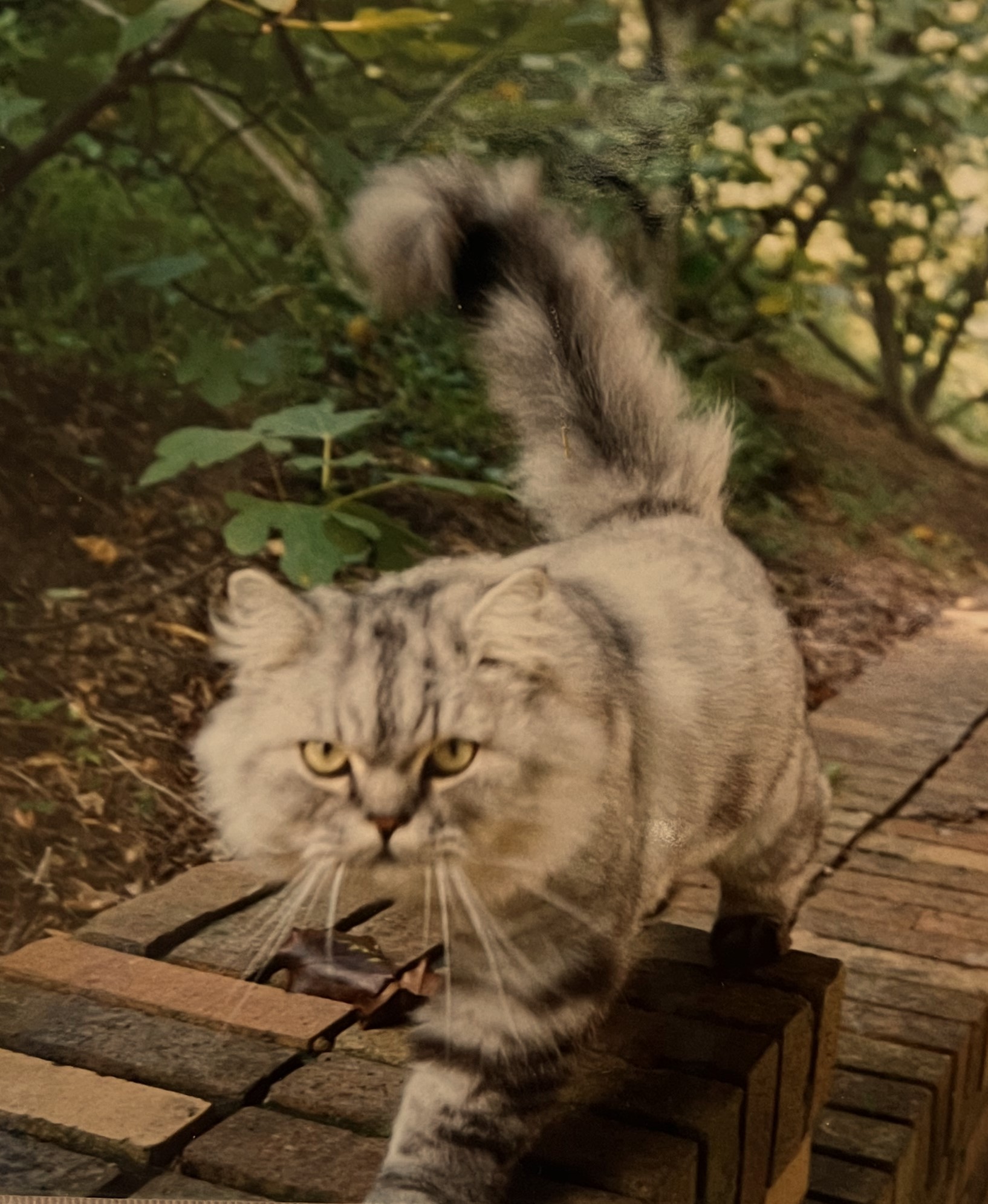
Streak the cat, on the wall on Wildwood Rd near his house.

Just look at that lion-like ruff, those symmetrically striped, magnificently furry front legs and paws, those yellow eyes, pink nose, delicate ears, and intense, intelligent gaze.  All these decades later, and I’ve never met a cat that was Streak’s equal in looks or personality. 

I made the little wreaths for Christmas, but I like them so much that they stay on year round.

If not for my friend, the thrift store guru, I might not have had the pleasure of creating a tribute to Streak.  None of my painted cats does justice to the one that inspired them, but I enjoyed the attempt.  Streak will forever feature in my favorite Atlanta memories.  Now, in the child-like part of my brain that still imagines my painted houses as sanctuaries for cherished companions, I can envision him living here.  He’s waiting by the front door to greet me.  Content and cozy with his dear cat family, Streak is nearby in all his feline fabulousness.