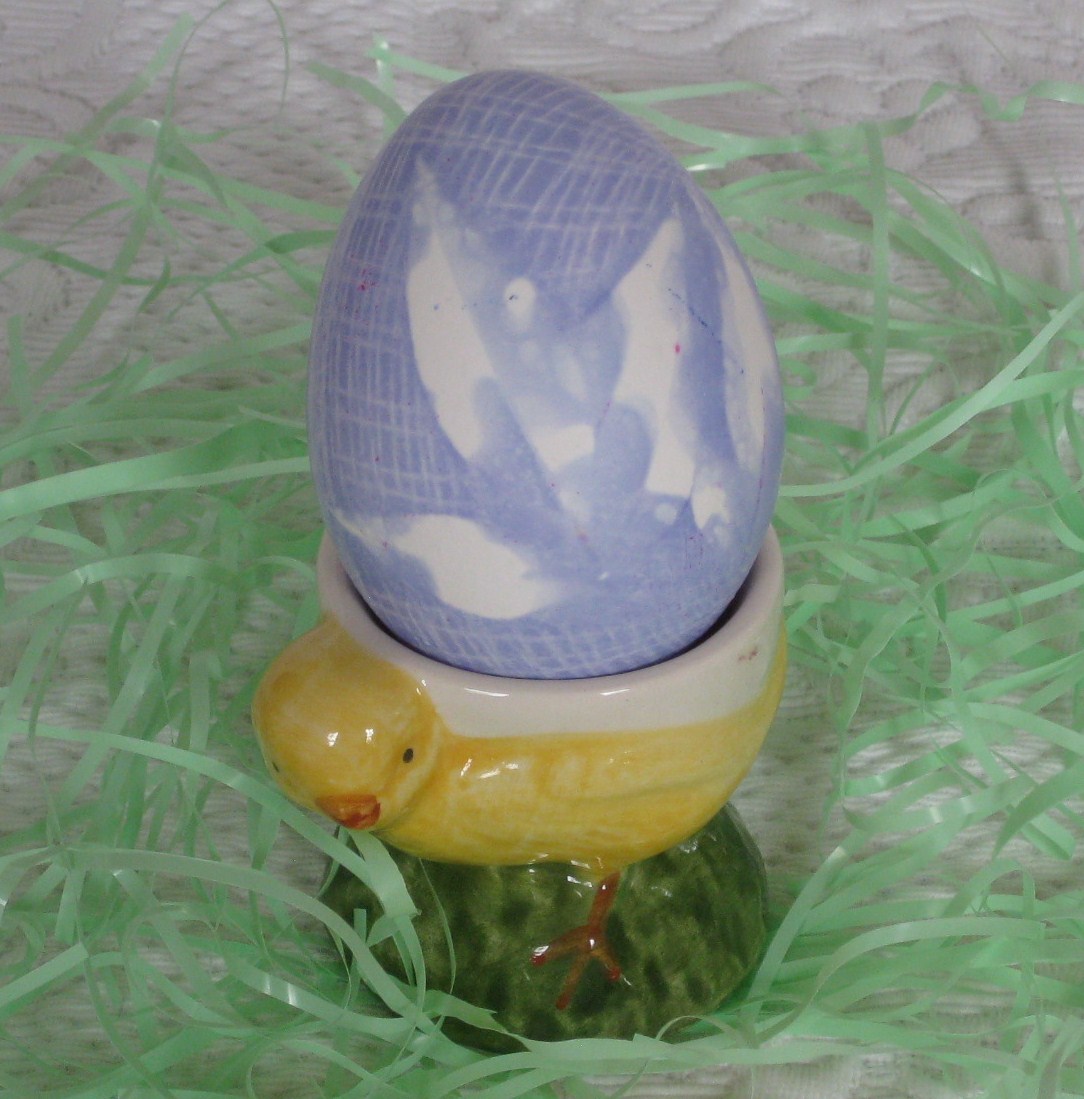
Because we fared well with our first batch of decorated eggs this season, my daughter and I pushed on. We experimented with natural dyes, without success. Boiled red cabbage suffuses the kitchen with a pungent smell and yields a vibrant reddish-blue color in the pan. Yet eggs left in this liquid for an extended period emerge an innocuous, industrial shade of gray-white. The same is true for beet juice. This might not be the case if we had boiled the eggs slowly with the vegetables, as we have done, with good results, to make our reddish-brown onion skin eggs (See post from April 2012). Surprisingly, only frozen blueberries mixed with water imparted a substantial but subtle color (a dull gray-blue, seen on the egg in the top center, above).
D and I soon turned to the stand-by, store-bought egg-coloring kit. We wanted to try some easy techniques that did not involve paint or markers. Outside in the biting March wind, we foraged for interesting bits of foliage and flowers. We arranged a sprig or a leaf on each egg, wrapped the egg tightly in cheesecloth, tied the ends with yarn and immersed the egg in the dye. We had used the cheesecloth technique before when decorating some of our onion skin eggs. (Pieces of old nylon stocking, recommended by some, did not work for us; they didn’t create a secure enough hold.) This cheesecloth process produces messily impressionistic images, as on the eggs above, instead of clear-cut stencil designs, which suits us fine.
My daughter created this interesting design with nandina leaves, wrapped very tightly to show the weave of the cheesecloth.
We made bolder patterns by simply wrapping rubber bands
tightly around the eggs before dyeing them.
For this design we used a sprig of pine needles bound with a rubber band. It reminds me of waving seagrass in front of a beach fence.
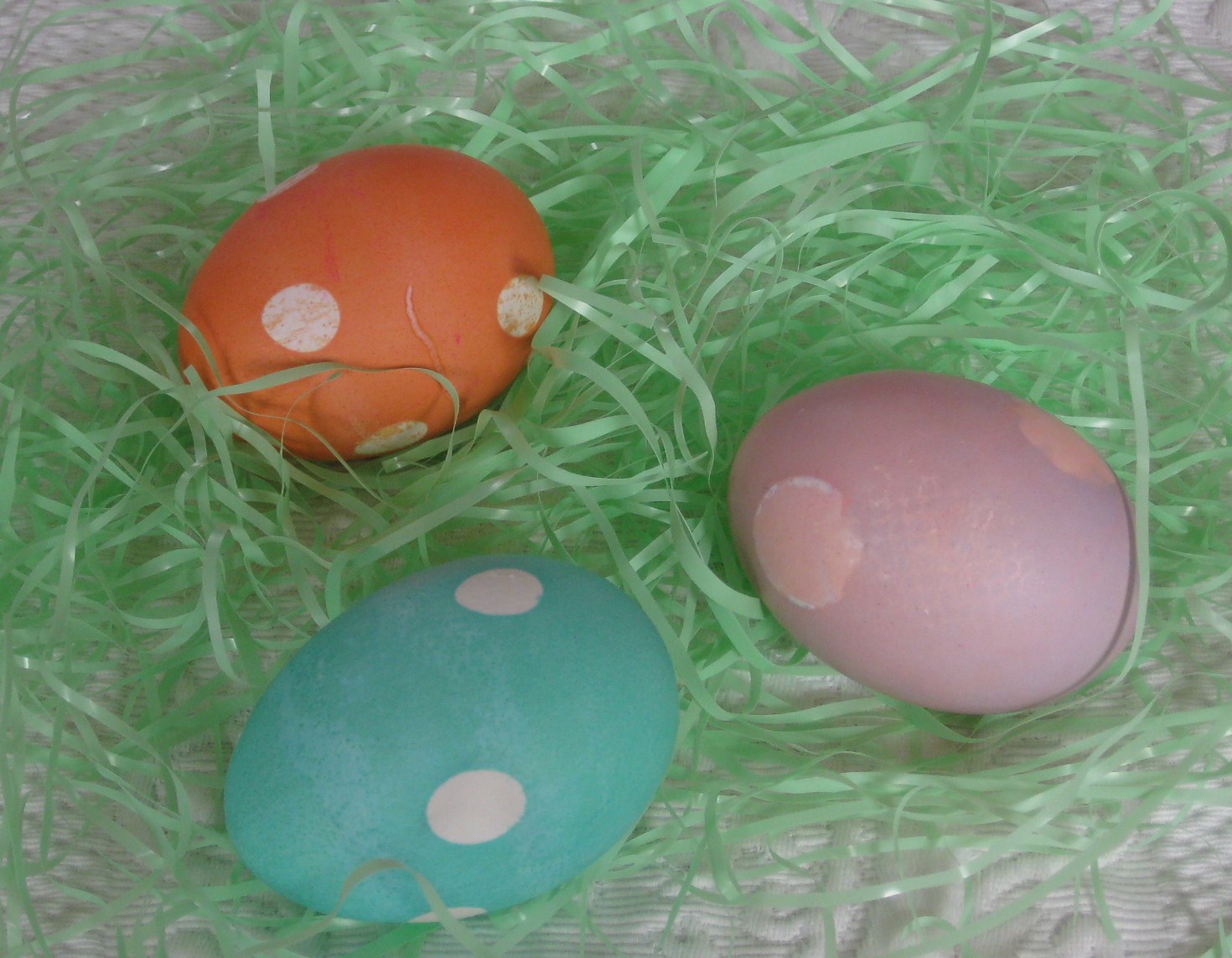
We made polka-dotted eggs by applying stickers before dyeing.
We used a variety of stickers for the eggs above. Our failure to remove the stickers immediately after dyeing made for the only stress of the evening. We spent considerable time trying,
with incomplete success, to scrape off the shredded stickers and the gooey residue.
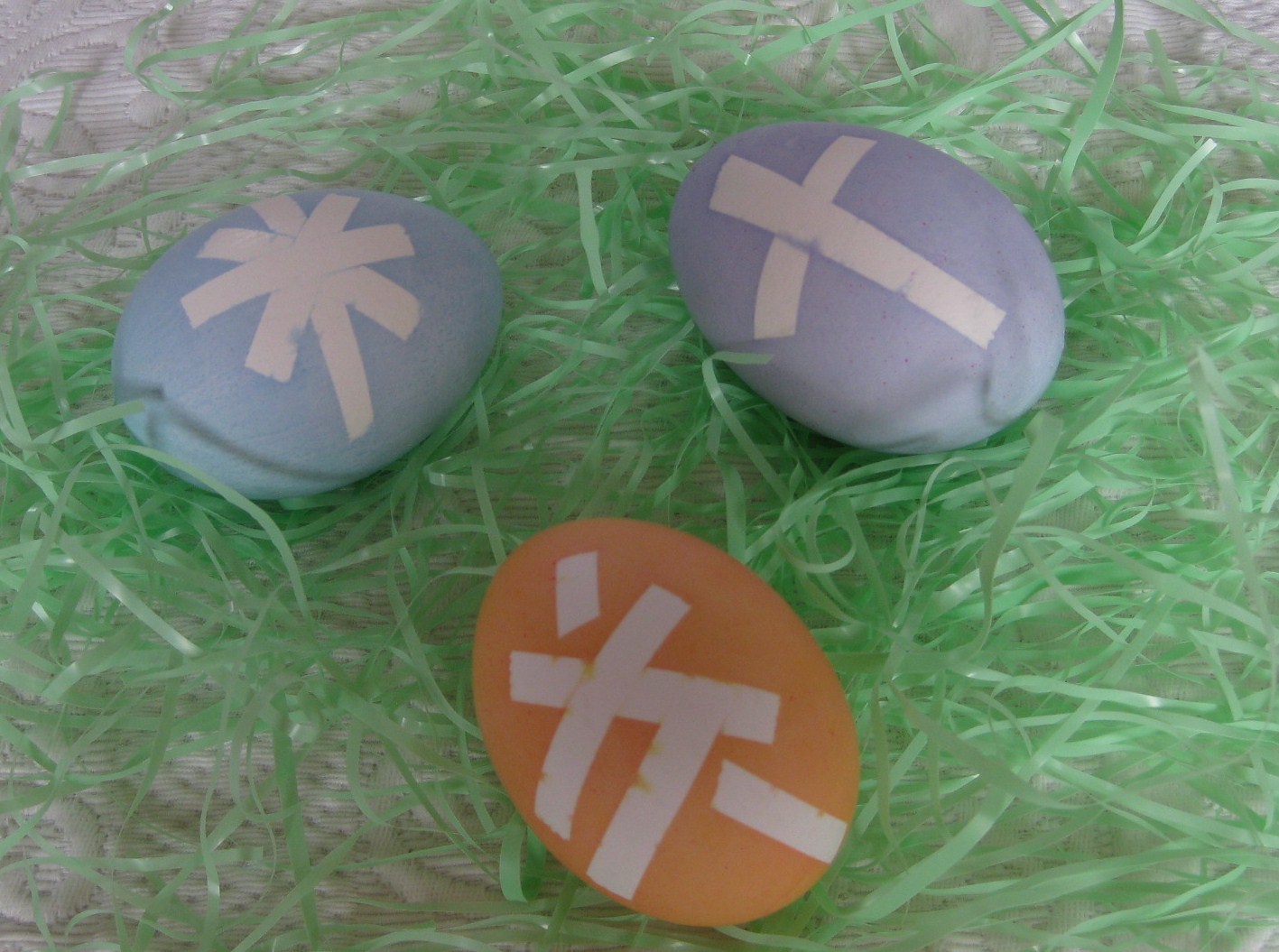
We used tape to create simple rectilinear designs. It peels off far more easily than stickers.
Charles Wesley eloquently summed up the message of Good Friday in the words of the following hymn, which he composed in 1762.
Its title comes from the last words of Christ from the cross,
as told in John 19:30: It is finished.
‘Tis Finished! The Messiah Dies
Tis finished! the Messiah dies, cut off for sins, but not his own.
Accomplished is the sacrifice, the great redeeming work is done.
The veil is rent; in Christ alone the living way to heaven is seen; The middle wall is broken down, and all the world may enter in.
‘Tis finished! All my guilt and pain, I want no sacrifice beside; for me the Lamb is slain, ’tis finished! I am justified.
The reign of sin and death is o’er, and all may live from sin set free; Satan hath lost his mortal power, ’tis swallowed up in victory.
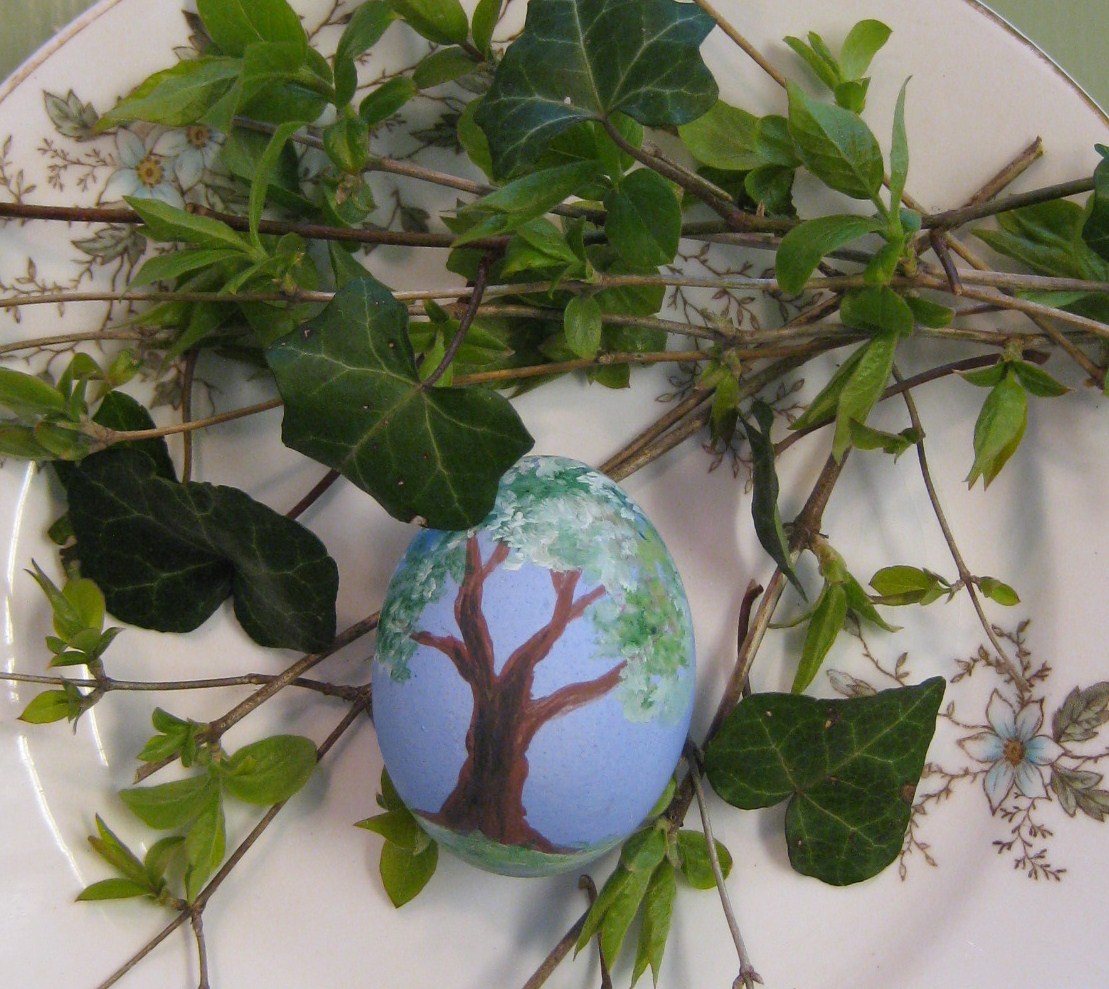
This year, my daughter and I continued our Easter-week egg-decorating tradition, but we kept the techniques simple and our approach low-key. We dyed these eggs using the tablets from a basic egg-coloring kit and decorated them using acrylic paints or markers. I am happy to report that no family members were harmed, either emotionally or physically, during the decorating of these eggs, which is more than I can say for some years.
For other approaches to egg-decorating (and the upheaval they have provoked), see several posts from April 2012.
Yesterday, our daughter went to New York City on a whirlwind, 24-hour trip with her drama class. The group left from the school by bus at 5 AM, and returned at 5 AM this morning. They saw two Broadway shows–Newsies and the eagerly awaited Matilda, still in previews. A Newsies cast member led the kids in a dance workshop. They had some free time, so I’m expecting a a full report on wandering Times Square characters. Are the Naked Cowboys in season yet? Were there plentiful sightings of Elmo, Shrek, Hello Kitty, Grandma Liberty and the Tin Man? How was the singing waitstaff at Ellen’s Stardust Diner? D is still asleep, so I haven’t heard the details of the trip yet. I’m very grateful to the drama teacher and to the parent chaperones accompanying the group. I’m especially thankful that I was not among them. While I enjoy New York in small, metered doses, I’m relieved that crowded, pre-dawn bus rides are predominantly in my past.
As D was preparing for the excursion that launched her spring break, I was recalling the days when I looked forward to my own eighth-grade adventure. I mentioned in an earlier post that I had the unlikely good fortune to participate in a school trip to France and England. (See A Small Reunion of the Rutherford Hall Gang, Nov. 2011.) As I said then, it was a rare event for a group from the Atlanta Public City Schools to venture anywhere for spring break in the 70s, much less to Europe. It was just about unheard of then for middle-schoolers in our area to take part in such study trips. But we were blessed with a dynamic and unusually dedicated French teacher, Martha Elizabeth Correll. She decided we must see France, and we must see it with her. We loved and admired the young, fun and charismatic Mrs. Correll. She seemed to be fond of us, too. She found a bargain-priced trip through the now extinct Foreign Study League. Nine of us, including several of my best friends, managed to persuade our parents that this was an opportunity not to be missed.
Mrs. Correll encouraged us to keep a journal during our trip, and naturally I saved mine. In my first entry, dated a few days before our departure, I mentioned my vague fear of flying. I had never been on a plane before: It couldn’t be especially frightening, could it? Katie, who wouldn’t ride the roller coasters at Six Flags, had flown before, and she wasn’t scared.
Above, most of our group at the Atlanta Airport, ready to board the plane to New York. Several of us hold our blue and white Foreign Study League carry-ons. Our teacher, Mrs. Correll, is at the far right, in her signature, whimsically decorated bell-bottom jeans.
My journal from the actual trip continues on the subject of airplane travel. The flights were unexpectedly smooth, I reported. Apparently I was expecting a roller coaster experience, despite Katie’s evidence to the contrary. But every aspect of flying was novel and amazing, if not particularly enjoyable. I wrote at length about the unbelievably cramped quarters on the overseas flight, the tiny bathrooms, and the unidentifiable food (my friend Jackie maintained that we had been served baked rat).
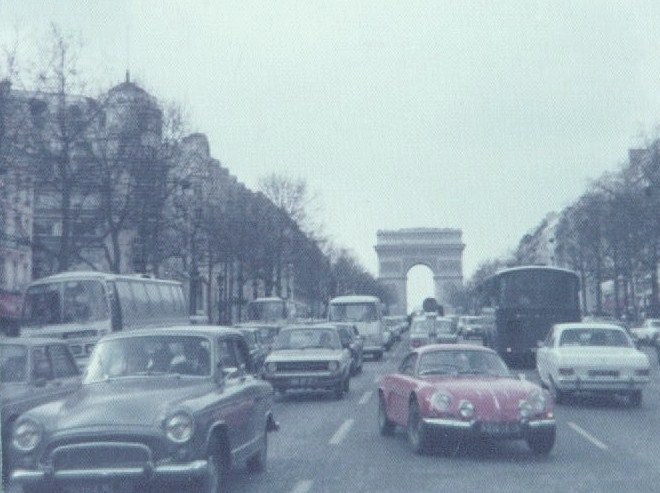
After a sleepless night on the plane, we arrived in Paris in the gray dawn and boarded our bus for an introductory tour of the city. I recall powerfully the miserable war I waged against my leaden eyelids during my first, much anticipated hour in a foreign country. We were surrounded by legendary sights, yet the yearning for sleep was overwhelming. After the discomfort of the airplane seats, the tour bus provided an ideal environment for snoozing. Most eyes were closing, most heads were bobbing. Mrs. Correll, ever vivacious, walked the aisle, rousing us. She hadn’t taken us with her to France so we could sleep on a bus. Once in the heart of Paris, I shook off some of the muddled fog of half-sleep. After stops at the Eiffel Tower and Notre-Dame, nearly everyone was awake enough to feel rejuvenated by our surroundings. Avoiding sleep became even easier once we noticed that our Parisian guide, Salvador, was charming and exotically handsome (so French!).
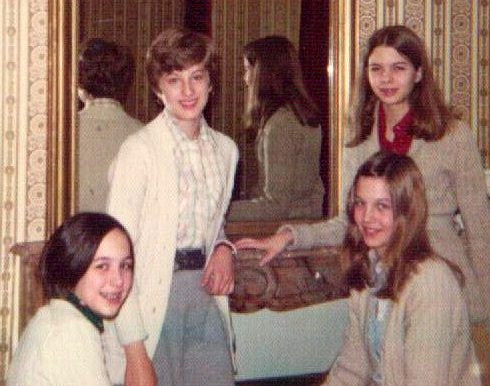
Rebecca, me, Jackie and Katie in our hotel room on Easter Sunday morning.
Because my expectations had been low, our hotel was a pleasant surprise. It had one of those old-fashioned elevators I had seen in movies, with a folding iron grille in place of a door. Our room was almost grand, if slightly faded. I liked its high ceilings, ornate wallpaper and elegant fireplace. Its large size was fortunate, considering there were five of us in it. Katie and Rebecca shared one double bed, Jackie and her mother shared the other, and I got the single. I remember being cold at night and sleeping huddled under my coat. We had been told not to expect a private bathroom, so we were surprised to find a spacious one with lavatory, bathtub and bidet. The toilettes, as we learned to say, were down the hall, in claustrophobic compartments. One of our friends went in one and couldn’t get out. He was finally extricated by a team of chamber maids speaking in baffling, rapid-fire French. After that, we were all careful about locking the door just so.
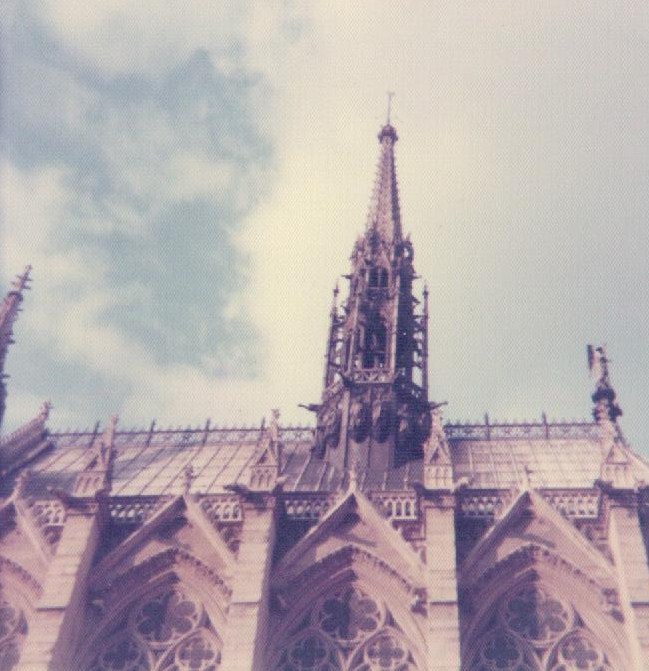
The 13th-Century Sainte-Chapelle, built by King Louis IX.
Our three-day visit to Paris was like a fast-paced tasting menu of the city’s highlights, most of which Mrs. Correll had discussed with us previously in vivid detail. She wanted us to understand and appreciate the history and culture of France, as well as its language. Paris came alive for us during that short time because our teacher had prepared us well. We heard some of the Easter mass in Notre-Dame. We saw the forbidding Conciergerie, where Marie Antoinette spent her sad last days. We beheld the lovely Sainte-Chapelle, the Gothic jewelbox that Saint Louis built to house the Crown of Thorns. We wandered the Latin Quarter, alive with bohemian student activity. We explored the courtyards of the Sorbonne, where Mrs. Correll had studied.
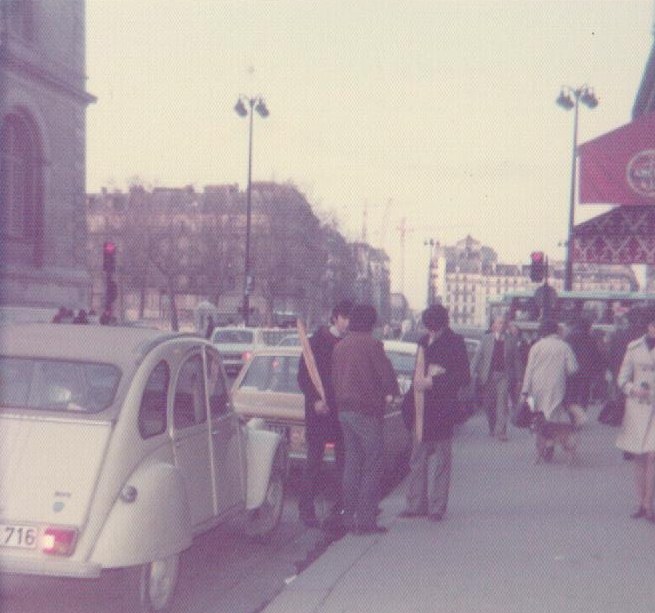
We watched old soldiers playing boules outside Les Invalides, fishermen casting their nets from the Pont Neuf, and children sailing paper boats in the Luxembourg Gardens. Everywhere there were Frenchmen carrying baguettes and wearing actual berets. We spent some time (not nearly enough for me) in the Louvre. Of course we walked the Champs-Elysees. We cruised the Seine at night in a Bateau Mouche. I got to witness first-hand the view I had most anticipated–the tip of the Île de la Cité with the lacy spires and flying buttresses of Notre-Dame just behind.
I loved the wealth of intricately decorated Easter candies and pastries that beckoned from the windows of small shops on narrow streets. Never before had fruit and vegetables looked so beguiling as they did in the city’s outdoor markets. Even displays in butcher shop windows were strangely beautiful, recalling old-master still lifes. We ate in cafés and brasseries, and learned that a croque-monsier, an omelette, or anything with frîtes was a good choice. We learned that French ice cream is served in minuscule metal dishes. And we found that paying for our meals and managing francs and centîmes was as difficult as we had feared.
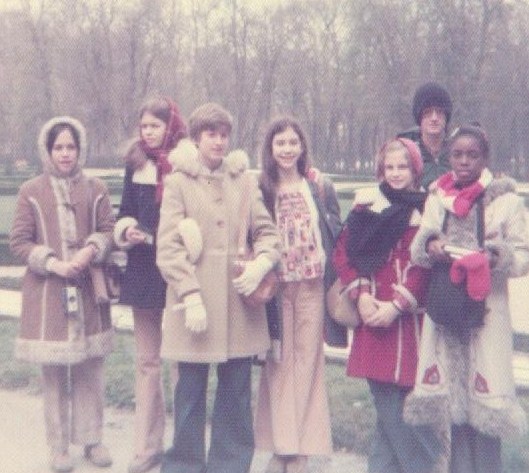
Real Frenchmen, real baguettes, and real berets.Some of our group (dressed in the height of 70s middle-school style), in the gardens at Versailles.
We were busy during our three days in Paris. But we weren’t so busy that we missed getting a sense of the city’s unique, ebullient, quirky atmosphere. Sooner than we would have liked, it was time to head to Normandy, to Mont-St-Michel, and on across the Channel to England.
Kiko refuses to acknowledge Daylight Savings Time; his alarm does not reset in the wee hours of March 9. He remains purposefully curled in his bed until actual daylight has worked its way into our house. Accordingly, we’ve been walking later. He has the right idea, I realize. March mornings this year have tended toward the cold and cloudy. A walk at 7 AM is likely to be an exercise in gray. An hour or two later, the world is a brighter, warmer, more welcoming place, and its beauty can be better appreciated.
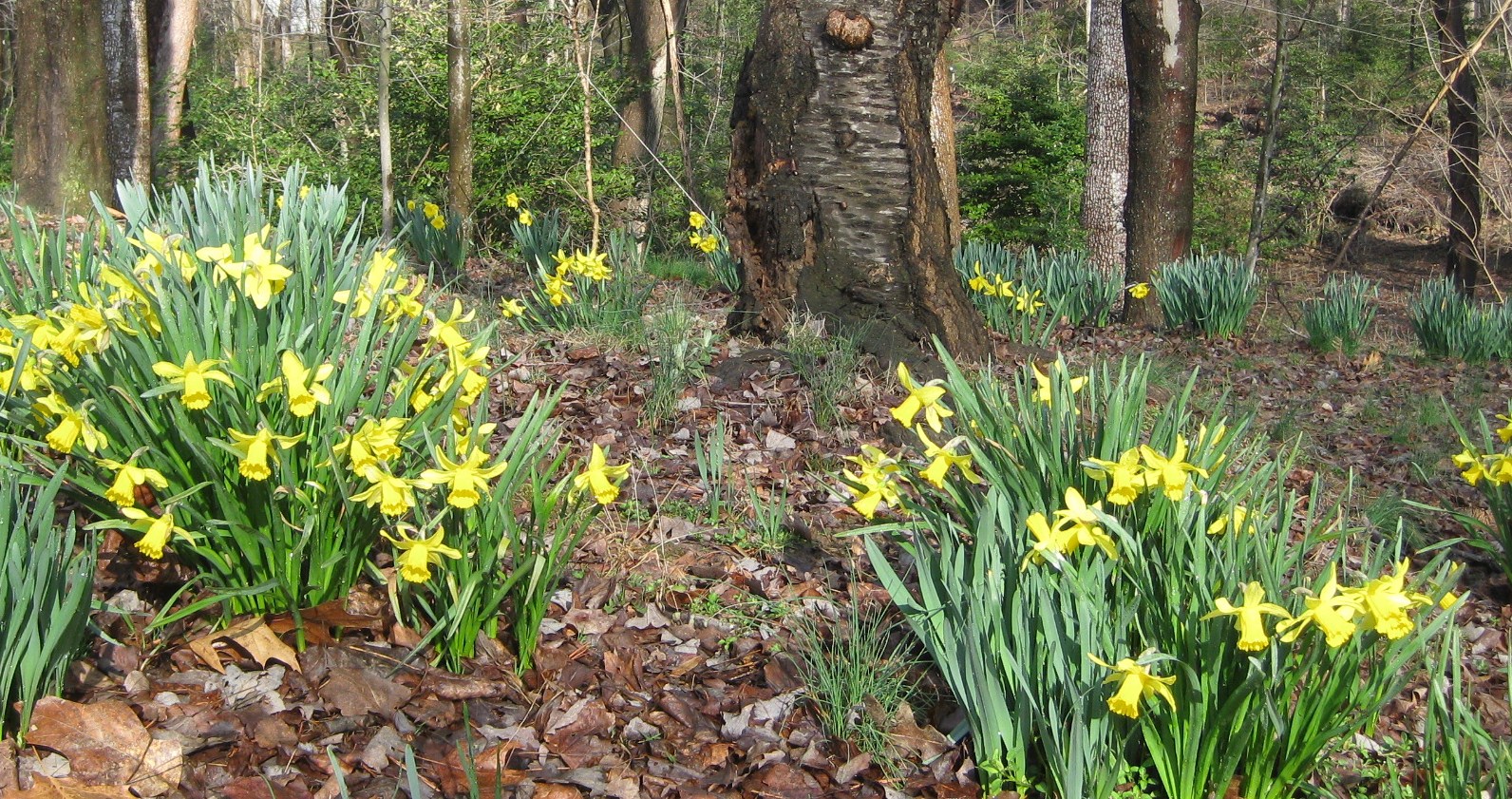
Two days ago, the daffodils were bowed down by yet another late snow. As the sun warms their bobbing heads on this first day of spring, it’s good to see that they’re none the worse for bearing that chilly burden.
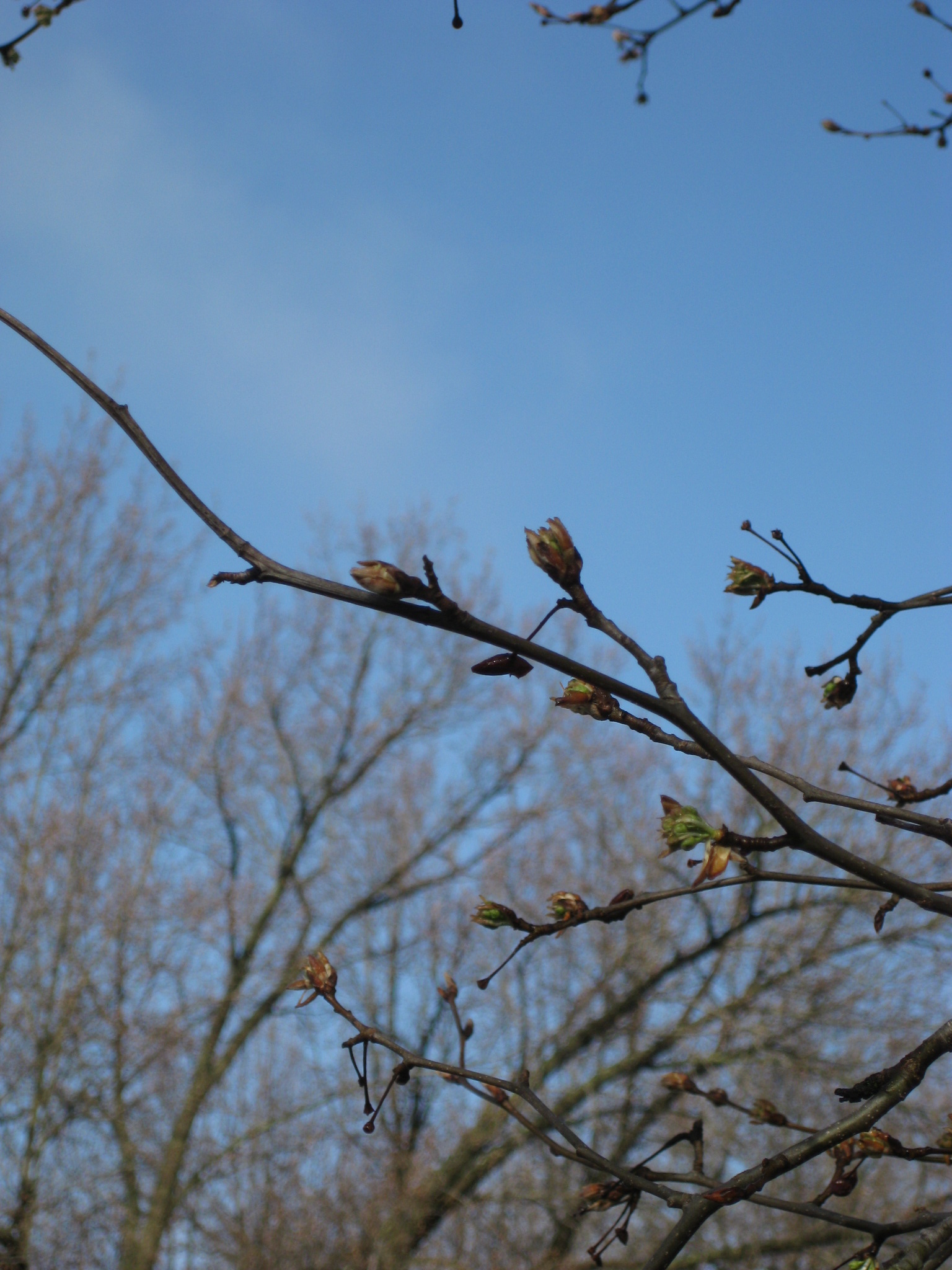
The maple trees are getting the message: it really is go time.
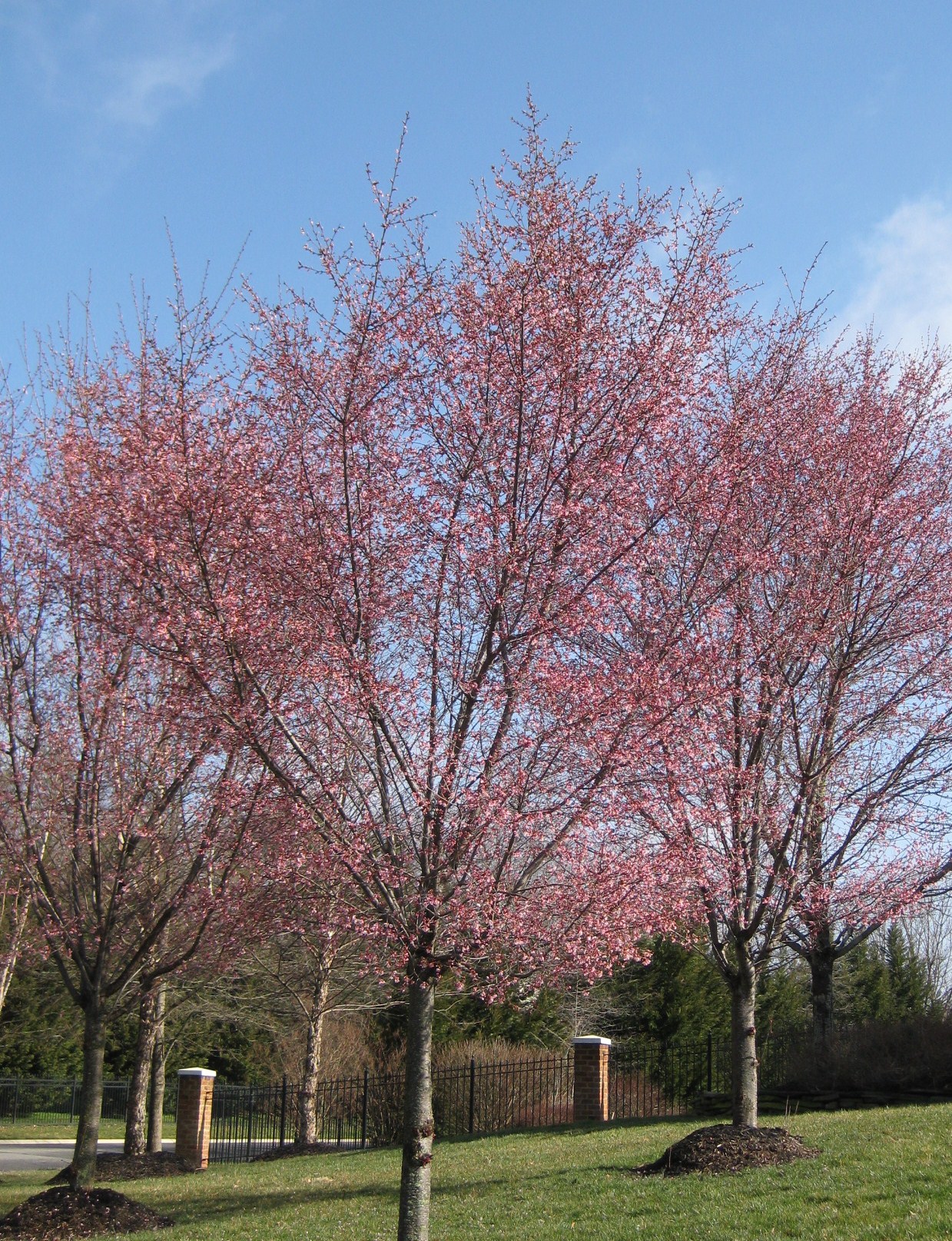
These cherry trees in our neighborhood, in the first stage of bloom, are right on schedule. The National Cherry Blossom Festival begins today in DC, with peak bloom expected April 3 – 6.
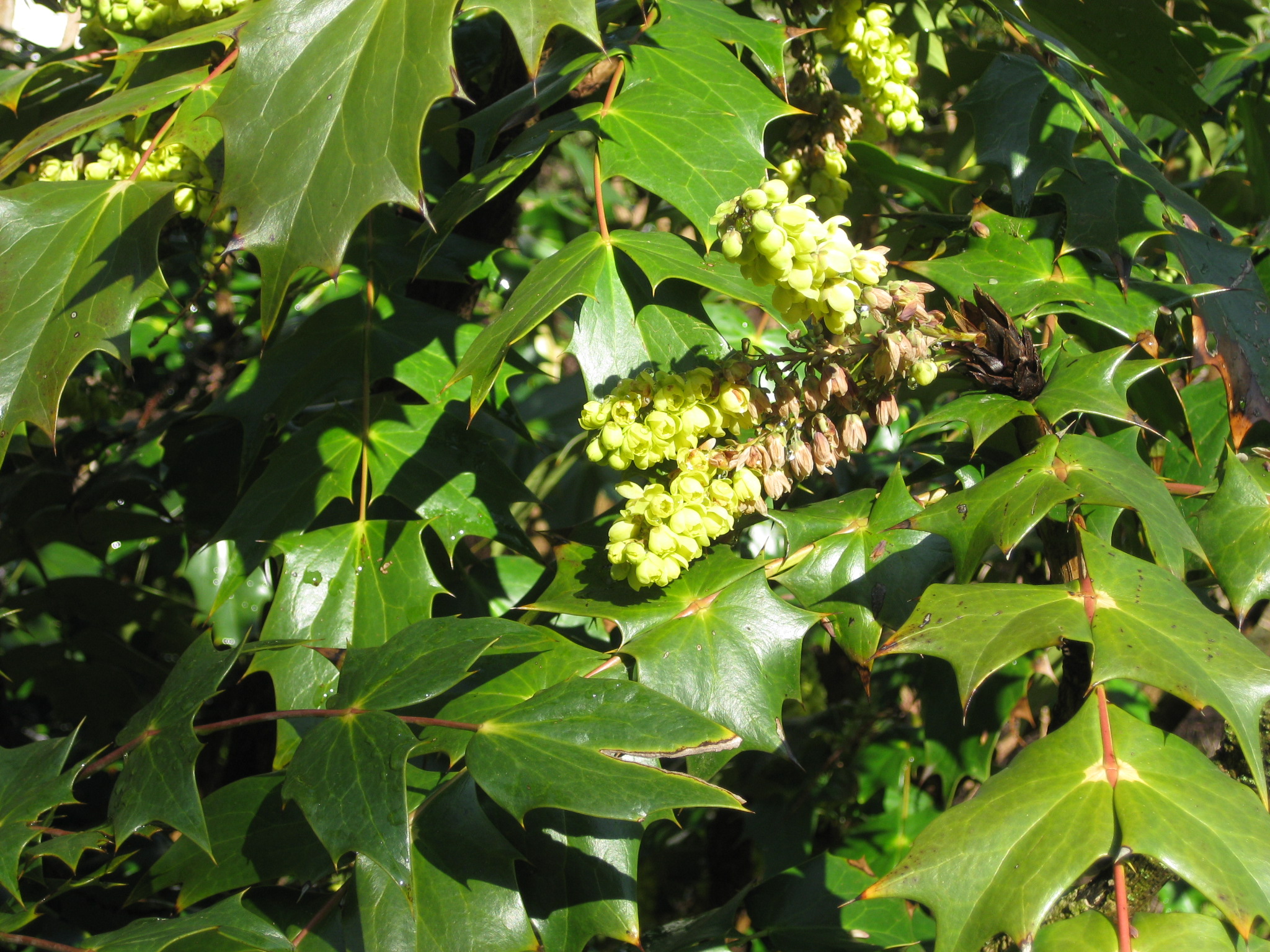
Kiko and I walk past these mahonia shrubs nearly every day. Mahonia is a vicious looking plant, especially during late summer and fall. Only Morticia Addams would include it in a bouquet. With its tough, spiky leaves, it resembles holly on steroids. In the very midst of winter, however, it begins to show a gentler side; it bears tiny, pale yellow, bell-like flowers that fill the frosty air with a fresh lemony fragrance. As spring arrives, the flowers give way to lush clusters of oval-shaped berries, much loved by the birds. This particular plant is leatherleaf mahonia, or mahonia bealei. Incredibly hearty, it’s invasive if left unchecked. What began as a single mahonia plant in my parents’ back yard forty years ago is now a tall, rather forbidding free-form hedge. I have a soft spot in my heart for mahonia; like nandina and wild trumpet vine, it reminds me of home. When I was growing up, mahonia berries featured prominently in playtime pretend recipes. Light green when they first appear, the berries darken to purple as they ripen. They have a delicate, powdery outer coating, which disappears as they’re handled, revealing the fruit’s true, more intense color. For this reason, mahonia berries often served as the primary ingredient in the “magic” potions my friends and I concocted. Sometimes, all that stood between life and death in our imagined storylines was a single, glowing mahonia berry.
Walking in the sun with my dog on this first morning of spring, I could feel the new season at hand. The birds were chirping, yelling, soaring, partying. Squirrels were jumping and scurrying with renewed vigor, much to Kiko’s delight. Plants were edging up out of brown, dead leaves, stretching new green shoots into the light. I’m in a mood to buy eggs, baby salad greens and asparagus. This afternoon, I might even get out the Easter decorations. Maybe it will be like the old days, when my daughter looked forward to getting home from school so she and I could dye eggs and gather branches for our Easter tree. Maybe. Spring makes all things new again. We’ll see.
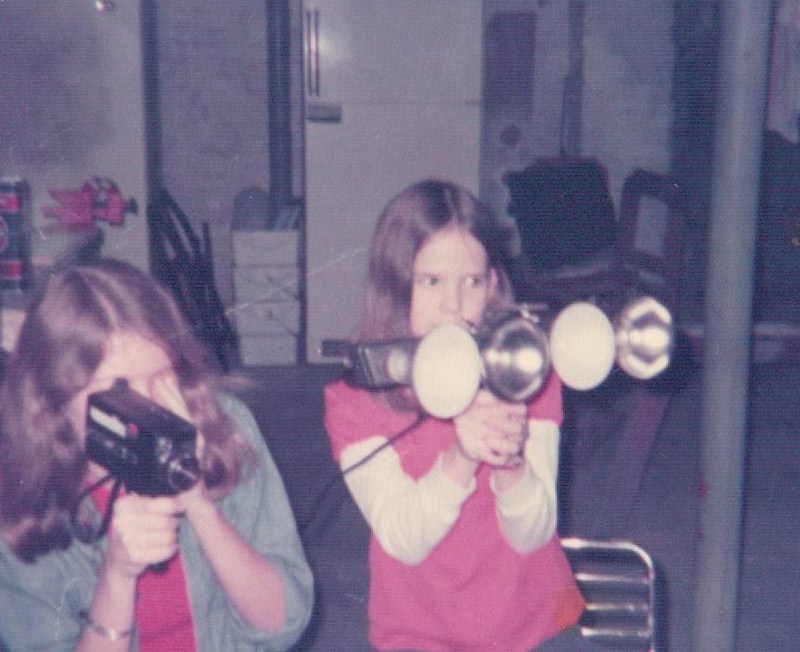
Filming in Dr. Welby’s basement digs: Katie’s older sister acts as camerawoman, while Rebecca’s younger sister aims the lights.
As is the case with most worthwhile projects, making our Super-8 movie had its moments of exhilaration, unforgettable fun, boredom and frustration. Naturally, the initial planning stage was the most gratifying. As I remember it, writing the movie with Katie was nothing less than a blast. I dislike this overused hyperbolic term; I cast a skeptical eye on those who repeatedly claim to have had a blast doing this or that. Really? A blast? I doubt it. But in this case, it was accurate. There was a heady sense of possibility in the air as Katie and I bounced ideas off one another. We’re gonna make a movie! Our movie! We’re in control! In our own minds, we were incredibly funny. We were good! We should have been destined for Saturday Night Live, as yet in its infancy.
As soon as we began filming, we realized we had no control. It was terrific to get the cast together for filming; it was like getting school credit for regularly attending a party with our best friends. But we encountered many difficulties. Filming began in February, and because we often worked on weekday afternoons, the light was erratic, and it disappeared far too quickly. Some of our pivotal outdoor scenes were indecipherably dark. Because we were working with actual film, the complete absence of light was not apparent until after developing. In March, with the start of Daylight Savings Time, suddenly all was intense brightness.
The drastic changes in light made for continuity issues, to say the least. We also found it difficult to maintain a convincing sense of flow when cast members’ appearances changed unexpectedly from day to day. Was Amanda wearing that scarf yesterday? Can anyone remember? Didn’t you have a different sweater? And then Dr. Welby got his hair cut from shoulder to chin length about half-way through filming.
It doesn’t sound difficult to avoid routinely filming the movie lights. Evidently it was trickier than it seems. The lights, and often the gaffers who held them, appeared in the background, (or occasionally the foreground) time after time.
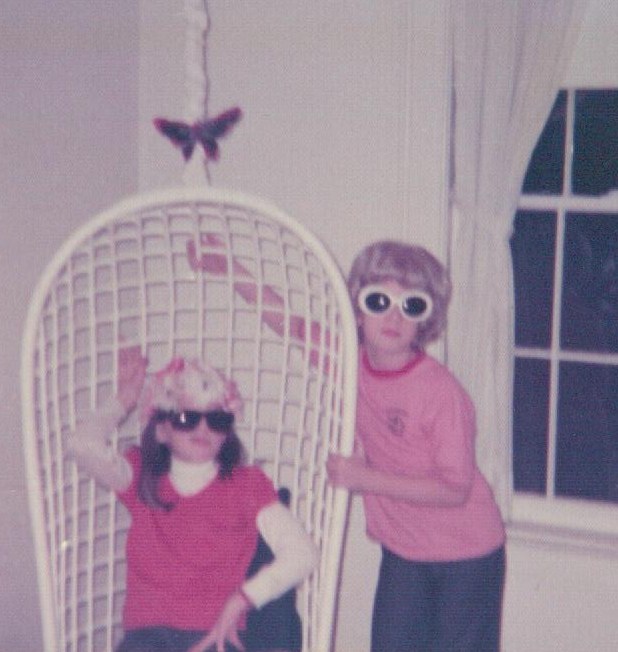
Our two gaffer-gophers on break, modeling costume accessories. They got nearly as much screen time as the actual cast.
The complications of filming were nothing compared to those of the editing process that followed. We thought we were being professional by shooting all the scenes involving the same set at the same time. We didn’t know how much amateur splicing left to be desired. Again, for any younger readers, if they exist, we were dealing with real film that must be sent away for processing. It then required cutting apart and taping back together so the scenes would flow in correct order. Personal computers, digital video and talking camera phones were still the stuff of James Bond movies and the fever dreams of a few elite techie geniuses.
For one part of the final project, Katie included a section entitled “How to Splice.” I sat at her side, some of the time, for moral support, as she followed the tedious steps she would outline in her paper. We would look at the film through an editor, a machine that I have completely blocked from memory, but one that I described in my report as resembling a tiny television screen. When we decided where the scenes should be cut, pushing something called the condensor on the editor resulted in a knick in the film. This knick indicated where the film should be cut. With scissors. Actual, not virtual scissors. Then Katie would painstakingly reattach the frames in the new order with splicing tape.
This was old-school cutting and pasting, and our movie required extreme amounts of it. The film was so thick with tape that it couldn’t pass smoothly through the projector. I can still hear the painful sputtering, ticking sound the film made as the scenes bounced up and down, roller-coaster style. How we dealt with this problem is my haziest recollection, probably because it was distinctly unpleasant. I vaguely remember discussing the additional, not insignificant cost to make a jump-free copy of the film. We must have managed this, because the film is, largely, viewable. It is no masterpiece, but it can be seen.
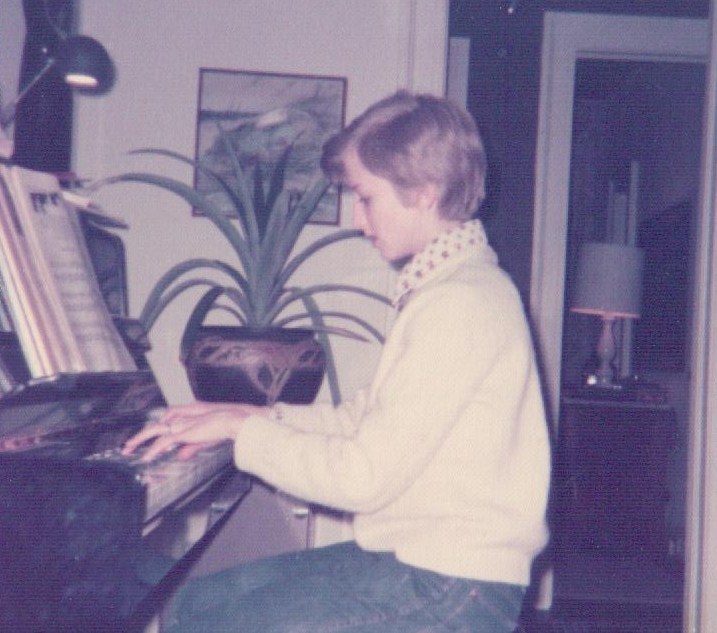
Every silent film needs music, of course. Using my portable tape player, I recorded the score. The cassette, long lost, consisted of selections by Scott Joplin and Edvard Grieg, pieces I happened to be working on during piano lessons. The music didn’t always fit exactly with the action, but if we timed the start of the tape and the film carefully, it didn’t miss by much.
As I mentioned earlier, it’s been a while since I’ve seen our movie. Its form continues to lapse further into obsolescence. I still have the actual film, and H’s father, a camera buff, owns a working movie projector from the 70s. During a future visit to Rochester, maybe we’ll arrange a family viewing. Years ago, Rebecca’s husband had the film converted to video and VHS copies made. We still have a VCR, somewhere in our basement, if we wanted to go looking. No one has yet been moved to make a digital version of the film.
My daughter saw the movie years ago, when she was still young enough to be impressed.
She’s been involved in her middle school’s news team for the past two years. With access to sophisticated video technology, the kids regularly turn out high-quality videos. Out of school, they can use their phones to produce similarly remarkable results. D would be amused at the intricate physicality of the old editing process. And she might be interested to see her mother at her age.
When I do see Dark Secrets again, I expect to know how I’ll feel. I’ll have a better understanding of my parents’ and other adults’ bafflement over some of our dramatic and comedic choices. Why does the Creation have a lightning bolt across her face? Why is the butler gleefully counting his money as he opens the door? I’m not sure why that’s supposed to be funny. I will see their point. But I will know why.
Because in some part of my soul, I’ll be fourteen again. I’ll be there with my two best friends Katie and Rebecca, reveling in our shared appreciation of idiosyncracy and non sequitur. Life’s possibilities will once again open wide. The future will be a distant, glowing horizon, the one evoked mistily in high school graduation speeches. SNL may see us yet! Who would have guessed that after all these years, it would still be around? And like us, it’s not just surviving, but going strong.
I find it a little alarming that my daughter is fourteen, and half-way througheighth grade. It’s alarming because my memory of being a fourteen-year-old eighth-grader is fairly clear. I remember many of my eighth-grade thoughts, and they weren’t so very different from my current middle-aged thoughts. This brings me face-to-face with the uncomfortable realization that my baby is no longer my baby. She’s my only child, so in a sense she’ll always be my baby. But from here on out she will be traversing the continuum from nearly grown-up to nearly completely grown-up. Can anyone ever claim to be truly grown-up? Maybe after the death of one or both of our parents? Or does this make us feel like old, lost children? More alarming thoughts, which I won’t dwell on now. Today I want to think about our movie.
I loved 8th grade. The snags of our newly-formed middle school were working themselves out. (See Middle-School Memorabilia, February 2012.) Once again, we were in classes with many of our old elementary school buddies, and we had the added bonus of meeting new friends. Some of these friendships took root thanks to an experimental, unstructured class that replaced language arts and social studies. As our independent project, my friend Katie and I made a movie.
She and I loved the movies. We dreamed of writing, directing, and perhaps starring in our own films one day. The logical starting point was our own Super 8 short film. Of course it was Katie’s family that had the camera, not mine. They had real cameras, ones with complicated knobs for focusing, as well as movie cameras, film projecters, even special movie lights. The were high-tech. I was wowed. I come from an anti-camera, anti-tech family. On Christmas morning, we would look around for the Kodak Instamatic. If it could be located, it often lacked film, flash bulbs, or both. One Christmas, our only pictures were taken by our next-door neighbor. Old photos from the 1940s on were tossed at random in the drawer of the coffee table, undated and unlabeled, a practice that inspired me to take the opposite approach, to document, organize and archive.
Katie and I favored the genres of comedy and horror. (See Movies with Friends: From Frogs to Rocky Horror to Toco Hill, and other posts from March 2012.) Our movie, we quickly decided, would be a campy, silly horror film, set in the 50s. As kids growing up in the 70s, we were fascinated by that Happy Days era, which seemed so distant. Because Katie’s mother and mine had saved most of their clothes from that time period, our costumes were immediately at hand. We also had lots of comical wigs and odd accessories that begged to be modeled.
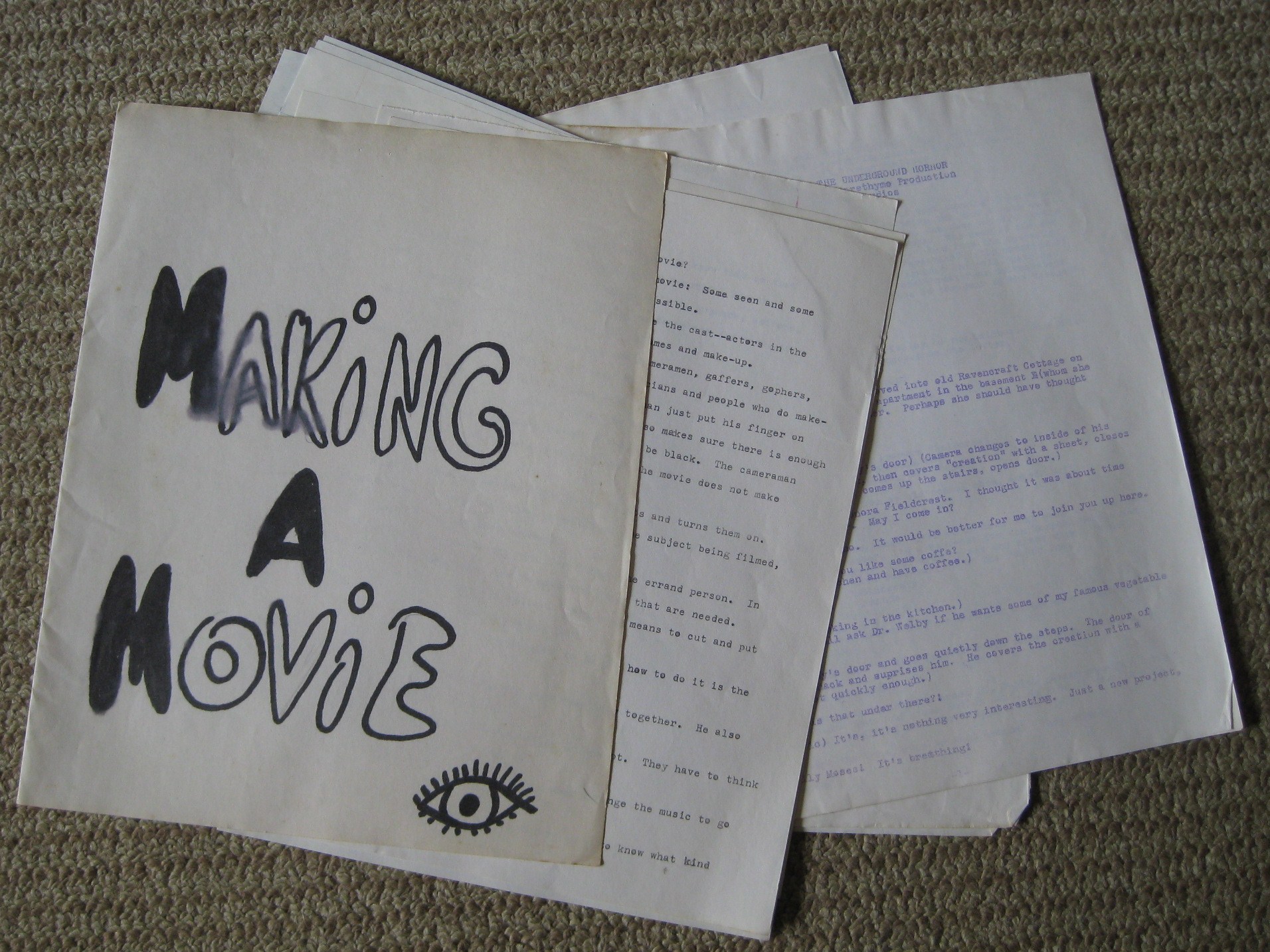
We spent Saturdays and school-day afternoons writing the script. To us, it was side-splittingly hilarious. I have several copies of the final four-page script, typed by Katie and mimeographed at school. It was a silent film, so the narration and dialogue were hand-written in a flowery cursive and filmed, panel by panel. Our working title was The Underground Horror, later finalized as Dark Secrets. It began promisely enough:
The date is 1957. Leonora Fieldcrest had just moved into old Ravencroft Cottage on Shepherd Lane. Knowing that the apartment in the basement was rented to a certain Dr. Marc Welby (whom she had never met), did not hinder her. Perhaps
she should have thought more carefully.
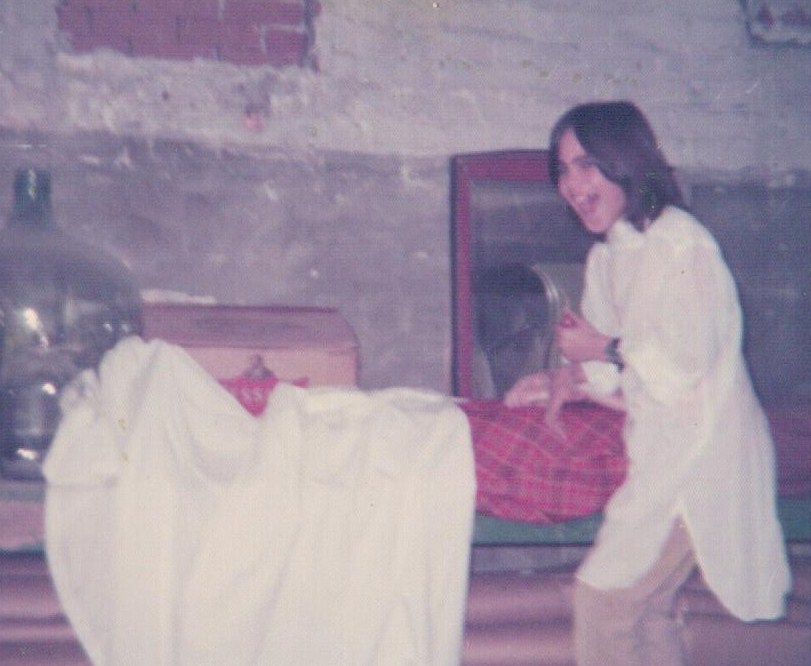
Our set was the home of our friend Rebecca, who would play Leonora’s “old school chum” and spunky gal reporter, Amanda Duff. Not surprisingly, Dr. Welby (we considered this name choice an example of our use of sophisticated irony) was up to no good. He was building a creature. His laboratory was a squalid subterranean room, the door of which had been painted, years before, by previous homeowners, with the ominous warning: Operations Shack! Scram! Rebecca’s basement (really a cellar, rudimentarily finished and typical of the 1930s-era homes in our neighborhood) simply cried out for us to film a horror movie in it.
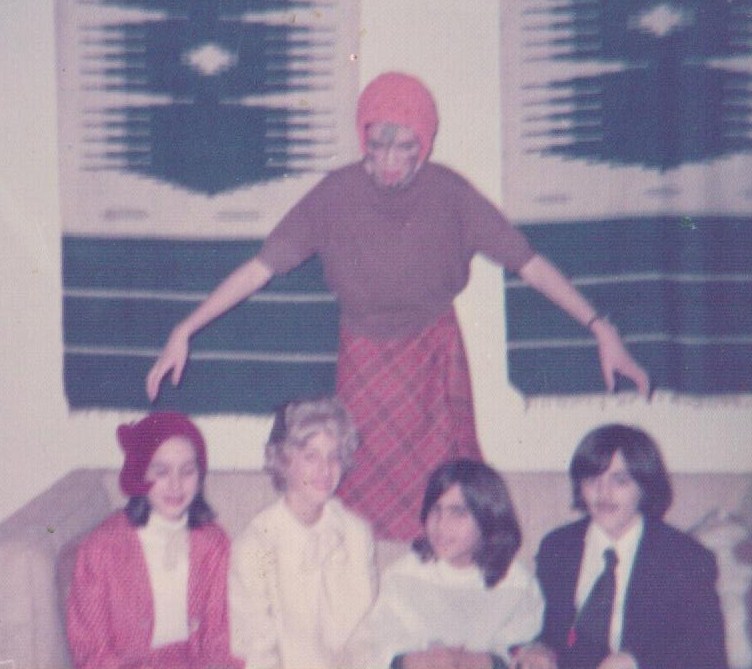
Katie took the role of the creature, and I played Leonora. We recruited two boys from our class for the male roles: Dr. Welby and Leonora’s butler. Everyone in old 50s movies had a butler, it seemed, and we needed another guy. Katie filmed the scenes she wasn’t in. Her older sister took care of the others. Rebecca’s younger sister and her friend served as gaffers and gophers. We relished tossing around such film jargon. Because the next-door neighbors had a cute little dog named Buster who was always underfoot, he was granted a role as Leonora’s puppy.
The entire cast, pictured above, from left to right: Amanda, Leonora, the Creation, standing menacingly, Dr. Welby, and the butler. It’s unfortunate that not a single still photo related to our film was in focus. I haven’t seen the movie in years, but I’m sure it’s not this blurry. I’m uncertain of the source of these pictures. Evidently they were taken before Katie got her very own good camera; at which point she became the primary photographer of our collective youth, known for her creative (and clear) photos. She has enjoyed a successful career as a photo-journalist for the Indianapolis Star newspaper.
Dr. Welby, at work in his Operations Shack. He laughs in a villainous manner as he puts the finishing touches on his Creation, whose red plaid skirt is visible.
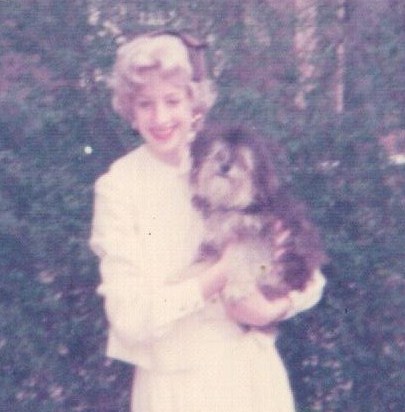
Me, as Leonora, with Buster the dog.
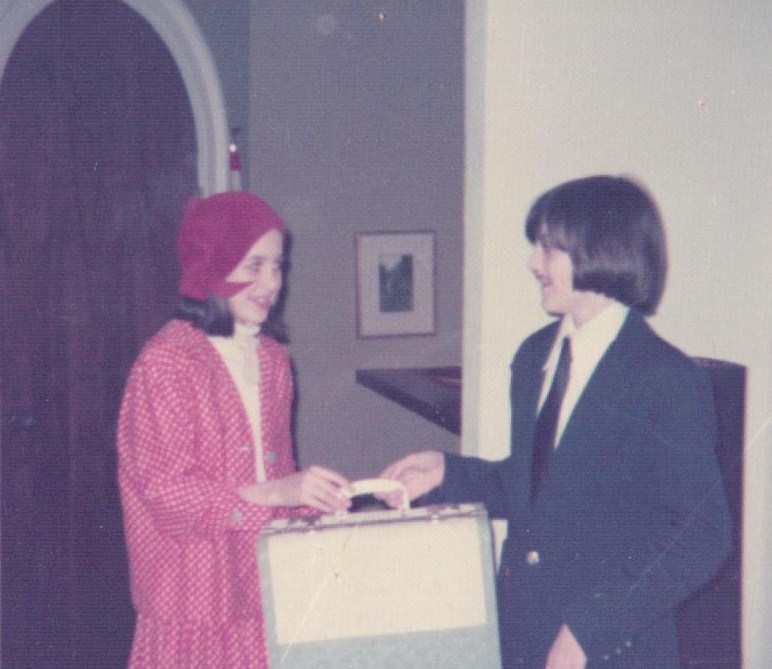
Amanda, just arrived from Kansas (on her bicycle),
hands her little suitcase to the butler.
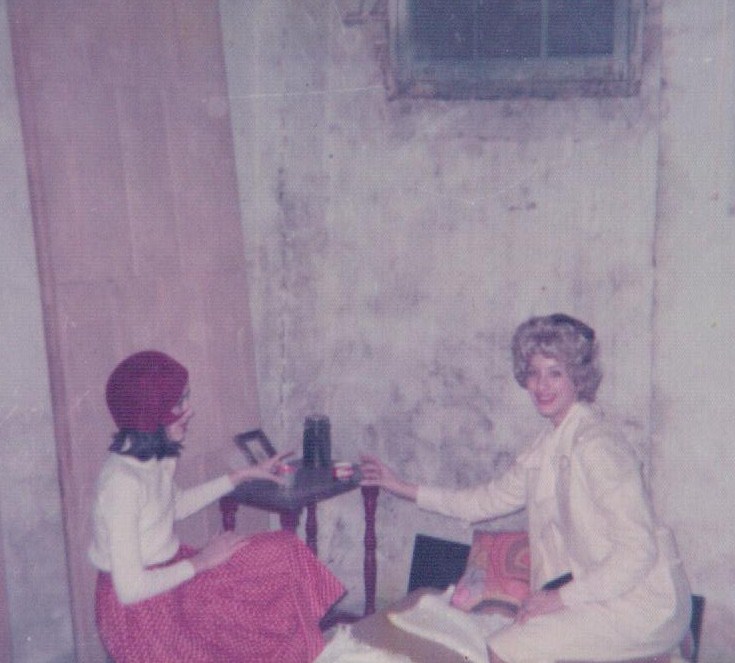
One of our funniest jokes (we thought), was the awfulness of Dr. Welby’s basement “apartment.” Here, Amanda and Leonora snoop around while the doc is out, observing personal mementos on the table beside his bare foam-rubber mattress on the floor.
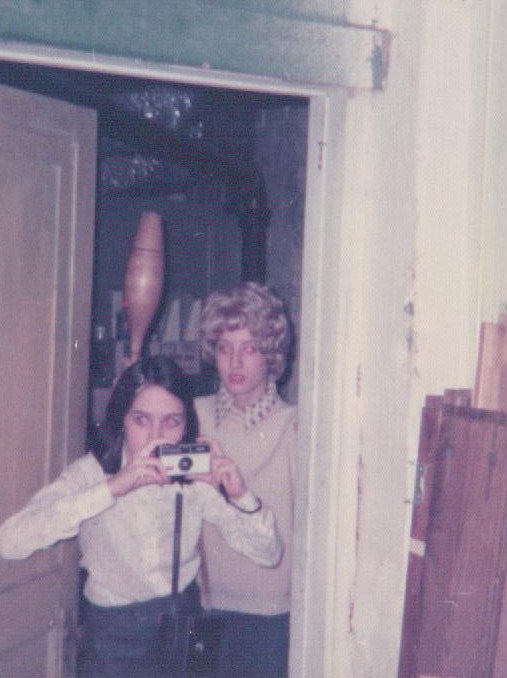
At Amanda’s insistence, the two friends sneak into Welby’s inner sanctum. Leonora brandishes an Indian juggling club. Ace Reporter Amanda wields her trusty, if anachronistic camera, perhaps the source of some of these blurry photos.
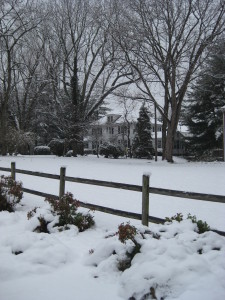
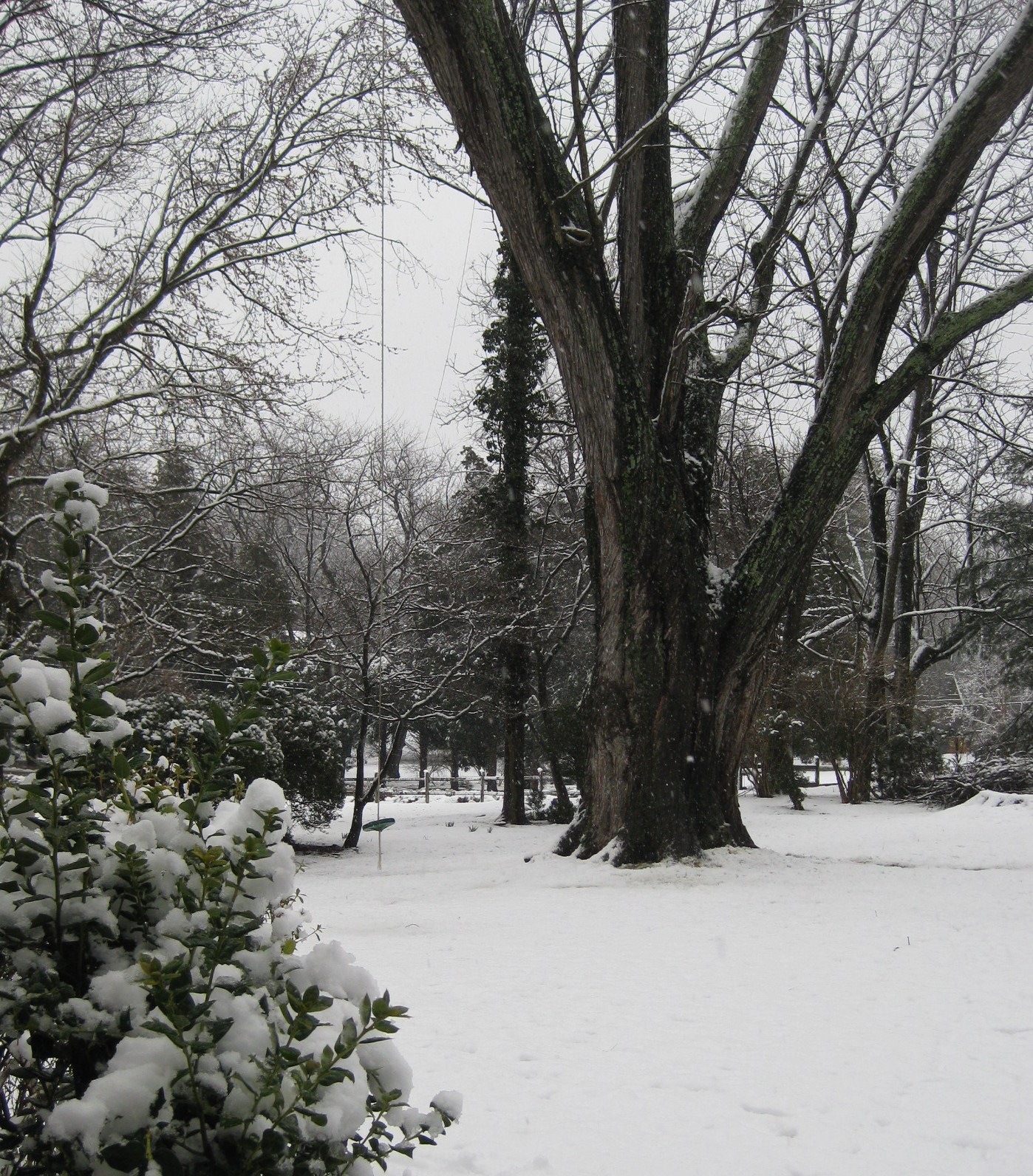
The snow that my daughter has yearned for all winter here in Virginia finally arrived early this morning.Understandably, this first significant, inordinately late snow of the season is a much-anticipated weather event. All week long every local TV station has had their Storm Watch coverage going full force. Giddy newscasters reported from points as yet untouched by snow, assuring us that the flakes were on their way. Usually, when this happens, it’s either a huge deal, like the blizzard of December 2009 that shut down the DC area for a week, or it’s a complete and utter bust. This was different; it fell somewhere in between.
Not a flake had descended at midnight last night. When we awoke this morning, it didn’t look like much, just a minimal coating on the ground and a fine snow floating down. But more was emphatically promised. Forecasts called for heavy snow all day and into the night. Schools, the Federal government, and many offices were closed. Even H’s office was closed, which is very rare indeed.
Once D and I went out to walk Kiko, enormous, sloppy flakes the size of mini-snowballs began pelting, and quickly drenching us. It was like walking in a heavy, thick, wet rain. It was not especially pleasant.
The snow continues to fall thickly now. D is at a friend’s house sledding, and H is out on the driveway with his never-before-used snow blower. He knew the snow was probably too wet, but he had to give the new toy a try. It’s kicking up an impressively wide spray of white slush. I hope both D and H are happy. Kiko and I are. We’re inside, warm and dry, and we plan to stay that way.
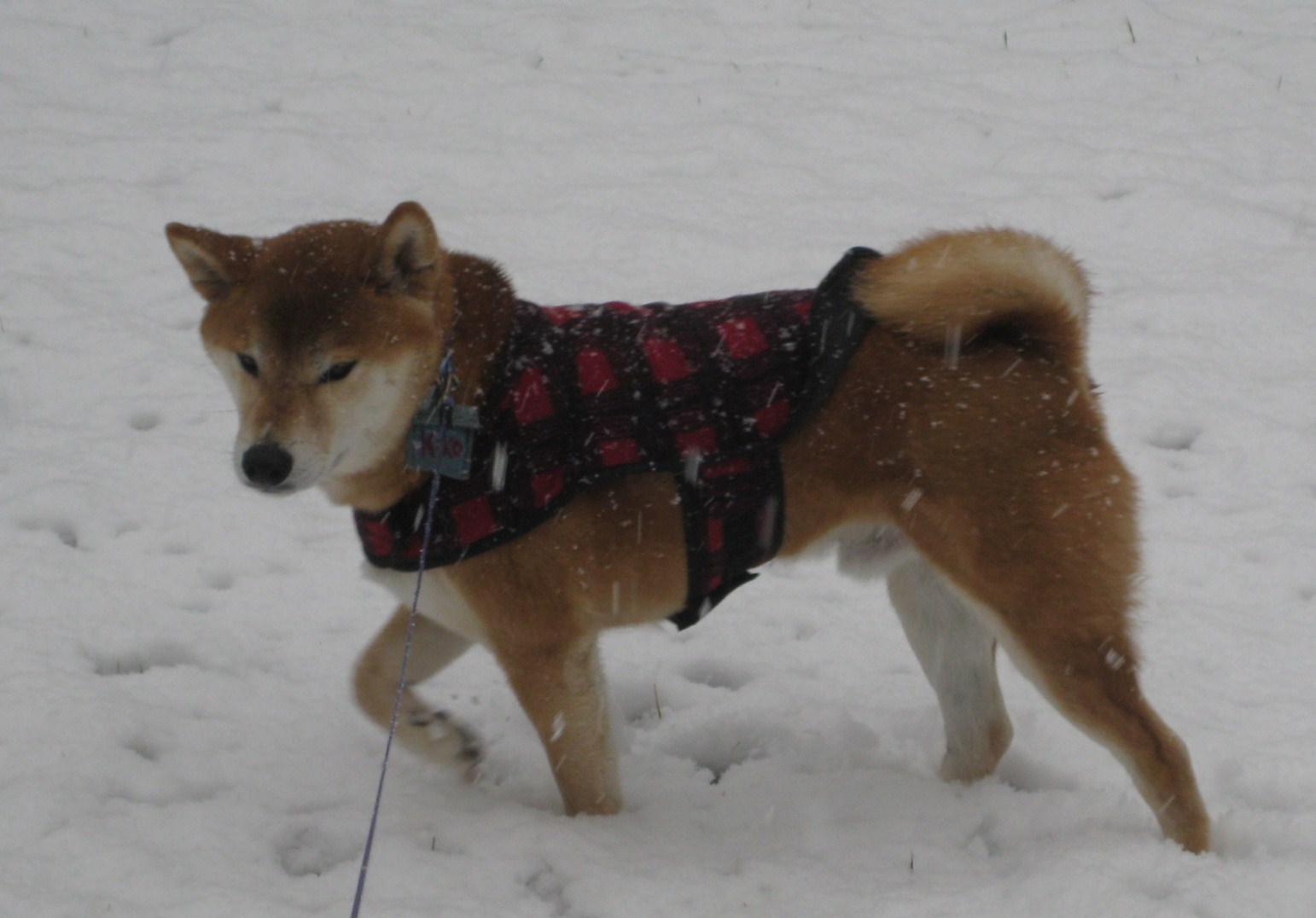
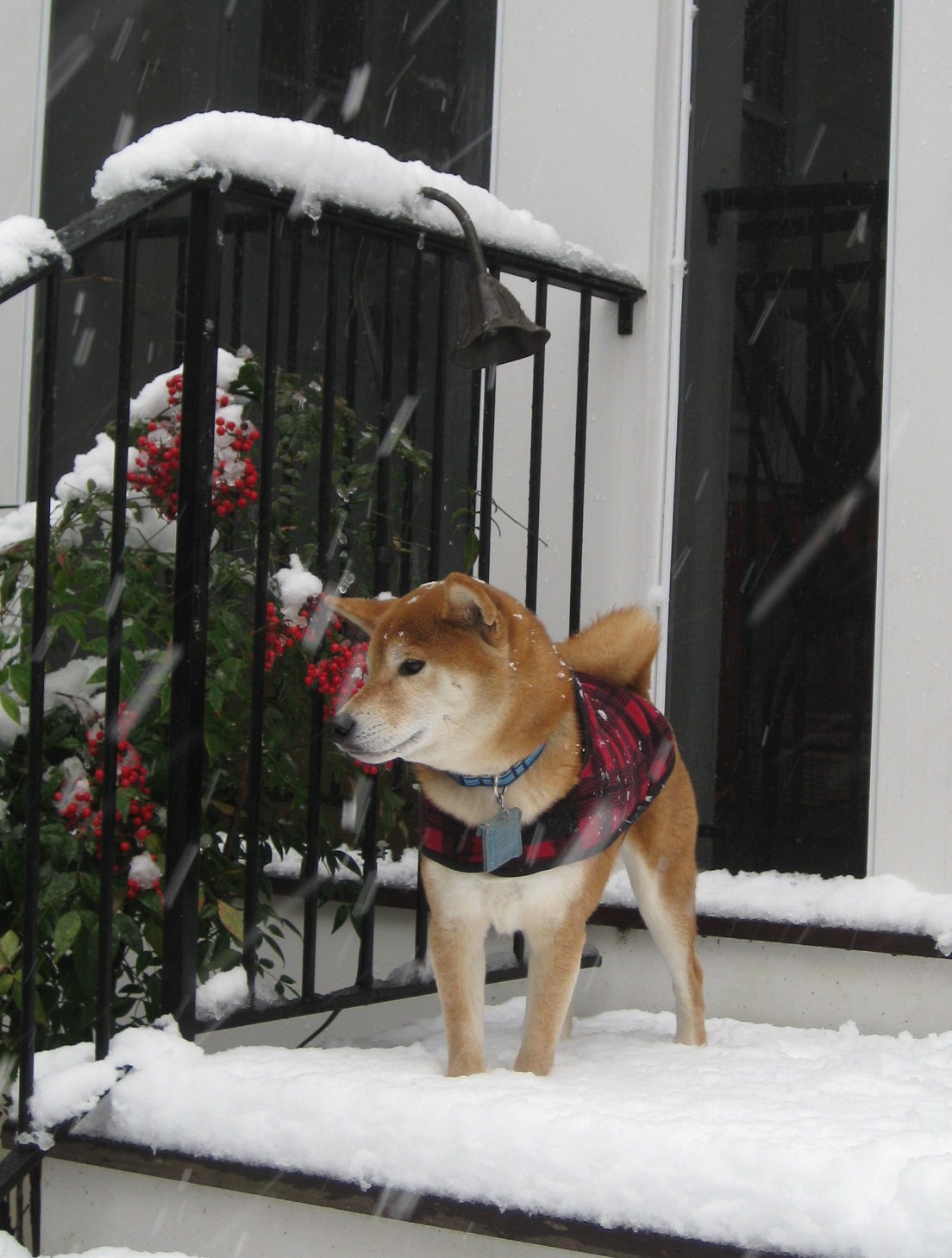
Kiko doesn’t seem to mind wearing his coat, which keeps him somewhat dry. He doesn’t like rain, and this snow bears a strong resemblance to rain.
Kiko has had enough of the fat white rain. Time to go in and dry off.
During our visit to Rochester, we left Kiko alone with H’s parents one afternoon while we went out. We felt no anxiety about leaving the dog with them. I don’t think I even gave a single thought to Kiko while we were gone. Grandma and Grandpa are worriers. They are careful. They visualize every possibility of disaster, no matter how remote. They looked after our two-year old daughter for ten days when H, my parents and I went to France. Everyone was fine. They should have no problem dealing with Kiko for an hour and a half.
When we returned, Grandpa came quickly to the door. He was clearly shaken. We knew something was up. Everything’s alright, he said, breathlessly. It’s all OK. . . . But Kiko got out.I was immediately beset by panic, even though Kiko was right there, looking up at me, perfectly fine, intact and unharmed, a bit sleepy.The story unfolded. Shortly after we left, Grandpa decided to get the car washed. With Rochester’s constant snow and never-ending salt and slush on the roads, car washes are a routine necessity. He looked into the living room and saw Kiko asleep on his bed. In the kitchen, he pressed the garage door opener, as he always does, before going out the side door. It was then that he was aware of a reddish flash behind him. Kiko was already in the garage and dashing out into the driveway. Grandpa lunged for the dog, managing to grab his tail, which looks very much like a curled handle, as on a teapot. But Kiko was moving too fast, and the tug on his tail merely caused him to yelp and move even faster.Our brilliant dog turned left at the end of the driveway and bounded down the very center of the street. H’s parents’ live on a busy road, where cars speed by with dependable frequency. This was no quiet neighborhood cul-de-sac. Oh no.
Fortunately Grandma heard Grandpa yell and was alerted to the situation. I had showed her Kiko’s bag of treats and left them out on the table. Thinking quickly, she got a treat and rushed out in pursuit. By this time Grandpa and the dog were well down the road. Kiko would stop occasionally and look back, then fly off again playfully. He was evidently thinking, This is a great game!. When he heard Grandma yell pleasantly, Kiko, treat!, he paused long enough to allow Grandpa to catch up and grab his collar. Luckily, I hadn’t removed the collar as I usually do at home; this dog is as slippery as an otter. Kiko was saddened and stunned to see the game ending so quickly, and he did all he could to resist returning home. He splayed his legs, put his head down resolutely, and managed to make his compact 26-pound bulk feel much heavier. But Grandpa was determined, and mustering his strength, he corraled our little runaway beast.
Considering that Grandpa and Grandma generally don’t move especially fast, it is a near-miracle that they managed to catch our speedy dog. Evidently the adrenaline rush fueled their unusual alacrity. The real miracle, according to Grandpa, was the absence of a single car passing by during the entire episode.
We all visualized various grim alternate endings: Grandpa collapses in the street with a heart attack, Grandma slips on the icy road and breaks a hip, and Kiko is still flattened by a Suburban.
We would all be awash in blame. The whys and the what-ifs would be dizzying and relentless. Why didn’t we ask Grandma and Grandpa if they planned to go out? Why didn’t we warn them about the garage door? What if we had taken Kiko with us? Grandpa would regret that car wash for the rest of his life, as H, D and I would regret that day’s outing.
Here, I am, close to tears, again, imagining the sad trip back to Virginia, without Kiko. Or with his inert little body packed in ice in the back of the car? I doubt we could have buried him in the frozen Rochester ground. We would have had to gather up all his stuff–his bed, blanket, food bowls, treats, Foxy, his little coat. Oh, his little plaid coat, the coat he wore only once! And now my heart is breaking for parents who have lost children (and I do mean human children) who must confront the tormenting evidence–the forlorn toys, the clothes, the snow boots–that screams: She’ll be back! She’s at a friend’s house. He’ll be home from school at 4:00! How do such parents answer, without going insane: No, pretty red dress, my baby won’t be home again. No, boots, he will not use you for this snow, or ever. Only with God’s help.
But our ending, this time, was a happy one. I don’t think God held back the cars that day. Nor do I think he assigns guardian angels to dogs. But maybe God did give Grandpa and Grandma the unaccustomed speed they needed to catch our escaped monster. And maybe he looked after them so they did not get hurt in the process. Maybe he helped Grandma remember that a treat might work magic. And maybe luck was simply on our side.
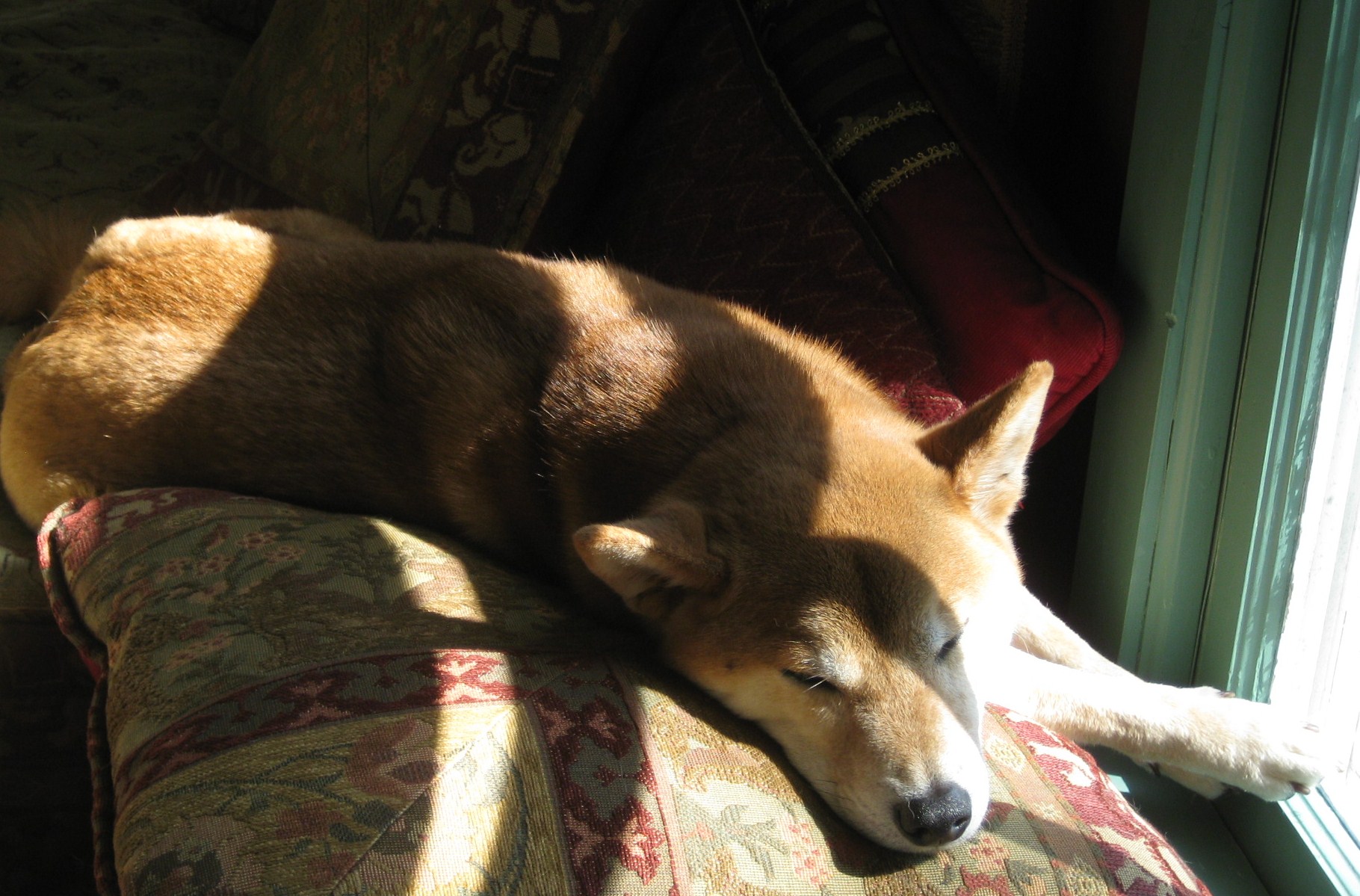
Today, safely at home, my Kiko is warm in the sun. I will cuddle him, and give thanks again. And I will say a prayer for those wrestling with an unhappy ending.
Kiko sleeps in the March sun.
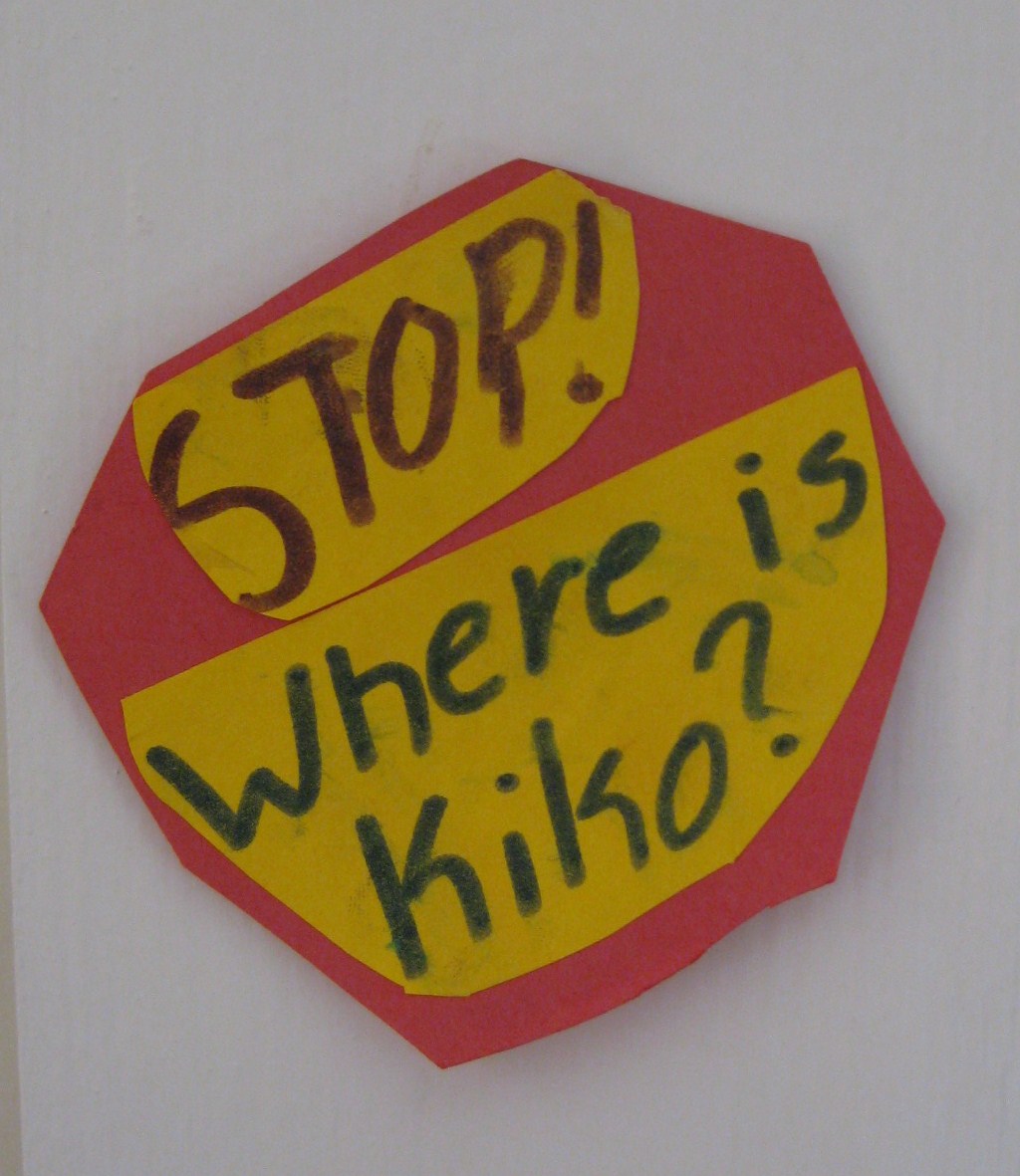
Now Grandma and Grandpa have signs like this one on all their doors, just as we do in our house.
A blog about motherhood, marriage and life: the joys and frustrations, beauty and absurdity, blessings and pain. It's about looking back, looking ahead, and walking the dog.