Category Archives: Family

The Light Shines in the Darkness, No Matter What Happens


Light Shines 004 The light shines in the darkness, and the darkness has not overcome it.

 –Luke 1: 5

As I contemplated a post for Christmas Eve, I realized that the one I wrote last year still expresses my thoughts for the day.  I modified the end somewhat, in response to recent tragedies, including that in Newtown, Connecticut.

**************************************************************

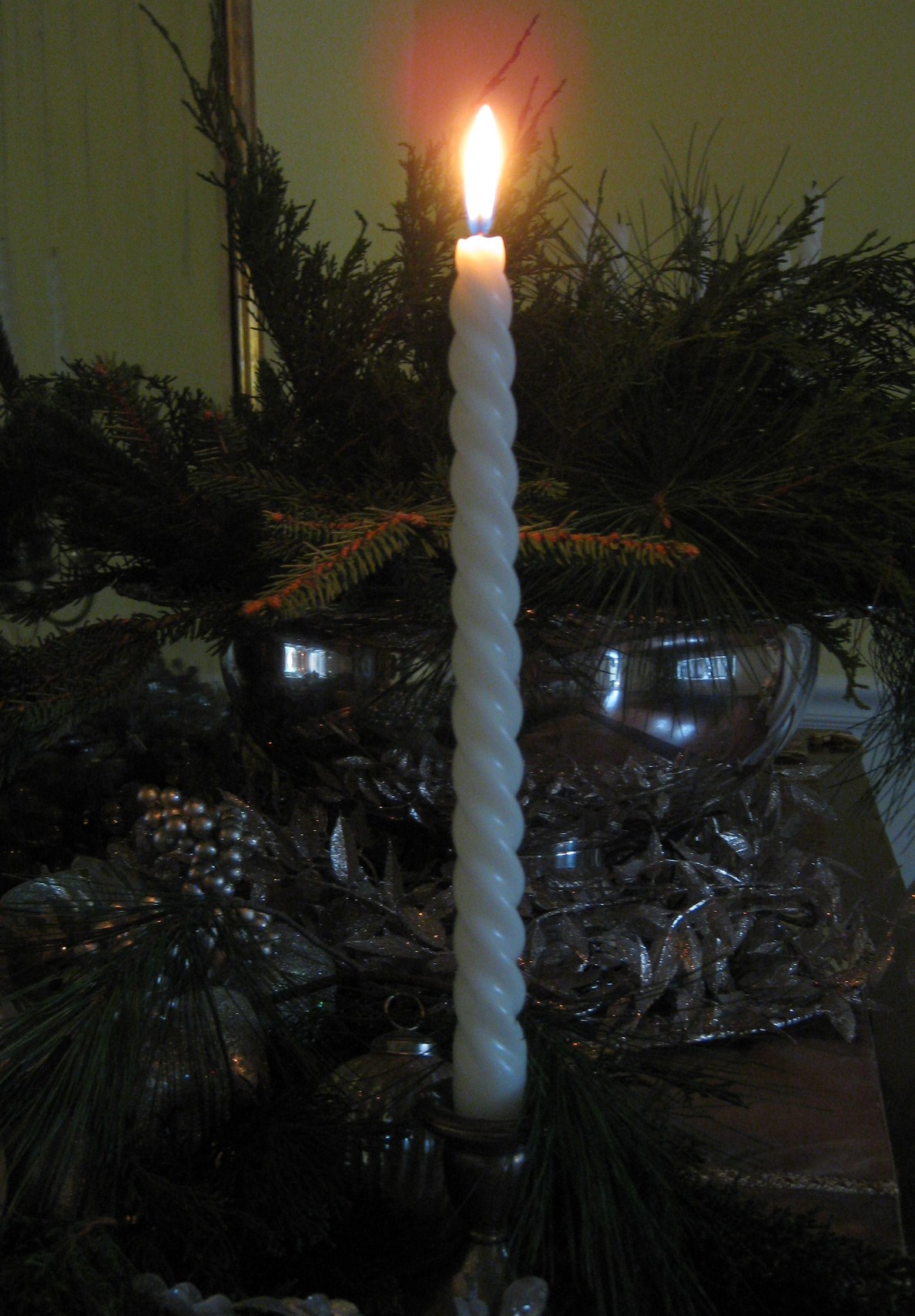
Our church’s candlelight Christmas Eve service is one of the highlights of the year. Each person receives a small white candle upon entering. Toward the end of the service, the sanctuary goes dark. The acolytes assist the congregation with the lighting of the individual, hand-held candles. Gradually, while we sing Silent Night, the light grows. By the final verse, the sanctuary is brightly glowing, as each member of the congregation holds high a lighted candle.

The process is a beautiful expression of God’s love. Into the darkness of the world, God sent a light. It appeared dim and insignificant at first. But soon it grew brighter and kindled countless other lights. When we allow the light of God’s gift to come alive within us, we glow. And we, in turn, have the power to spread the light. Our combined light is a mighty force. The darkness will not overcome it.

The source of the light is one baby, born to an unknown young woman and witnessed only by her trusting husband and perhaps the animals of a stable. In an unlikely juxtaposition, a multitude of angels announces the birth not to the ruling elite, but to shepherds in the fields outside of town. (This is nevertheless appropriate, because the baby’s great ancestor David was a shepherd boy when he was hand-picked to be king.) Before long, the birth of the child has attracted the attention of wise men from distant Eastern lands. Led by a singular star, they embark on a long journey to find the humble family. They bow down in awe before the baby and present him with rare and costly gifts.

God’s great gift turns the world upside down, upsets its expected order. There is no room in the comfort of any inn for God’s only son. Angels appear to lowly shepherds, and kings worship a baby. Allowing God’s light to shine within us may lead us to unexpected places. The tidiness of our lives is likely to be overturned. This is the difficulty in letting our inner light shine. Its power may summon us to go where we would rather not venture. It may be more convenient to quench that light, to hide it under a bushel. But knowing that the flame that dwells within us is from God, the light of salvation, ever-present, we can have the courage to go where it wills us.

The darkness of our world may seem impenetrable at times.  When innocent children and their caring leaders are massacred on a crisp Friday morning two weeks before Christmas, our world appears almost unimaginably dark.  It would seem that God turned his back that day in Newtown, Connecticut.  What about the angels some say he sends?  Where were they that day?   No one, not the most learned theologian or the holiest, most enlightened human, can adequately explain why such terrible things happen. Certainly I can’t.  But it helps me to realize that we lack God’s all-seeing perspective.  We see through the glass dimly; we can’t grasp the big picture.  Maybe God did send angels that day, but they didn’t work as we might expect.  Maybe those who died in Newtown were needed elsewhere; maybe they were promoted early to a place of honor and privilege somewhere we might call heaven.

Despite the evil that is abroad in the world, God’s love is stronger.  We are never alone; he is with us even in the worst of times. He is there to lead us to the light, out of the depths of despair.  On this Christmas Eve, I pray for the light to be kindled and nourished in hearts throughout the world.  And I pray that we will have the strength to let the light be our guide.

Do not be afraid; for see—I bring you good news of great joy for all the people:  to you is born this day in the city of David a Savior, who is the Messiah, the Lord.

–Luke 2: 10b-11
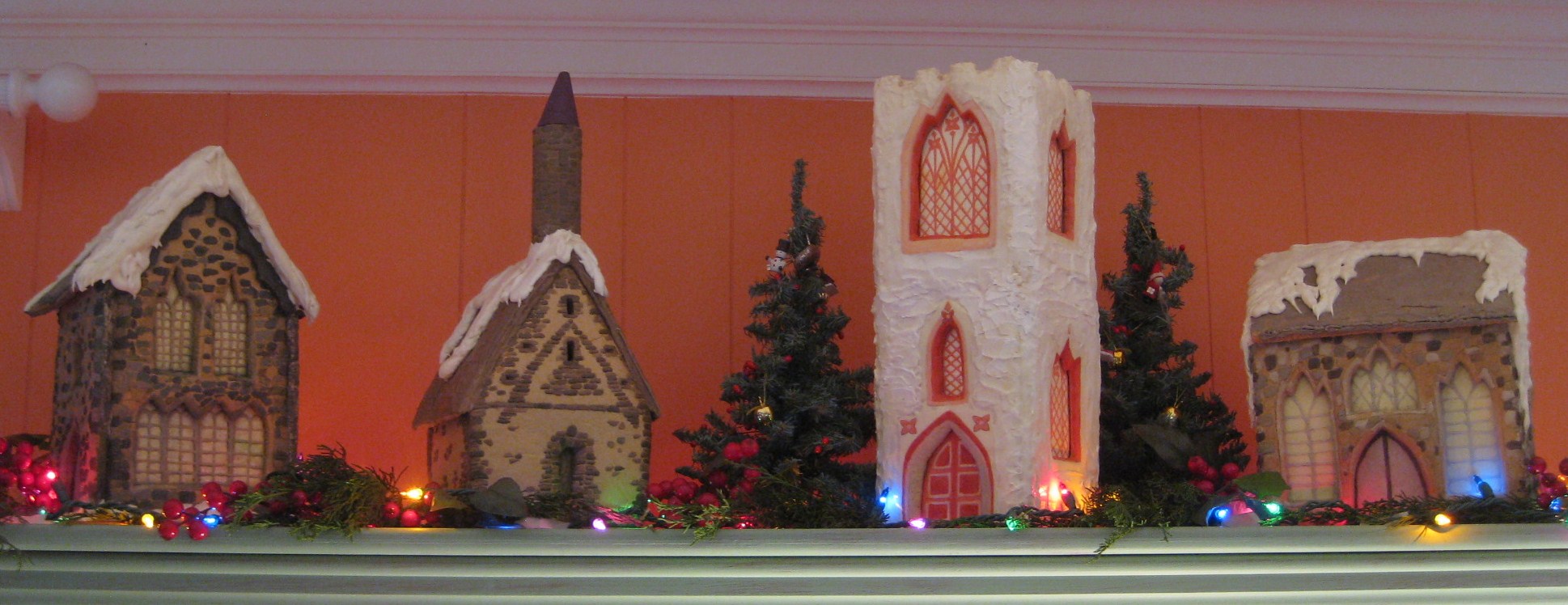
The Gingerbread Village Today

For several years it appeared that our gingerbread structures were none the worse for wear despite constant exposure to household elements. When I started to notice a few small flying moths, I searched the pantry, found nothing, and tried to ignore the problem. But the moths became more difficult to ignore.  I began to spot them regularly in the vicinity of the playroom hutch, and I was soon led to the source of the dusty-winged pests.  Our cheery, kid-friendly cottage, the first of my daughter’s and my combined efforts,  had lost its battle with an invading army of mealworms. I remembered then that I had sprayed the house only once, instead of my customary twice, with acrylic fixative. It was time to rethink the year-round gingerbread display.

The pastel candy-covered house went in the trash (despite D’s pleas that it could be saved—the poor child, I fear, has inherited a potential hoarding gene from both sides of the family). I tried to seal and pack the other buildings as thoroughly as my mother would have done. The castle, though, exceeded the size of any box I could find.  Mama would have painstakingly pieced together something that would contain it. I did not do this. I wrapped the castle in plastic, tried to tape over the unclosable box flaps, and hoped for the best. We stored all the boxes on shelves in the basement, which, incidentally, no longer flooded.


Just a few months after the village had been packed away, the inadequacy of my storage of the castle becamse dramatically apparent.  During every quick trip to the basement, a rustling, scurrying sound could be heard.  Before long, we had localized the noise to the castle box.  Clearly, it was the pitter-patter of tiny feet.  A multitude of mice had hit the housing jackpot; they were living large in a sweet, edible palace. When my husband carried the box to the back yard and opened it, five mice on a sugar high zipped out, ran right back down the steps and disappeared into the murky corners of the basement. The castle had been almost completely denuded of its abundant, exuberant royal icing. 

 
We were forced to reckon with our mice-control system.  Capturing them in humane traps, easing their nerves by feeding them Cheerios and then releasing them a couple of miles down the road at the edge of the woods was not yielding the best results.  Sadly, we adopted more stringent measures, and we no longer found evidence of mouse parties.  But the fate of the castle made me even less eager to unpack the remaining gingerbread houses as December rolled around each year.  Seven years passed.  

 
Just after Thanksgiving this year, I decided I had the time, energy and fortitude of mind to confront the stored boxes.  Still, I dreaded what I might discover. I knew that our house played host to other creatures besides mice that were likely to enjoy dining on gingerbread.

 
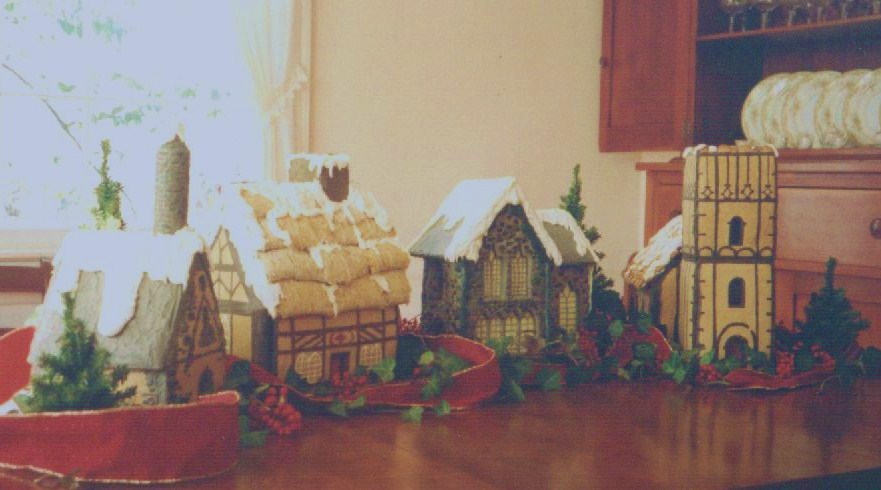
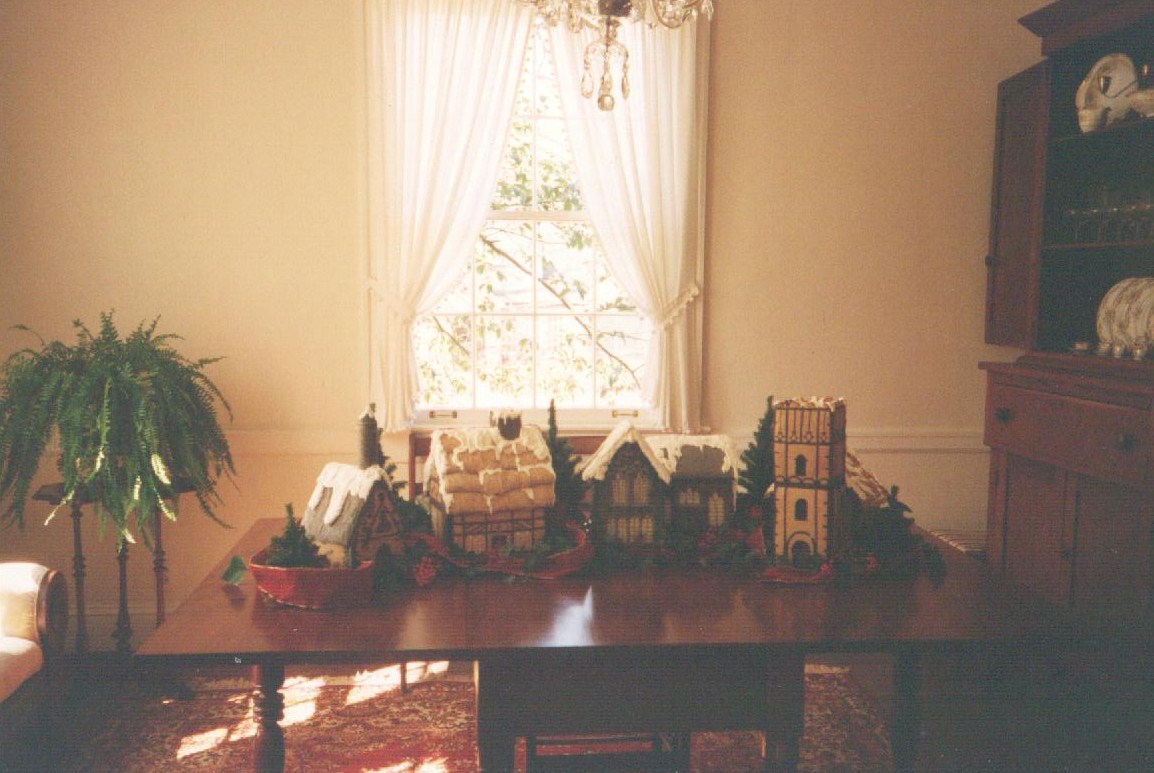
One by one, I unsealed the boxes and brought out each house.  The thatched cottage from 1989 had a few issues with its Shredded Wheat roof, but otherwise it had held up well.  The Norman church tower from 1990 was missing only a few crenellations along its roofline.  The manor house and its adjoining wing (’91 & ’92) had both survived mostly intact.  The white Gothic tower, made to commemorate our wedding in 1995, showed few signs of age.  All its surfaces had been completely covered in white royal icing, and I had expected it to have a long life.  The replica of St. Kevin’s Kitchen (’96), a playhouse-sized eleventh-century Irish chapel, looked good as new except for having lost its conical chimney cap.  Only one building was a loss.  The nave of the Norman church (’93) had succumbed to a mealworm infestation like the one that had destroyed the candy cottage.  I took each house outside to the back patio for a thorough coating of acrylic spray.  The village is back on the playroom hutch again, at least for Christmas (and perhaps through Valentine’s Day). 

Gingerbread 032The Manor House, St. Kevin’s Kitchen (so-called because of its chimney-like tower), the Gothic Bell Tower, and Manor House Wing.             

The Gingerbread Village Relocates and Plays to a Younger Audience

003

As a toddler, our daughter’s favorite playthings were the various trappings of Christmas.  She had little use for actual toys if holiday decorations were at hand.  This led to occasional minor heartbreaks when fragile tidbits fell to pieces in her insistent little fingers, but generally she knew how to handle with care.

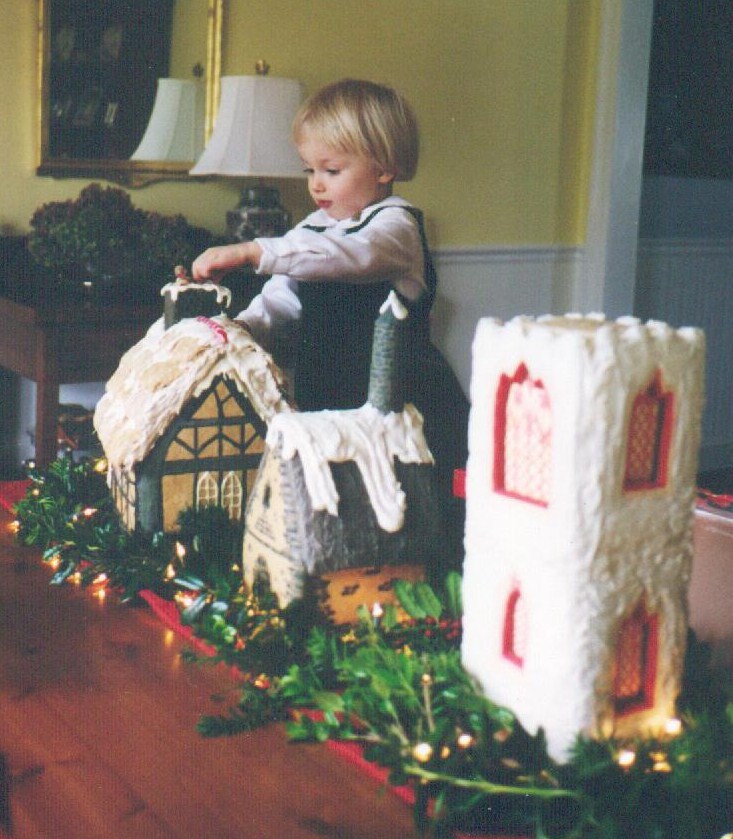
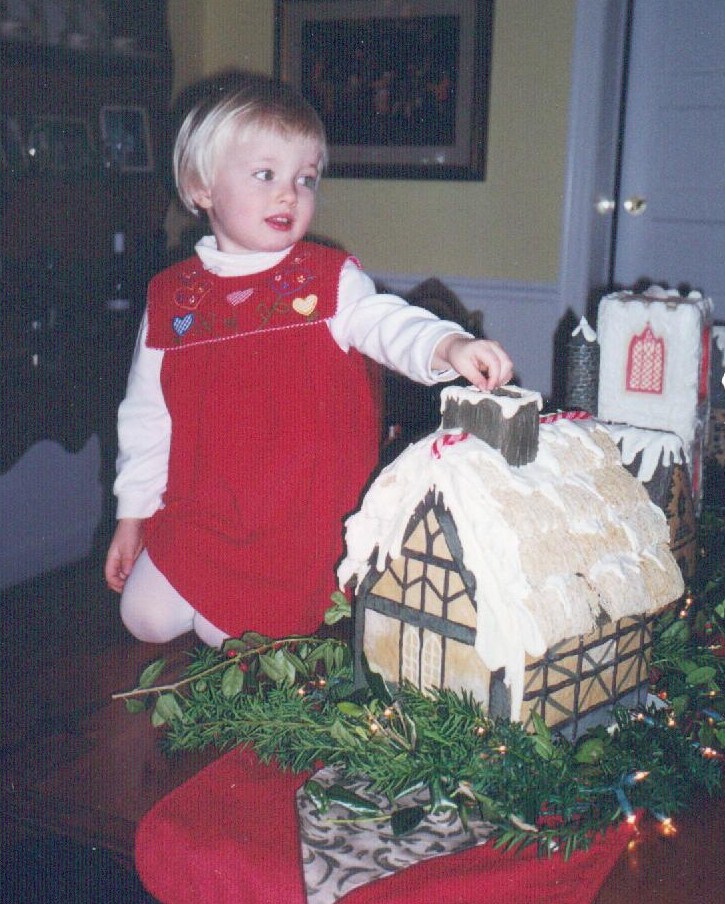
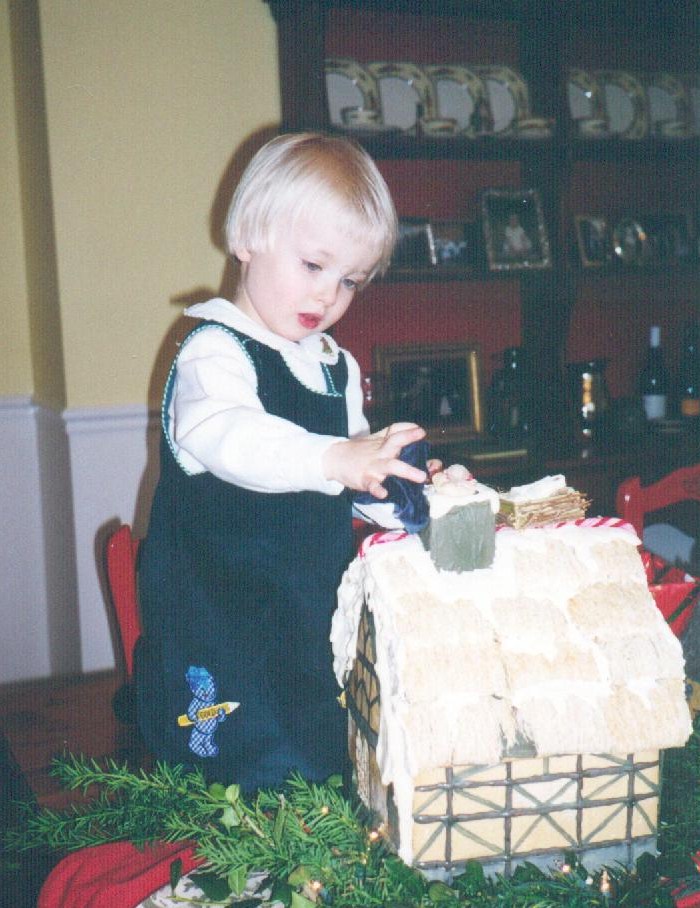
The first year that I unpacked the gingerbread village in Virginia, D was at my side, bubbling with excitement.  She greeted each structure with much admiration, and I was duly flattered.  She helped me arrange the buildings, some in the center of the dining room table, others atop the hutch.  D could spend hours sitting on the table, setting up various inhabitants among the houses and churches, talking to herself, happily lost in her imagination.  The village might host our clothespin nativity figures one day.  The felt Christmas mice, or a crowd of Polly Pocket dolls might have the run of the place the next day.  The possibilities were nearly endless, just like a child’s busy, growing mind.

D proved to have a knack for creating attractive baked goods.  At age three, she was a surprisingly skilled sugar cookie baker.  She turned out to be a natural with a pastry bag; her royal icing decorations were top-knotch.   Before long, she was asking to help me make a gingerbread house.  I realized that she would, indeed, be a capable assistant.

Our first mother-daughter collaboration was a modest cottage.  I gave my daughter fairly free reign in terms of decoration, so it was a colorful dream of candy and icing.  The next year, we decided to go big.  We made an elaborate, turreted gingerbread castle.  It was an appropriately exuberant candy palace for a girl who chose to wear a different princess costume every day.

Because I couldn’t face the daunting task of properly sealing, packing and storing the gingerbread village, it became a permanent display in our playroom. Our old house, as I’ve said before, is lacking in closets, and our basement used to flood with every hard rain. The absence of the perfect spot to store the village was a good excuse to simply keep it out all year long. D was glad to have it as a constant companion. Every new holiday brought another chance to redecorate.  Our Christmas village had become a town for all seasons.

007

008

D, nearly three, arranges the clothespin Mary and baby Jesus
on the roof of the thatched cottage.

My Medieval English Gingerbread Village

001

Back in 1989, home from grad school one winter break, I had enough free time to try my hand at making a gingerbread house. I had spent the previous year living in England researching my dissertation, and visions of picture-perfect country villages were rattling around in my head. I loved the quaint homes lining narrow lanes, the dwellings in use since medieval times and only gaining in charm over the centuries. I was especially fond of the thatched cottages with their half-timbered facades and slanting walls. When I saw Martha Stewart’s masterful gingerbread replica of her Turkey Hill farmhouse, I was further inspired. I liked its relative architectural correctness and its conspicuous absence of frou-frou candy cuteness typically associated with gingerbread buildings.

So I set out to make a thatched cottage. I used Martha Stewart’s recipe and diligently followed her gingerbread-baking tips. I remember thinking my mother was overly uptight when she expressed some dismay at my timing; I began rolling out the dough a day or so before our annual Christmas party. Now I know exactly how she felt. Recently I was struggling to prepare for out-of-town guests when I noted with incredulity that my daughter had plunged into an ambitious beading project that required table surfaces in several rooms. Mama, please accept my belated apology!

That first house took about a week to bake and assemble. If I had thought I could finish it by the party, I was certainly mistaken. It wasn’t even done by Christmas, as that year’s holiday photos attest; it can be glimpsed in the background, roofless, Progresso soup cans supporting its walls. But by New Year’s Eve it was complete, from its Gothic windows, snow-topped chimney and roof of Shredded Wheat, which bears a remarkable resemblance to thatch.

Gingerbread is generally considered a fragile, impermanent medium. But this is not necessarily the case. Like the thirteenth and fourteenth-century cottages I so admired in England, my first gingerbread house has had a long life. It is still with us. The strength of royal icing, a mixture of powdered sugar and egg whites, should not be underestimated, and a clear acrylic spray does wonders to protect gingerbread surfaces.

During the 90s I made other houses and several churches, all in a subdued palette and reflecting various medieval periods. A gingerbread village evolved. Each January I flew back to New Jersey, leaving my mother to deal with the increasingly time-consuming task of storing the houses. She was a faithful (if somewhat understandably resentful) curator of the collection. She kept the village on display atop the hall bookcases until after Valentine’s Day, when she sealed the houses in plastic bags and carefully taped boxes.

By the time H and I bought our home in Virginia, Mama was eager to retire as gingerbread caretaker. House by house, the village began the trek from Atlanta in the back of my parents’ station wagon. I saw, with some alarm, that it would be up to me to deal with the complicated preservation demands of theoretically edible structures prone to decay.  As in every craft project, the fun is in the design and fabrication, not in routine maintenance. I wasn’t sure I wanted this new role, but abandoning the houses to the trash bin was not an option.

003

The first four buildings of the gingerbread village, displayed
in my parents’ dining room in 1993.

Little White Lights, for the Season of Light


House lights 006

I prefer to avoid overhead lights whenever possible.  They  scream institution: school, office, hospital, the DMV, and perhaps worst of all, the department-store fitting room.  They drone on of chores and unpleasantness.  Best to use them, I believe, under only three circumstances:

  • 1.  To quickly (and briefly) illuminate a dark room upon entry (to avoid falling over the dog or some misplaced, unexpected obstacle).
  • 2.  When cleaning, as in vacuuming, scrubbing floors and dusting.
  • 3.  In case of emergencies.

Nothing makes a room or its inhabitants look sadder and more forlorn than a ceiling light casting its cold and dismal glow.  The light is either too harsh or too dim.  The angle is all wrong.  I suspect there are untold numbers of people unwittingly suffering a diminished quality of life because they persist in flicking on the overhead switch, and leaving it on.  

Were they to employ a decent-looking table lamp instead of the ceiling light, a space that once appeared mournful and dejected might become cozy and pleasant.  They might find themselves inexplicably cheerier.

I’ve acquired lots of lamps over the years, mostly at flea markets, yard sales and antique stores.  Others were gifts from my mother, from whom I acquired my distaste for ceiling fixtures.  Our house probably has too many lamps.  In December, some of these are relegated to the basement.  Christmas demands a softer, warmer, more festive glow than most lamps can offer.  The outside of our house gets its special holiday treatment, and the inside is not neglected. 

During the Christmas season, the optimal sources of interior illumination, I believe, are strands of small clear white lights.  To some degree, they mimic the effect of candlelight.  Yet compared to candles, they involve considerably less mess and threat of fire.  I discovered the charm of such lights one year as we were preparing for our annual holiday party.  Now we decorate for the party and keep the lights up through Epiphany, January 6. 

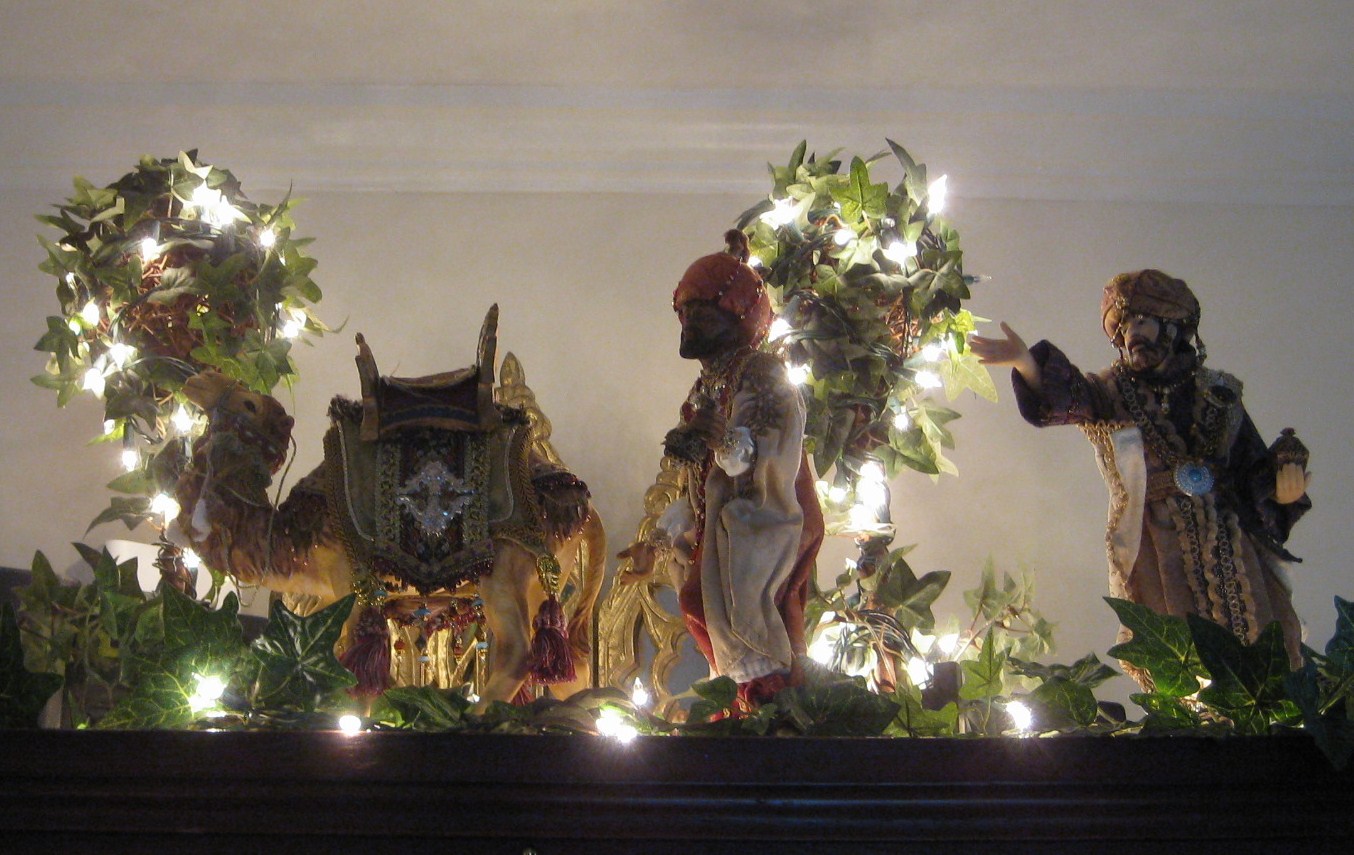
White lights peek out from the ivy at the feet of the large nativity figures occupying the tops of the TV armoire and the adjacent bookshelves. They’re entwined in garlands on the stair banister, atop the secretary in the living room, the sideboard in the dining room, and sometimes on top of the piano.

They adorn our big Christmas tree in the living room, typically a blue spruce.  In the first years of our marriage, before a child came along to distract me, I spent the better part of two days wrapping nearly every branch with lights, for a total of about 1,300.   Now, I lack the time to be so obsessive (at least in that regard). 

White lights decorate our several small artificial trees, like the alpine trees above in the dining room. ( I found that one of these trees alone appears bedraggled and pitiful, but a grouping of three is just right.  We hang our homemade pinecone and cork creatures, pasta and seashell angels on these trees.  See posts from December 2011.) 

Around 5 PM each evening, as the winter night settles in, I start plugging in the many strands of lights.  (Unfortunately my husband has not developed a one-switch system, as he has with the electric candles in the windows and the exterior spotlights.)  Our rooms begin to glow, as if enlivened by tiny stars.  I am reminded that we are in a special season, a time when we focus on the miraculous light that God sent to shine in our dark world. 

Nativity 006

The manger scene atop the bookshelves.

Nativity 003

The nativity figures are so large that the magi and their well-dressed camel occupy the armoire on the adjacent wall.

Sideboard 002

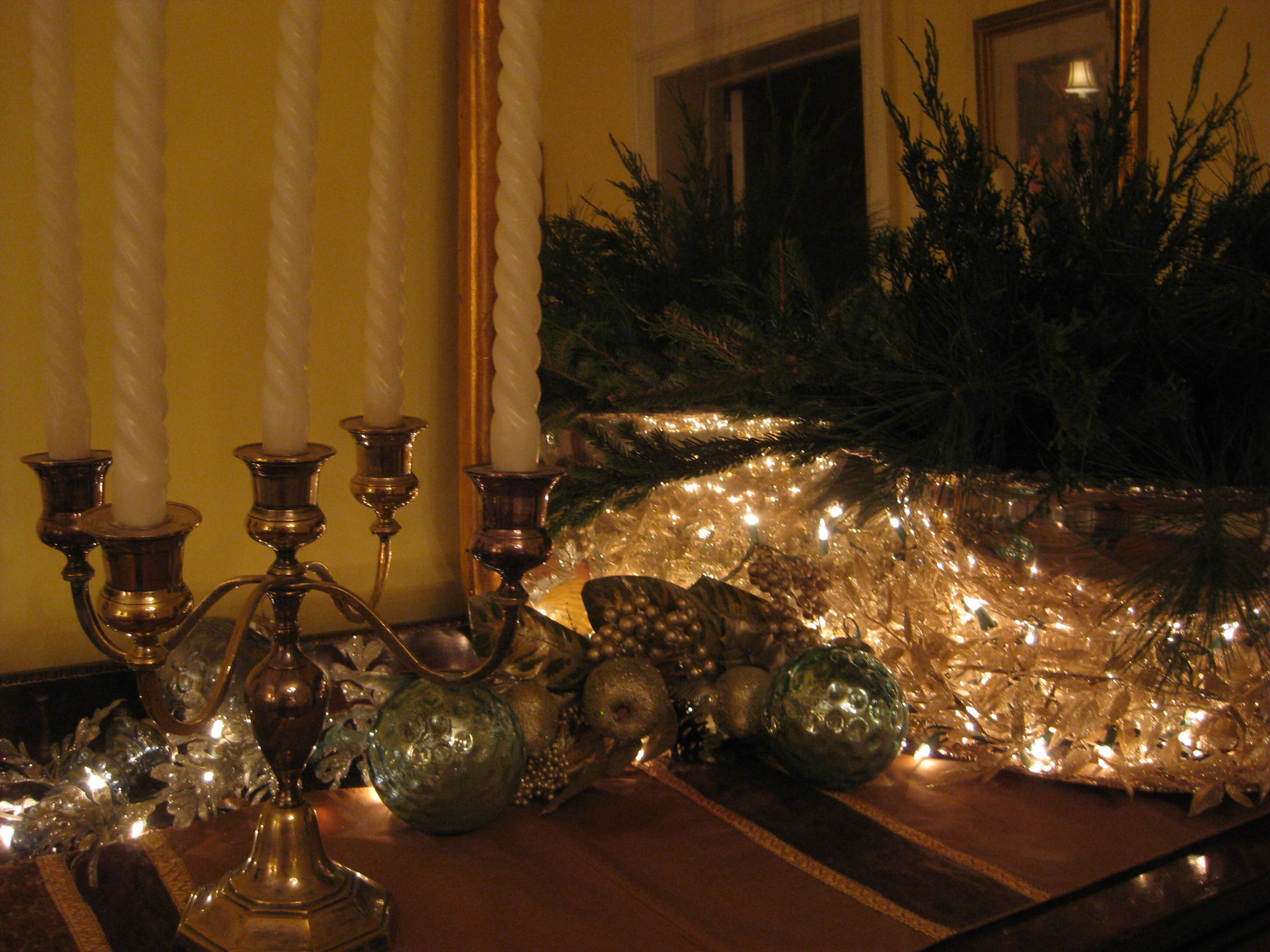
White lights add a warm glow on the dining room sideboard.

Lighting up the Night for Christmas

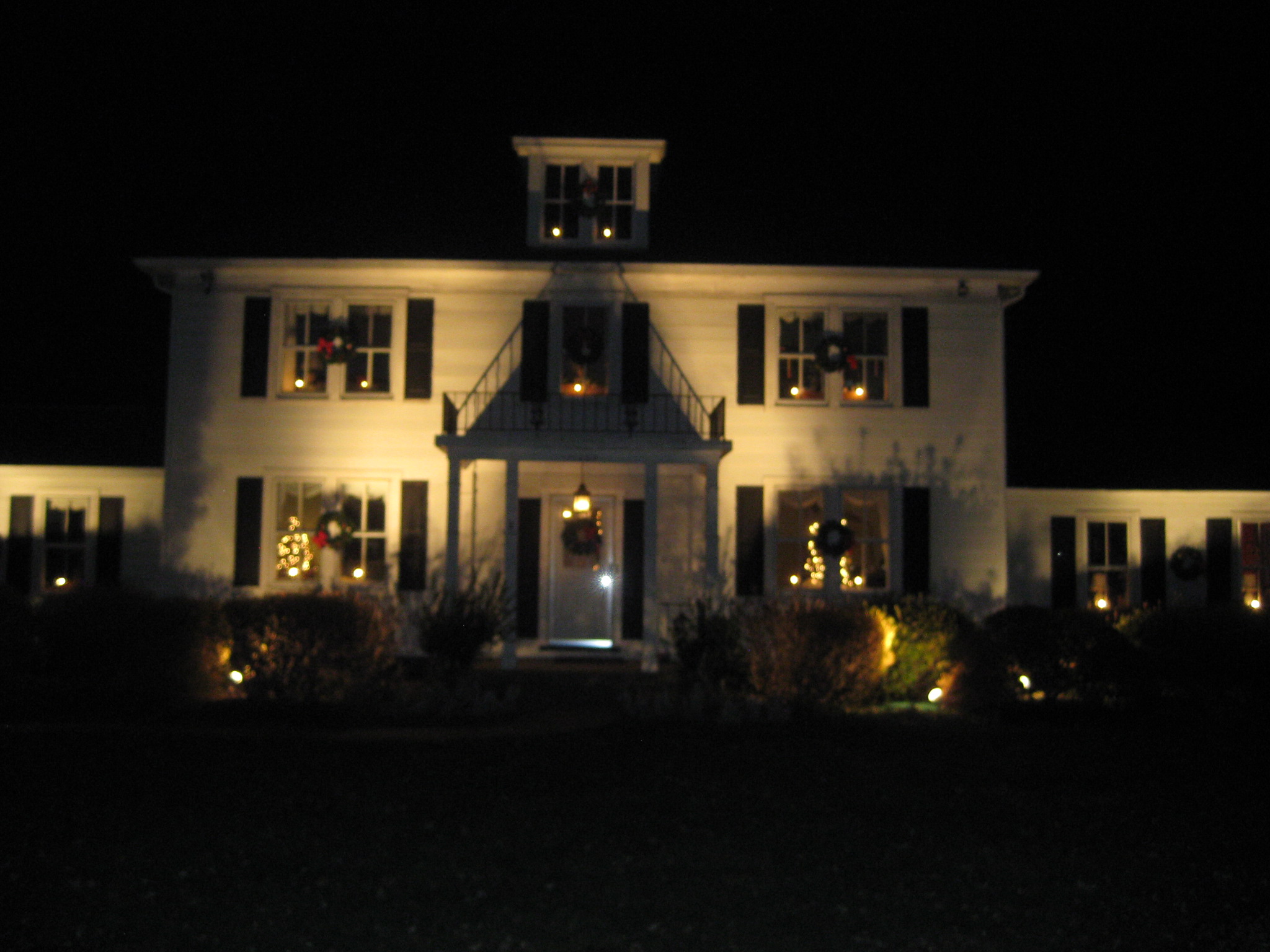
One of the things I love best about the Christmas season is the chance to light up the darkness with light. My husband and daughter feel the same way.  Like Clark Griswold in National Lampoon’s Christmas Vacation (which we watch every year), H has a vested interest in exterior illumination, although he takes a somewhat more subdued approach. There is no stapling of a thousand strings of lights to the roof, no plastic Santa and reindeer; only some carefully placed spotlights and a candle in each window to highlight the wreath above.


During the day, it’s evident, at least under close scrutiny, that our home has many needs: it needs painting and new siding. We really should do something about the windows at some point.  (But I like the old, wavy glass from 1920, as well as those costly to replace “true divided lights.”) None of this matters, though, as dusk falls every evening in December.  With the click of a switch in the basement, the house gleams newly white and clean. Instead of highlighting flaws, the light, like the true light of Christmas, makes them disappear.  All dreariness, all weariness, is erased. The effect is simple and pretty. One month each year, we get to live with light in the darkness. And we decide, yet again, that no home improvements are necessary for a while.

Christmas house 002

November Woods

While there is no denying the bright glory of mid-October foliage, I find the muted palette of November equally beautiful in its own way.  After most of the leaves have fallen, our neighborhood woods wear their subtle winter tones of gray, beige and brown.  The few remaining autumn dashes of orange, flame-red and green stand out like colorful stitching on a sensible tan tweed jacket.  On this day, the leaves were so deep that the familiar path was hidden.  Kiko, however, our sure-footed guide, knew the way by smell. 

Woods II 001

Novemberwoods032

Woods II 007

Novemberwoods022

Novemberwoods010

I like the star-like shape formed by the core of this fallen tree’s roots. 

Woods II 015

D and Kiko on the banks of the hidden lake.

On This Election Day, Go Vote!

DC2012012

My maternal grandmother Nora was born in 1894.  In 1920, when the 19th Amendment, the Susan B. Anthony Amendment, was passed, she was twenty-six.  She had been married to my grandfather for five years, and they were the parents of a two-year old son, my mother’s oldest brother.  Having lived through a time when women could not vote, my grandmother took that newly granted right very seriously.  She never missed an election, either national or local, and she was quite vocal in encouraging other women to get out and vote.  Not voting was a sure sign of laziness, ignorance, or just “being plain sorry,” according to Nora.

I wish I had thought to ask her, before her death at age 94, about the presidential election of 1920.  I would like to have discussed the details, such as where she voted and how.  Were there long lines, and did the women turn out enthusiastically? Like most rural Kentuckians and Southerners of her generation, my grandmother was an ardent, lifelong Democrat. I assume she cast her first vote for James M. Cox, the Democratic candidate, newspaperman and Governor of Ohio.  Cox, by nearly all hindsight accounts the better man, lost to Warren G. Harding, now remembered primarily for the rampant corruption of his administration. Twelve years would pass before my grandmother chose the winning ticket, when she, no doubt, voted for Franklin Delano Roosevelt in 1932. Interestingly, a young FDR had been James Cox’s Vice Presidential running mate.

Today on election day, I’m especially grateful to the generations of determined women who fought for nearly a hundred years for the precious right to vote.  Because of their efforts, my grandmother voted in 1920, I will vote today, and my daughter will vote before long.  In years past, I may have supported candidates that probably would not have won my grandmother’s vote.  But this year, I feel confident that she would strongly agree with my choice.

On this election day and always, may God bless the United States of America!

New This Year: Spooky Trick-or-Treaters

SpookyGuys006

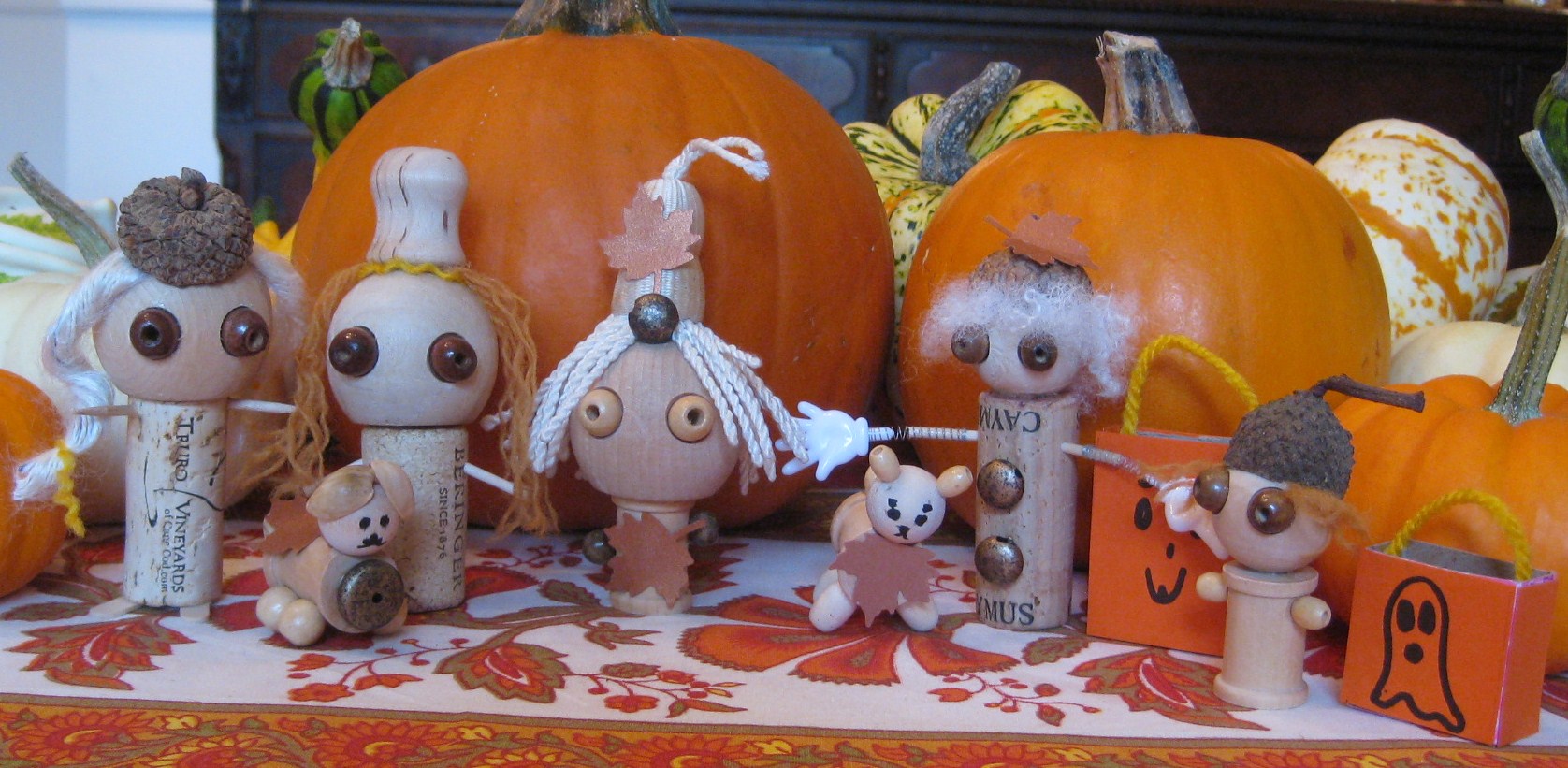
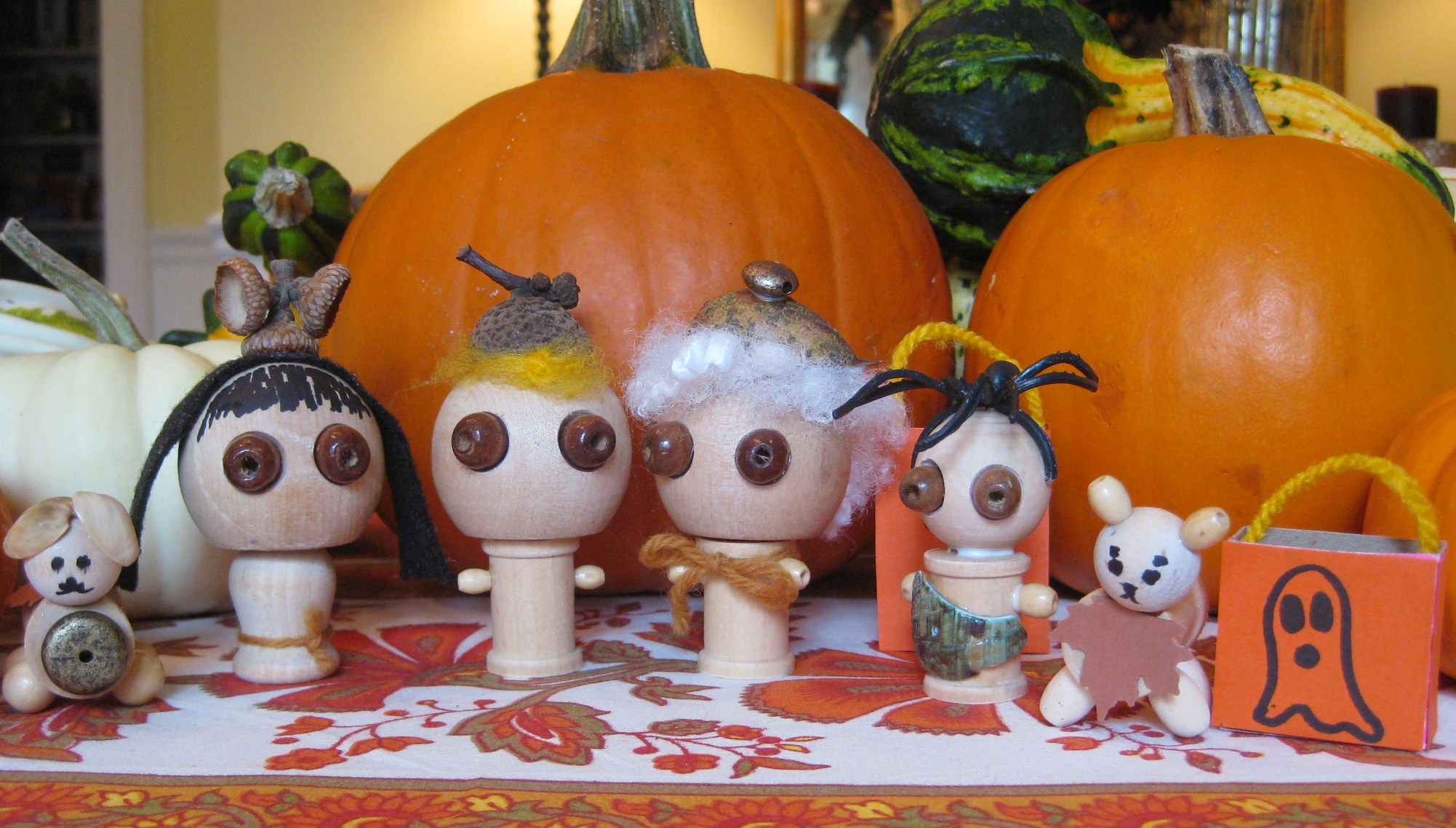
This fall, my daughter and I spent several amusing afternoons in production of these big-headed, bug-eyed trick-or-treaters to add to our Halloween decorations.  Using a Dremel, we drilled indentations for the wooden bead eyes, which we anchored with Sobo glue.  Our goal was to create a variety of strange and crazy-looking little figures, so we rather indiscriminately raided the craft closet in search of odd miscellaneous items.

For hair, we used yarn, felt, an old shade pull, and some of the stuffing that Kiko was at the time pulling out from the toy he was attacking.  Hats are acorn caps, wooden craft cups, and in one case, a plastic spider ring.  For bodies we used small spools or corks.  Toothpicks or wooden beads form the arms.  One figure received oversized white plastic hands on springs that came with a set of Halloween pencil-toppers. We made two dogs, one with ears of pecan shells, the other with wooden bead ears.  Maple leaves from a craft punch adorn several of the creatures.  We covered miniature Nerds boxes with orange paper to make trick-or-treat bags.  Because we didn’t intend our creations to be perfect or traditionally cute, no one (and I won’t name names) flew into a rage when a slight crafting hitch or two arose.

SpookyGuys009

From Little Pumpkin to Halloween Jack-‘O-Lantern

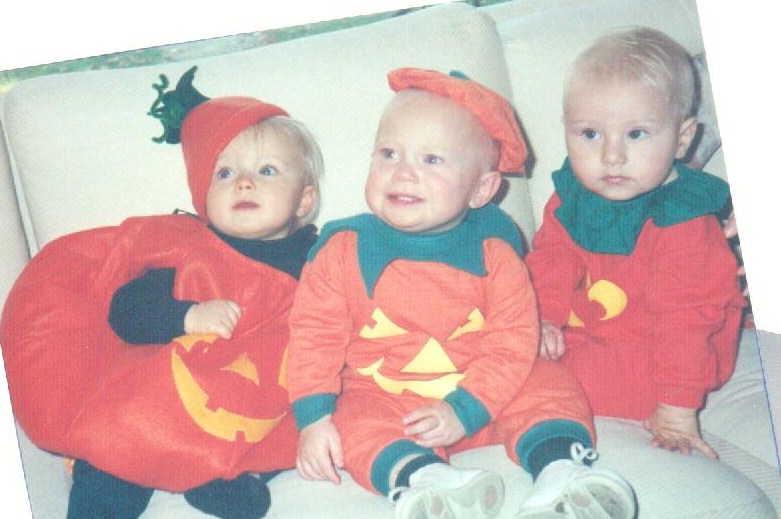
It’s an easy and logical progression from pumpkin to jack-o’-lantern.  Mother/baby Halloween parties across the country are crowded with crawling, crying, babbling, drooling, toddling jack-o’- lanterns.  Our first Halloween event was typical.

001

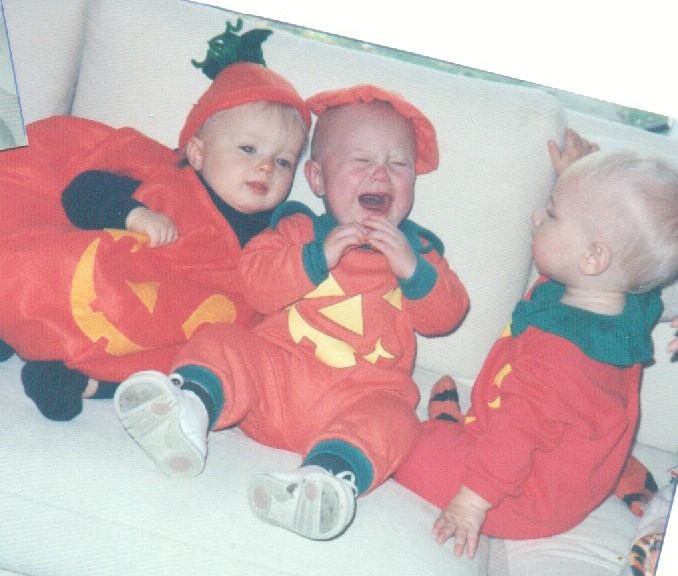
The three jack-o’-lanterns at our Halloween playgroup party are assembled here for a photo opp.  The middle pumpkin took offense, perhaps at the indignity of being sandwiched between two other pumpkins.

3 pumpkins

She continued to protest, loudly and forcefully.  The other two pumpkins seemed mildly interested, at best.

J's 1st Halloween

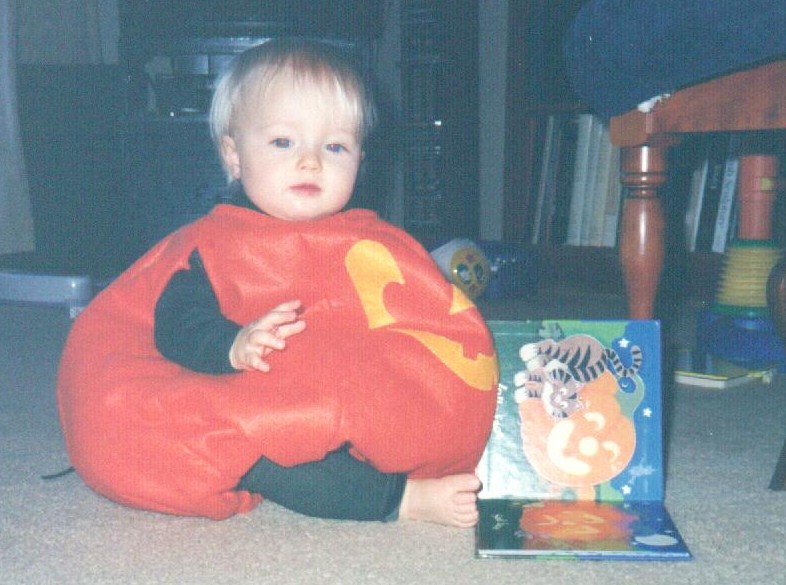
After the party, D relaxed at home by quietly ripping the flaps off a seasonal pop-up book.

004

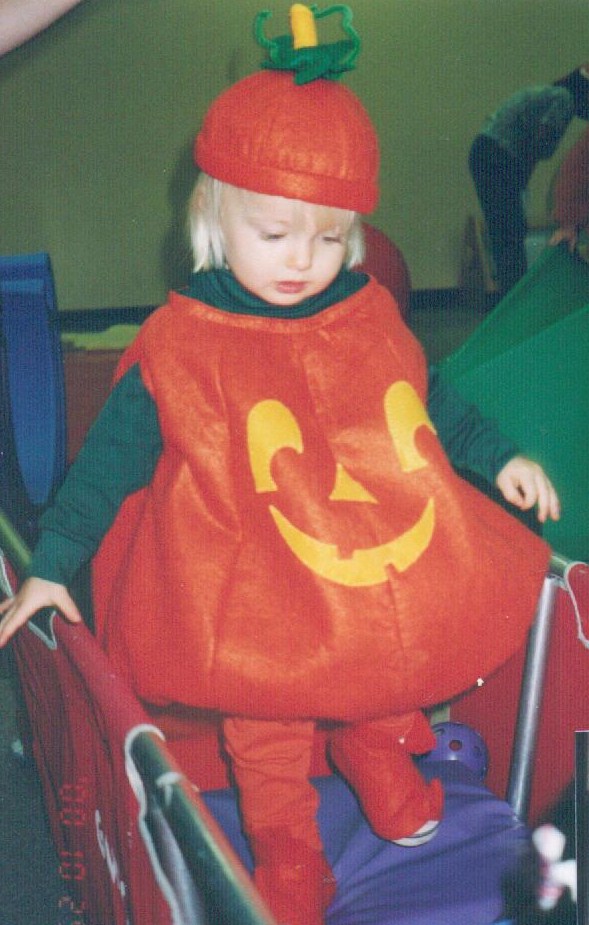
We reused D’s jack-o’-lantern costume on her second Halloween.  As we had expected, our not-quite-two-year-old voiced no protest at having worn that same old thing last year. On her first Halloween, she was not yet walking, and the costume proved cumbersome for a crawler.  Here, at our Gymboree party, she enjoyed being a jaunty pumpkin on the move, walking, running, jumping, and bouncing.

005

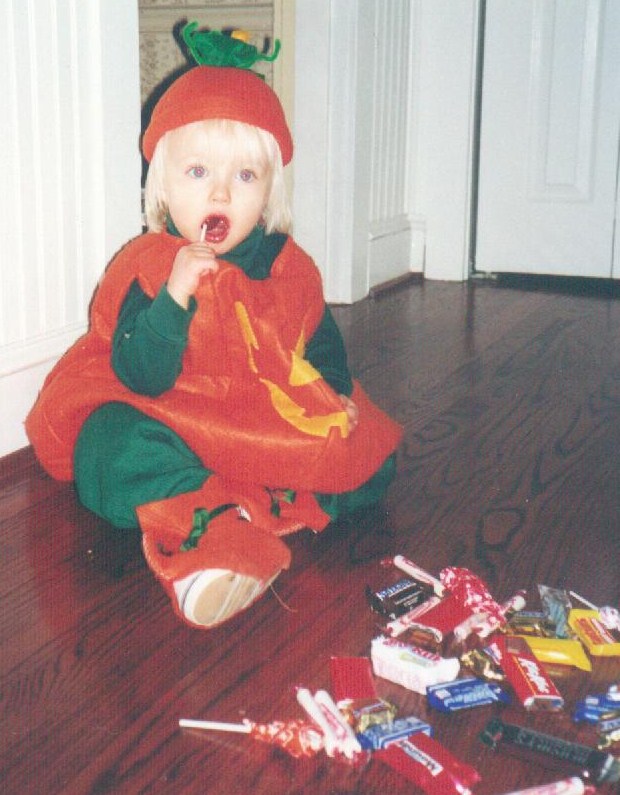
On D’s first Halloween, we went with some of our playgroup friends to an afternoon celebration geared to young children at the local mall.  We couldn’t justify trick-or-treating on behalf of a baby in a stroller.  But on year 2, we hit our neighborhood.  Up to this point, I had limited our daughter’s exposure to candy.  She got a few sweet treats, but, as the baby books advised, not many.  That Halloween, however, the jig was up. The great wealth of the candy universe opened up to her like a treasure chest unearthed, and she rejoiced.  While Kit-Kats were initially her favorite chocolate, she quickly developed an eclectic, enthusiastic palette.  Here, she sits in a trance-like state savoring a lollipop, the contents of her trick-or-treat pumpkin spread around her in what was then the bareness of our kitchen.