Category Archives: Family

Back When the Movies were Big, and the Theatre was a Palace: Atlanta’s Fabulous Fox

My trove of movie memories was neatly packed, sealed, and hidden away in my mind, and it took a while to access them. I’ve grown so accustomed to the ease of home viewing, of DVDs, streaming video and Tivo, that I had nearly forgotten the thrill of the old-time movie-going experience.

Having grown up in Atlanta during the 60s and 70s, my most colorful movie memories center on the Fox Theatre, which opened in 1929. Originally intended as the Yaarab Temple Mosque, national Shriners’ headquarters, its flamboyant style is best described as Islamic with touches of Egyptian. When escalating costs jeopardized the project, William Fox stepped in and oversaw the completion of the building as his newest movie palace. The fanciful exterior is a wealth of onion domes, minarets, ornate tile work and arched colonnades.

The movie that stands out most clearly among the many I saw at the Fox was, strangely, a re-release of Disney’s Song of the South, truly a remnant from another world. I was with a group of fifth-grade friends, and it was the first time a parent had dropped us off at the theatre. Maybe the movie was chosen by that parent simply for its “G” rating. Had we been younger, we might have taken some delight in the singing, dancing, southern dialect-spewing animals of the Uncle Remus stories. We were mature enough to be uncomfortable watching wise and contented former slaves extolling the joys of life on the old plantation. (Because it is now generally considered a racially offensive film, it has never been released in its entirety on VHS or DVD.)

The movie wasn’t a good fit for us, but it didn’t matter, because the Fox Theatre was dazzling. Gilded opulence was everywhere, from the box office window, to the concession stand to the luxurious Ladies’ Lounge (no mere utilitarian restrooms for the Fox). The auditorium was vast and atmospheric, with nearly 5,000 seats. It resembled an enchanted courtyard from the Arabian Nights. Before the movie began, we marveled at the gradually darkening and slowly rotating twilight sky above, flickering with crystal stars and the occasional drifting, wispy cloud. Just before show time, the famous pipe organ rose from the orchestra pit. The second-largest theatre organ in the U.S., it filled the great space with the music of an entire orchestra, a variety of brass instruments and sound effects, such as thunder and lightning.

By the mid 70s, as potential movie-goers flocked to the suburbs, the Fox was struggling financially. Down at the heels and seedy, it had become the Blanche DuBois of movie palaces. The City of Atlanta, always quick to move on in the name of progress, proposed demolishing the theatre to make way for Southern Bell’s new headquarters. This plan awakened Atlantans, at long last, to the urgent need for hometown historic preservation. (The city’s once-magnificent Terminal Station, designed in the Spanish Mission style by the architect of the Fox, had been torn down in 1972.)

Perhaps because so many Georgians clung to their own unforgettable memories of the old theatre, the Save-the-Fox campaign gained support quickly. The building was not only saved, but eventually fully restored. It now serves as a popular concert venue, with a film series every summer, complete with organ sing-a-longs. The historic old girl looks better than ever. Blanche has bucked up, gone through rehab, become fit and healthy. An active, happy grandmother, it looks as though she has many good years ahead.

My daughter has never been to the Fox.  My husband hasn’t either, although he and I have eaten dinner across the street at the Georgian Terrace, while crowds flocked to a performance of Celtic Woman. I hope we can catch a summer movie at the Fox this year, so H & D can see that magical, indoor amethyst sky.

Belated Reflections on the Oscars: Does it Matter that the Pictures Got Small?

It took us part of two nights, but we watched the Oscars. We can’t see the show all in one go. It’s too long, and it’s on a school night. Even when we have the time, and a late-rising morning to follow, my family and I cannot sit relatively still and be attentive for much more than twenty minutes in a row. This is just one of the reasons that we don’t go to the movies.
We will see some of the Oscar-nominated movies, eventually, at home. There is no pause button at the theatre, and we like our pause button. It’s not merely valuable for snack and drink runs. When our daughter was very young, I realized how handy it was to stop the action to explain a word or concept. Because we could break for discussion during a program about the worst jobs in the medieval world, at age six or so she learned quite a bit about the nasty tasks required of the wode maker and the fuller. Perhaps such knowledge isn’t vital to everyday life, but it certainly does put a twenty-first century kid’s bad days in perspective. I pause too often, probably, to point out certain actors to her (the cowboy at the dude ranch on Modern Family—that’sTim Blake Nelson, who was in O Brother Where Art Thou. Remember when he sang I’m in the Jailhouse Now?) We replay funny scenes, or those in which dialogue is indistinct. Tensions arise, naturally, when we disagree over what constitutes overuse of the remote. Sometimes it seems that we’ll never get through a show. But that’s OK, because we can always finish it tomorrow, or the next day.


This year’s Academy Awards ceremony, with its focus on retro Hollywood glamour, was not a night for the young. It wasn’t the most entertaining of Oscars, but I found the somewhat geriatric slant very comforting. I fit right in. Some stars, like Billy Crystal, the veteran comic host, were aging oddly. Others looked great (for their age), but no one stood out to me as looking particularly young. Not even the truly young.

For such a lavish production, we were puzzled by the bad sound quality. What was that tinny, echoing noise after Billy Crystal’s every quip? I was reminded of the constantly jangling cowbells on the ski slopes at last year’s winter Olympics. D said it sounded like the buzzing of a hearing aid, which would be appropriate, considering the largely AARP crowd that was honored.

It was fitting, also, that the biggest winner of the night was a mostly silent, black and white film set in the roaring 20s. (The Artist will be in our Netflix queue if for no reason other than Uggie the Jack Russell.) Throughout the night, there abounded references to a powerful, collective love of the movies. Misty-eyed presenters and winners recalled formative childhood experiences, spellbound in a packed theatre, the big screen before them in all its majesty.

I have such powerful memories, but my daughter, as yet, does not. She missed the era of the opulent movie palace. She has never known a time when a movie was an event, a destination. Instead, she will remember sitting on the sofa watching our fairly, but not overly large TV in the armoire, wrangling for the remote. Is this a loss? Will rapid advances in technology and communications make up for the absence of the grand movie experience? Will we all be so well-connected through new social media that we will be perfectly happy to watch movies on our contact lenses or some other tiny device? Will it no longer matter that the pictures got small, to paraphrase Norma Desmond, the aging star in Sunset Boulevard?

What’s with the Ashes?


Ash Wed 012

Today, we are likely to see people walking around with a messy black smudge on their foreheads. Some may be sharply dressed in business attire, which makes the apparent dirt on their faces look all the more incongruous. My husband has remarked that these people strike him as somewhat irritatingly smug. He thinks they broadcast their piety too overtly: I went to church today, on a weekday. Aren’t I good? Aren’t I saintly? It wouldn’t hurt you to go to church, too. To me, they are brave. They took time off work for their faith, and they are willing to bear a visible sign of it in a secular world.

Here, then, is why I will go to church this Ash Wednesday (although our service is at night, and unless we need milk or some other grocery staple, I will head straight home afterwards.) 

                You are dust, and to dust you shall return. 

                –Genesis 3:19

Ash Wednesday is a reminder of what would have been, without the transforming salvation of Christ. God uttered the words above, angrily, to Adam and Eve, just before he booted them out of Eden, the garden of paradise that could have been their eternal, blissful home. Because they disobeyed God, they forfeited a life of ease and joy. They were sent out into desolation, forced to eke out a living through toil and pain.

If you grew up going to Sunday School, you’ve heard the story many times. (And if you haven’t, I hope you won’t let a discomfort with the creation story get in the way.) Maybe you’ve wondered: What were they thinking? The first couple had it great: full-time leisure, full-time luxury. Their every day made a vacation at one of the world’s supreme resorts pale in comparison. The trees dripped with delicious treats, theirs for the easy picking. All except for the apples on one tree.

There was a serpent in the garden. He was wise and wily, and he knew about that whole free-will thing. Indeed, he owed his existence to it. He looked with contempt upon the innocent contentment of the two humans. He realized the fragility of the thread that kept them in their lovely home. It wasn’t long before the serpent made his move. Appealing to Eve’s pride, he offered an opportunity for further greatness. Knowledge equal to God’s was at her fingertips, but God selfishly chose to keep this power to himself. She deserved better, didn’t she? So Eve ate from the tree. Adam, who apparently needed no convincing, munched along complacently.

Paradise was lost, for the taste of a forbidden fruit. We may think we would have known better. But probably not. Like Eve, we might have fallen for the pride trap. Or maybe, like Adam, we might have given very little thought to the matter: If Eve says it’s fine, it must be. (I envision one of David Letterman’s goofy expressions on Adam’s face.) In simply thinking we would have known better, it’s evident that we would not have. With free will comes the ability to make the wrong choice, a choice we tend to exercise repeatedly. Like Adam and Eve, if left to our own devices, our fate would be to wander in the dust. 

Repent and believe the good news!

–Mark 1: 15

But we are not abandoned, without hope, in a barren land. Paradise is still within our grasp. On Ash Wednesday, we confront the grim reality of our sin, of our tendency toward pride and selfishness. On our own, we could never be good enough to work our way back to Eden. But we don’t have to be. Jesus took our sins upon himself. As the spotless Lamb of God, the perfect sacrifice, he wiped our messy slates clean.

To accept Christ’s free gift of salvation, we need to acknowledge our wrongheadedness and to ask forgiveness. God’s forgiveness is granted for our willingness to repent; it’s not contingent on our going forward without a misstep. We are human; we will stumble and lose our way at times. We cannot be perfect in this lifetime, but we can desire to achieve perfection.

The ashes are marked on the forehead in the shape of a cross, the instrument of death that became the tree of life. Christ’s good news saves us from a future of ashy, dusty nothingness, replacing it with the promise of unimaginable joy in a paradise everlasting. We can’t even comprehend unending joy; our flawed human nature prevents us. But we will understand it fully, and magnificently, one day, I am convinced.

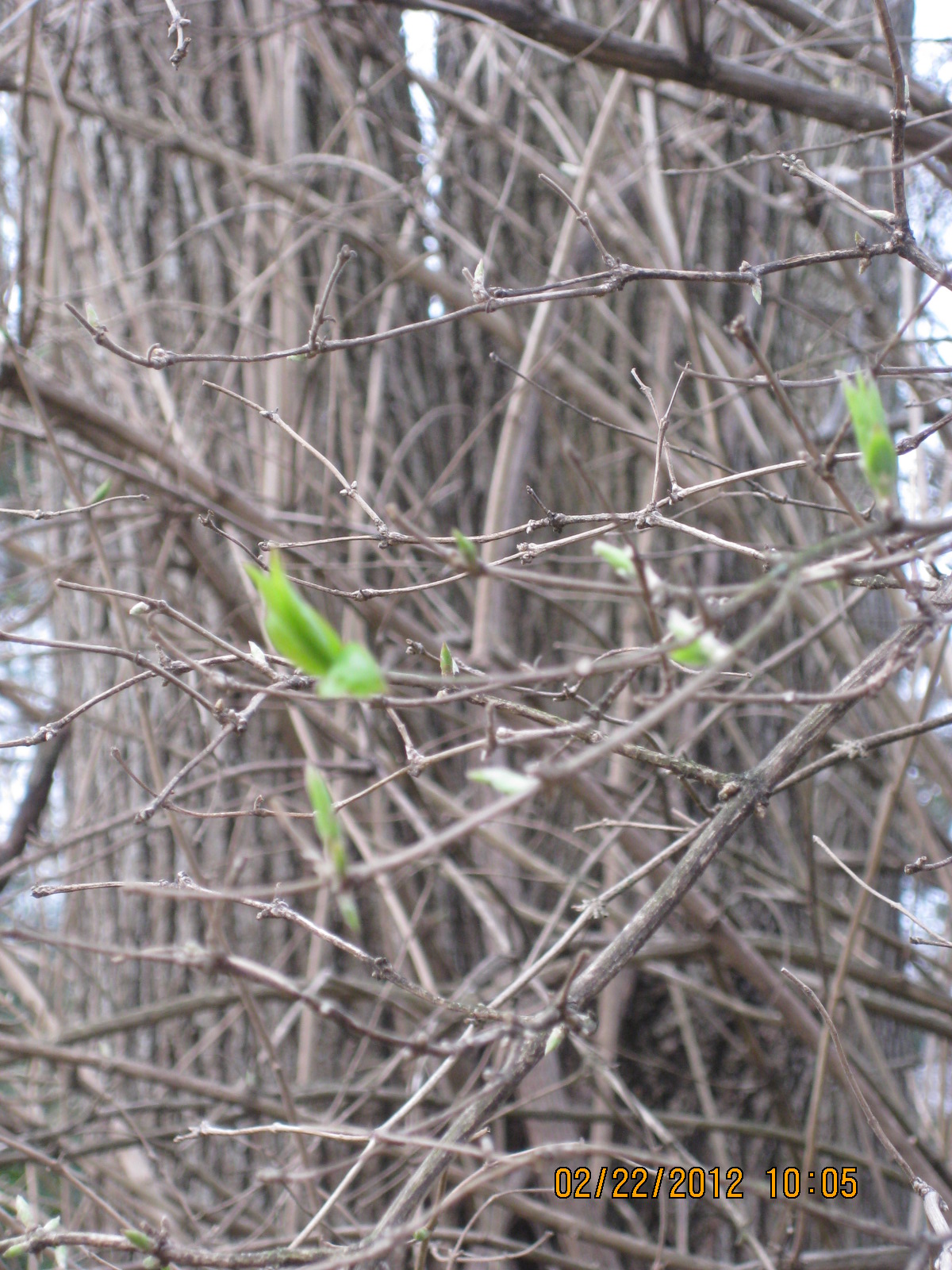
Today I saw the first few green buds emerging from the gray bleakness of our yard, in a wild tangle of honeysuckle. This seems very fitting, on Ash Wednesday, when we celebrate the life that comes of death, of the new birth offered to us without price. 

God demonstrates his own love for us in this:  While we  were  still sinners, Christ died for us.

–Romans 5: 6-8

Ash Wed 008

Fool-Proof Valentine’s Days

ValentinesDay013

My favorite memories of Valentine’s Day as an adult have nothing to do with romance. This is not a complaint about my husband. I have known great romance, much of it with him. Even when he could barely afford it, he did Valentine’s Day right. When we were first dating, I felt like the luckiest girl in the world because he had chosen me. But we were busy grad students, and it was also a stressful time. He was anxious about classes, research in the lab, and the daunting prospect of, say, the final in physics of gases. I was teaching and trying to make some preliminary headway on my dissertation. February was an especially angst-ridden month. In the early stages of our relationship, when Valentine’s Day could have been best enjoyed, we simply had too much on our minds.

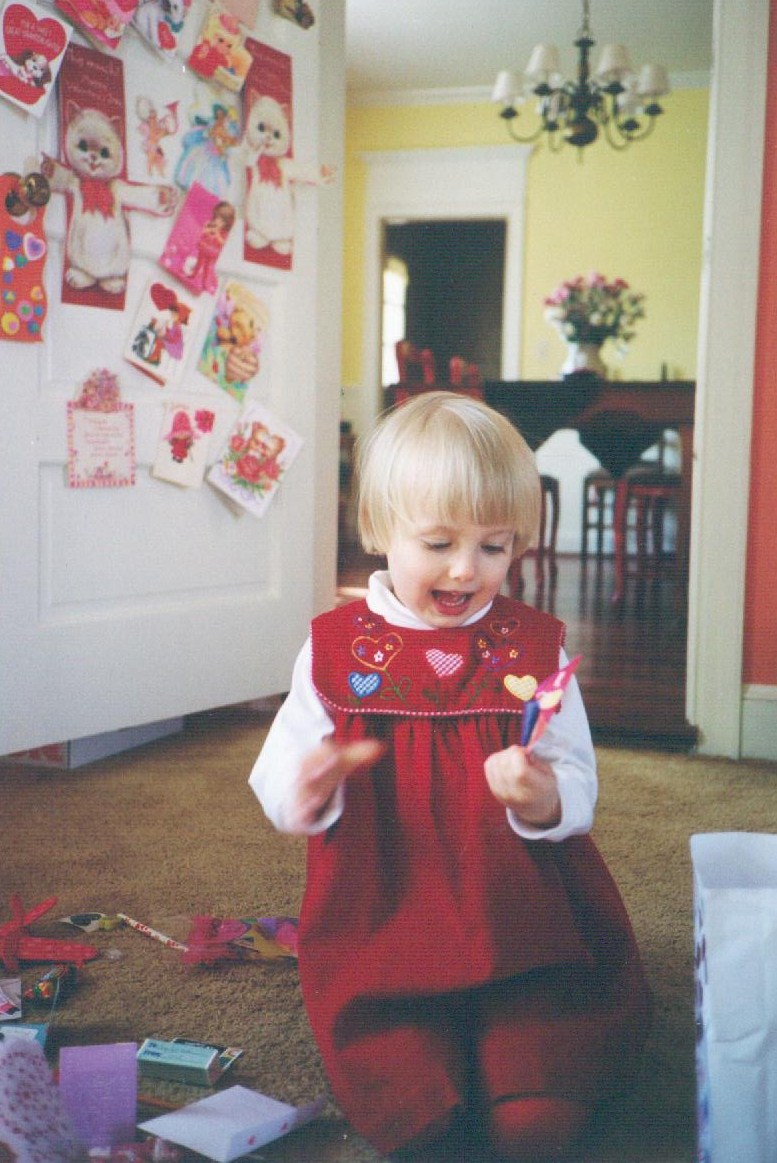
Therefore, my happiest grown-up Valentine experiences occurred when my daughter was in preschool. I would arrive at church to pick her up. Unless there was snow, the kids would be out on the playground. D and her friends would probably be climbing on the little blue playhouse, or see-sawing vigorously on the green plastic alligator. She was adorable in her red fleece Scandinavian-style jacket and matching hat (both made by Mama), and her multi-colored Elephanten suede shoes. When she saw me standing at the fence, she’d smile delightedly, as though I were the most marvelous surprise. She’d yell out Mama! in her sweet, unmistakable voice. She was excited to see me, to tell me about her day, to show me her Valentines and the special holiday craft she had made.

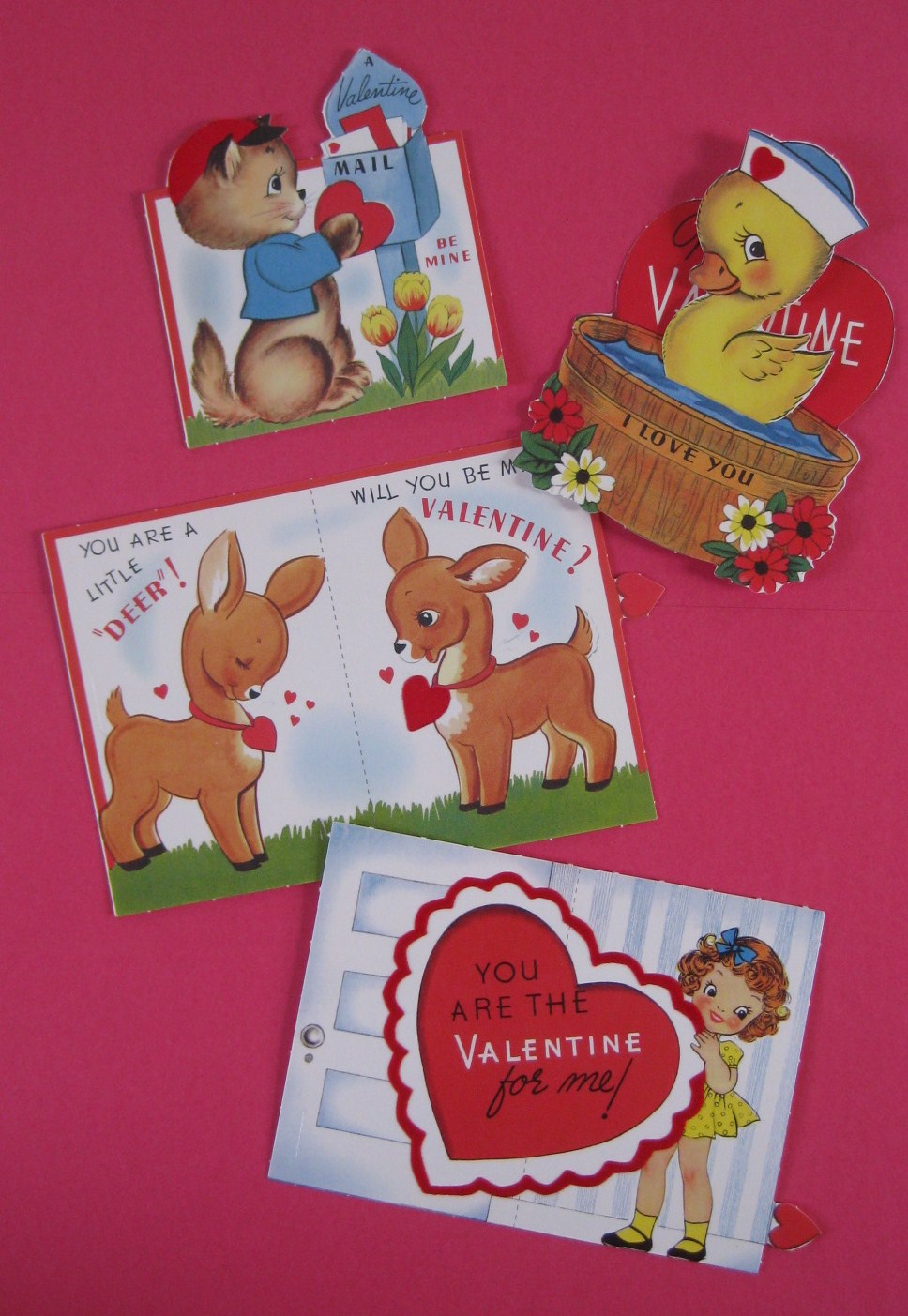
Once home, we would open her cards and spread them out on the playroom floor. Some were accompanied by candy, cookies, or tiny toys.  We’d examine each Valentine, noting who sent each one. Did the child write his or her own name, or did a parent do it? This was a question of great interest to a preschooler. The cards were small and cute, bearing images of such childhood icons as Cassie from Dragon Tales, Scooby-Doo, Clifford, Barbie and Winnie-the-Pooh. There were always a few charming homemade cards.

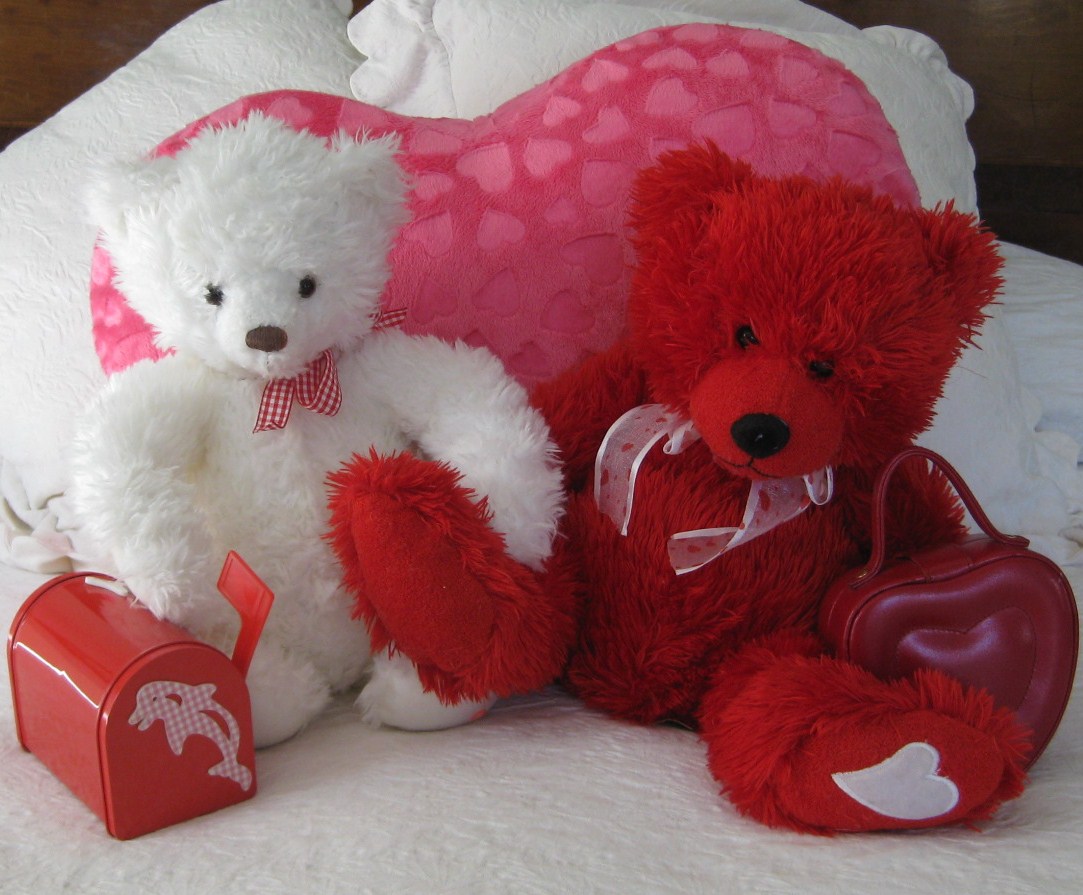
After we had gone through all the cards, I would give D her Valentine gifts from H and me. These usually included a stuffed animal, maybe a fuzzy white bear with red accents, holding a heart-shaped balloon. No such gift was ever less than perfect. My daughter was always elated, always satisfied. She would giggle and hug her bear tight. She’d sleep with it that night. It was so easy. What could be better? These were enchanted, fool-proof Valentine’s Days.

The preschool years may be the optimum time to enjoy the holiday fully. Preschoolers are enthusiastic about the cards, the candy, the gifts, the festive snacks. Nothing is complicated, but this will change before long. The early elementary school years bring difficulties that tarnish the day: competition, rivalries, mismatched puppy-love crushes, disappointment.

If you’re like me, and didn’t go to preschool, maybe you had, or will have, the good fortune to savor the simple pleasures of the day through the eager eyes of a child.

And now that Valentine’s Day 2012 is history, I propose a toast to a cheerfully comfortable second half of February!

0032

Pure Valentine pleasure!

ValBears005

Some of the Valentine gifts that met with my daughter’s complete approval.

The Best Part of Valentine’s Day: Before the Day

ValentinesDay008

One of my favorite childhood memories is sitting at the kitchen table, eating cinnamon red hots and making Valentines. I can see the bright February sunshine warming up the room. Popi would be sleeping nearby on the dining room rug. After a while we’d hear Daddy’s car come up the driveway as he arrived home from work. Before long it would be time for dinner. It’s a vision of complete, homey contentment.

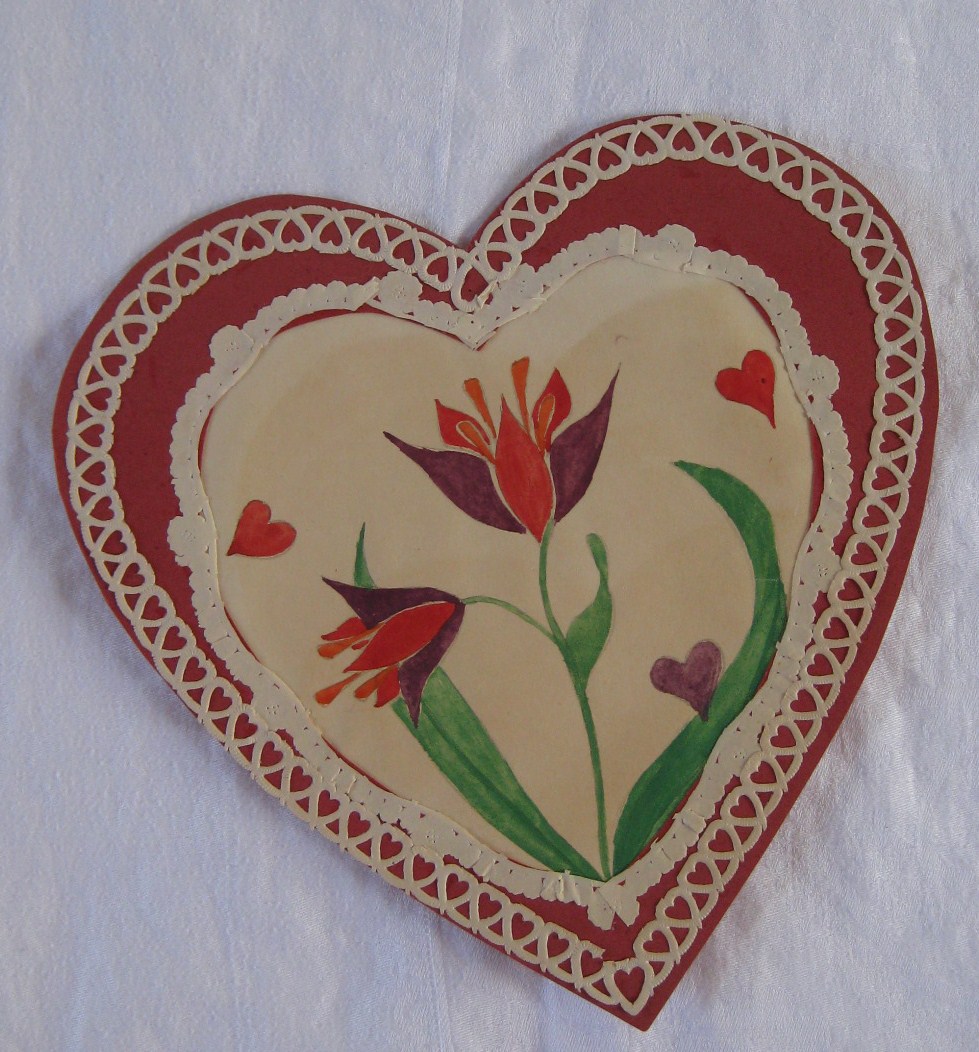
When I was little, my mother and I would make our Valentines together. We’d each make one for Daddy, and she would help me with those I gave out to my classmates. We used all the typical materials: red and pink construction paper, doilies, flowers and hearts that we cut from old greeting cards. As I got older I might use watercolors to paint my own designs. Our supplies were far more limited in those days. There were no stores that stocked a nearly infinite variety of stickers, archival papers, fancy cutters, punches and the like. Martha Stewart was still just a hardworking caterer.

The preparatory time was what I enjoyed most. The lead-up was always better than the day itself. I have few recollections of an actual Valentine’s Day during elementary school. The clearest memory I have is painful. In fifth grade, a boy gave me a heart-shaped box of Valentine candy. Of course, he was not a boy that I “liked,” so the gesture made me feel sad and uncomfortable. I wished I liked him. I knew how he felt; I was familiar with the misery of unrequited love. I liked another boy who didn’t like me. Fortunately, though, I hadn’t given him a special gift that made me feel even worse.

This seemed to set the pattern for my Valentine’s Days throughout middle and high school. A card, flower or candy, if one came, would be from a nice boy I didn’t like. If I ventured out and gave a gift, it was unlikely to be reciprocated. Although I kept my expectations low, the day was either mildly disappointing or fraught with anxiety. Best, then, to enjoy making cards for my parents and a few extras that I could pin on my bulletin board, eat red hots, and appreciate the winter light.

ValentinesDay018

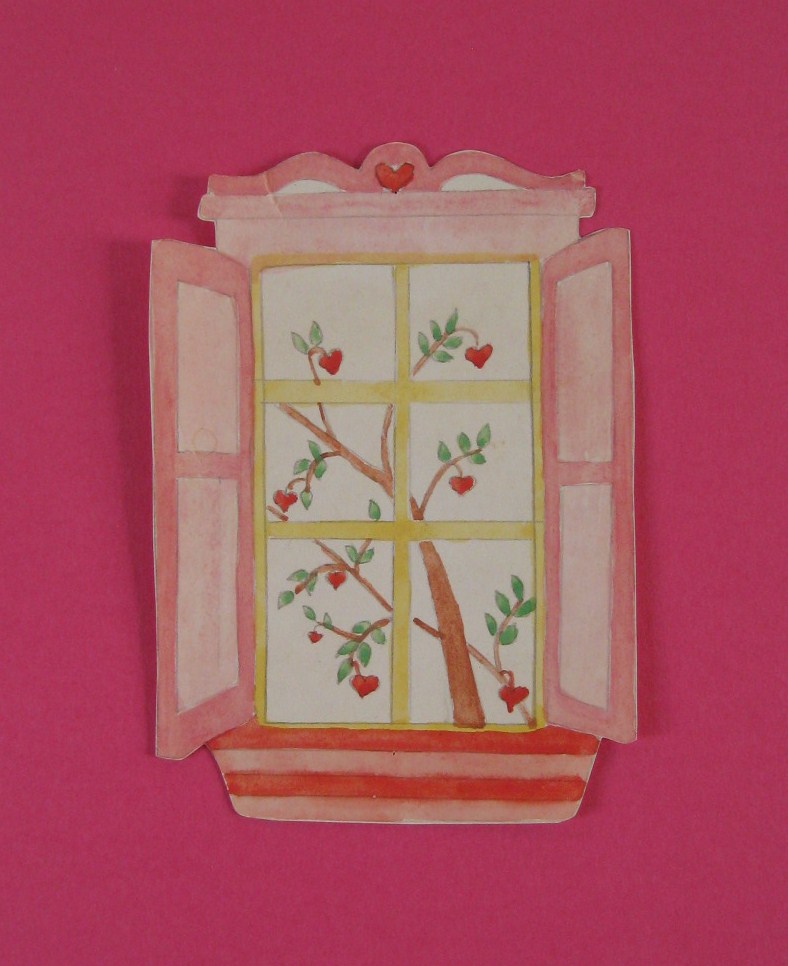
Sitting by the kitchen window prompted me to paint this Valentine tree.  I painted lots of heart-trees during my early teens.
They were easier than trees with other foliage.

ValentinesDay017

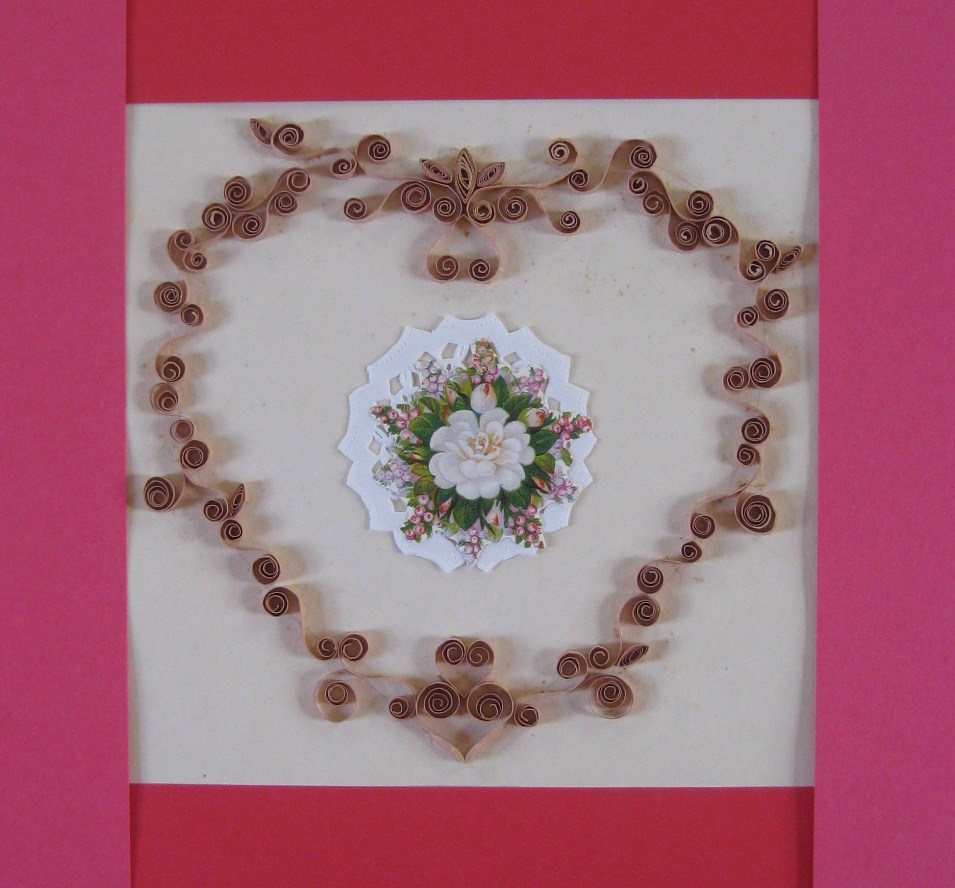
This heart is made from strips of rolled paper, inspired by a library book Mama found on the art of quilling.  Now, there are kits to do this type of thing.

Remembering Doug

Two weeks ago today, my friend Doug passed away. Doug had a zest for life that never flagged, despite the direness of the situation. He was a character. He was great company. He will be sorely missed.

Doug was known for his sharp memory, keen sense of humor, and flair for observing the odd detail, qualities that made him a compelling storyteller. He had copious amounts of material to draw on, including high school days in his native Seattle, where one of his classmates was Jimi Hendrix.

Doug had an exceptional ability to talk to anyone about anything. What’s more, he could make the exchange interesting. Early in his career he worked for the CDC in the effort to combat the spread of syphilis. He coached interviewers on effective methods for talking with syphilis patients about those to whom they may have spread the disease. If anyone could make a conversation about VD less uncomfortable, perhaps even verging on enjoyable, it was Doug. Not simply a skilled talker, Doug was a thoughtful listener and an engaging conversationalist. He delighted in the give and take of a spirited conversation. He would have been in his element with Samuel Johnson in the clubs and coffeehouses of eighteenth-century London, or with the circle of the recently deceased Christopher Hitchens.

Doug found his true calling in his career with the Fulton County Public Defender. His outlook made him uniquely suited to the position. He had a profound respect for all people. He empathized especially with underdogs and with those who had been dealt life’s poor hand. Doug took pleasure in getting to know his clients. He could see their admirable qualities despite the shadows of their terrible decisions and ill-advised deeds.

Doug was a dapper dresser with a discerning eye. For years, he and my father made an outing of the annual sale at Muse’s, the old Atlanta menswear store. Doug recognized style wherever it appeared. I remember his remarking on the classic élan of one of his clients who happened to be a transvestite. He was so impressed with her smartly tailored dress and lovely jewelry that, with a thought to his wife’s upcoming birthday, he asked for shopping references.

For the past two decades, Doug had suffered from syringomyelia, a rare degenerative neuromuscular disease. It began with a disturbing loss of balance first noticed during his neighborhood jogs. Over the years, it progressed at varying rates, leading toward a nearly complete loss of physical mobility and bringing with it a host of related issues. As the disease accelerated, Doug never lost his dignity or his ability to laugh. When he could no longer work, his computer and the Internet served as lifelines to keep him mentally active and in touch with his many friends and acquaintances. He continued to be a force in the legal community, appearing remotely on several occasions as a commentator on Court TV.

During our visits to Atlanta, my daughter and I liked to stop in to see Doug on our walks to the park. He and I discussed recent events and swapped memories of former neighbors. Doug was a great resource for entertainment trivia, and he never forgot names. He knew, for example, that Rashida Jones, who had just begun appearing on The Office, was the daughter of Quincy Jones and Peggy Lipton. Doug and I liked similarly offbeat movies and TV shows. I regret that I never got the chance to ask him if he watched Justified. Its dark, ironic humor would have appealed to him, I think. And in its colorful, flawed characters, he may have seen glimpses of his former clients.

When my daughter was very young, her primary motivation for stopping by Doug’s house (other than to marvel at his futuristic wheelchair) was the chance to see the elusive and fabulously fluffy Elvis the cat. Elvis is shy and typically avoids children. If we stayed long enough, though, he would usually appear from beneath the sofa, or slink in furtively from another room. After staring intently for a while, he sometimes allowed my daughter to pet him. Doug told D it was because she behaved in a calm and grown-up manner that Elvis was willing to trust her. But he didn’t condescend to children, and D came to enjoy talking with him as much as I did. She appreciated his addressing her as a full-fledged person, even when she was a preschooler. Doug asked interesting questions, and he heard her responses. He avoided the painful clichés children must often endure from well-meaning adults.

Doug’s devoted family was his greatest treasure. He never bragged, but he adored sharing amusing anecdotes about his beautiful wife and daughter, his handsome son. He chose Christmas and birthday gifts for his wife with the utmost care. To preserve the surprise, he had her presents sent to my parents’ house, where my mother would wrap them. Sometimes, however, his gifts needed no festive paper. As his illness increasingly confined him, he treated his wife to unusual thrills with an emphasis on motion: a flight in a hot air balloon, a ride in a speeding racecar. Doug was a NASCAR devotee. Anyone who thinks all NASCAR fans are cut from the same cloth never met Doug. His elegant wife is an even less likely fan, but under the influence of his enthusiasm, she became a convert.

After so much of his life spent in hospitals, subjected to a dizzying array of treatments and procedures, Doug took his last breath at home, asleep in his own bed. I like to think that where he is now, the opportunities for fascinating conversation are even more abundant. And he has no need, anymore, for that cool wheelchair.

Middle School Memorabilia, Part I

January_Feb2012020

The fragility of memory has always bothered me. Even as a child, I hated that many experiences were already lost. During Atlanta’s mild February days, my parents would reminisce about the lovely white winters in Kentucky. Don’t you remember the huge snowman we made when you were three? No, I didn’t remember, and it angered me. Just as it angered me that my Georgia friends and I were so snow-deprived that the slightest dusting of powder, or more typically, ice, sent us outside in deliriously futile attempts at snow-related activities. The sled would get mired in leaves and mud, the smallest snowball was elusive. We would return inside wet, cold and grumpy. I had spent my babyhood in a winter wonderland, without a single memory to show for it. The old photo of me in a snowsuit stirs no wayward recollection. It seemed terribly unfair.

Partly in an effort to make up for the transience of memory, and partly because I have a strong thread of OCD, I save the stuff that declares I was there. My parents’ attic was once filled with boxes of papers attesting to my life’s various stages. There are letters, artwork, class papers, books, school information, playbills, calendars with notes of daily activities, and much more. Although I realize the line is fine, I’m not a hoarder. Not every scrap of my past made the cut; much has been thrown away or recycled over the years (sometimes, I admit, reluctantly). My collections are organized, to a degree.

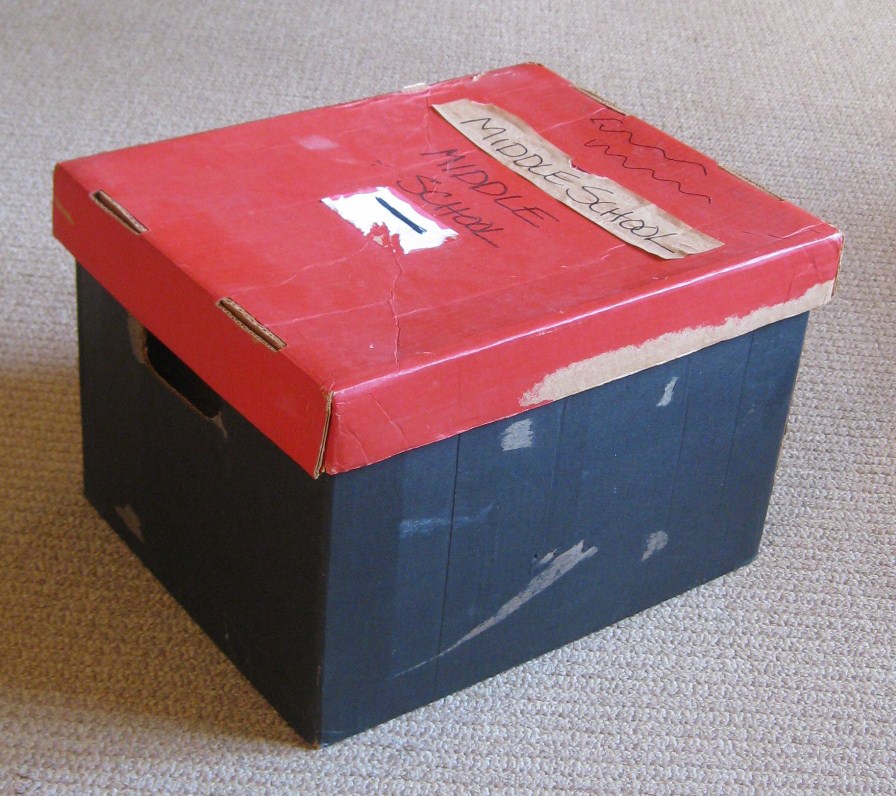
Now that I live in a house with storage space, on every drive up from Atlanta, my parents bring along one or two of those memory-filled boxes. They are determined, little by little, to win back some space in their home, while mine becomes more cluttered. This Christmas, a battered file box labeled Middle School arrived with them. Its timing was perfect. It offered a window onto my early teen years, when I was my daughter’s age. And it proves that my memory is not altogether unreliable.

My seventh grade year coincided with the desegregation of the Atlanta Public Schools. This was accomplished, I am glad to say, without the riotous tumult that occurred in certain cities (not all of them southern—Boston comes to mind). The perceived threat of greater diversity prompted a few families to flee our in-town neighborhood for distant suburbs. But we would stay the course, as would most of my friends. This was no time to pull up roots so recently planted, roots that were just beginning to flourish. We believed in equal rights for all people, and we were in this together.

We were bused to a newly created middle school adjacent to the Georgia Tech campus. Previously a high school, it was a massive, rambling, red brick structure built in 1922. Impressive, yet down-at-the-heels, it would have made a spectacularly atmospheric haunted house. I can see it as the architectural star of American Horror Story: Schoolhouse.  Even now I have the occasional eerie dream that I’m lost in the shadowy recesses of the sub-basement, or peering out from a broken window in a third-floor classroom. If the details are vague, the spirit of the place remains very much alive in my mind.

The life that teemed within the walls was equally unique. The school brought together a diverse young population. We spanned every spectrum. There were kids from the grand old homes of Ansley Park, from Techwood Homes, the country’s first public housing project, and from every Atlanta neighborhood in between. All of the major ethnic groups were represented, as were many of the more obscure ones. For most of us, it was the first time we were outside our own comfortably familiar environment. For all of us, it was an adventure. A nearly unforgettable one, as my memorabilia box confirms.

00116
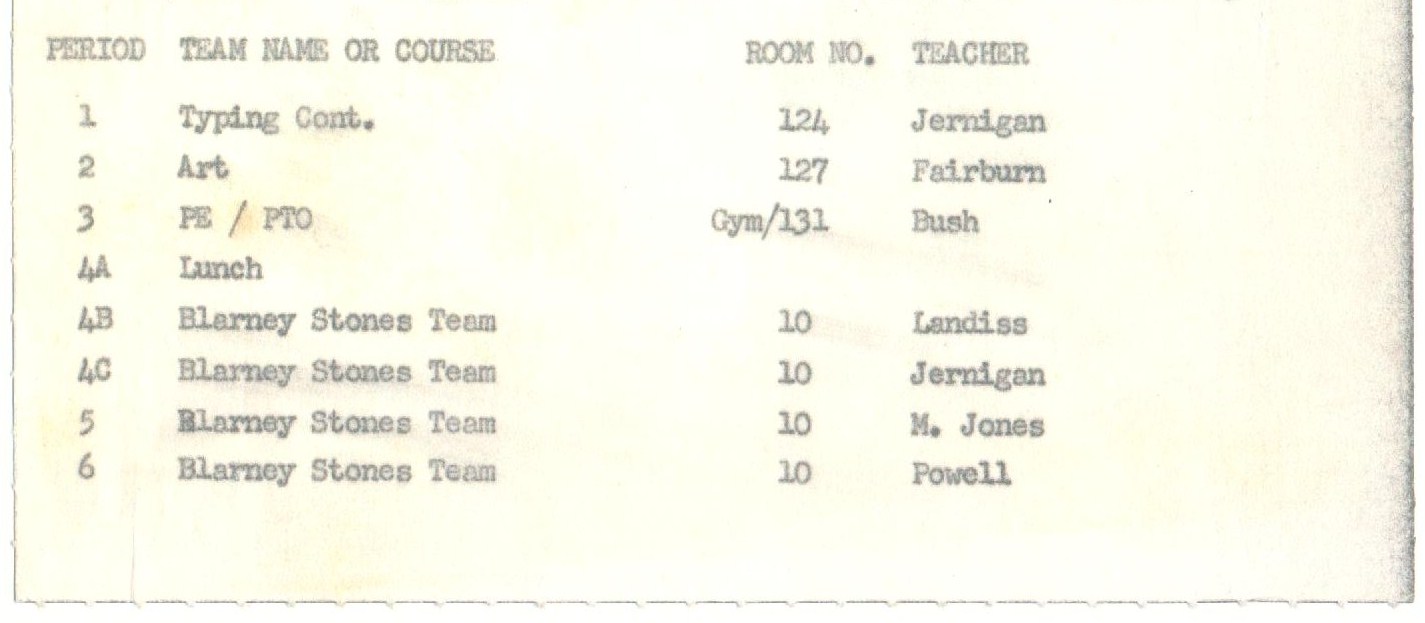
My 7th-grade schedule.


Memory: Persistently Disintegrating and Rebuilding

0531

If time moves at a bewildering pace, memory is equally problematic. Over the years, I have clung to certain recollections, the details etched in my mind with crystalline clarity, only to realize later that they are erroneous.

I was absolutely sure, for example, of the enormity of the airplane on my first overseas flight. As I remember it, in coach there were four seats across on the two side rows and ten in the center. I thought my friend Jackie and I were in that miserable middle section. A frail, elderly couple was marooned in the very center, and I felt terrible for them. Recently, when I found my notes from the trip, I read in my own eighth-grade cursive that there were three seats on each side row and only four in the center.  I had been so sure about that central row of ten. While this may seem an insignificant point, in my mind it had been pivotal. It was hard proof of the plane’s great size and cattle-car conditions.

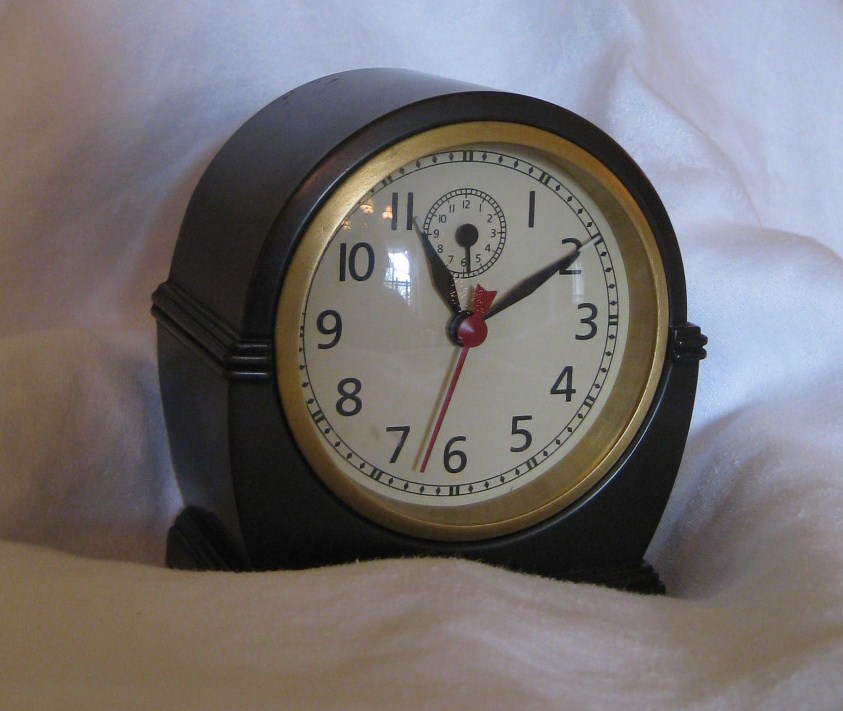
I am not alone in my flawed remembrance. Recently, the iron-clad nature of the eye-witness account, once accorded special precedence in crime solving, has been cast into doubt. A witness may be supremely confident of what or whom he saw, but still he may be dead wrong. Perception is likely to be flawed in various ways, including the angle of vision, circumstances surrounding the viewing of the event, even one’s emotional state at the time. Memory is not set in stone, but prone to suggestion and easily colored by prior and later experience. It’s an ongoing drama being constantly reshot. As time passes, our memories both erode and build up piece by tiny piece, like shifting beach sand in a storm. Salvador Dali’s paintings of melting clocks capture this truth: over time, memory is simultaneously persistent and disintegrating.

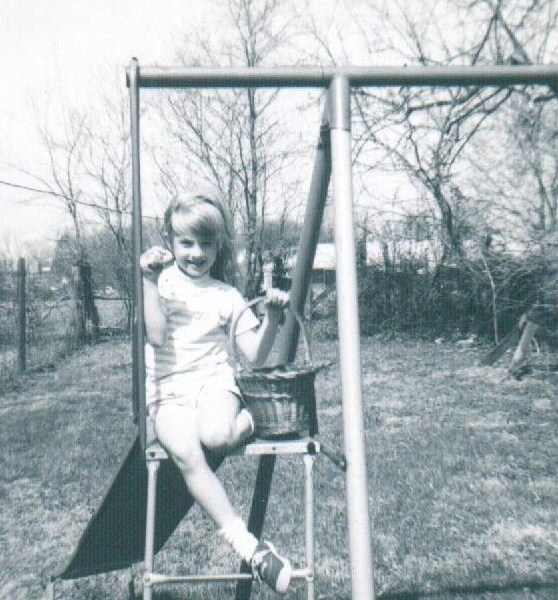
Memories of early childhood are especially likely to be compilations, aggregates of our own experiences and accounts of older friends and relatives. Photos may trick us into believing we remember, when we do not. I think I recall playing on my swing set when it was set up behind the chicken lot at my grandparents’ house. I may remember using the dining room table as a secret fort before Thanksgiving dinner, reaching up surreptitiously to grab a piece of turkey. Guess I’ll never know if these memories are mine or borrowed.

In one of my most vivid memories, I’m about four years old, catching lightning bugs with two friends on a warm Kentucky summer night. The vision is suffused with a heavy Keatsian Ode to a Nightingale atmosphere. There are “verdurous glooms and winding mossy ways” and “fast-fading violets covered up in leaves.” Jarringly, amidst all that tender poetic beauty, there intrudes the sharp and uninvited recollection that the bubble gum I was chewing began to taste much like the pungent scent of the fireflies. Did this really happen? Maybe it did. As Proust has famously observed, the sense of taste can transport us miraculously into the long-ago. He had his tea-dipped madeleine; I had my insect-infused bubble gum. Perhaps if I were to sample lightning bug gum again, I would know for sure.

Memory is perversely selective. The most trivial of objects and events may be fixed indelibly and inexplicably in our minds. Yet unless we have consciously prepared ourselves beforehand, crucial episodes slip away with barely a trace. Faces of loved ones fade and blur. I don’t remember visiting my grandfather in the hospital before he died. I remember the blue dress I wore to his funeral, and I think I recall kissing him as he lay in his coffin. My shock at the firm, marble-like coldness of his face rings true, but who knows?

Memory, like life, is a work in progress, a bubbling stew of the inconsequential and the profound, the ridiculous and the significant. In both memory and life, the miscellaneous threads may tangle. We tend to look for meaning where it doesn’t exist, and fail to recognize it when we stumble upon it. Yet dead ends may lead us on new and better paths. When I’m struck by a memory’s mingled richness, sweetness and bitterness, it’s comforting to remember that it’s the taste of life itself.

002

Seems like I remember playing in my grandfather’s 1951 Dodge with my friend Bob.  It was the old car Grandaddy used for his errands in town and trips to the tobacco barn. My grandmother wouldn’t let him drive her much newer car, a Chrysler with pronounced fins.

00115
The only thing I remember clearly about this day is the Sugar Daddy I was eating. It was very cold, and we were about to go somewhere.

Are you puzzled by the strangeness of some early memories?
Wonder why you recall certain details clearly and forget the main story?  I’d love to hear about it.

Where did the Time Go?

Post-Christmas 019

As I’ve been looking back on those first few months with our baby girl, it hits me: how is it possible that thirteen years have passed in a flash?

With the busyness of the holidays, I hadn’t had much of a chance to think about our daughter’s first teen birthday. Now, in the silence of a nearly empty house, the realization is here to be reckoned with. Where did the time go?

I must be officially old, because time is most definitely whizzing past me. My husband and I have discussed how we seem always to be looking at events in the rearview mirror. Thanksgiving: way back in the distance. Decorating the house for Christmas (such a production): all done. The entire holiday season, with its daunting preparations, a flurry of family arrivals and departures: all done. Our daughter’s birthday: over, bringing with it a new year, a new number to remember to write on checks and correspondence. Taking the decorations down and boxing them up: almost done (a less enjoyable task, so it stretches out longer).

Time speeds by now like the numbers on our oven timer. As in childhood the years move at a slower pace, setting the timer for a short while takes forever, each five-second interval requiring its own finger punch. Suddenly, though, the digits are flying by in a blur. The roast is set to cook for thirteen hours.

The ever-accelerating passage of time is a threadbare topic, a conversational fallback that I remember considering more tiresome than the weather. But now my comments about time’s bewildering flight come pouring forth unbidden and unwanted. My baby has become a teenager, in what seems like the span of a few months. I don’t want a return to the baby phase, but I would like to know how all the stages zipped by with such haste.

Another symptom of my advancing age is that, against my better judgment, I persist in noting the rapidly increasing height of every child I know. My goodness, how you’ve grown! I can’t believe how tall you are! My daughter typically appears more willowy after a night’s sleep. She and her friends are growing like the pokeweed that nearly took over our back porch one summer. I found similar comments particularly tedious when I was young. They’re equally irksome when I say them. But they are true, and the situation begs to be acknowledged.

I take some solace in the fact that I do not ask this question of children and teenagers: Do you have a boyfriend? A girlfriend? At least I don’t ask it yet. As a girl I was bombarded with that exasperating question by distant family members during visits to Kentucky. I guess it was the only remark that came to mind. There was no satisfactory answer. “No” signified that I was unpopular and deserving of their sympathy. “Yes” meant more questions to follow: What’s his name? How old is he?. . .His name is Marcus Aurelius and he’s 35! Oh, who cares? You’ll never meet him!

Time flies, the kids are growing like weeds, and I’m getting older at the same pace. I may blubber on about such truths, but I haven’t surrendered my life entirely to cliché.  At least not for the fleeting nanosecond that is now.

Good Times with our New Baby

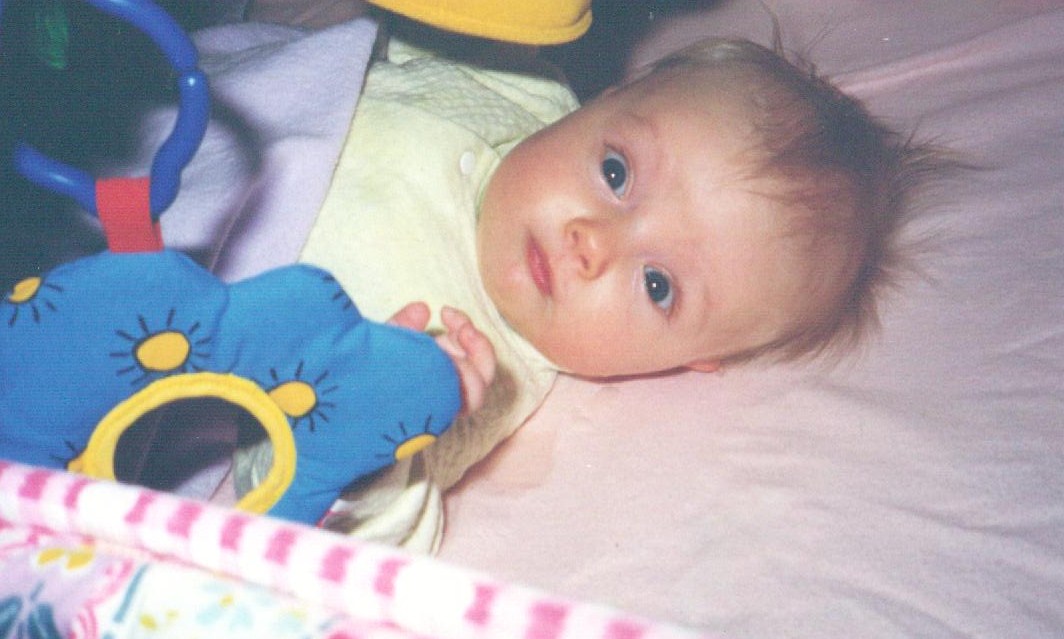
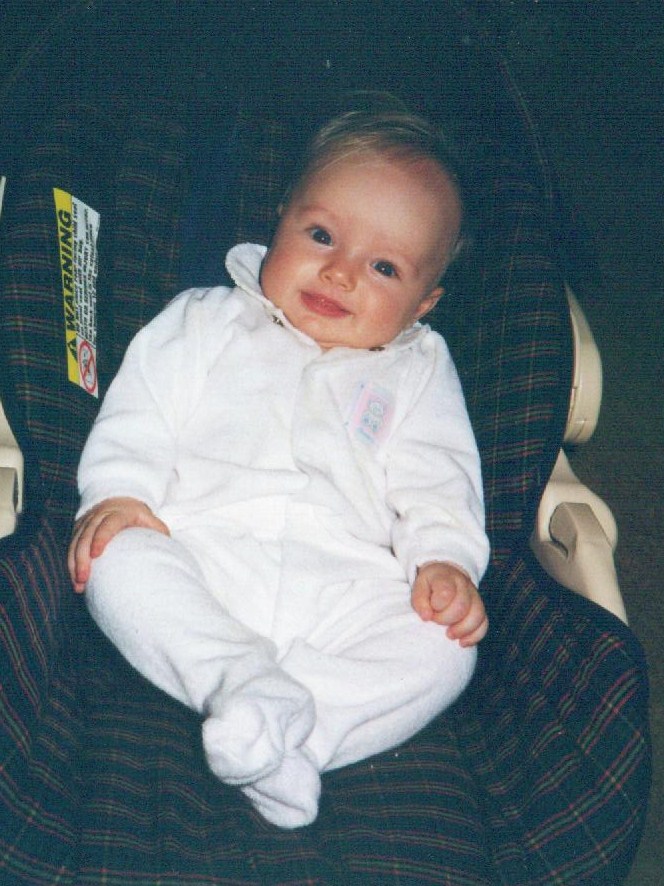
Our daughter, around three months, marvels at her crib toys.  My husband particularly loved the way her hair stood on end, resembling the fluff of a baby chick.

00114

A little farther along in my journal, descriptions of the sweet, endearing ways of our daughter become more frequent. She was still upset and no doubt uncomfortable much of the time. Her new world apparently continued to disappoint, but perhaps she was learning to lower her expectations. Increasingly, she expressed happiness and ease as well as anger and frustration. And in my eyes, she was becoming less other, more human. As she looked up at me and smiled, wrapping all her tiny fingers tightly around one of mine, it was impossible not to feel overcome by motherly love.

I recall, just like it was yesterday, standing at the changing table in our little nursery, entranced by my little girl, three weeks old. She liked to gaze out the window onto the snowy street below, then turn toward me, her eyes open incredibly wide and her lips pursed, as though mimicking fear or surprise for comic effect. Sometimes she’d stare intently at the curtain and appear similarly impressed. Can you believe that curtain? Isn’t it the best thing ever?  When she was so inclined, it didn’t take much to please her, just as it didn’t take much to rouse her fury.

She loved my big fuzzy stuffed bear. One of her first deliberate actions was to stretch out her arms to feel his fur. She did this repeatedly, and when I brought him close she’d bury her face in his fluff. With great satisfaction I recognized a future fellow dog lover.

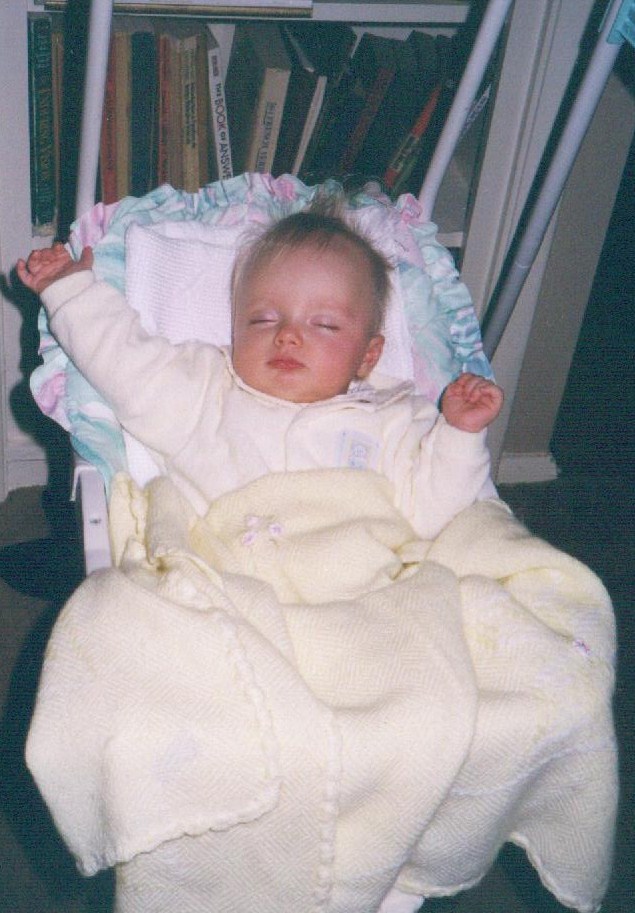
Her smiles and periods of contentment increased. She watched me cheerfully as I cooked or folded laundry. When she was truly excited, her entire face lit up and her small body launched into motion, shoulders shifting, hands reaching, legs kicking, brimming full with the joy of life. And when she settled down, she did so with a luxurious stretch, ending in an exuberant flourish, arms high above her head, fingers outstretched gracefully. It brought to mind a gymnast’s gesture after a spectacular dismount. Maybe this world wasn’t so bad, after all.

Around three months, we started hearing little laughs, mixed in with her ongoing babble of sounds. It wasn’t until five months that we were rewarded with extended, exultant giggling. As she sat in her swing, my husband fanned her vigorously with the Virginia road atlas, an activity they had enjoyed for some time. She clearly loved the feel of the breeze on her face. With each burst of air, she’d breathe in with a delighted gasp, her eyes widening. After a considerable build-up, she erupted in giggles. A magical, enchanted, musical sound, the laughter of an angelic elf. Not surprisingly, she still relishes the feel of the wind on her face. She loves skiing, riding roller coasters and speedboats, and going fast in general.

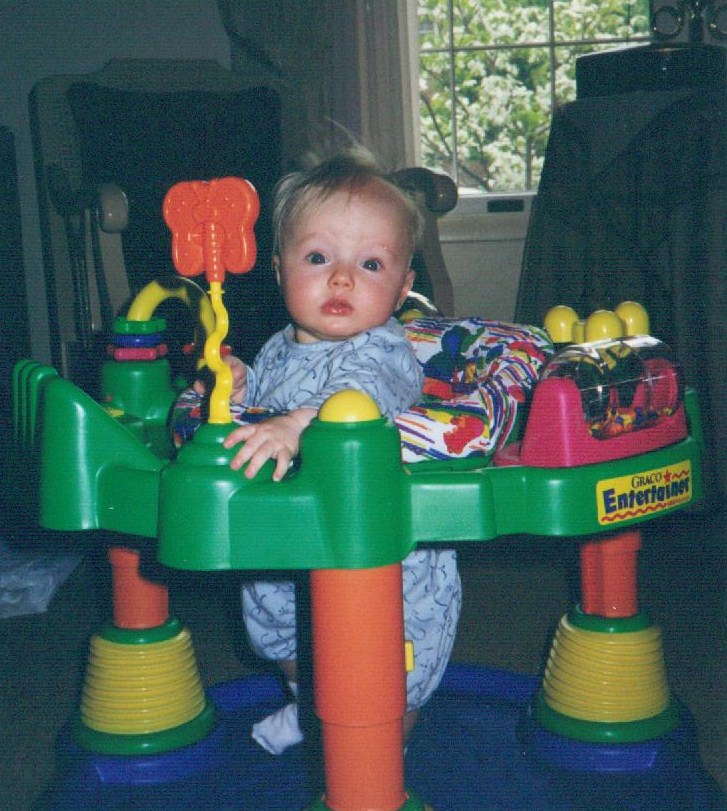
Our daughter began to discover fun and excitement in many sources: her toys, her feet, her toes, and her fingers, which she would often lick very daintily, one by one, as though having just polished off a fried chicken dinner.  At four months, we bought her an “exersaucer” that allowed her to practice putting weight on her legs. She loved jumping in it, spinning around, rattling its various attachments, all the while making singing or talking sounds, usually very loudly.  For a while it was like having a miniature Stanley Kowalksi in the house, bellowing a jibberishy form of Stelllllaaaaa!

Now, as my daughter whistles piercingly while doing her homework, it seems that in some respects things have changed very little.  Inside my tall, elegant teenager, I can still see that baby, a whirling dervish of energy, noisily rocking her exersaucer, awake to all of life’s wondrous potential.

003

A welcome smile.

002

Asleep in her swing.  Thank goodness for that swing!

004

First day in the new exersaucer.