Category Archives: Parenthood

Paris: La Place de la Contrescarpe

Many significant Paris attractions were within easy reach of our small hotel by the Pantheon.  Typically, we’d begin our excursions by heading down rue Soufflot.  One afternoon during our visit twelve years ago, my husband and I took an opposite route.  For us, and perhaps for the typical tourist, it was the road less traveled.  We followed the narrow streets behind the Pantheon, down the hill for several blocks, to emerge onto a lively little square.  The upper stories of the old buildings leaned in all around, as though in intimate discussion.  We had stumbled upon La Place de la Contrescarpe.
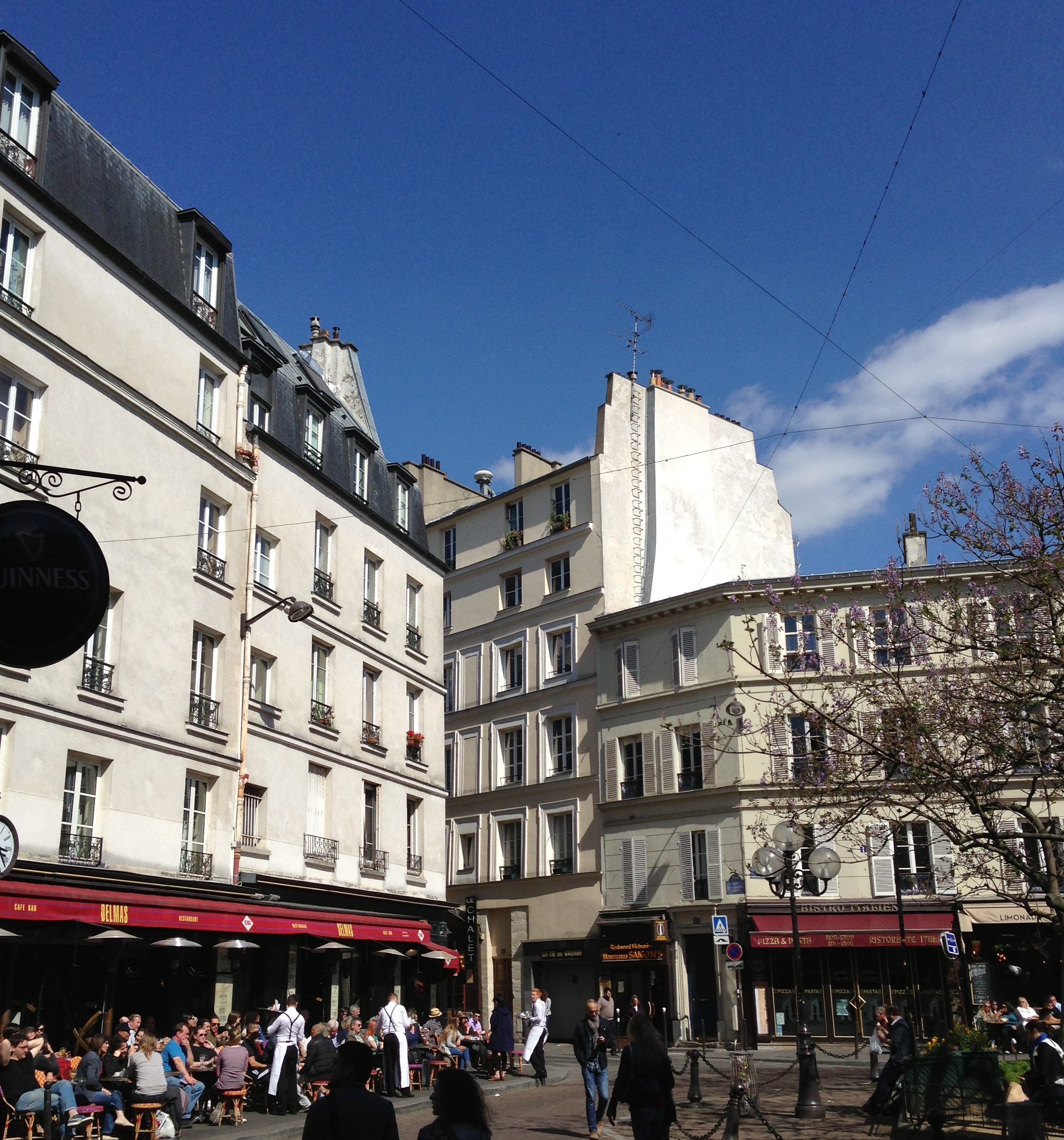
Europe 2014 372
La Place de la Contrescarpe, seen from our entry point on rue de l’Estrapade.

It was a warm day in May, and we quickly settled into an inviting outdoor table at La Contrescarpe, one of several cafés bordering the square.  We sipped our beers and watched locals running errands and socializing.  The school day had recently ended, and the square was abuzz with activity and the musical sounds of French conversation.  Teenagers from nearby lycées headed to the cafés or chatted by the fountain in the leafy center of the square.  Parents and younger children paused for gelato, pastries and baguettes at the many small shops.
Europe2014282
La Contrescarpe.

Because we discovered the square near the end of our trip, we didn’t get a chance to return.  When we discussed plans for this visit, my husband and I agreed that we should go early and often to our favorite little Place.  On our first day back in Paris last month, after leaving our bags at the hotel, we set off down the familiar streets for lunch at the café.

The square was just as we had remembered it, just as authentically French, still relatively untrodden by throngs of international tourists.  Because the weather was sunny but chilly, we took an outside table within reach of an overhead heater.  Thanks to these, April in Paris is more comfortable than ever.  H and I ordered our celebratory “cinquantes,” 50-cl draft beers that we associate with an unhurried afternoon in France.  Our daughter sampled her first Croque Monsieur.  Or did she have the Croque Madame, topped with a fried egg?  One of those, which she heartily enjoyed, along with her Orangina.  The food was tasty, and the service was efficient and polite.  The waiter understood our French without any apparent trouble. What’s more, he continued to address us in French, something we’ve learned to take as a compliment.  It was quite the pleasure to be back.

La Contrescarpe became our local café, our destination for rest and refreshment after hours of sightseeing.  It was a prime spot for viewing Parisian street theatre, which continued unabated.  Several featured players, quirky character actors, as it were, returned again and again.  Occasionally, when they became overly boisterous, they were courteously but firmly shooed away by the café staff.  We enjoyed the feeling of being part of the scene.

Europe20142721
View of La Place de la Contrescarpe from our outdoor café table.

I didn’t realize until after we had returned home that the Contrescarpe area, traditionally a working class district, has a rich historical association with writers.  Rabelais frequented the area’s taverns.  Balzac set much of Le Pere Goriot in the neighborhood.  Victor Hugo’s Jean Valjean haunted its streets in Les Miserables.  James Joyce wrote Ulysees there.  George Orwell lived and worked in the neighborhood.

Its most evocative literary ties, however, may be with Hemingway.  Just steps from the Place, and within sight of our table at La Contrescarpe, is the apartment at 74 rue Cardinal Lemoine, where he and his first wife lived in cheerful poetic poverty.  On the opening page of A Moveable Feast, Hemingway writes how “the cold wind would strip the leaves from the trees in the Place Contrescarpe.” He rented a small garret room for writing around the corner on rue Descartes, in the same building where the poet Verlaine died in 1896.

I had generally avoided reading Hemingway because I wasn’t drawn to tales of bullfighting, fishing, boxing, or war.  But A Moveable Feast, a memoir of his early years as a writer in Paris during the 1920s, had been on my to-read list seemingly forever.  About two years ago, I read it.  Hemingway’s Paris, so vividly and often comically evoked, was the Latin Quarter.  “My” Paris.  I remember appreciating the many references to my favorite spots, to the names of streets I traversed as a student.  Like Hemingway, my friends and I were always on the lookout for cheap places to eat and drink.  We were familiar with his Paris, of great beauty, bare-bones accommodations and inconvenient plumbing.

But the repeated mentions of La Place Contrescarpe, I’m disappointed to say, rang no bell of recognition.  I recall thinking the unusual name sounded vaguely familiar, but I didn’t realize Hemingway’s first Paris home was immediately off that very same square H and I had enjoyed so much.  I had no idea that as we sat at our favorite café table, we were facing the writer’s former “flat at the top of the hill.”

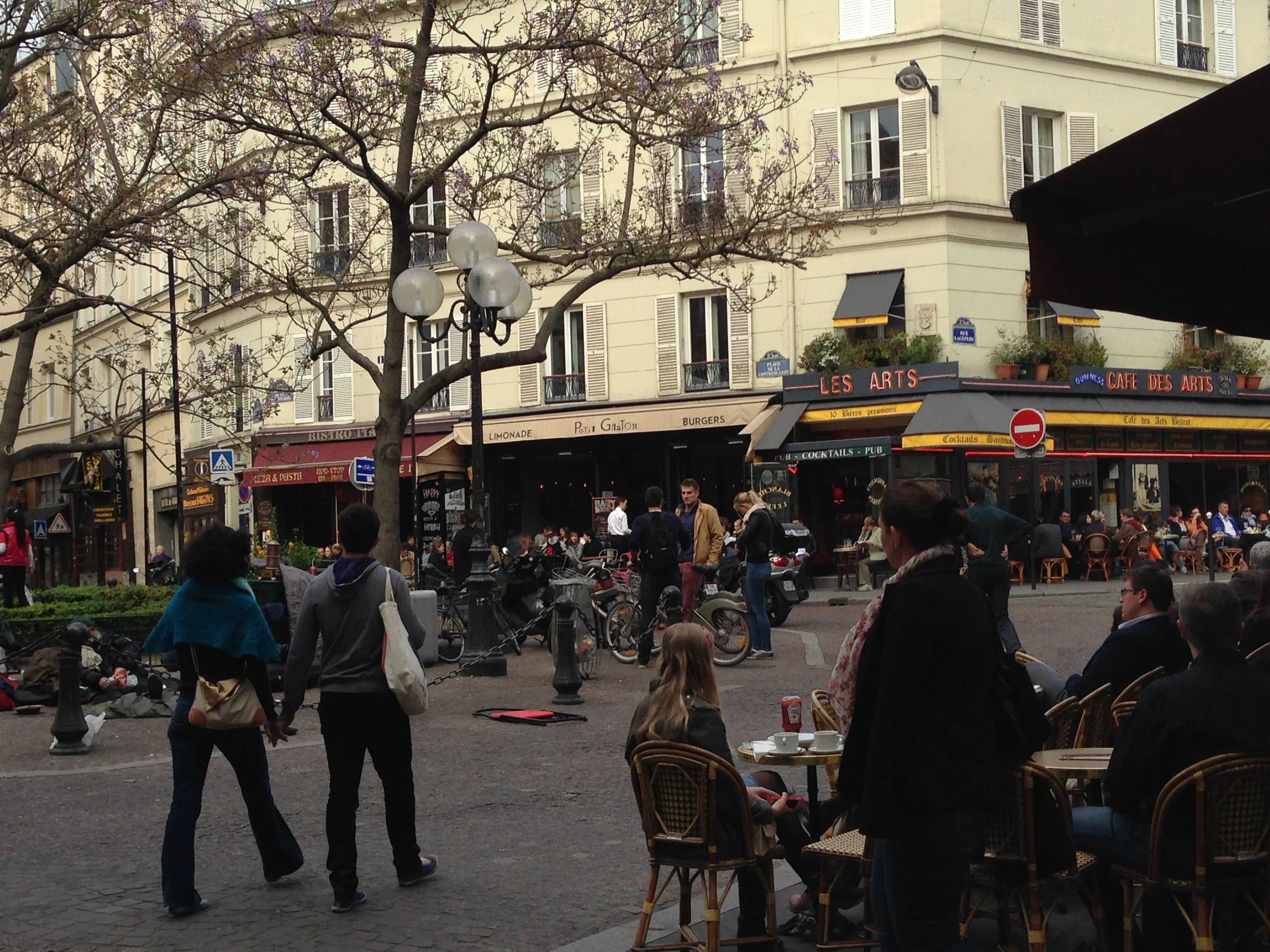
Hemingway avoided the café that adjoins the house he lived in.  Then known as the Café des Amateurs, he described it as “the cesspool of the rue Mouffetard,” “a sad, evilly run café where the drunkards of the quarter crowded together.” While we didn’t sample the current café in that location, preferring our post across the street, it looked perfectly pleasant, neither sad nor evil.  Obviously times change. I can’t help but be relieved, however, that it wasn’t La Contrescarpe or a previous incarnation that received such a bad review.  I like to think there were spring evenings when Hemingway, happy after a successful day of writing, joined his wife Hadley at an outdoor table there on the Place de la Contrescarpe.  Should he have appeared during our visit, “Midnight in Paris” style, my family and I would have been glad to clink glasses with him in a contented “Salut.”  I know he would appreciate the cinquante as much as H and I did.
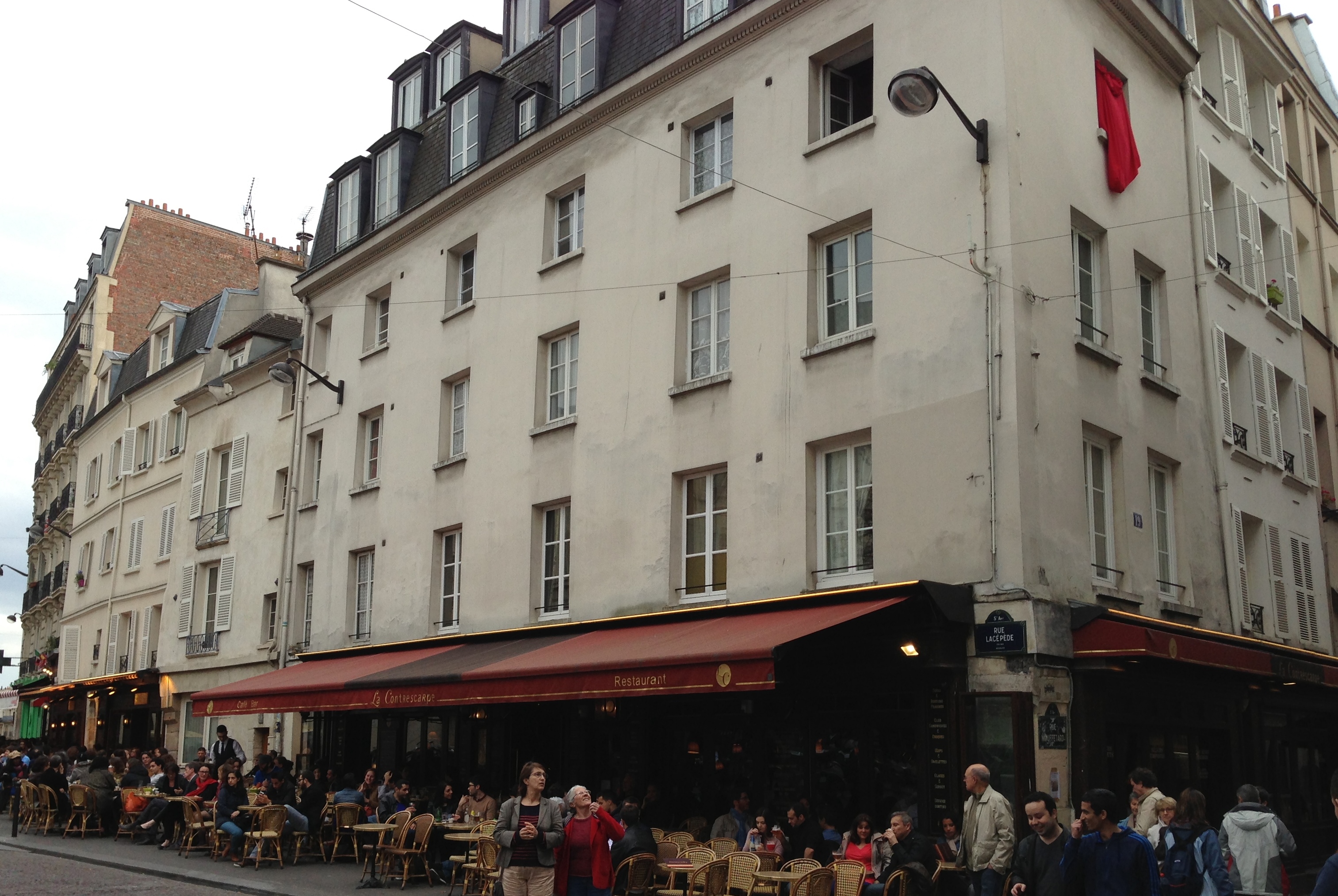
Europe2014276
Our favorite table at La Contrescarpe, with a view toward rue Cardinal Lemoine. The former Café des Amateurs is now the Café des Arts.


Hooray, We’re Off to See Our Dentist!

My recent trip to Atlanta reminded me how fortunate I am to have parents who refrain from using guilt as a coercive tactic. When I went to see them, it wasn’t in response to complaints about my not having been there in ages (although that would have been true–I hadn’t come to Atlanta since the previous summer).  My parents eagerly anticipate seeing me, my husband and daughter, but they don’t want us to feel obligated to visit.  While we’re with them, they want us to feel like we’re on vacation.  They cook our favorite meals and treat us to dinners out.  They encourage us to rest, take it easy, or go out and do something fun.

Even during this visit, Mama would say routinely after a meal, “Now, I’ll clean up.  You go relax.  You have to clean up every night.”  Daddy, recovering from surgery, was determined to carry my suitcase up the back stairs.  It was hard to persuade my parents to let me lift a finger around the house.  Mama finally thought of a few small tasks that involved  a ladder.  Even then, it was all I could do to keep Daddy from pushing past me and scampering up to the top.  Last year, I would have let him, but the dent in his forehead from a fall in the hospital told me I’d better not.

Mama had only one real request, and even then she suggested it with no pressure.  She had asked me earlier if I would mind driving them “out to see John.”  John is their dentist, and they love him.  My parents never dread a dental visit, as many people do.  For them, it’s a social occasion with the added benefit of cleaner, better teeth.  They look forward to seeing John.  They’ve known him since he was sixteen.  He was my first boyfriend.

The summer before our junior year, John appeared at a church youth group function with a friend.  He was charming,  witty and somewhat sophisticated.  All the girls in MYF sat up and took notice.  I expected he’d soon be cuddling in the church van with one of several girls I remember, perhaps inaccurately and unfairly, as serial boyfriend collectors.  Any cute new guy was likely to pair up with one of them.  But this boy liked me.

John seemed to think more than most boys his age, and he had varied interests.  He played basketball but also read books, had a talent for art, and could talk about ideas without sounding dull or pompous. When I said I hated all 70s rock music, he brought over his Queen albums.  I played Night at the Opera and Day at the Races over and over on my cheap stereo, and I still love Queen.  I think I saw my first foreign film, Cousin Cousine, with him.  He was no highbrow; we also saw Kentucky Fried Movie and The Spy Who Loved Me.  We found out Elvis had died when we stopped by Baskin-Robbins after playing tennis at the crumbly old court behind Rock Springs Presbyterian Church.  Even back then, John, like the elf in Rudolf, knew he wanted to be a dentist.

We were a couple for only a few months, but the timing was significant.  Just before I met John, I’d had a few tense dates with a boy who was, to use a classic crossword puzzle word, a cad.  He was dashing and handsome but as shallow as a driveway puddle after a quick summer storm.  Thanks to John, I discovered early on that I didn’t need to waste my time with boys who were clearly not right for me.  And I learned there was no truth to the adage that good guys have to be boring.

Our reasons for breaking up are hazy now.  It probably had something to do with the fact that we were both sixteen and had most of our lives ahead of us.  But we remained friends, and we were still in regular contact when John’s father suddenly got a new job that required the family to relocate to Charleston, West Virginia.  It was February, in the middle of the school year, with less than two weeks left in the quarter.  John moved in with my family so he could finish up schoolwork and take exams.  He settled into the upstairs room off the attic.  Because he attended a different school than I did, Daddy let John borrow the station wagon, while he took the bus to work.  He made John’s lunch every day.  I don’t think he really needed clothes, but Daddy bought him Levi’s at Charlie’s Trading Post, and my mother made him a shirt.  John never lost his sense of humor even in the midst of his melancholy over the impending move.  Mama understood and sympathized, and when John had trouble sleeping, the two of them sat up late together talking. 

00162
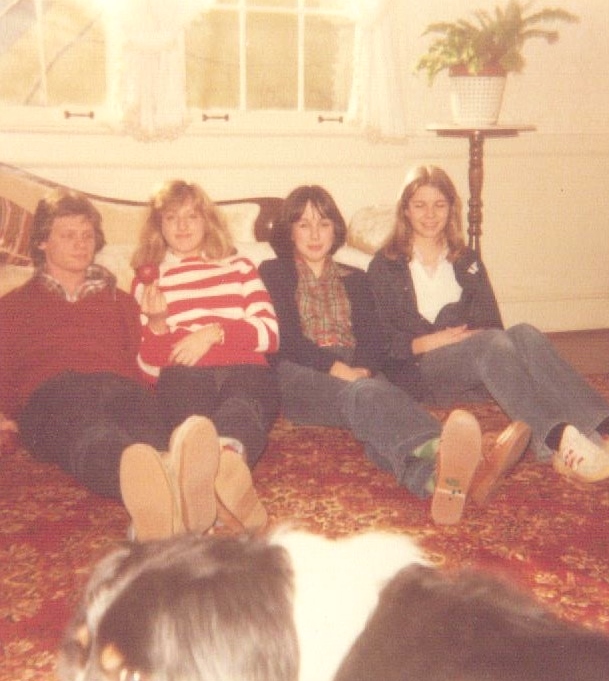
February 1978: John with me, Rebecca and Katie. My dog Popi looms in the foreground.

My parents became John’s patients after the retirement of our long-term family dentist, who was also a good friend. That was years ago, and they have followed John as his practice has moved farther away.  Reaching his office now requires a twenty-five mile drive on I-85, an increasingly dicey adventure for my parents.  On their last visit, they got lost when Daddy took an earlier exit.  This was one of the incidents that prompted my husband to decide we had to set my parents up with a GPS system, as well as the reason Mama asked if I’d mind driving.  Friends have wondered why they don’t find a dentist with a nearby practice.  The answer is simple.  That dentist wouldn’t be John.

00322
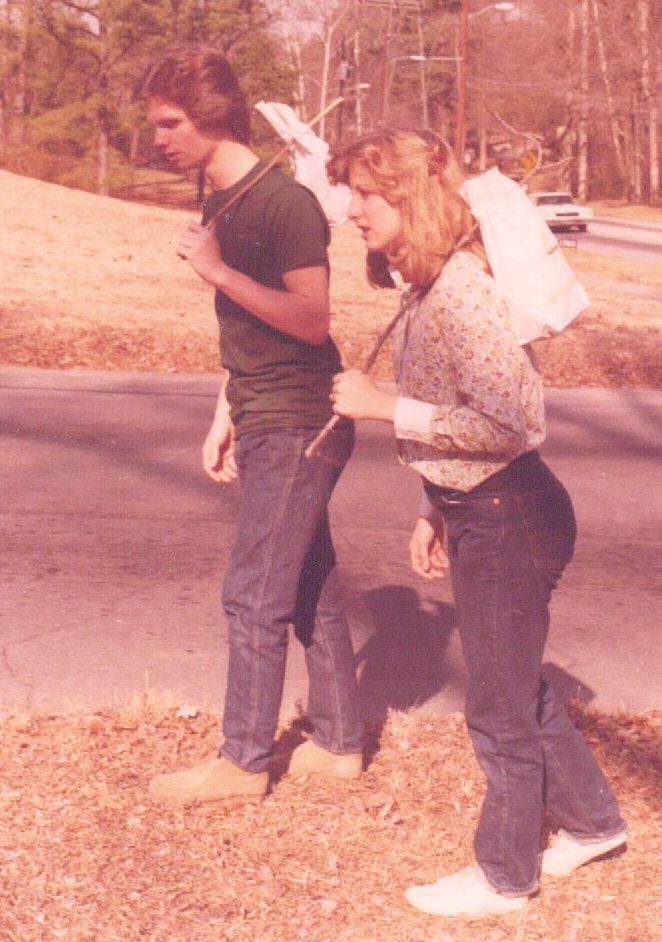
John and I pose as ill-equipped runaways for our photographer friend Katie. With our similarly feathered hair, we were true children of the 70s.

My parents and I survived the drive to John’s office.  I managed to follow the GPS directions despite Daddy’s persistent efforts to get me to take the earlier exit.  Shortly after we arrived, John came out to greet us ebulliently, as if we were long-lost family, even though he was with a patient.  He took the time later to sit down and catch up.  We laughed about the old days when we were teenagers, as well as the current ones as parents of teens.

John’s effervescence, rooted in empathy and sincerity, is contagious.  He’s not one of those hollowly entertaining types that seems like great company until their arrogance becomes apparent.  You realize you’re incidental, needed only as a spectator.  John has real warmth; his joviality is not merely presentation but extends to those around him.  A few minutes with him and your outlook improves.  I agree with my parents.  It’s worth the drive to see John.

0059
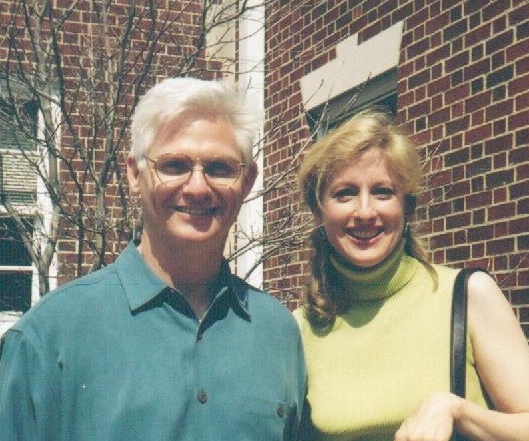
John with his wife and children in 2002. My husband, daughter, my parents and I met up with John and his family at a church celebration that year.
00163
John and me, 2002.


In Atlanta, to be a Daughter


Atlanta 010

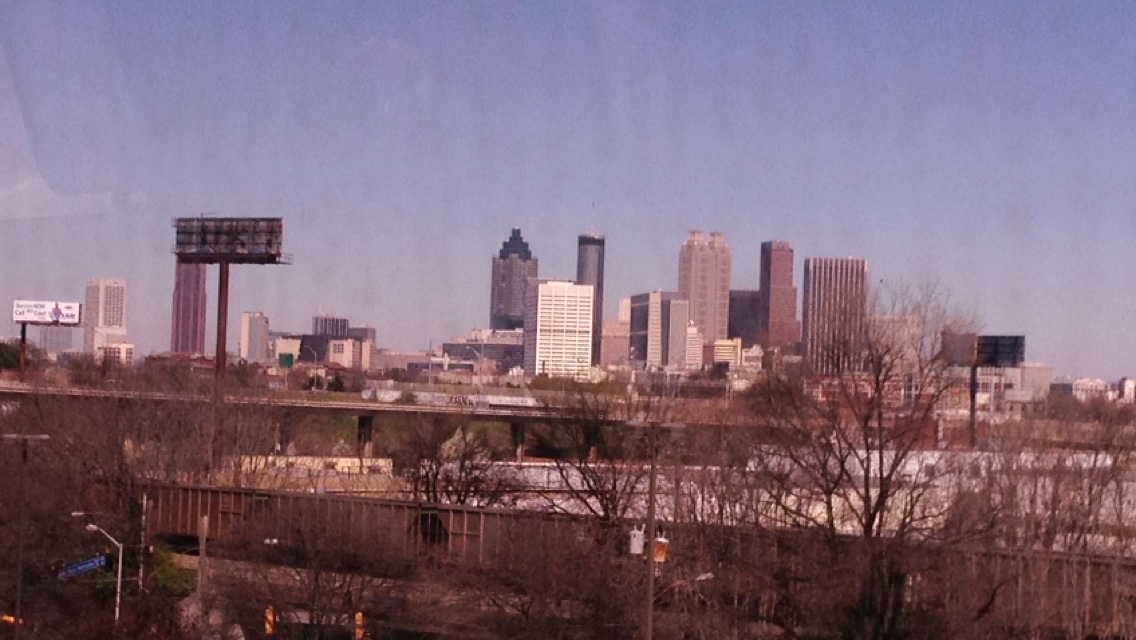
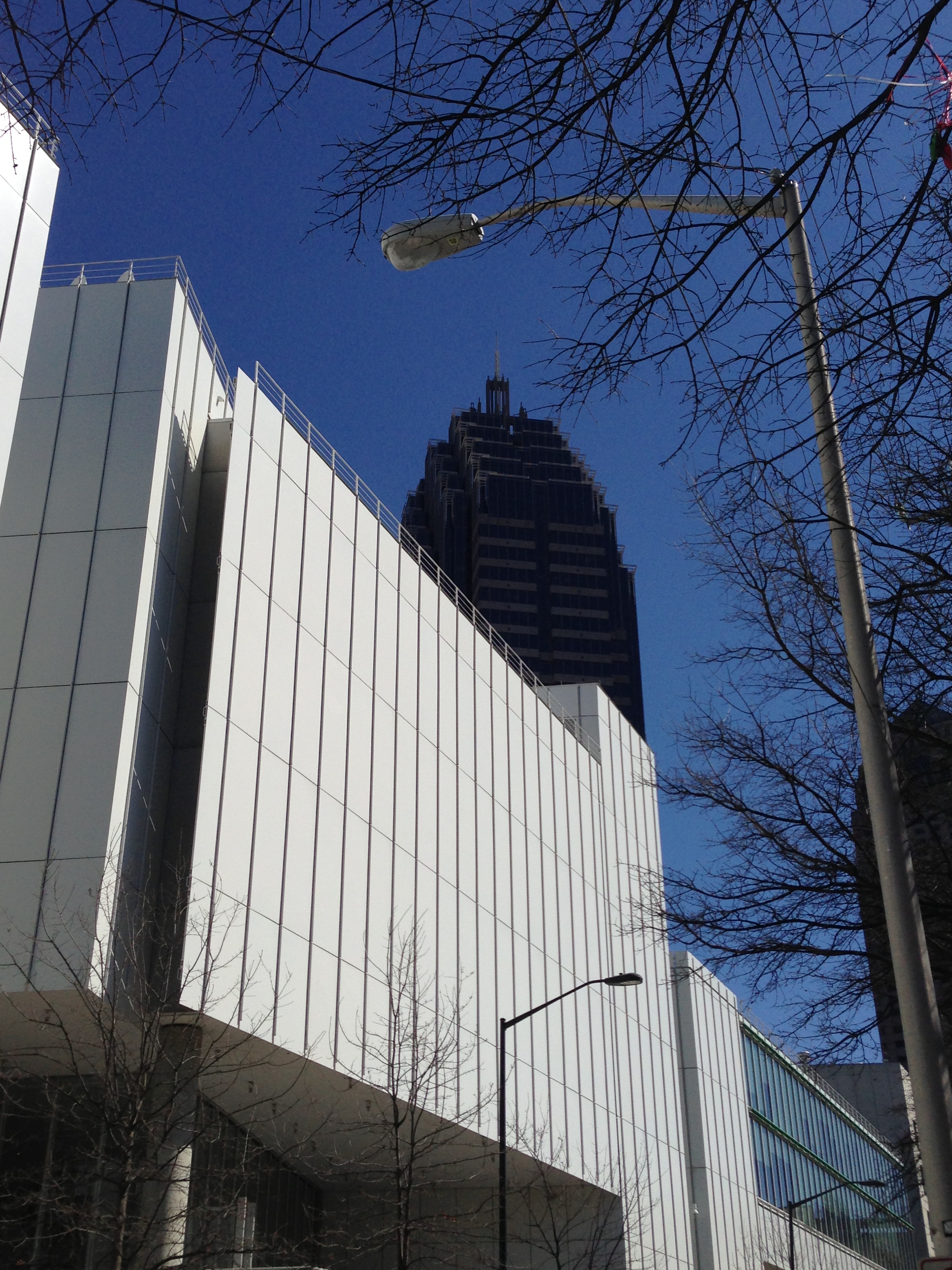
The Atlanta skyline, from the MARTA train, March 21.

Last Thursday I did something I hadn’t done in nine years:  I flew to Atlanta, alone, to visit my parents.  Ever since my daughter was born, she has been my constant travel companion.  Even as a baby she was good company when we flew together. The joy she found in the adventure of airplane travel almost made up for the difficulties of managing the clumsy baby seat and all the various gear she required.  As she got older she became a great help, as she has a natural bent for understanding automatic ticketing machines. With her assistance, I learned to buy and reload a MARTA Breeze card and to make my way through the stations.  It felt strange to be leaving town without her.

The last time I went to Atlanta by myself, Mama had been very sick.  This time, it was Daddy.  In February he underwent a serious surgery that left him in a fragile state.  Typically healthy, hearty and appearing far younger than his years, time was making sudden and unwelcome inroads.  Fortunately, Mama was feeling pretty well.  Her usual chronic health concerns were manageable, and Daddy’s illness spurred her into action.  She had recently had cataract surgery, which improved her vision and gave her confidence to drive again (although only to familiar, nearby places–she wasn’t about to attempt I-85).  It had been over twenty years since she had regularly set foot in a grocery store, because Daddy had done nearly all the shopping and errand-running.

My parents are blessed to have a strong caring network of neighbors and church friends, so my immediate presence hadn’t been an absolute requirement.  I can’t say how grateful I am to the many who step in so graciously to help.  While I offered to fly down at any time, I sensed that Mama preferred I wait until Daddy was feeling better and regaining some of his lost weight. That way he could better enjoy my visit, and I wouldn’t be as alarmed at his appearance.

Atlanta 011

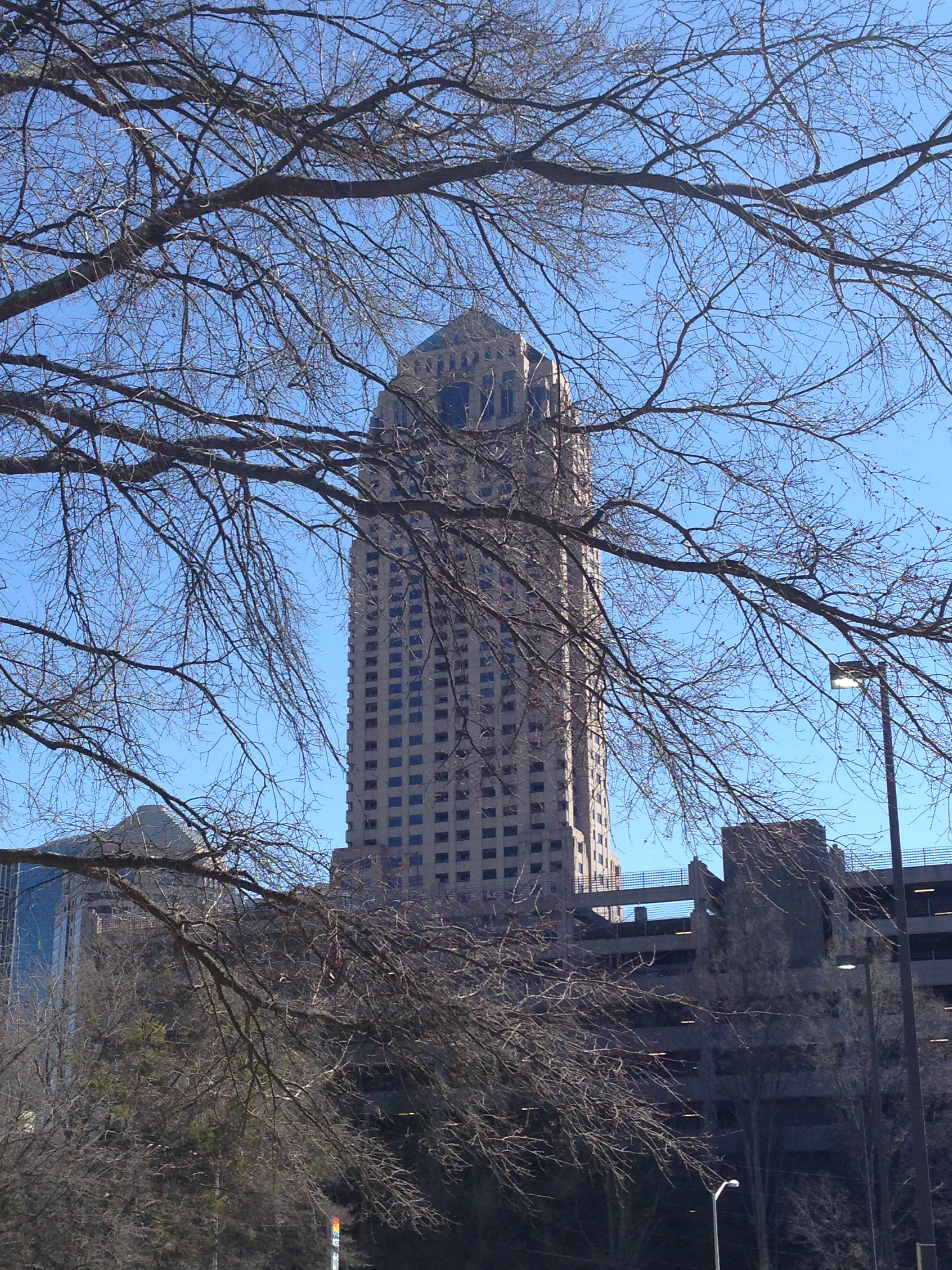
Another view from the train, showing the gold dome of the Capitol between the twin “Sloppy” Floyd Towers.  The cream-colored tower to the left is City Hall, which dates from 1930.

I tend to think my family in Virginia can’t get through the mornings without me.  Who will make sure our daughter is really, truly awake and up in the pre-dawn darkness?  Who’ll make her breakfast and lunch?  Who’ll walk Kiko?  I knew they’d be fine in the evenings.  While there would be no cooking, they’d have no trouble eating.  My husband would bring home Chipotle, Chinese or Thai.  They’re capable of opening cans, jars, and boiling pasta.  Those mornings, though, they’d be rough.  Then it hit me.  So what if the mornings are rough? That just means they’ll appreciate me all the more once I return.

So I went, and I’m glad I did.  I’ll go back, too, with more frequency.  As those of us of a certain age already know or are coming to realize (at least those lucky enough to have our parents still with us), sometimes the duties and rewards of daughterhood take priority over those of motherhood.

Atlanta 013

The back of the High Museum of Art, much expanded since I worked there in the 80s.

Atlanta 016

    The High Museum with the Promenade building in the background.

Atlanta 014

The Four Seasons Hotel, as seen from the Arts Center Station.

Atlanta 017

I was very glad not to see any snow.  While the weather was cooler than I had hoped, it was sunny, and there were real signs of spring, such as this dandelion in the mulch.  There are no dandelions yet in northern Virginia.

Snow Day # 10


Snow017

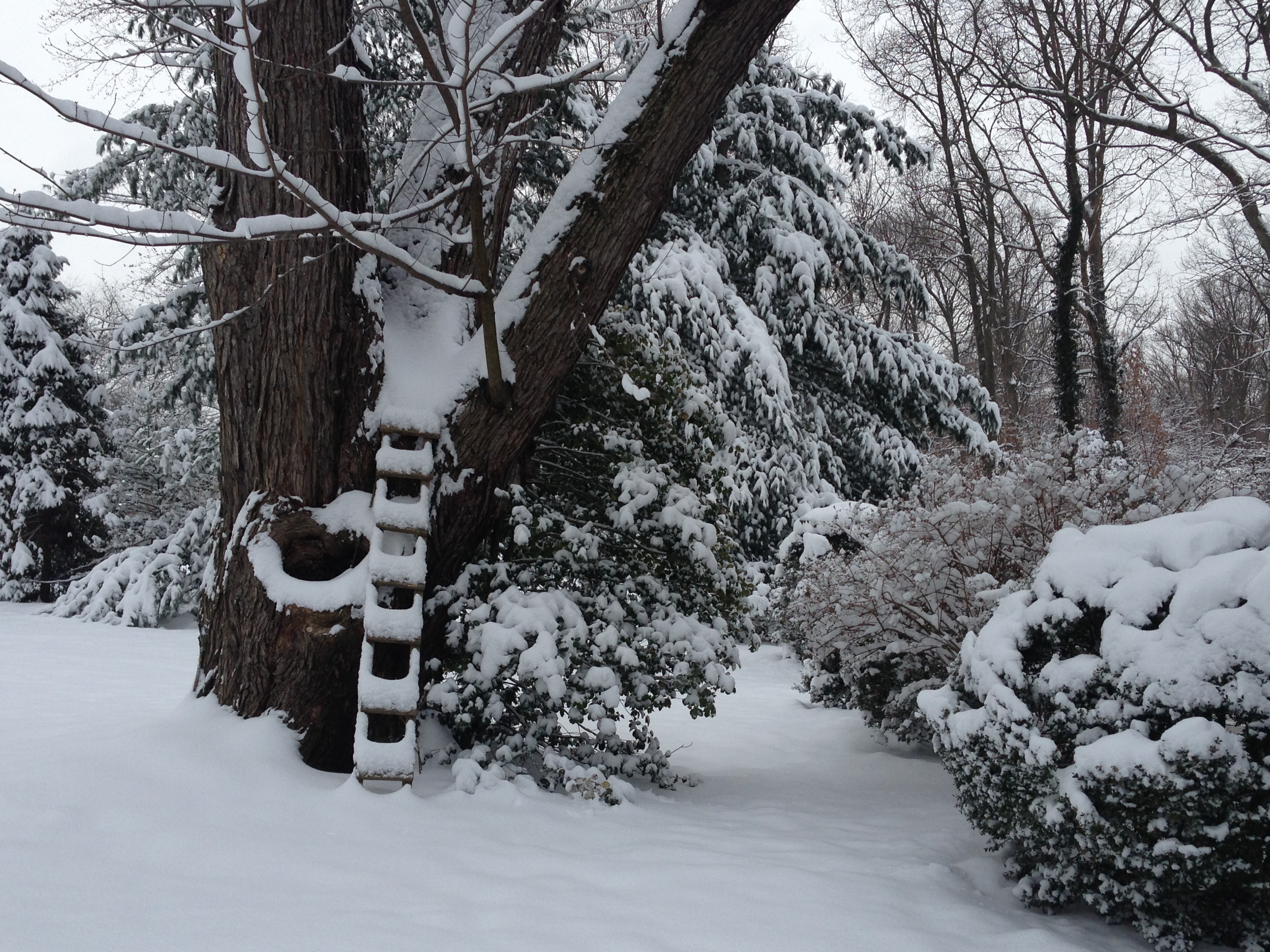
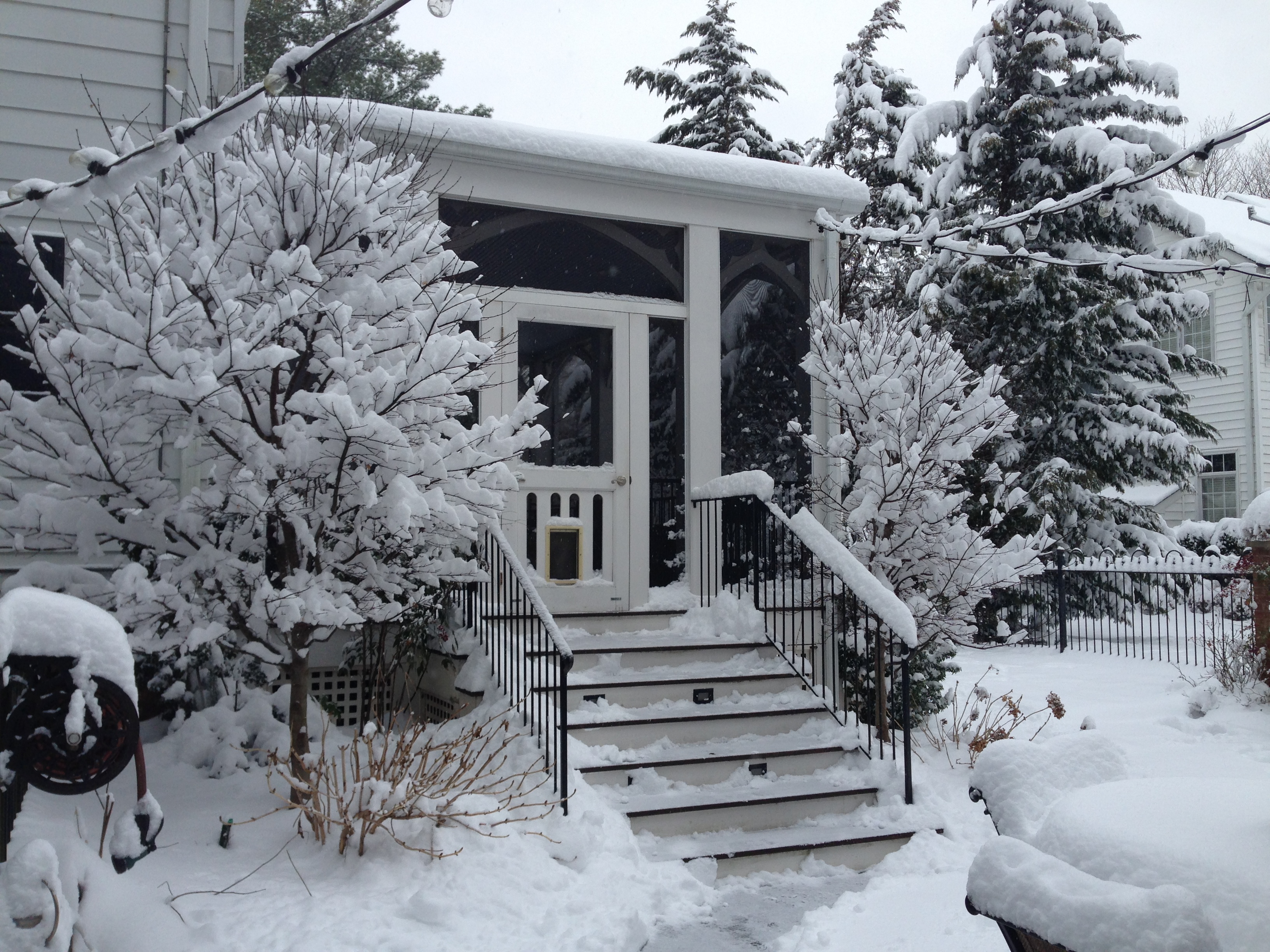
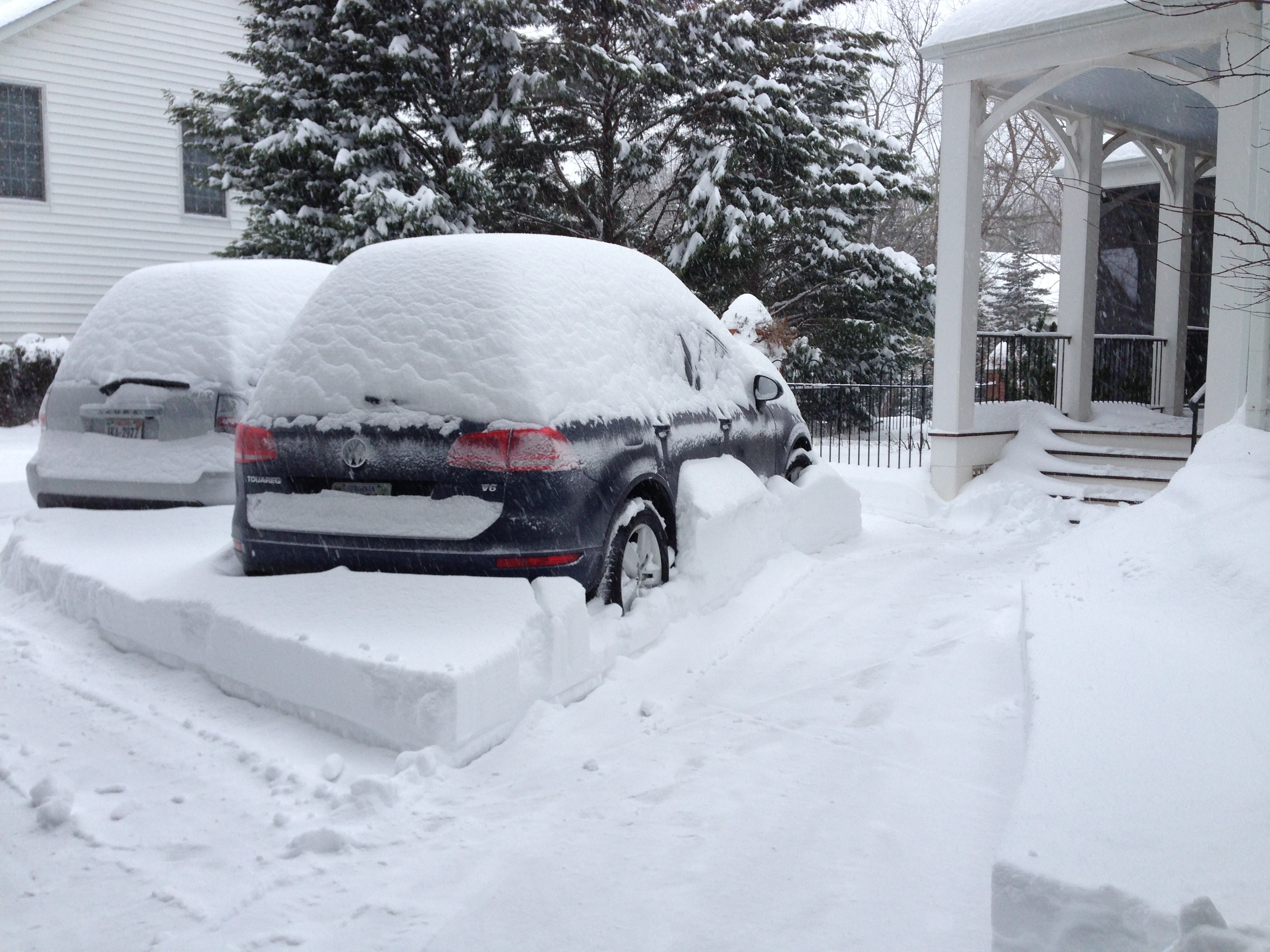
Just as predicted, more snow.  And yes, schools are closed again.  This is a gorgeous, fluffy snow, the kind that appears to coat tree branches with cotton puffs.  While I got my fill of the white stuff several snow days ago, this one occurs at a welcome time.  My daughter returned yesterday morning from her annual drama trip to New York City.  It’s a twenty-four hour excursion, from 4 AM Saturday to 4 AM Sunday.  They saw the musical Pippin, did an improv workshop, toured the theatre district and went to the Top of the Rock. D slept until early afternoon but was still exhausted.  Today is a much-needed catch-up day, a time to ease back, slowly, into her regular schedule.  A 5:30 wake-up in our house is never pretty, but it would have been frightfully ugly this morning.  Thank you, St. Patrick’s Day snow!

On a sadder note, the kids may be in school until mid-July.

Snow0371

snow2004

My Favorite View: At Home, with Moonlight on the Snow

Briefly, we were almost completely without snow. For several days, our lawn had been visible (our messy, muddy, stick-strewn lawn). Heavy fluffy flakes began falling in earnest this morning, and now the neighborhood is blanketed in white again. Should there come a time when the snow melts for real, there is one aspect of it that I’ll miss. That’s the vision of moonlight on the snow.

My all-time favorite view is the one from our upstairs windows onto the snow-covered front lawn on a moonlit night. February’s full moon, according to my Farmer’s Almanac desk calendar, is known as the Snow Moon. Here in Virginia it’s certainly lived up to the name. During our recent snowy spell, many nights were clear, the sky black, the stars intense, and the moon big and bright. So bright that it lit up the snow with a gasp-inducing glittery incandescence. Against the glowing white snow, the shadows of our maple trees were dramatically dark blue. This magical view always takes me back, back to the first January we spent in our house, when our daughter was a year old. That winter I often gazed out at that view, brand-new to me, rocking, nursing, cuddling my baby girl. It felt good to be in a place I could call home.

The memory of that time is perhaps particularly vivid because, for so many years, I had postponed settling down. By my own choice, I was a latecomer to marriage, motherhood, and a fixed address. When I arrived as an eighteen-year-old at UGA, I discovered how much I enjoyed campus student life. Thanks to a taste of the working world following college, I soon realized that graduate school offered the chance to return to a life free from many cares of traditional adulthood. I managed to be a grad student for eight years. That sounds like an incredibly long time, I realize, but there were many in my field of art history who lingered far longer. I relished that busy peripatetic life, happily unsure of where I’d be the next year. I moved at least ten times during grad school, including two house-sitting stints and a year-long residence in London for dissertation research. Traveling as a student was cheap and easy. I had acquaintances scattered across continents and no strings to tie me down. I made wonderful friends, met a great many unforgettable characters, and had exciting adventures.

But even I couldn’t sustain such a rootless lifestyle forever. By the time I met H, I was feeling the need for a change. Yet because he was seven years younger, I assumed our timelines would always be hopelessly out of sync. Wouldn’t he need another decade or so to figure things out?

Fortunately he required only half that long. Five years later we began our married life together in a tiny Butler Tract apartment in Princeton. It took us only two more moves before we landed in our old Virginia farmhouse. It seemed to wrap its arms around us and say, You’re home. You’re a family. Stay a while.

We have, and we will. On every snowy, moonlit night, before I go to sleep, I look out the window and give thanks that I’m here in this house with my husband, daughter and dog. My only regret is that my parents aren’t nearby. All else considered, I’m right where I want to be. Right where I hope to be tomorrow and for years to come. After so many years of running, it’s good to rest and be home.

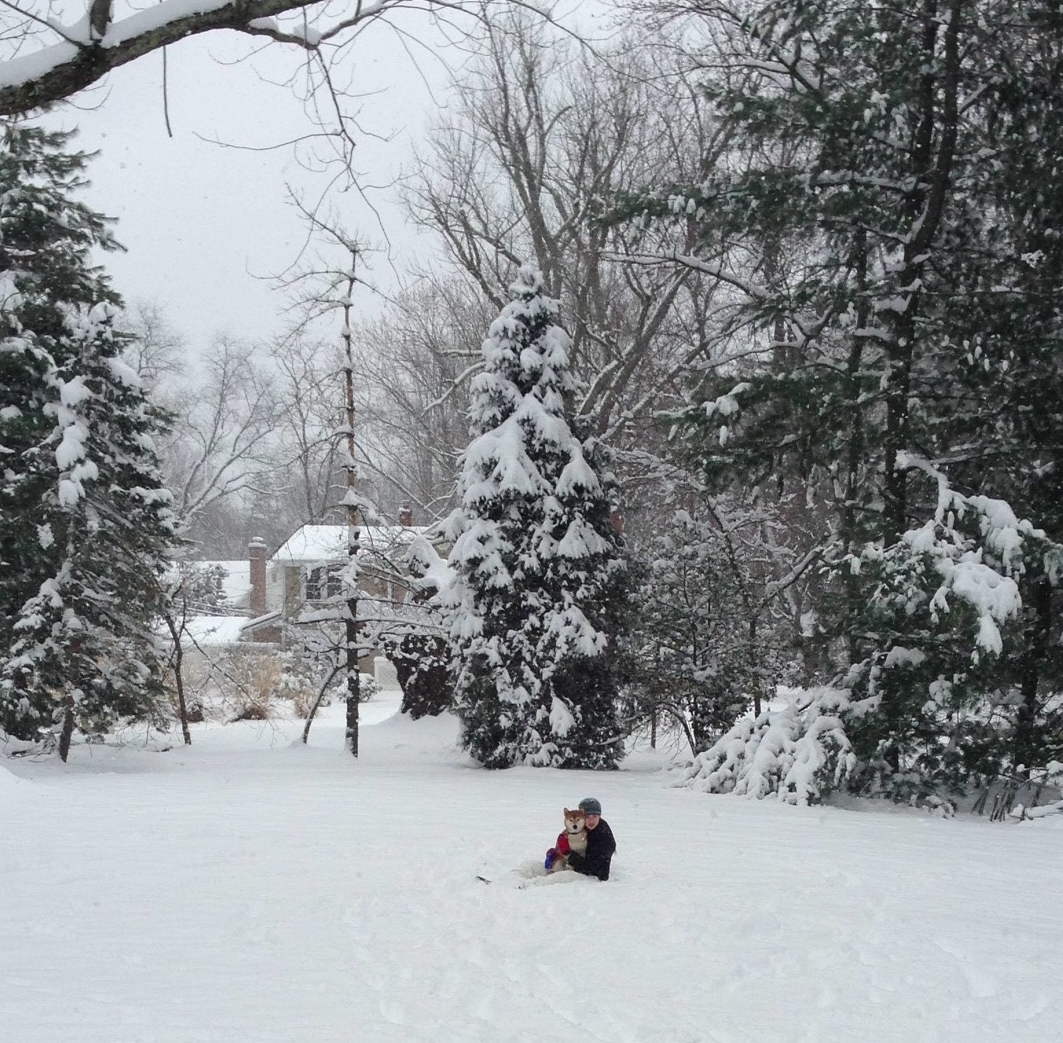
My favorite moonlit view is unphotographable. But this recent early morning scene of Kiko on the lookout gives some sense of the blue shadows on the snow.

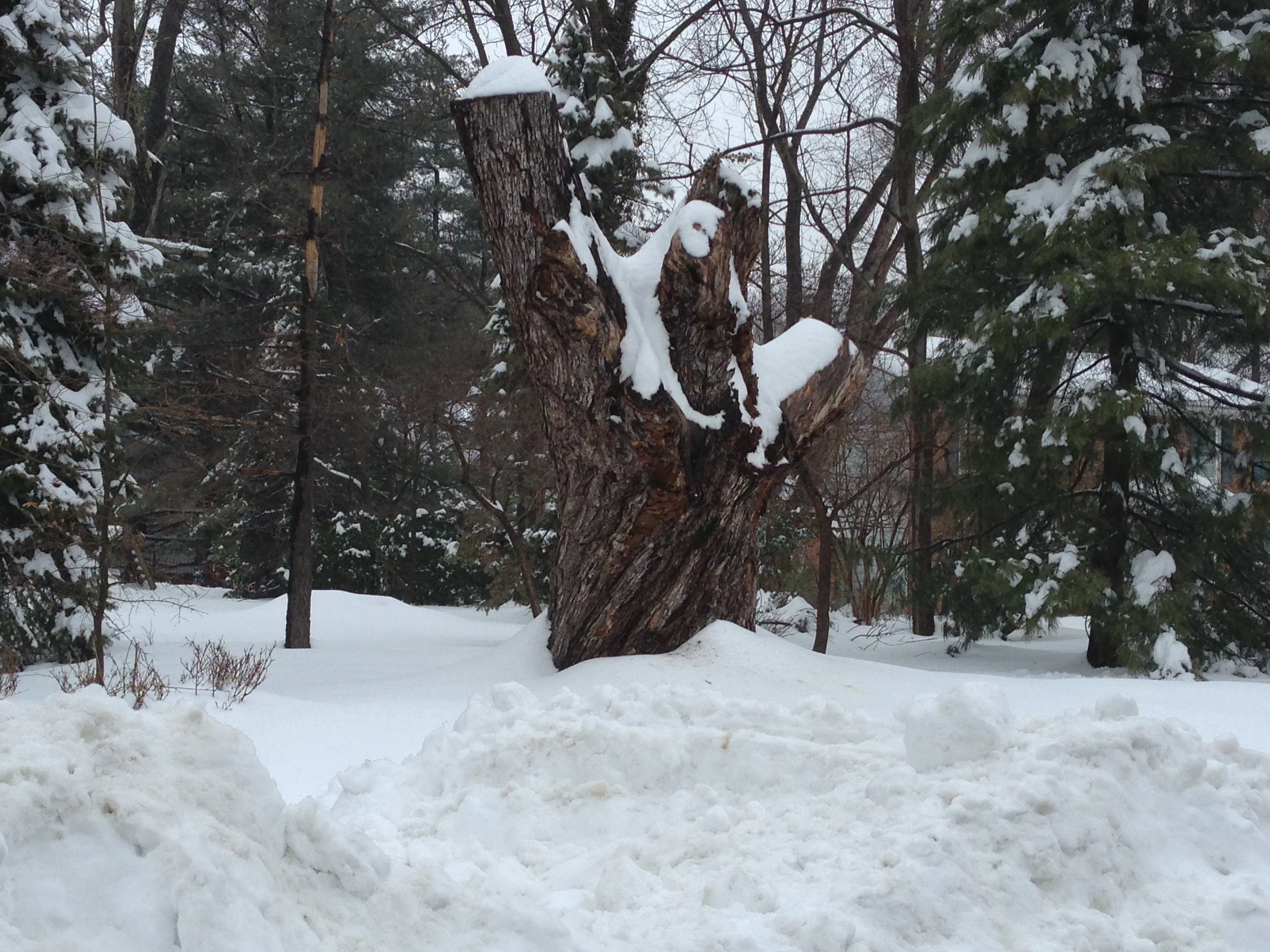
H and D in front of our house, soon after our offer was accepted in December 1999. That was back when the maple stump was still a full tree.

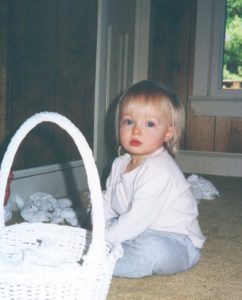
Our daughter in the spring of 2000. Back when she enjoyed playing with a basket of crumpled paper. And when her eyes were still blue. They’ve since changed to green.

Real Snow. Enough Now.

Jan_Feb20142456

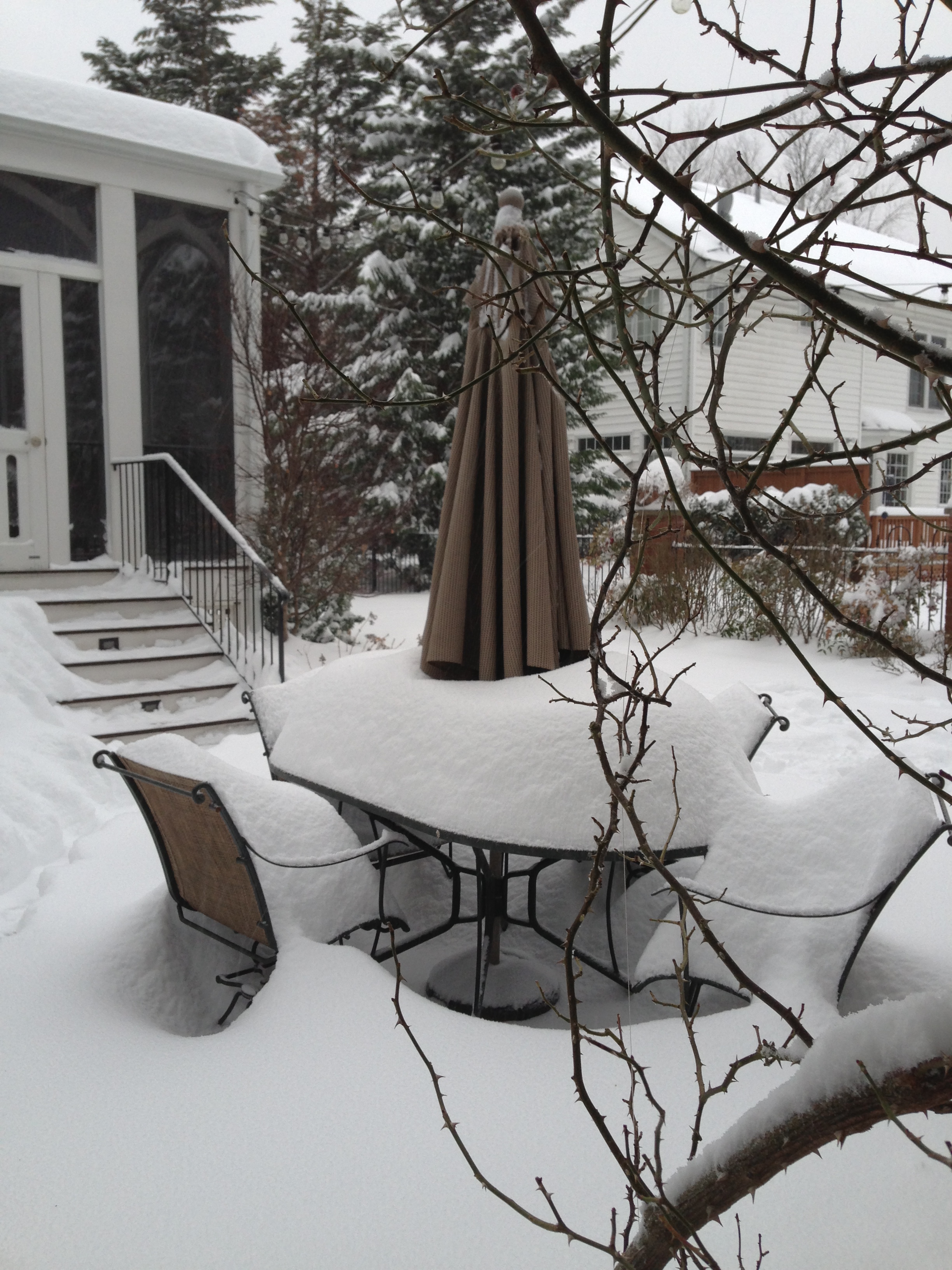
Today we have a snow day with real snow, and lots of it.  The schools here in northern Virginia used up all their snow days back in January.  Yet there’s been very little actual snow.  Certainly we’ve had our fill of frigid temperatures and diverse forms of icy accumulation.  But as for the pretty fluffy white stuff, not so much.

Until this morning, when we woke up to over a foot of the real thing.  It’s more snow than we’ve seen here in four years, when we were treated to back-to-back blizzards, pre- and post-Christmas, that paralyzed the area.  Last night’s snow was enough to shut down all runways at Reagan National and Dulles Airports, enough for the government to call a State of Emergency, enough even for my husband’s office to close.  This gave him the chance, at long last, to fire up his essentially unused snow blower, the one he bought in 2010, just after those last big storms.

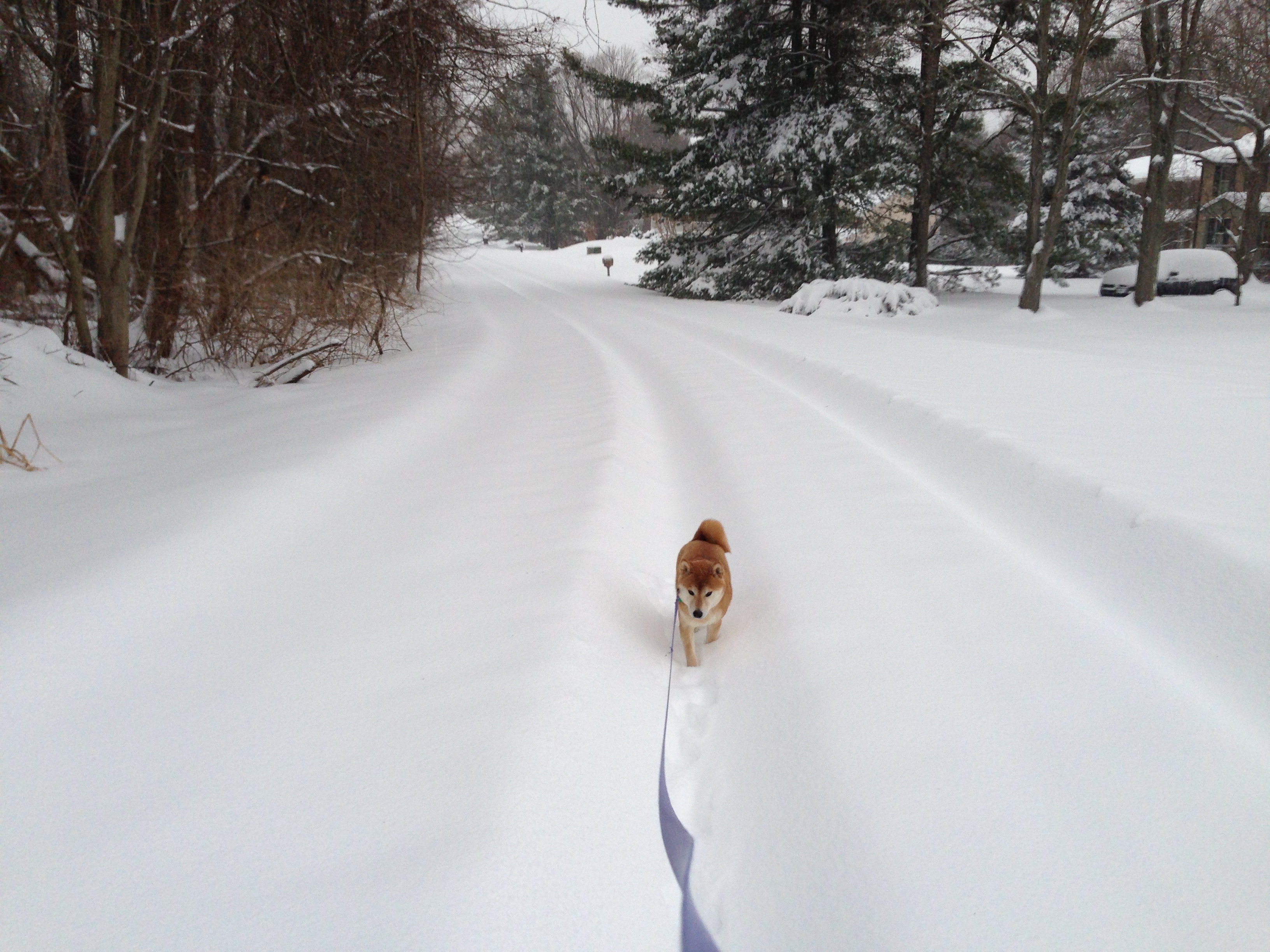
The street was a smooth, untouched, snow-covered ribbon this morning when Kiko and I headed out for our walk.  We were grateful to be able to follow the parallel impressions left by a car sometime during the night.  In the tire tracks, the snow didn’t flood up and over my boots, or envelop Kiko’s entire body.  Where the snow was completely untouched, my little dog was forced to bound through it with a sort of swimming motion.  He seems to thrill at that first plunge, but his exhilaration quickly dissipates.  Following his exertions, he slept for hours on the playroom sofa.  All day long I’ve been tempted to join him.  Wouldn’t it be nice if we all could be so lucky?

My daughter, of course, was delighted by the snow, and by yet another snow day.  As for Kiko and me, we’re ready for spring.

Jan_Feb20142450

Feb13002

Jan_Feb20142470

Jan_Feb20142447

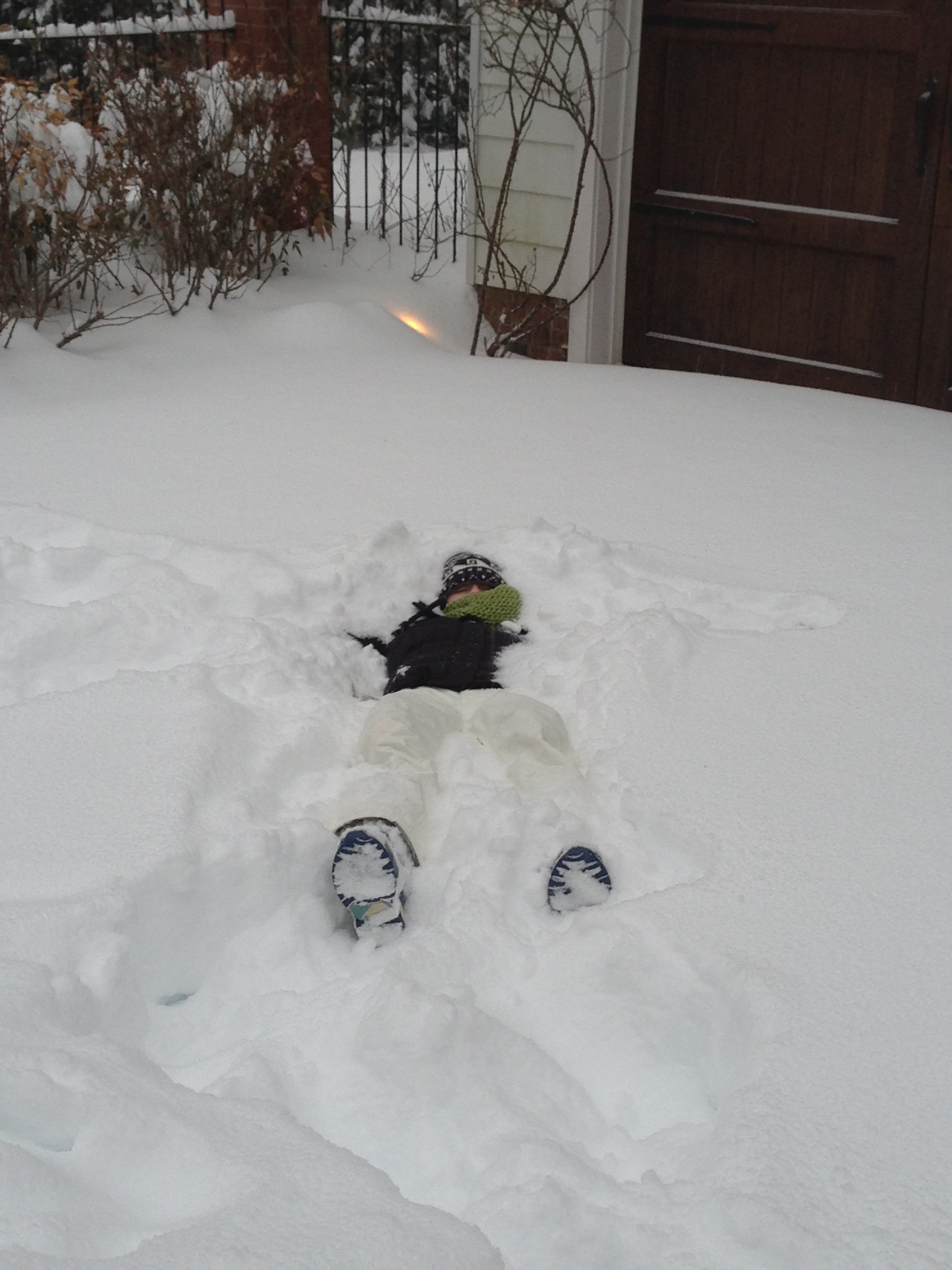
My daughter, at home in her element.

Early-Morning Irritability

I try not to use my blog to rant about life’s trivial annoyances. But today I’ll risk sounding like a pouty child. This morning, a series of minor nuisances really ticked me off.

It began around 6:20, when I applied myself, with much concentration, to the vexing mystery of the moment—how to get the little rubber ring to stay put on the lid of my daughter’s new thermos. I persisted, but had no success. The bell of the toaster oven dinged. Because I had devoted too much pointless effort to the thermos, the mini-bagels I had been toasting for D’s breakfast were burned beyond rehabilitation.

It was at this inopportune moment that my husband wandered blithely into the kitchen. He remarked, in all innocence, that he couldn’t understand why D, who is in the process of choosing the classes she will take next year in high school (high school!), needs to continue studying English. She can read. She’s a good writer. What more does she need to know about English?

That comment, following so quickly on the heels of my thermos and bagel difficulties, was the last straw. My poor fragile camel’s back cracked sharply in half. Some say, I responded, through slightly clenched teeth, that there is value in literature. While reading good books is unlikely to lead to a well-paid career . . .no . . . it’s likely to ensure the absence of a well-paid career, it offers some help in coping with life’s disappointments. I stopped there. I did not add this further petulant bitterness: that reading offers the possibility of occasionally eking out some small measure of joy in a world rife with uncooperative thermos rings, annoying toaster ovens and clueless husbands whose idea of enlightening reading is an online windsurfing forum. H wisely kept quiet until he left for work.

And then Kiko and I went out for our walk. Another lovely light snow had fallen. I expected that the walk would lighten my mood. But no. Paved surfaces were far more slippery than I had expected, and Kiko insisted on attempting a break-neck pace, determined to run, if not in the road, then as close to it as possible, where the cars were hurtling by us more aggressively than usual. The salt from the road frequently stung his paws, prompting him to limp flamboyantly, one foot in the air, yet without lessening his speed. I had to repeatedly kneel down to brush the snow from his paw pads. An icy, gusty wind whipped the snow into my eyes, and the blue glare of the sun on the white ground was blinding. My ears were wet and freezing under my scarf, while my hands were too hot in my mittens. I was reminded vividly of why I find skiing so unpleasant. Our morning outing was an ordeal to be suffered through.

On a happier note, it sure is good to be back home.  Alone, except for my silent dog, now sleeping peacefully in another room.

*********************************************************

H telephoned later, warning me about the icy roads and clearly trying to appease my irrational meanness.  I’m feeling better now.  As Gilda Radner’s Roseanne Roseannadanna used to say:  Never mind.

ColdAM006

It was a beautiful morning to be annoyed.

A San Francisco Treat

For over twenty years now, my husband had been saying, “Sometime we need to go out to California.”  As a near-penniless grad student, he had given a talk at a conference in Monterey.  He had flown to San Francisco, where he managed to find an affordable motel (read seedy, verging on squalid) for the two days before his university per diem kicked in.  He became smitten with the city and the dramatic rocky west coast.  He’s been wanting to return ever since.  Yet the time was never quite right, and I wasn’t particularly enthusiastic.  Despite glowing reviews from him and several native and transplanted California friends, my stubborn, wrong-headed vision of the state persisted: thousands of miles of disaster-prone L.A. sprawl and superficiality.  My bias was no doubt influenced by my mother’s attitude.  In her opinion, California (unlike Europe, somehow), was simply too far away to merit serious consideration.  While I was growing up, she harbored a vague dread that one day, school, a job, or a boy would lure me to the opposite end of the country.  Now that my daughter is in high school, I can even more fully appreciate this concern.
One thing led to another, though, and we reached a family decision to head to the bay area this past winter break.  And I have to admit, I should have paid attention earlier to all those fans of northern California.   I understand now.  It’s every bit as good as they say. Maybe even a little bit better, because the weather was so gorgeous. We had prepared for fog, drizzle, gray skies and a damp chill in the air. Instead, we found sunshine, bright blue skies and afternoon temperatures in the mid-60s. With its palm trees, live oaks, cypresses, huge eucalyptus trees and lush flowers, the city has a tropical feel that, for me, at least, was completely unexpected.  It was a welcome break from the icy Virginia December we had left behind.

CA109

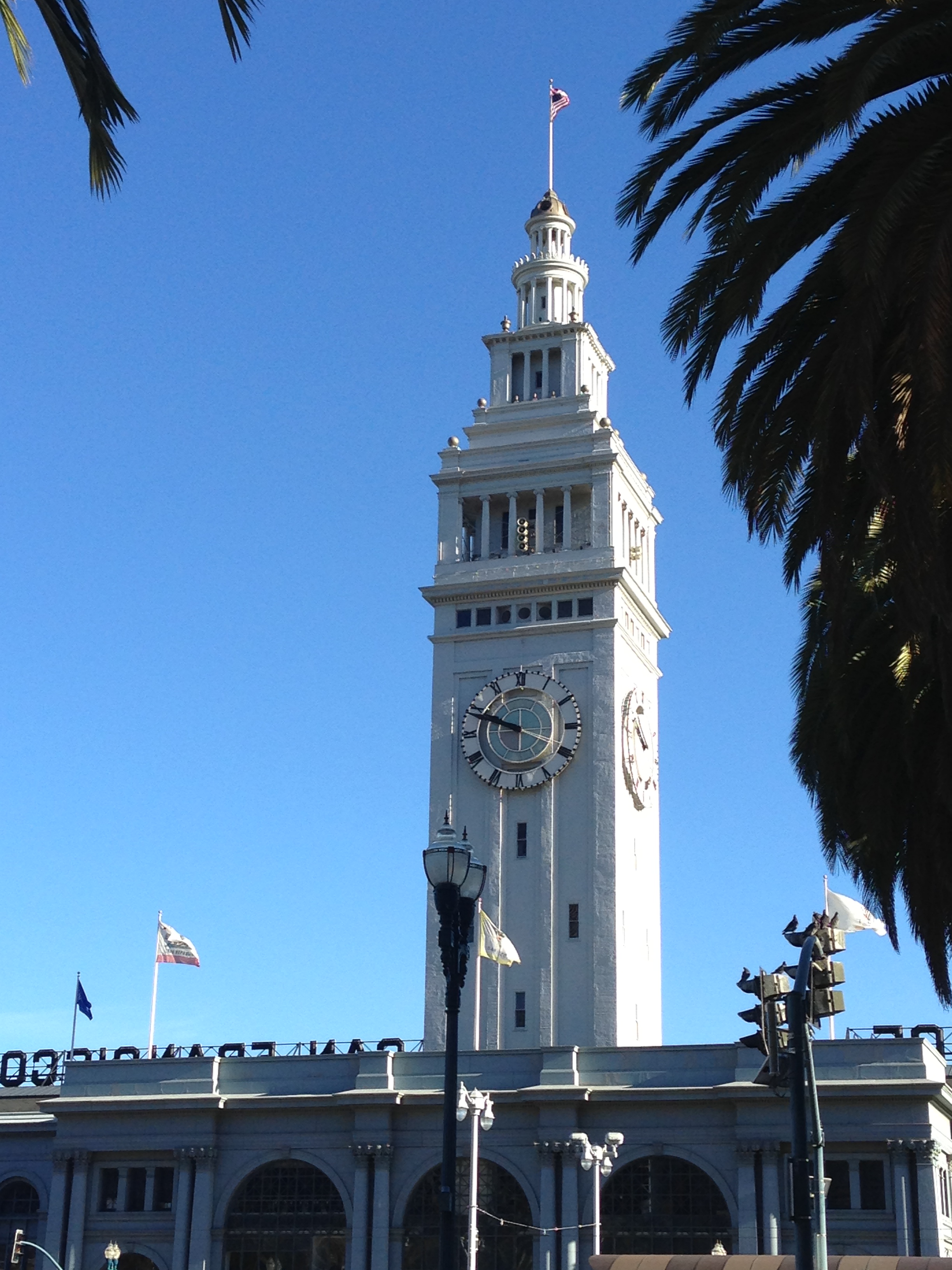
The 19th-century Italianate tower of the Ferry Building sits sentinel on the beautifully reconfigured Embarcadero, (former site of the 1960s-era Embarcadero Freeway that collapsed during the 1989 Loma Prieta earthquake.)
CA135

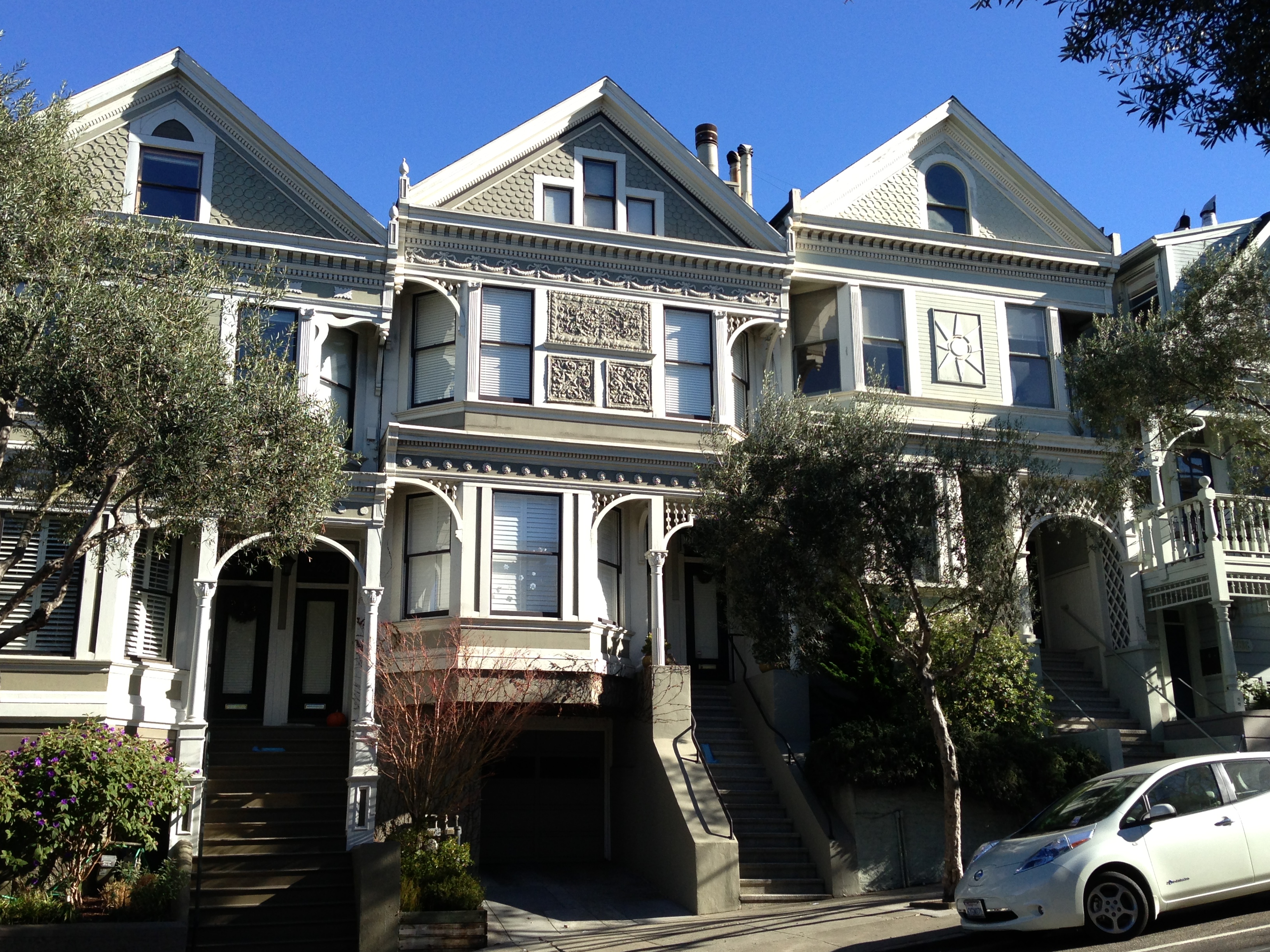
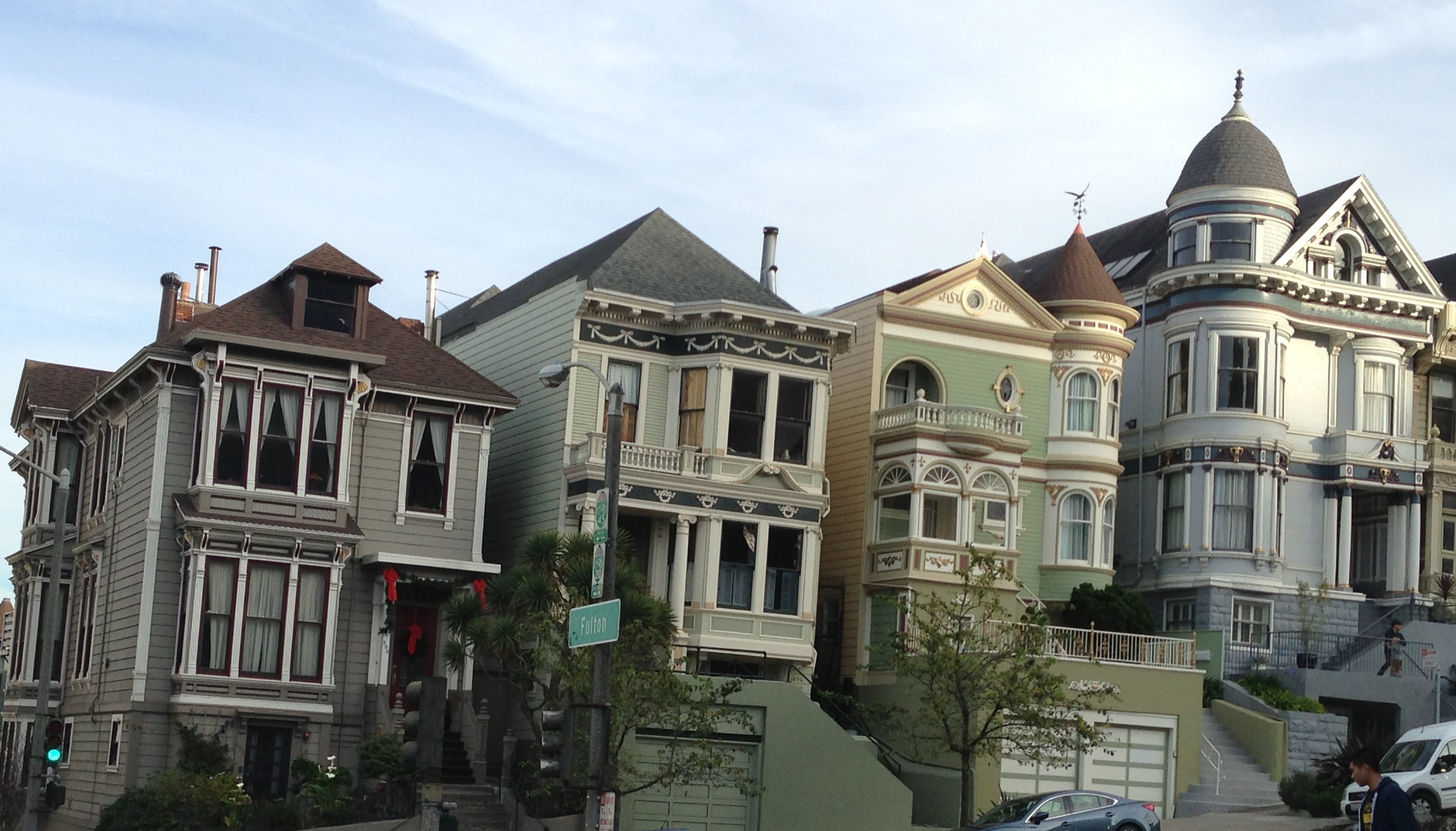
A row of Victorian homes, delicately decorated and painted.
CA174

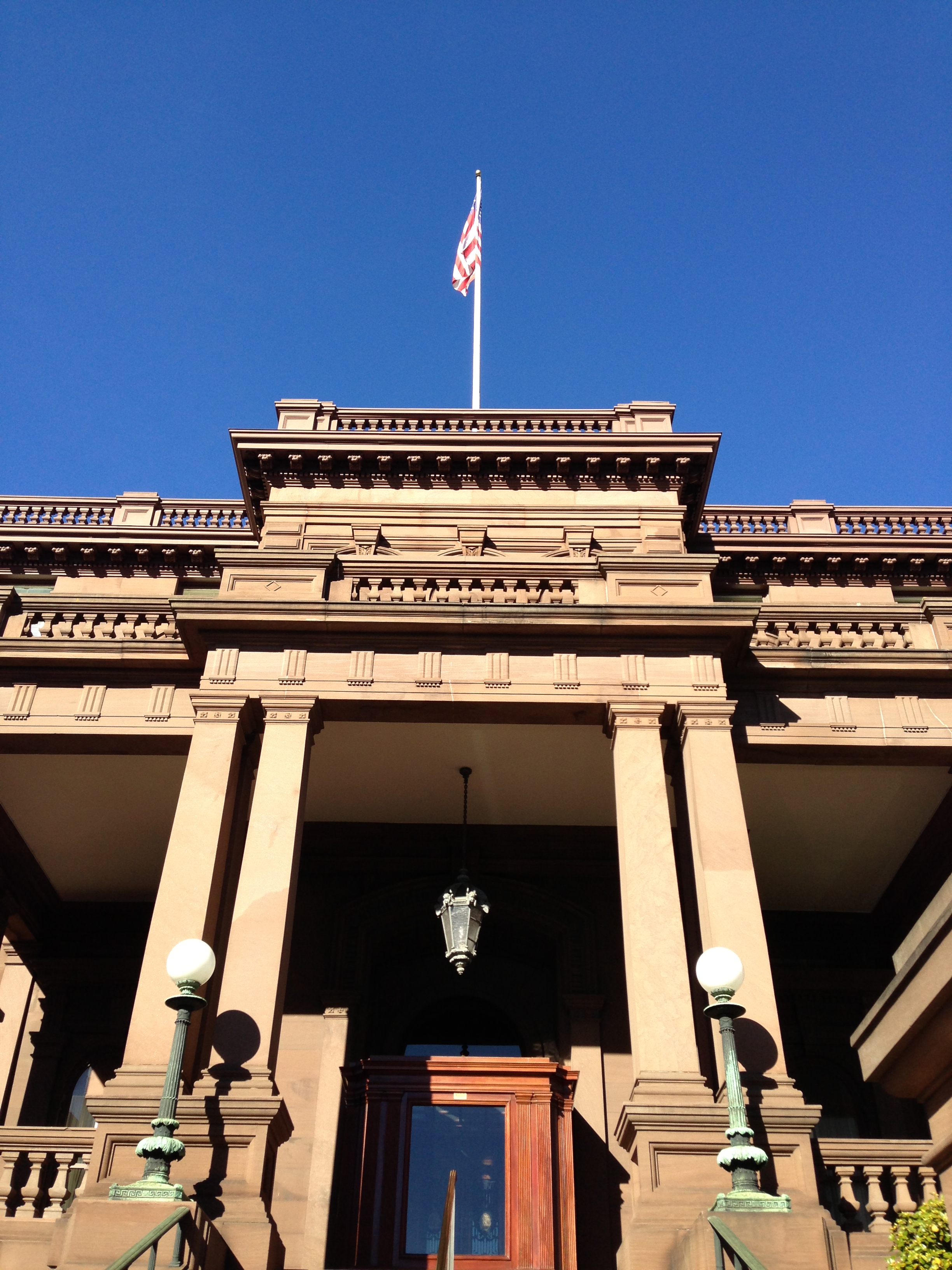
Portico of the James C. Flood mansion in Nob Hill.  Built in 1886,
it’s one of few buildings to survive the 1906 earthquake and fire.

CA343

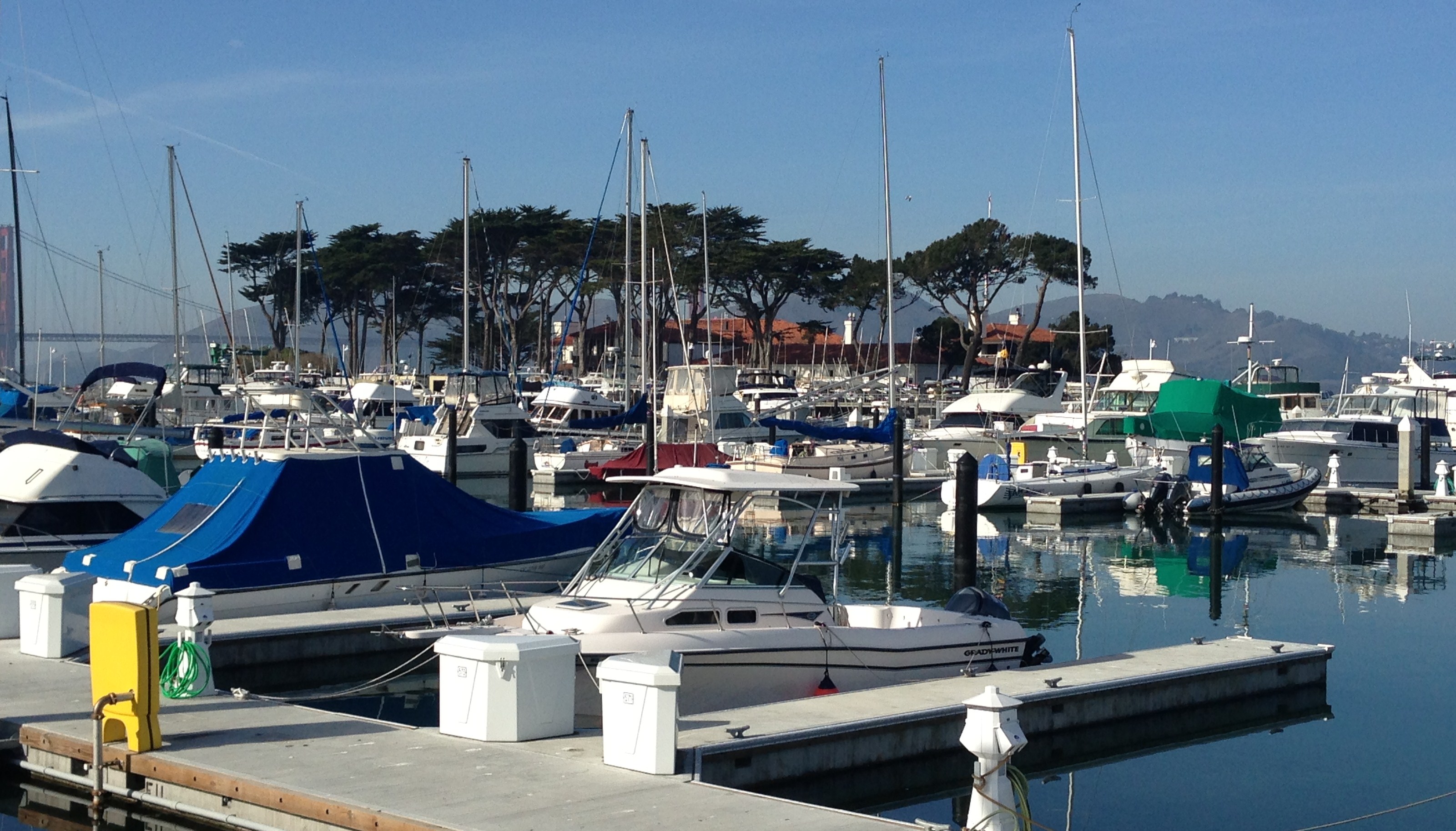
A peaceful view along the waterfront, somewhere between
Fisherman’s Wharf & Ghirardelli Square.

CA357

The Marina, with the Golden Gate Bridge in the background.
Nearby is Crissy Field, a must-see spot for my husband.  It’s where windsurfers gather when weather permits.

CA406

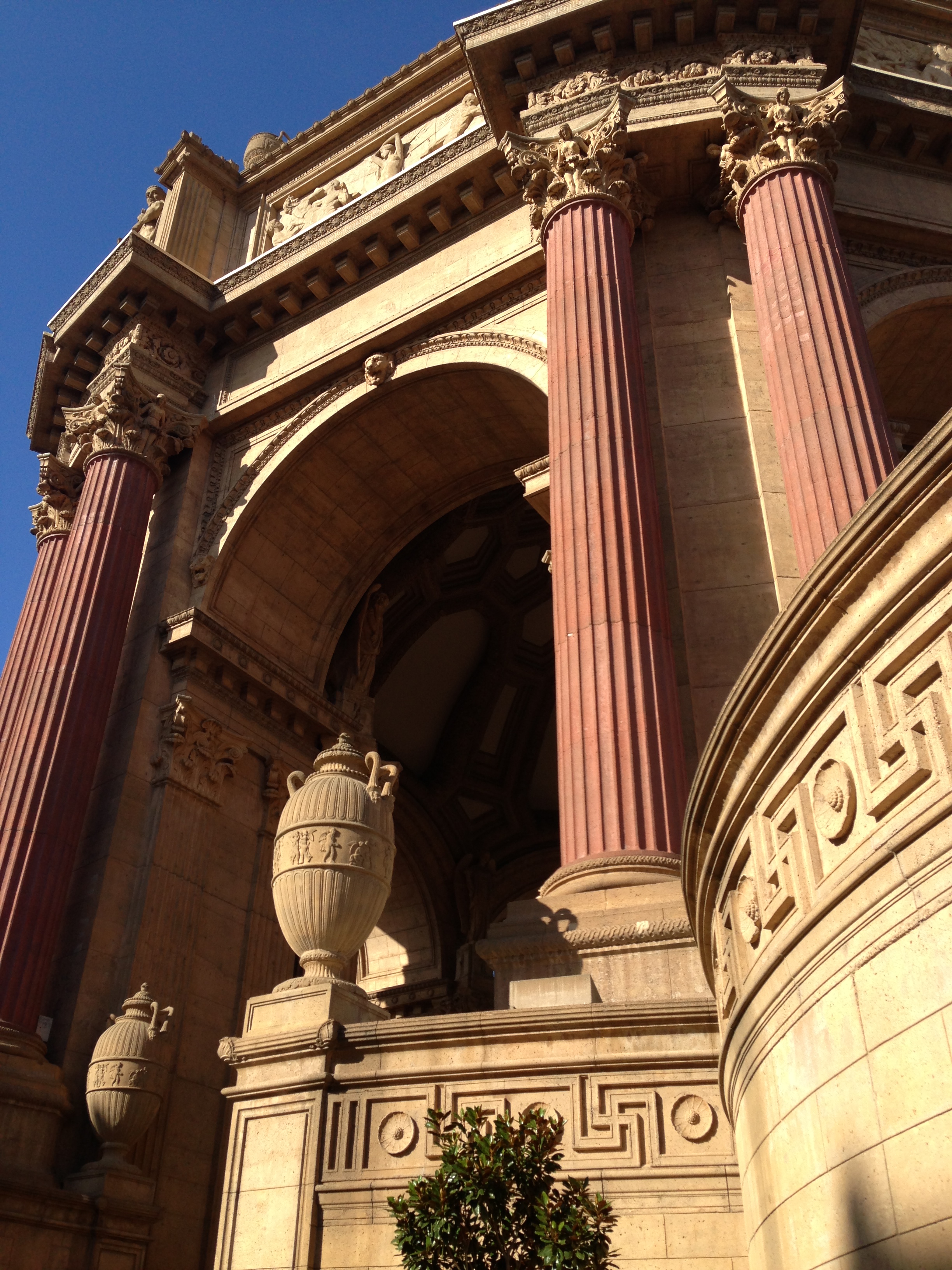
On my list of sights was the monumental Palace of Fine Arts,
designed by Bernard Maybeck for the Panama-Pacific Exhibition in 1915.  It was rebuilt of permanent materials in the 1960s.

CA392

A close-up view of the Palace of Fine Arts.

CA615

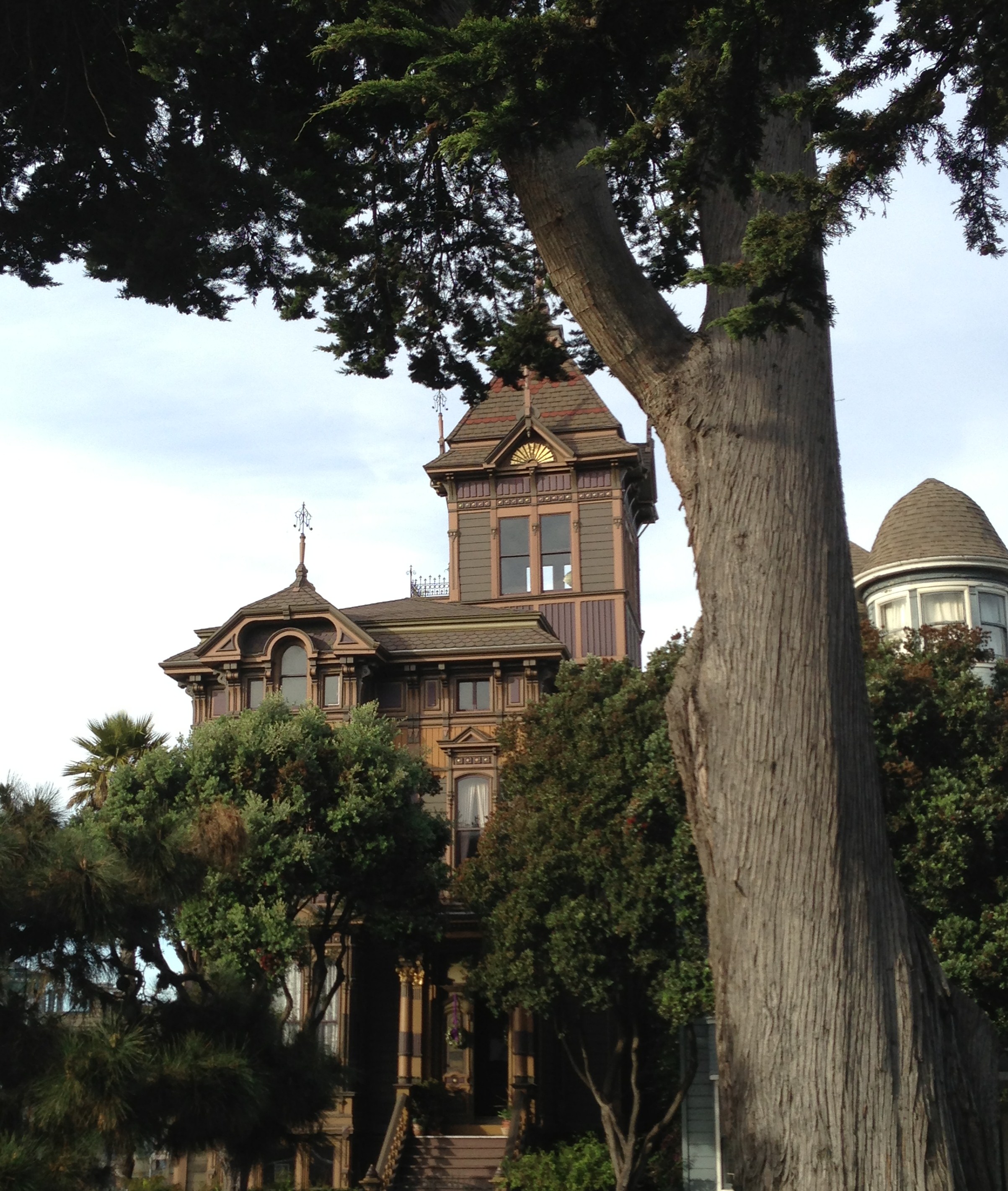
A towering Victorian mansion on Alamo Square.

CA622

Perhaps the most familiar row of Victorians in San Francisco, the
six “Painted Ladies” on Steiner Street across from Alamo Square.

CA651

The less familiar, but just as beautifully painted sisters in the lower block of Steiner Street.
CA645

Hibiscus adorns the entry of an Alamo Square home.
I loved the city’s tropical plantings.
CA656

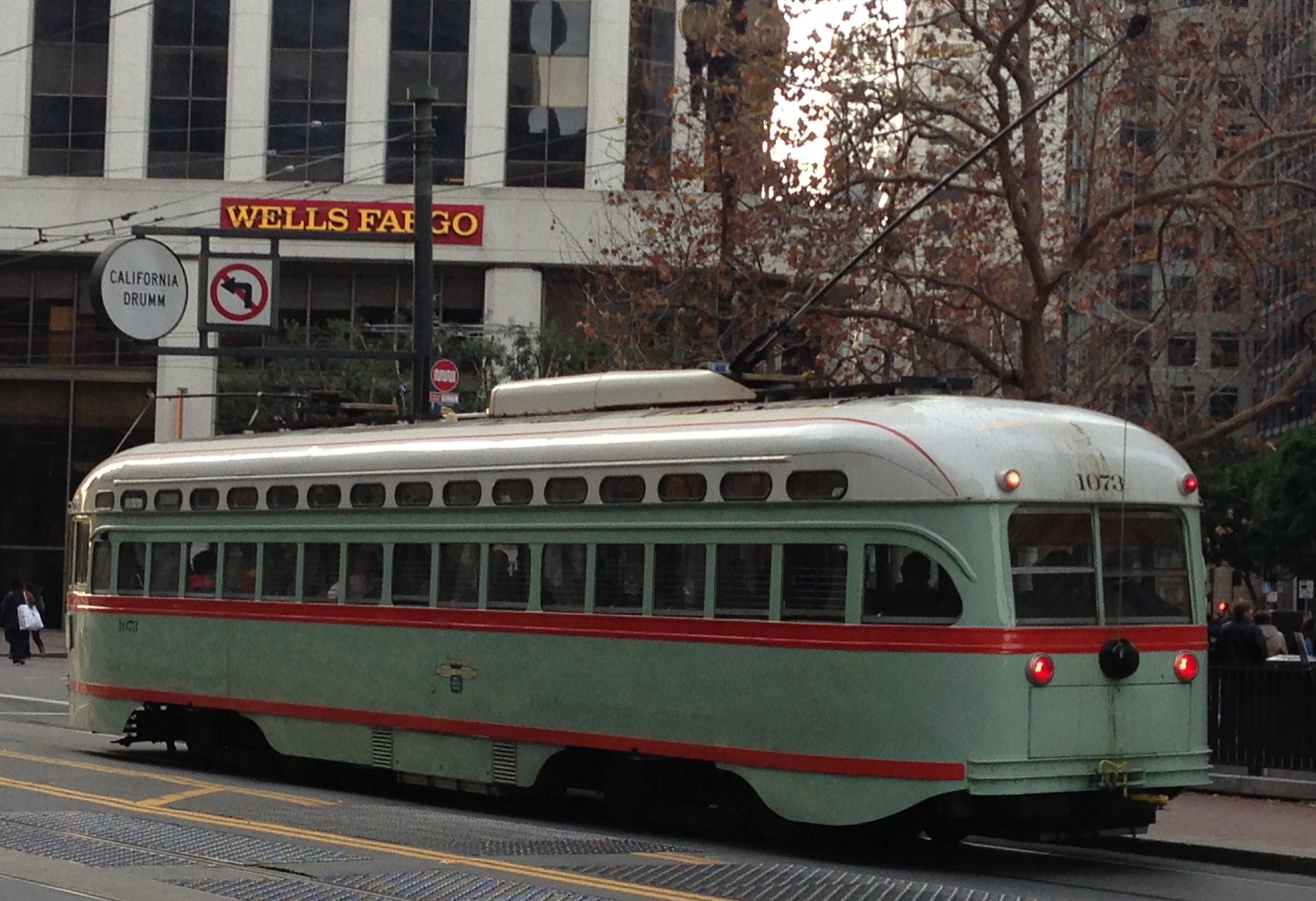
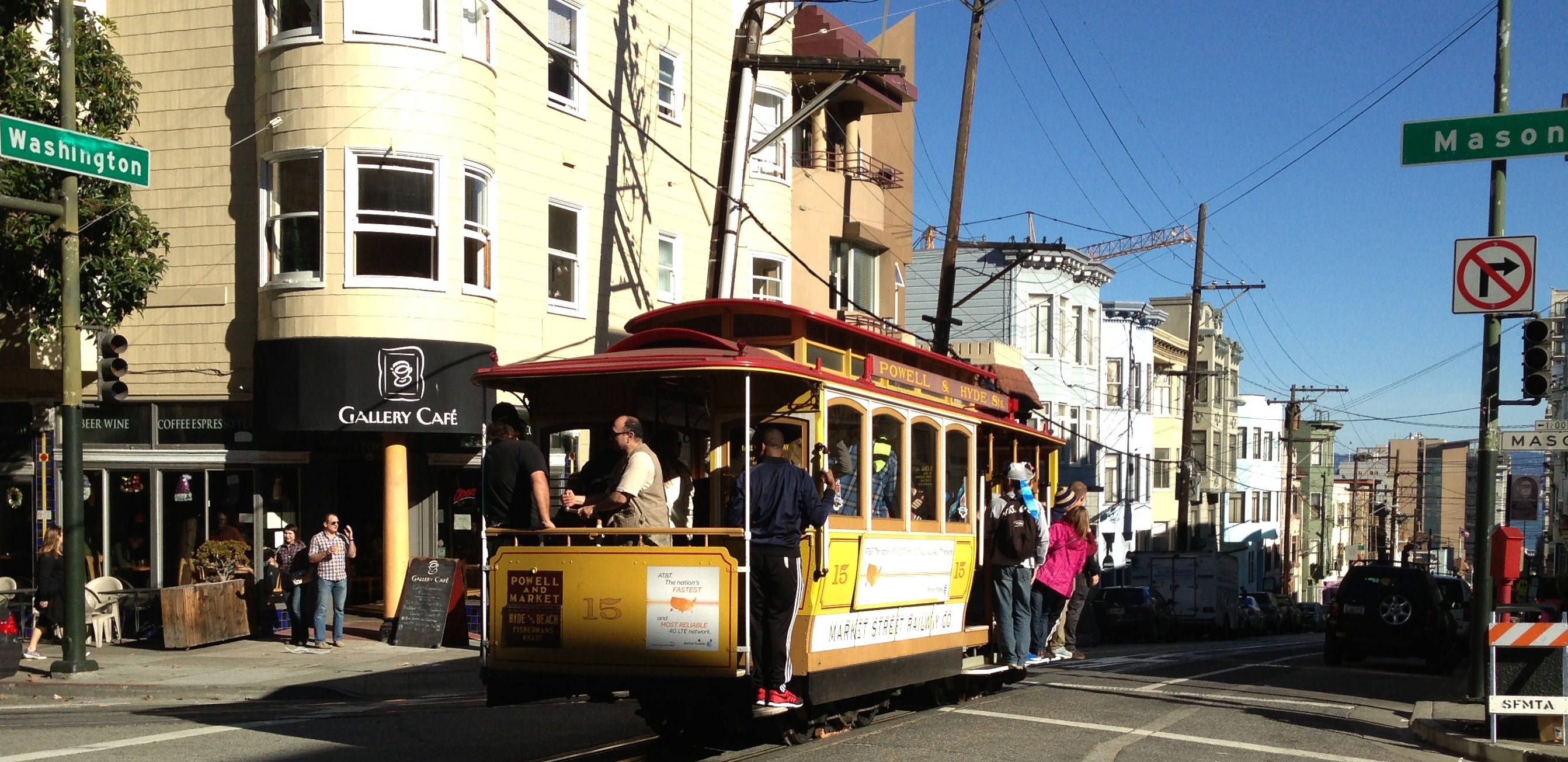
With Muni passes, we sampled the city’s many forms of public transportation. Vintage streetcars, like this one on Market Street, are better enjoyed from the outside, as they spend most of their time stopped. Best to catch a bus if you’re in a hurry.

CA150

Cable cars offer a lively ride.  We learned to avoid the long tourist lines and hop on in the middle of the intersection. Our daughter was thrilled when she was assigned an outside perch as we sailed down one of the city’s steep, signature hills.

More Exercises in Extreme Gift Wrapping

Two years ago, I wrote about my husband’s flair for imaginative gift-wrapping.  (See Exercises in Extreme Gift Wrapping, December 2011.) H was born into a family of happy wrappers.  One of the pillars of their holiday tradition is the inventive wrapping of every single gift, no matter how large or small, no matter how humble.  A bracelet might be hidden in a box sized for an appliance.  If an object has a recognizable shape, it’s typically disguised in another box.  Multiple containers are frequently employed.  The family name is undoubtedly enshrined in a place of prominence in the gift-wrap hall of fame. 
My family’s approach to gift wrapping, on the other hand, may be described as practical and decorative.  Certainly, compared to H’s family, we are wrapping minimalists.  But then most of the world would be, as well.  I was unprepared for the sea of multi-colored gifts that flooded the living room on our first Christmas together at H’s parents’ house.


My husband has continued the tradition in his own way.  He no longer feels the need to wrap up a pair of socks in a refrigerator box simply to fill out the gift-scape under the tree.  His approach emphasizes visual impact and imaginative packaging.  In 2011, he enclosed three gifts for our daughter in large cylindrical tubes intended for setting concrete.  Last Christmas and this year, he followed up with gifts of strikingly unusual shape.   

Christmasnight020

On the morning of Christmas Eve 2012, a modest triangular package appeared under the tree.  The tag read, “To D, from Mama and Daddy.”  Our daughter was thrilled to see that Daddy had been busy again down in the basement, working on a new packaging scheme.  She suspected that the pyramid would be only the first of a series of mysterious packages.  She was right, of course.

Christmasnight037

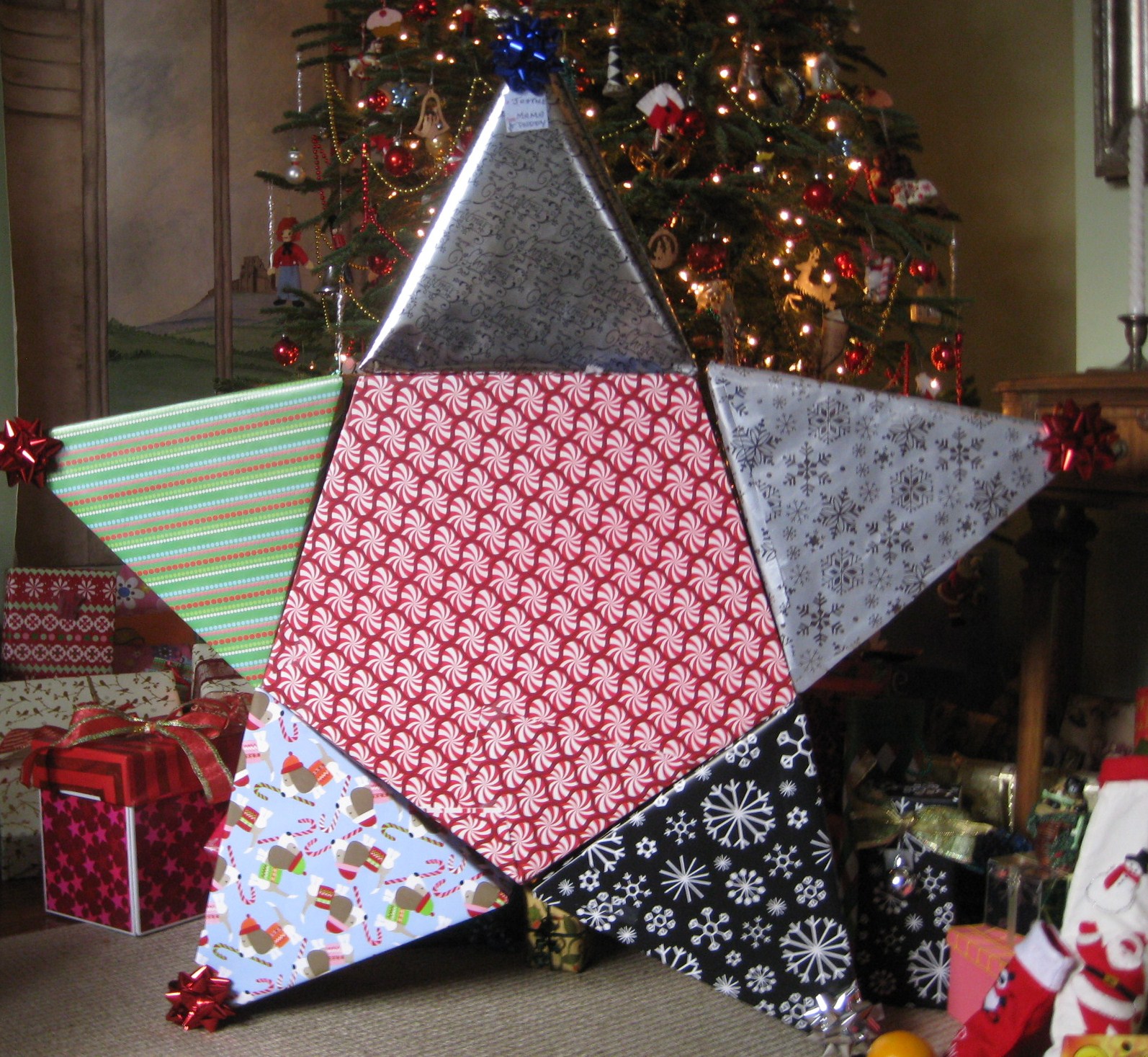
On Christmas morning, the silver pyramid had become one of the arms of a five-pointed star, the center of which was a pentagon-shaped box.  Each point contained a small gift, while the pentagon encased a more substantial present.  Really, though, the items inside the boxes were almost incidental.  The real gifts here were the surprise factor, followed by the intricate process of unwrapping, a sustained big reveal.

Christmasnight071

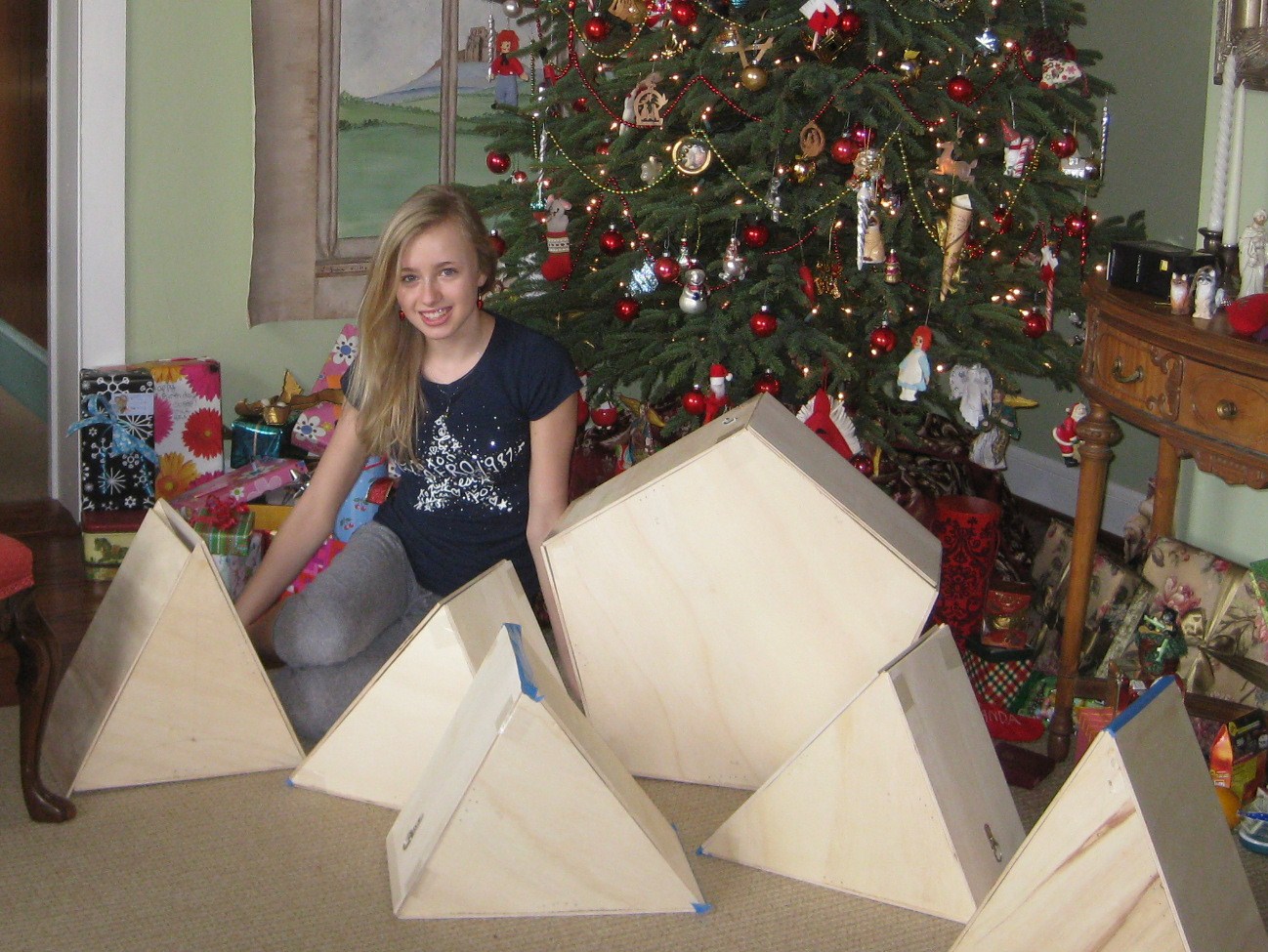
Above, our daughter sits among the unwrapped elements, the hinged plywood boxes my husband carefully constructed to form the star.  His engineering training and math skills equipped him for the endeavor. 

Christmas061

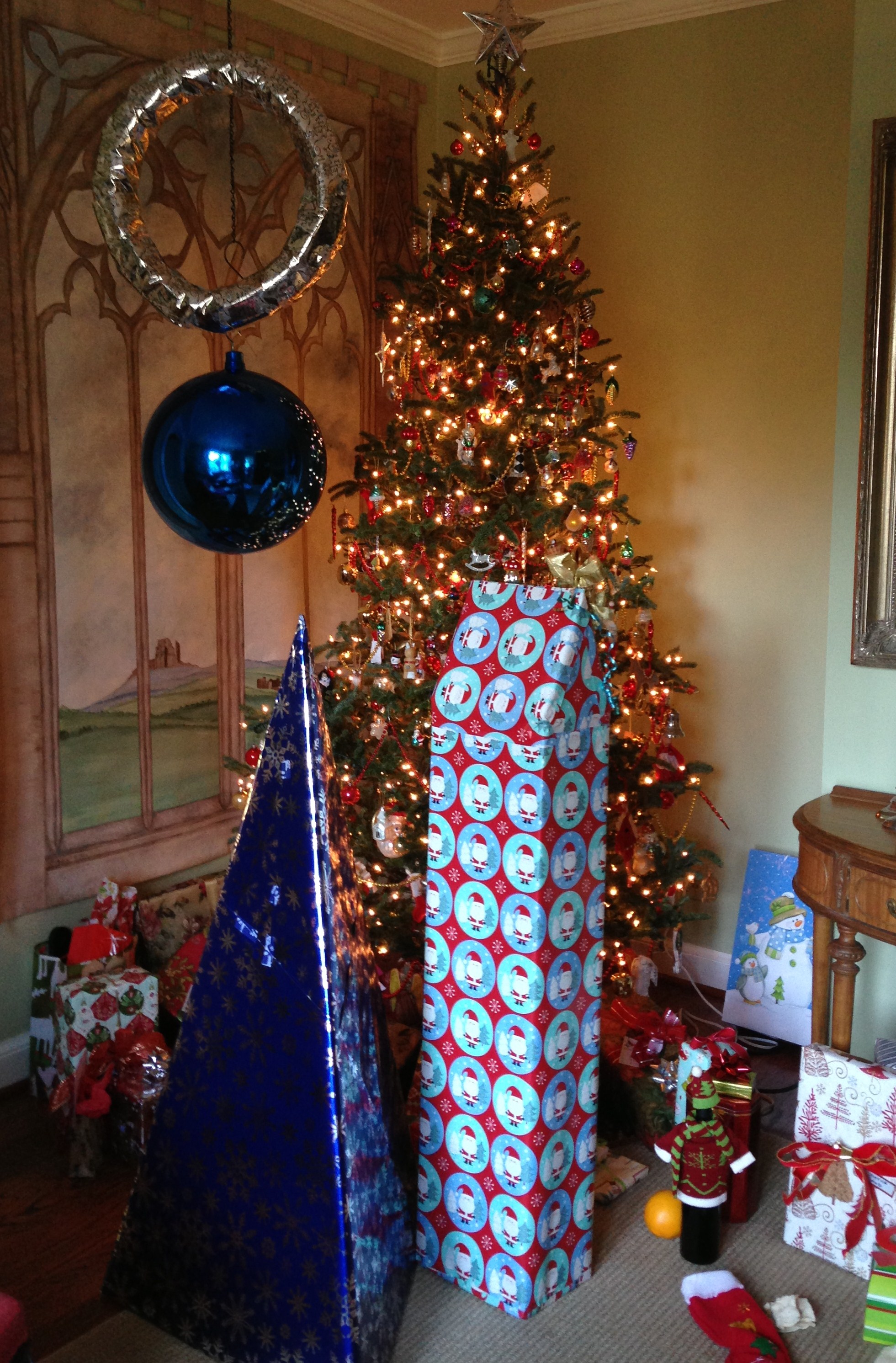
This year, a slender, four-foot tall pyramid turned up by the tree a few days before Christmas.  The package prompted my daughter to respond in kind with a last-minute present we had for H.  The gift was in a long, narrow box.  She disguised the shape by adding a gable-like projection at the top.  No doubt about it, she’s her father’s daughter.  Although she claims it was unintended, she was nevertheless proud that her creation turned out to be just slightly taller than H’s pyramid.
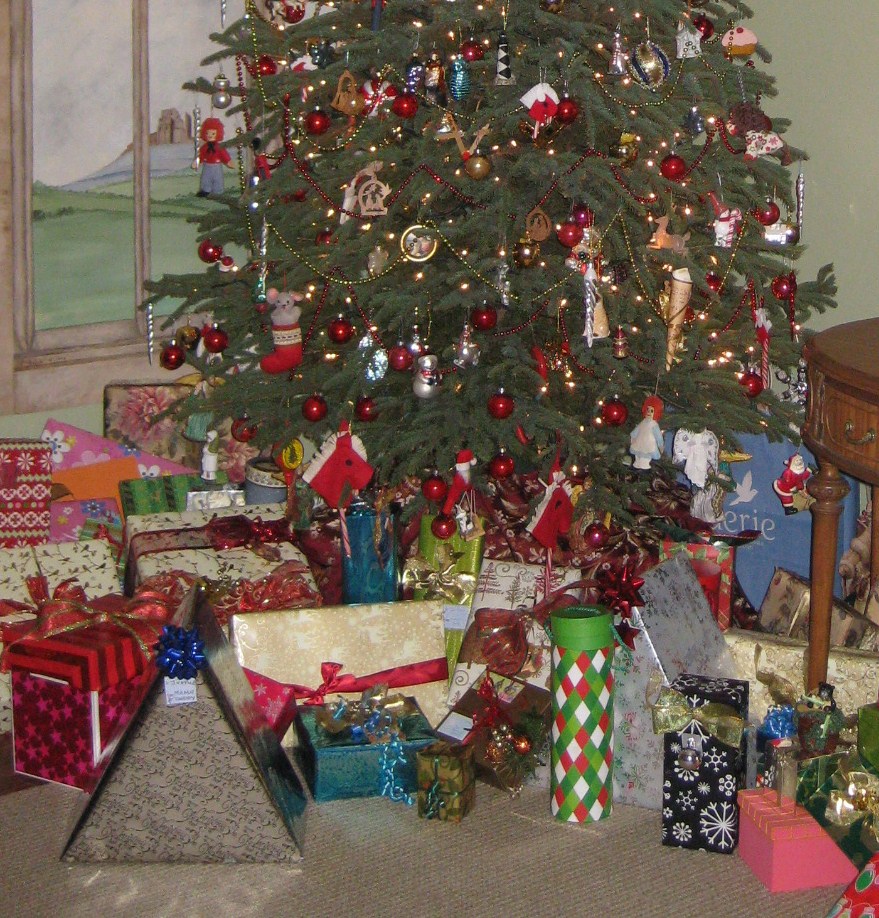
On Christmas Eve, I awakened to the startling sound of drilling coming from under the bed.  I assumed H was busy working his holiday magic.  Once downstairs, I found an oversized blue Christmas orb suspended from the ceiling.  On Christmas morning, the final element of the mobile appeared: a silver-wrapped ring, about the size of a pool life-saver.
Christmas068

The uniquely shaped items, as always, were saved for last.  The pyramid was another neatly hinged plywood box, large enough for D to sit inside.  The silver ring turned out to be a section of pool noodle, taped together, with a tiny gift wedged inside.  The blue Christmas ball was purely decorative.  H was pleased with D’s clever and meticulous wrapping of his gift.  He’s delighted to know that in his daughter’s hands, the family tradition of extreme gift-wrapping has a sure future. 

Time Warp (Another Little Girl in Red)

00158

I was born to a family of savers and recyclers. Among the many boxes in my parents’ attic are several that contain my mother’s old sewing patterns, clearly marked and dated, from the 1960s on.  When Mama decided that my daughter needed her own Red Riding Hood robe like the one I had worn in the Christmas photo from 1965, she used the same pattern.  D loved her version and wore it for years.  Here she is at age three in 2002:  another little blonde girl in red, happy to be visiting her grandparents.